
The complete guide
How To Choose A 1080p Autofocus Webcam For Work, Study And Streaming
The problem with the camera you already have
Open any laptop and there is a camera built into the lid. It works. That is about the strongest thing most people can say about it. The lens is tiny, it is fixed at one focus distance, and the sensor behind it struggles the moment the light in the room changes. You end up looking soft, slightly grey, and oddly far away, while the person on the other end leans in to work out your expression.
That matters more than it used to. Interviews happen over video. Client calls, tutorials, team catch-ups and family calls all run through the same little square. If you spend hours a week on camera, improving the camera is one of the cheapest changes you can make to how you come across.
A 1080p autofocus webcam fixes the two things built-in cameras get wrong most often. It gives you four times the detail of a standard 720p feed, and it keeps you in focus when you move. Everything else is detail.
What autofocus actually changes
Most budget webcams use fixed focus. The lens is set at the factory to be sharp at roughly an arm's length, and anything closer or further drifts out. In normal use that is fine until you lean forward to read something, push your chair back, or hold up a page to show a colleague. Then the picture goes soft exactly when you need it sharp.
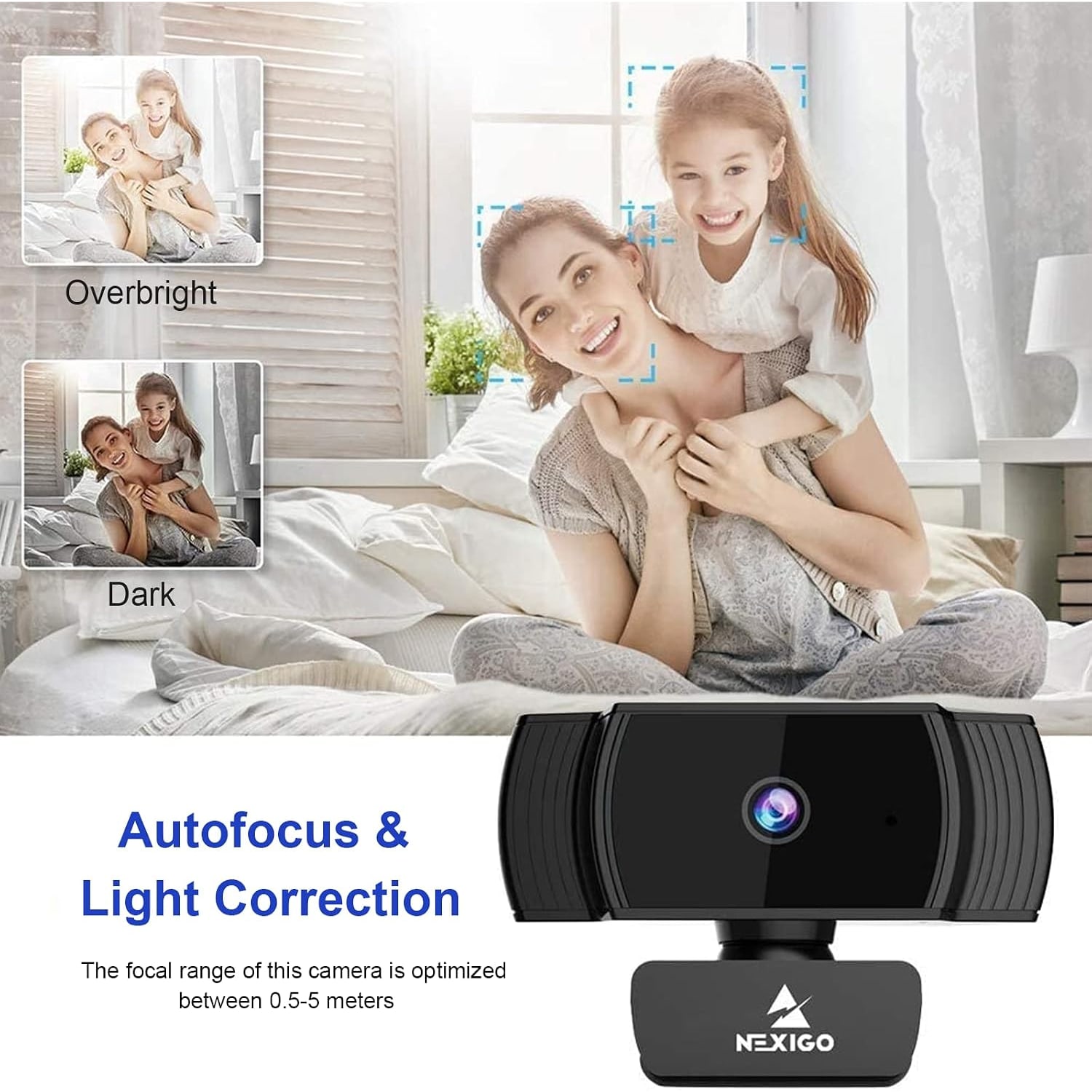
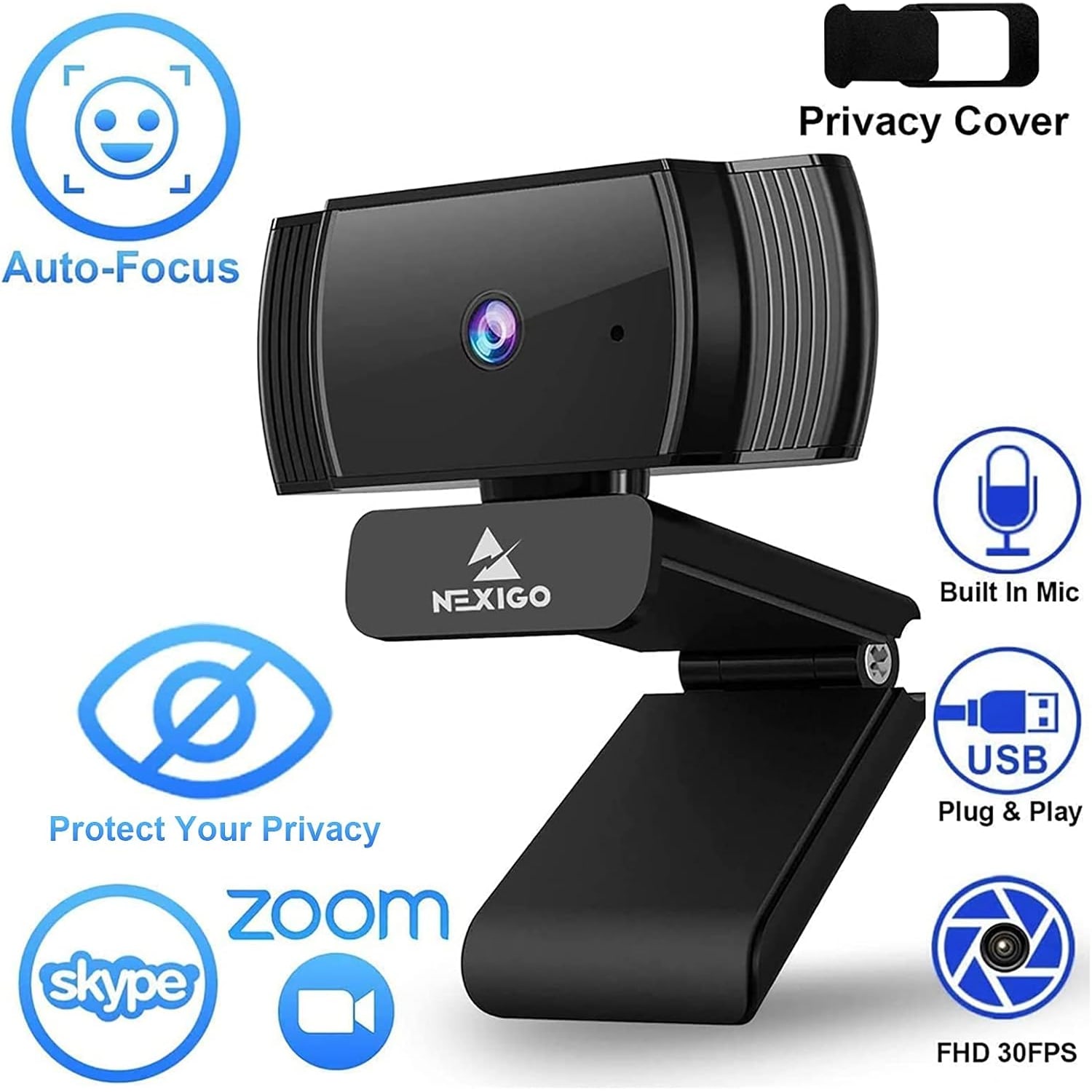
Autofocus lenses adjust continuously. This one works from a starting distance of about 7cm, which is close enough to show a label, a printed page or a small object to the camera and have it snap sharp. If you present anything visual, that is the feature you will use daily.
There is a flip side. Autofocus can hunt if something keeps moving behind you, like a fan or a doorway. This camera lets you switch autofocus off and set the focal point manually, which solves that completely for fixed setups. Anyone filming a whiteboard, a workbench or a fixed product shot should take advantage of it.
Picture quality beyond the resolution number
Resolution gets printed on every box, but it is only part of the story. This camera pairs 1080p with a 2MP CMOS sensor, a wide-angle lens at f/2, automatic white balance and automatic exposure. In plain terms, it works out brightness and colour for you and gets it right most of the time.
Low light correction helps when the room is dim, and in a flat with the blinds half closed, that is often the case. Still, no small webcam beats good light. The simplest improvement anyone can make is to put a light source in front of their face rather than behind it. A desk lamp bounced off a pale wall is enough. If a bright window sits behind you, the camera will expose for the window and turn you into a silhouette, and no amount of correction fully rescues that.
Frame rate is 30fps, which is the standard for video calls and perfectly smooth for conversation. Fast motion, such as gaming footage, benefits from higher rates, but for talking heads 30fps looks natural.
Sound, and why it is half the battle
People forgive a mediocre picture. They do not forgive audio they have to strain through. The built-in microphone here has noise cancellation, which pulls back steady background sound such as aircon, a ceiling fan or the hum from a corridor. That is a real benefit in a small flat where you cannot control the room.
For most meetings this is enough, and the convenience of one cable instead of a headset is genuine. If you record voiceovers, podcast, or stream for an audience, a separate microphone will still sound better, and you can mix and match. Your computer lets you choose the camera and the microphone independently, so you can take video from the webcam and audio from something else.
Mounting and where it will actually live
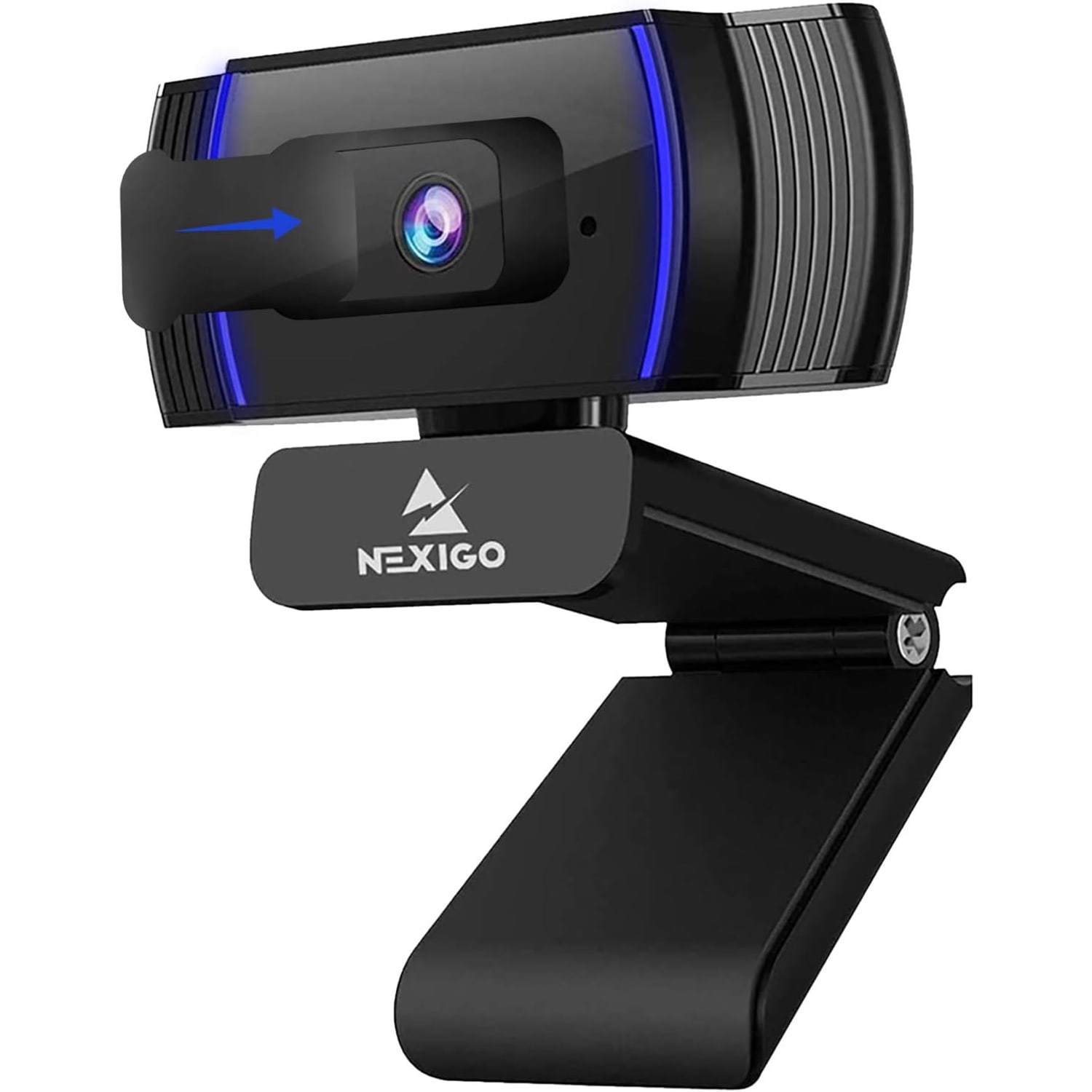
The clip folds, which sounds minor until you try to fit a rigid webcam to a slim modern monitor. This one grips a monitor bezel, a laptop lid or a flat surface, and it also mounts on a tripod if you prefer the camera off to one side or lower down.
Height matters. The most flattering position is roughly at eye level or very slightly above, with the lens looking straight at you rather than up from the desk. If your laptop sits low, a stand or even a stack of books under it does more for your appearance than any setting in the software.
The cable is 2m. That reaches from a monitor to a desktop tower under the desk in most setups, but measure first if your computer sits on the floor and the desk is deep. Pulling a cable tight stresses the connector over time.
At 0.19kg the whole thing is light, so it travels easily. People who split time between an office desk and a home desk often just move the camera rather than buying two.
Privacy, handled with a sliding cover
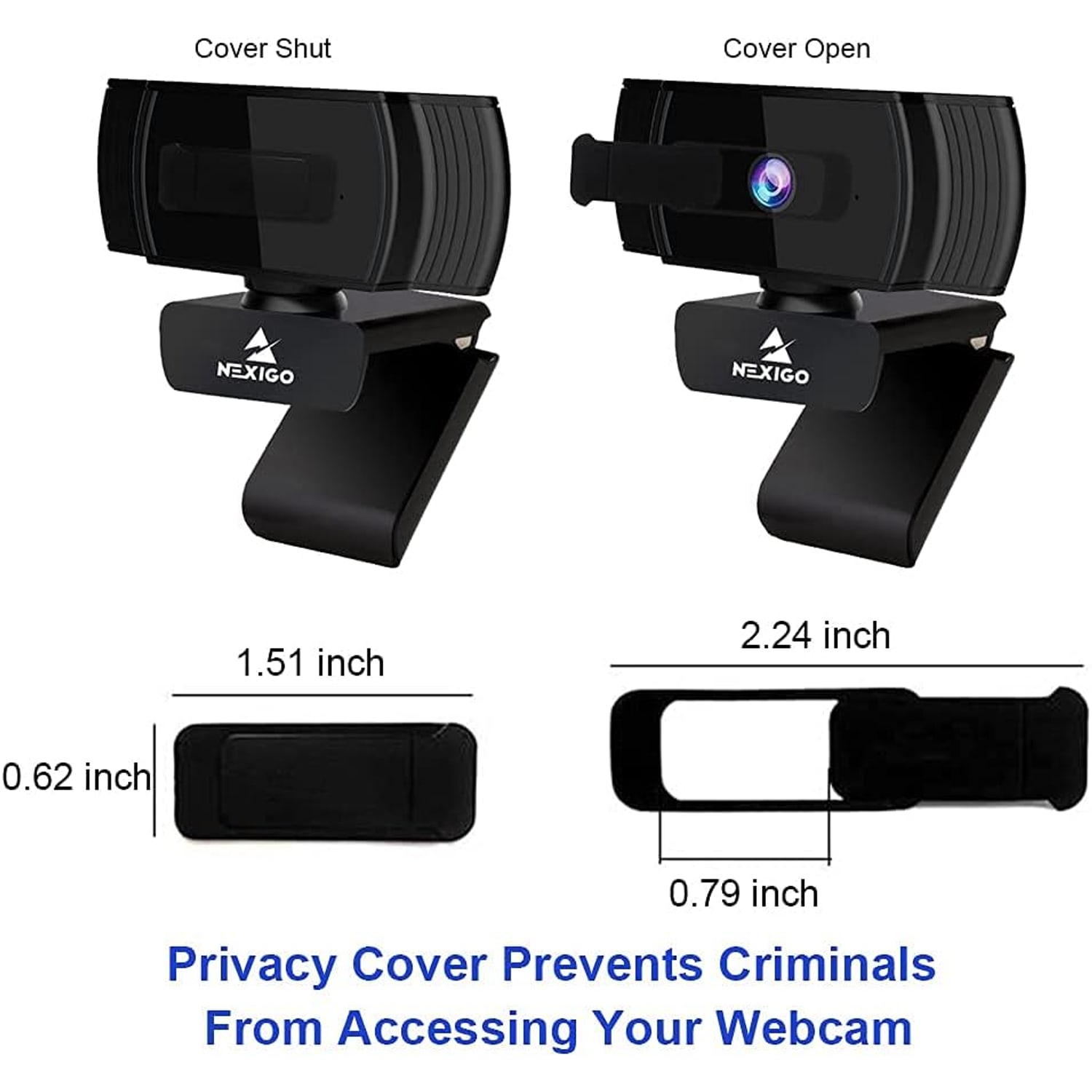
Software indicators are useful, but a physical cover is simpler to trust. The shutter slides across the lens and blocks it completely. Close it at the end of the day and the question of whether the camera is on stops being a question.
There is a practical bonus in a humid climate. A lens left open on a desk collects dust and a fine film that gradually softens every call. Keeping the cover closed between uses means the glass stays clean, and you will clean it far less often.
Worth noting separately: recording other people is covered by Singapore law, including the PDPA. If you plan to record meetings or classes, tell participants and get their agreement first.
Who this suits, and who should look elsewhere
This camera makes sense if you are one person at a desk who wants to look clear and sound clear. Remote workers, students in online classes, tutors, job seekers, people starting out in streaming, and anyone who got tired of their laptop lens will all get what they came for. The best plug and play webcam for most households is simply the one that works the minute it is connected, and that is the design brief here.
It is less suited to a few cases. If you need to frame several people around a meeting table, you want something with a wider field of view. If you shoot fast action or want 60fps, this runs at 30fps. If you need weather protection, note that it is not water resistant and is strictly an indoor camera. There is no image stabilisation either, though for a camera fixed to a monitor that rarely comes up.
Setup and care
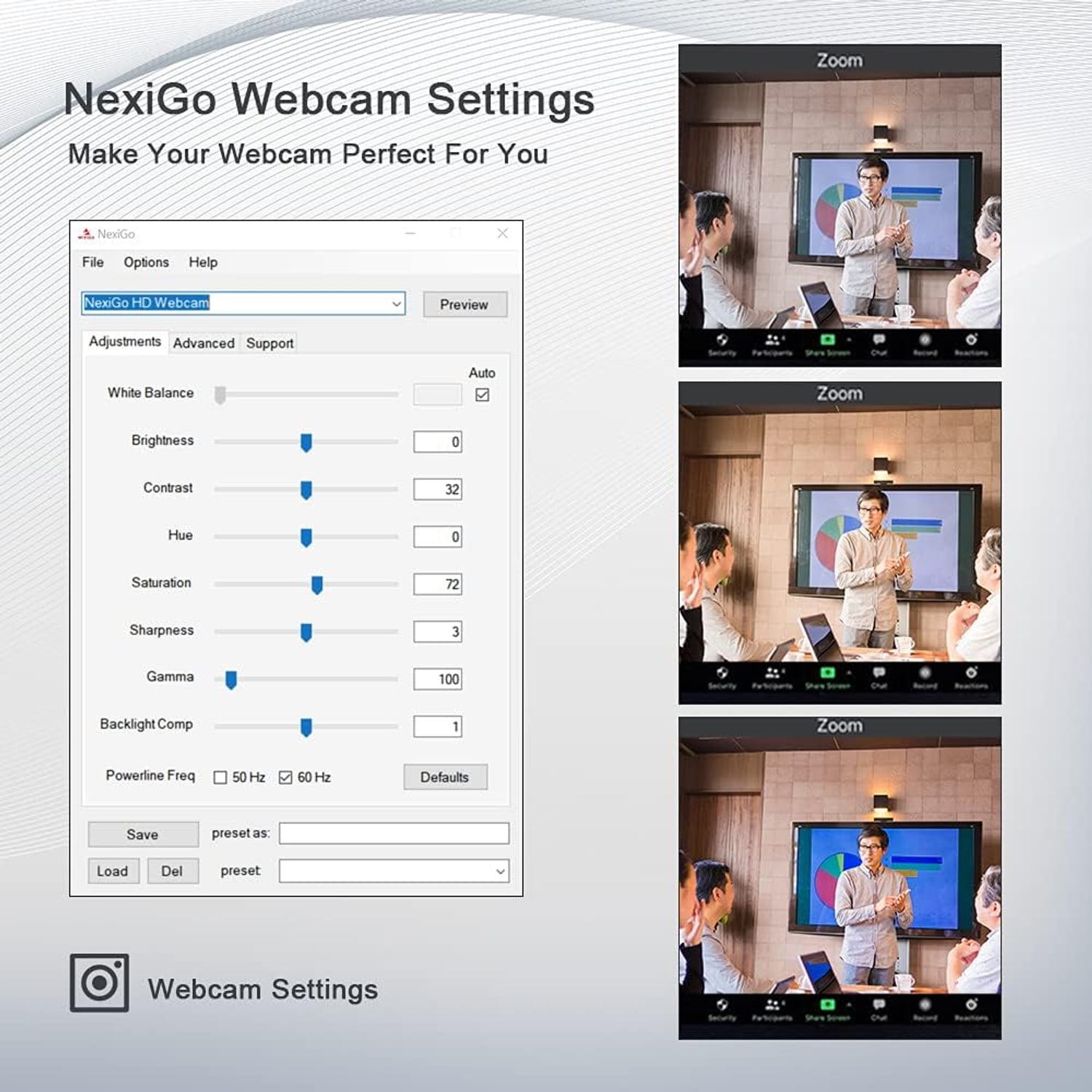
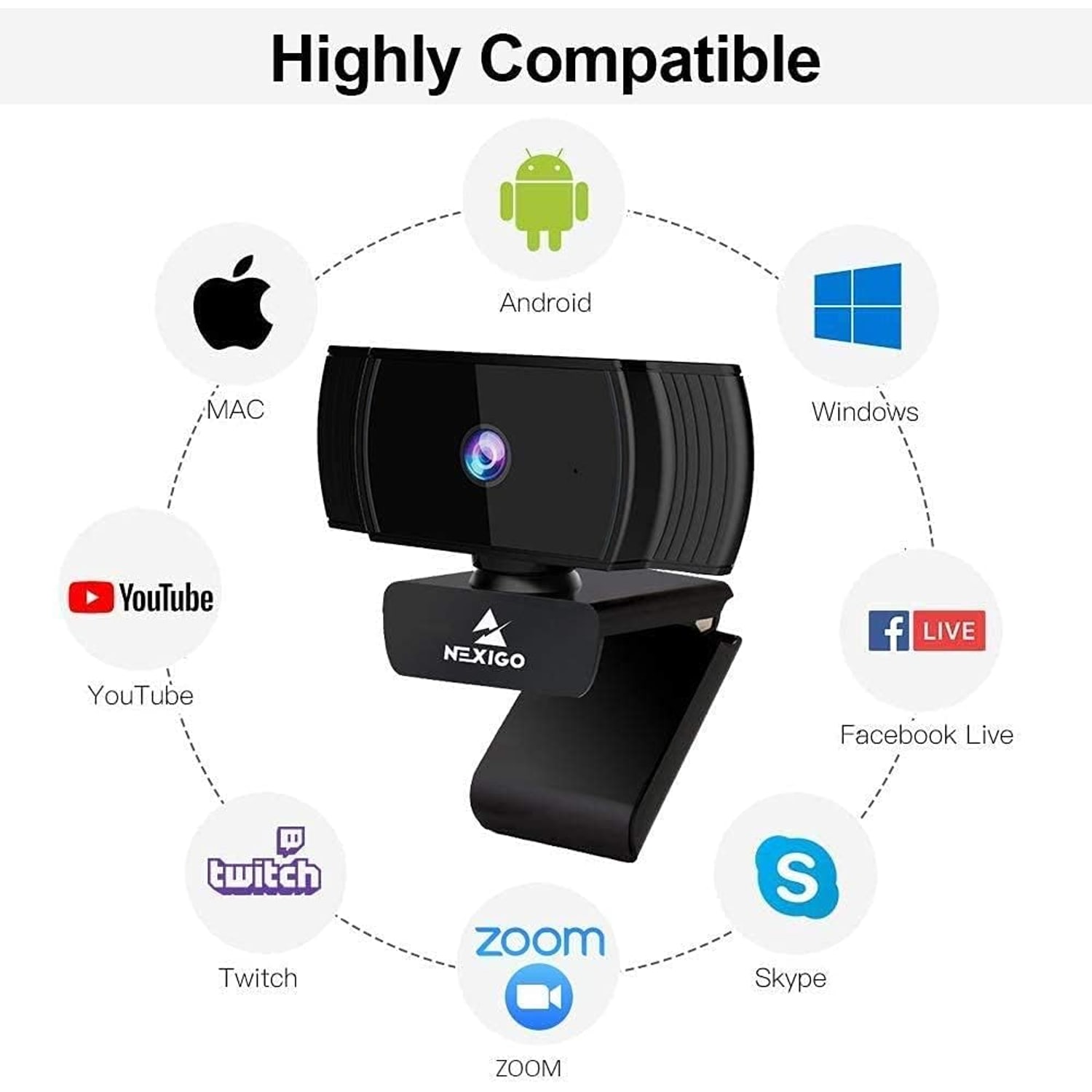
Setup is short. Clip it on, plug the USB cable in, wait a few seconds, then open your meeting app and pick the camera in the video settings. On most systems no driver download is needed. Optional desktop software is available if you want finer control over the image while using Zoom, Teams or similar apps.
Care is just as short. Wipe the lens with a dry microfibre cloth and nothing else. Avoid solvents and alcohol wipes, which can mark coatings. Unplug by the connector rather than tugging the cord. Fold the clip flat for storage and keep it somewhere dry and out of direct sun. There are no batteries to replace and nothing to charge.
The short version
If your current camera makes you look like a weather report from 2004, a 1080p autofocus webcam is an easy fix. You get Full HD at 30fps, a lens that keeps you sharp as you move, a built-in noise-cancelling microphone so you can skip the headset, and a cover that closes when you are done.
Light your face from the front, put the camera near eye level, and plug it in. That is the whole setup. For one person on a desk, it covers everything that matters and leaves the complicated gear to people who actually need it.