
The complete guide
How To Choose A Camera Sling Bag For City Shooting And Travel
The shot you miss while unzipping a backpack
Street and travel photography reward speed. A hawker lifts a wok and the flame jumps. A child chases pigeons across a plaza. The sun drops between two towers for about a minute. If your camera is zipped inside a backpack, you watch these things happen and then describe them to people later.
The usual fix is to carry the camera in your hand or round your neck all day. That works until it rains, or the train is packed, or your neck starts to ache.
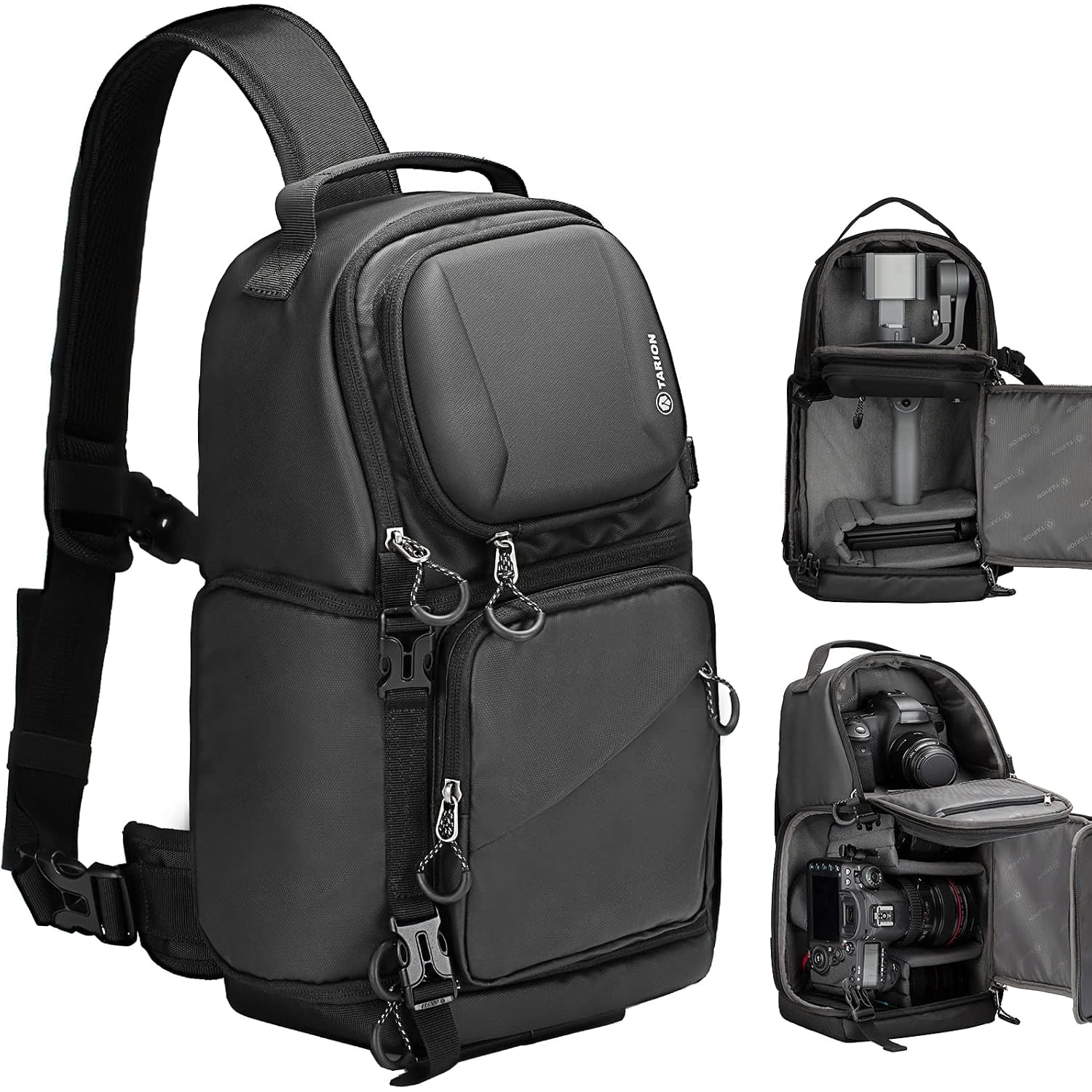
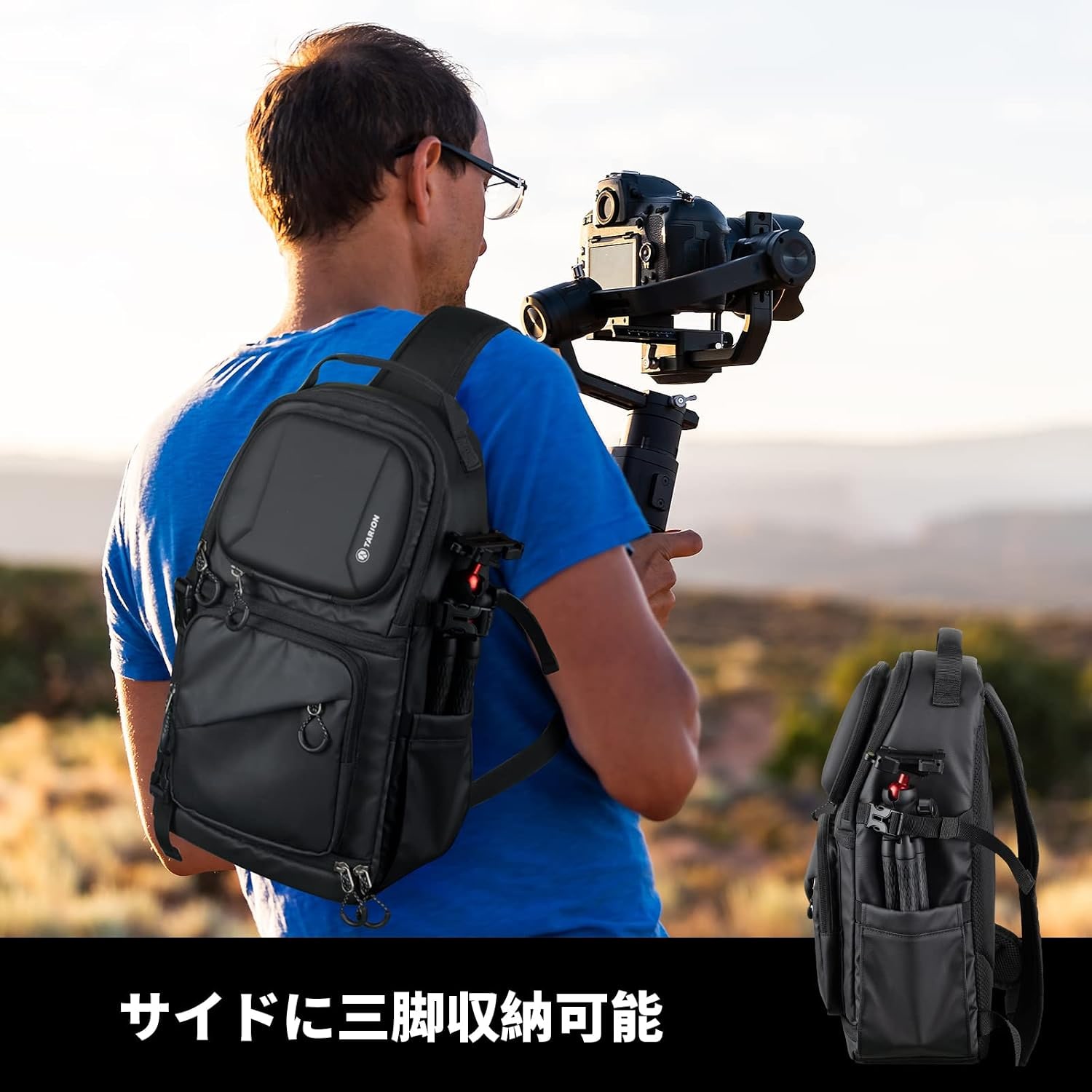
A camera sling bag sits between those two choices. The camera is protected and out of sight while you walk. When you want it, you slide the bag round to your chest, open the side and lift the camera out. The bag never leaves your body. This guide looks at how this particular sling is built and who it suits.
How a sling works
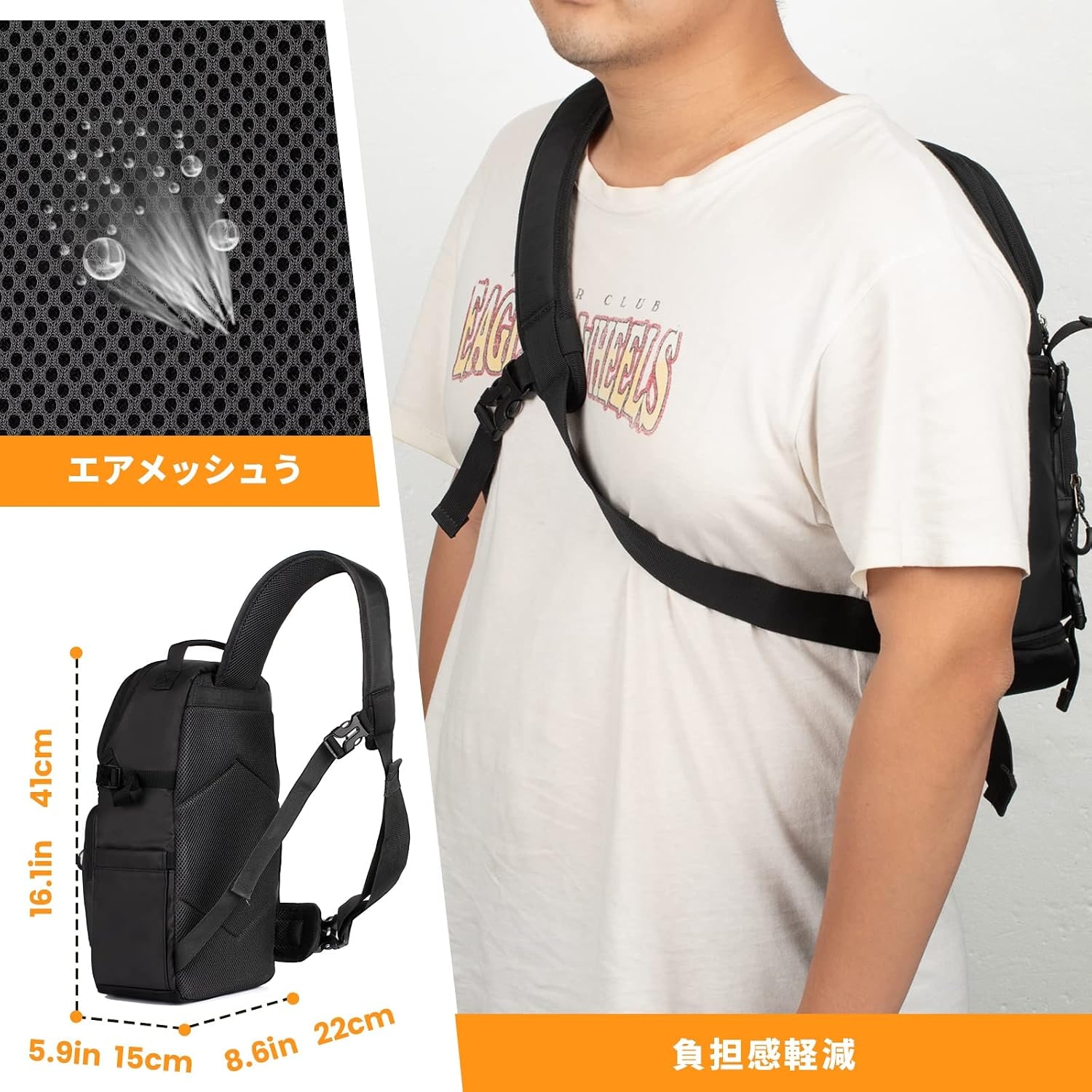
A sling has one main strap that runs across your body, from one shoulder to the opposite hip. On your back it behaves like a small backpack. Pull the strap and the bag rotates to your front, where it becomes a kind of shelf at chest height.
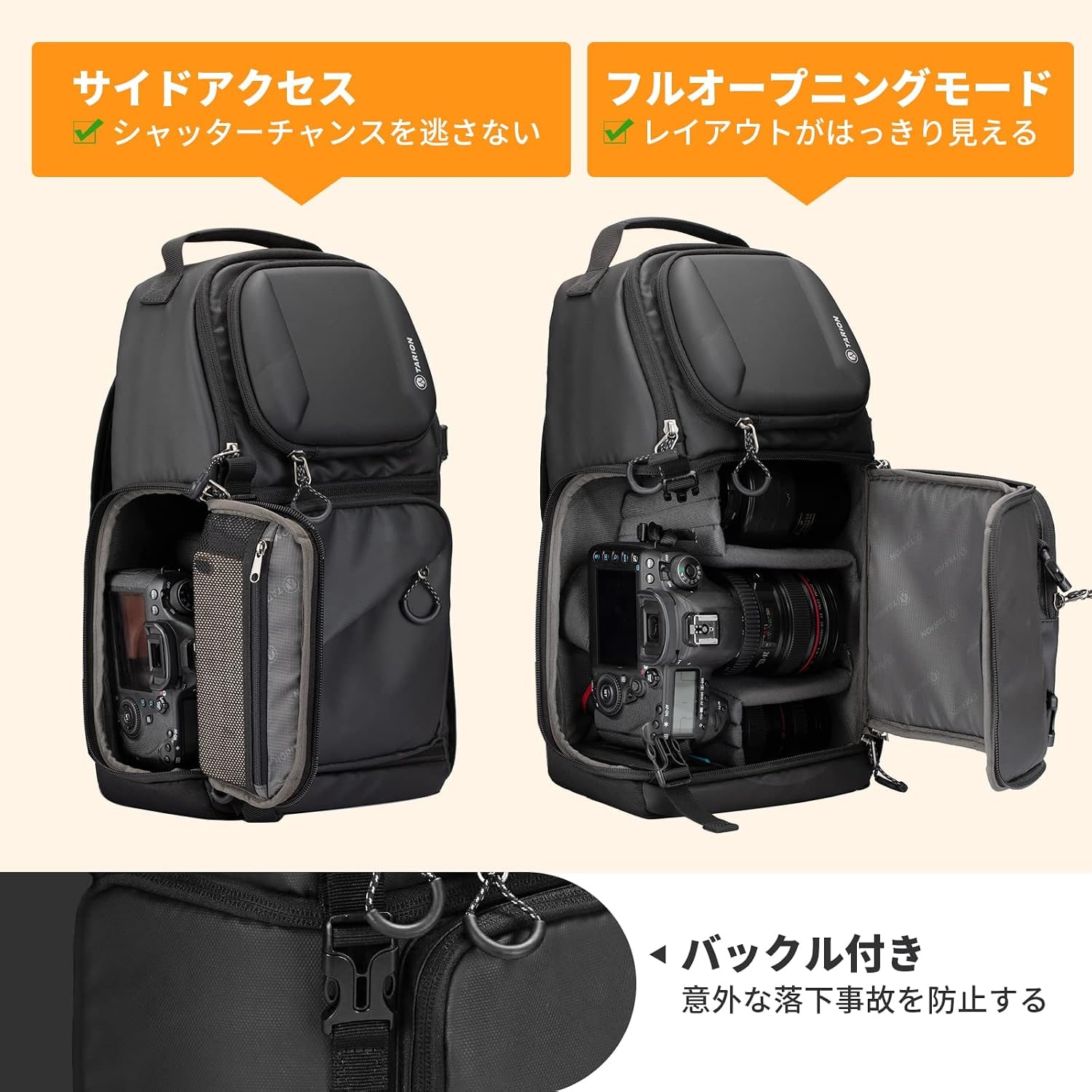
This bag is made for that move. It has a quick side opening, which ends up on top when the bag is at your chest. The maker says you can reach your camera in a few seconds. A chest strap keeps the bag from sliding round when you do not want it to, and two buckles on the sides fasten shut while you are walking.
For packing at home, the bottom compartment opens a full 180 degrees. You lay the bag flat and see everything at once.
What fits inside
The stated capacity is 9 litres. Outside, the bag measures 15 x 22 x 41 cm. Inside, the maker gives 20 x 12.5 x 39 cm.
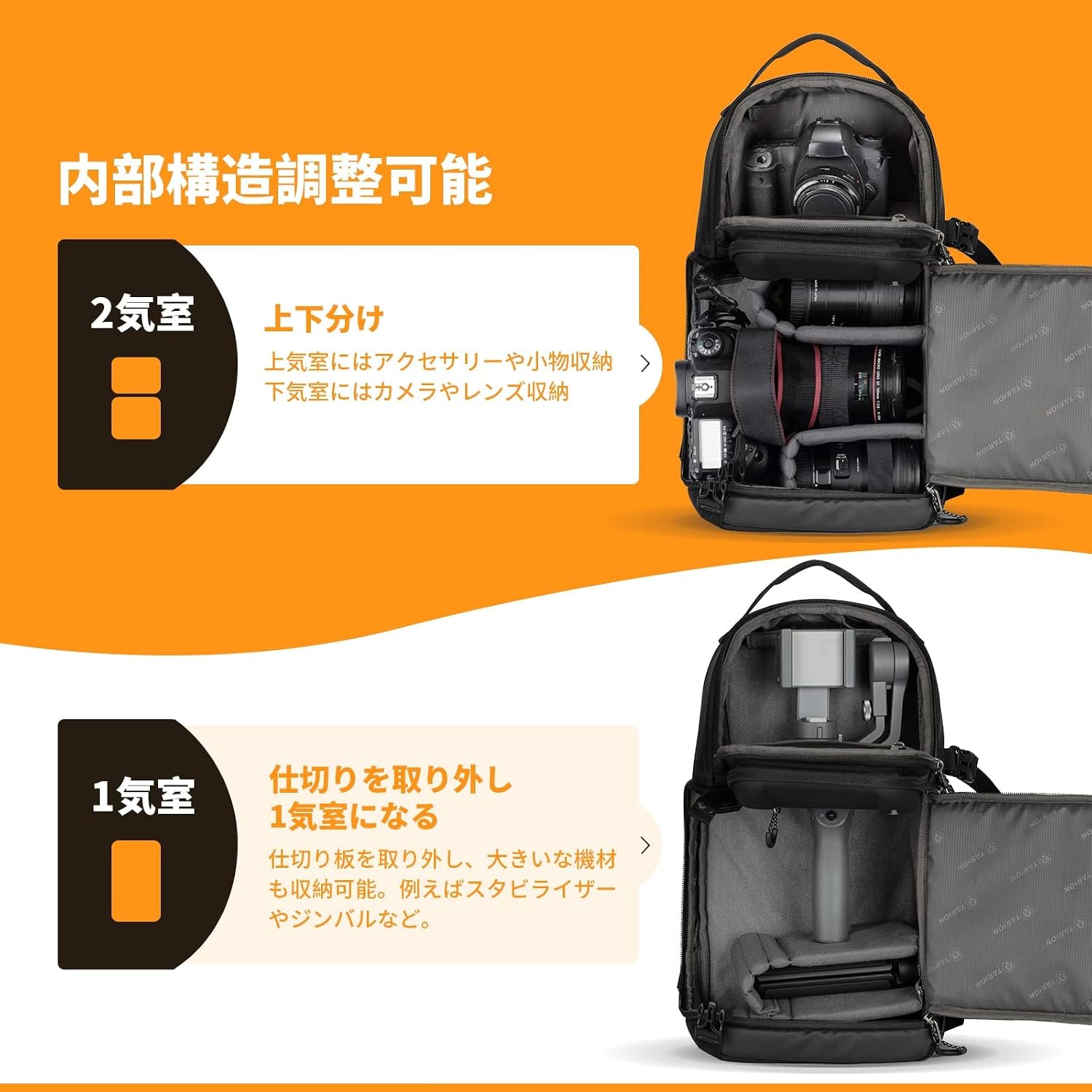
The space is split in two. The top compartment is about 19.8 x 10.9 x 13 cm and holds one DSLR camera. The bottom compartment is about 21.1 x 10.9 x 23.9 cm and holds one camera and two lenses. The maker says it is compatible with 75-300mm lenses.
There is a third way to pack it. Remove the divider between the sections and you get the full height for one long item. The maker says a camera with a 150-600mm telephoto lens fits like this. Bird photographers heading to the wetlands or the reservoir parks will see the appeal, though a lens that size leaves room for little else.
Three dividers are removable. Spend ten minutes on them when the bag arrives. Each item should sit firmly, with padding between it and its neighbour. Loose gear rattles, and rattling gear gets scratched.
The surest way to check fit is with a ruler. Measure your camera with its everyday lens attached, including the grip and the viewfinder hump. Compare the depth with the 12.5 cm inside figure first, because depth is the dimension that most often catches people out.
Protection, and the hard shell top
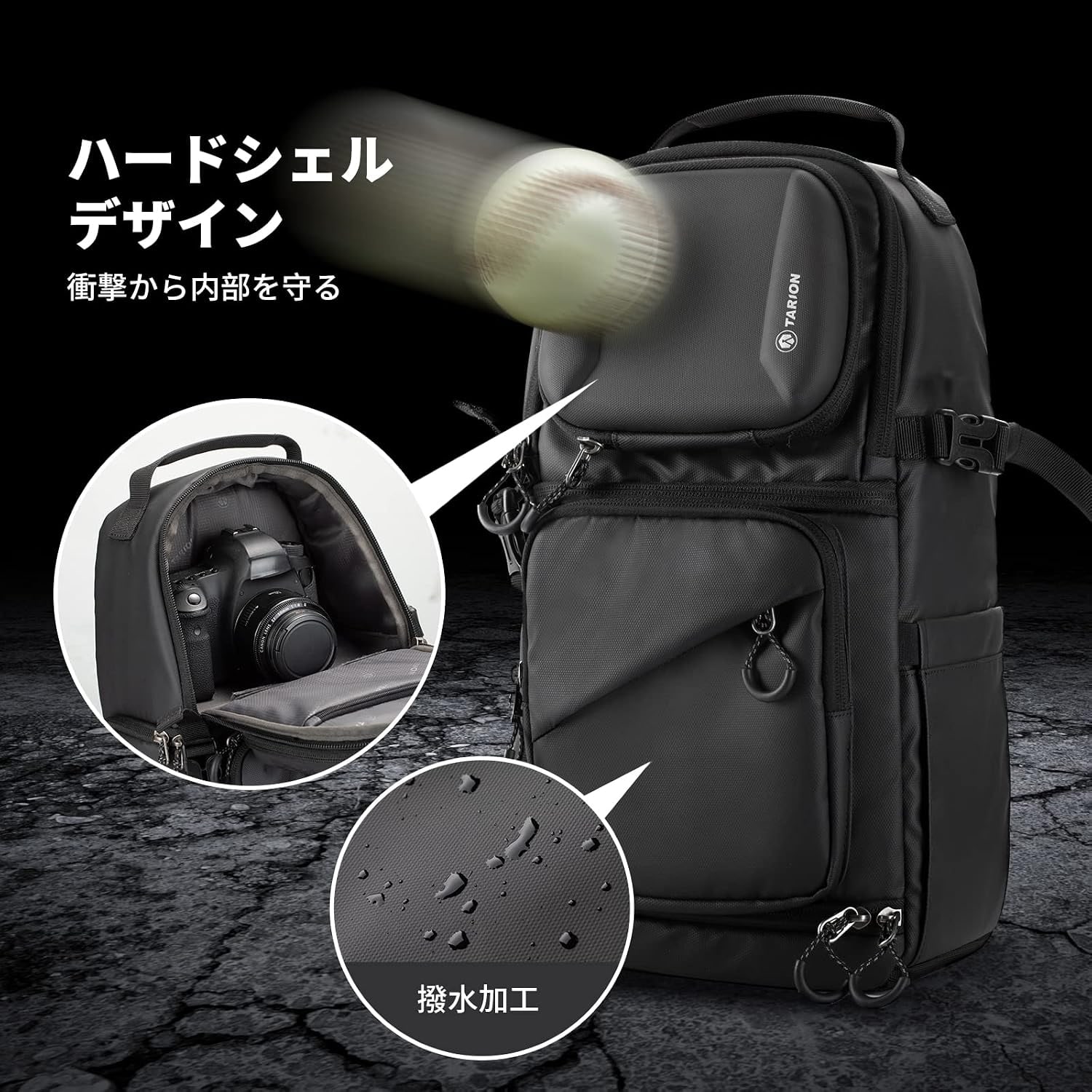
Most camera bags are soft all over. This one has a hard shell on the top pocket. The top is where a bag meets door frames, luggage racks and the edge of the table when you swing it down. A rigid shell spreads those knocks instead of passing them straight to what is beneath. An elastic strap inside the top pocket holds items in place when you open it.
The rest of the bag relies on padding and on how well you set the dividers. The maker does not state how thick the padding is. As with any soft bag, do not sit on it or check it into an aircraft hold with gear inside.
Rain, spray and dust
The fabric is listed as 100% polyester, and the bag is rated water repellent. In practice, light rain and splashes bead on the surface for a while. That covers the dash from the bus stop to the covered walkway.
Water repellent is not the same as sealed. In a real tropical downpour, water finds zips and seams on any fabric bag. For that reason the maker includes a waterproof and dustproof cover pouch as a second layer of protection. Keep it in a front pocket, not at the bottom of the bag, so it is in reach when the first heavy drops land.
Even with the cover, the sensible move in a storm is to get under shelter and wait. Rain here is often fierce but short. No cover makes it wise to stand in the open with a camera on your back.
The dust protection is useful as well. Beaches, construction hoardings and dry trails all throw up fine grit that works into zips.
Carrying it in the heat
A bag can be well made and still be miserable in 32 degree heat with high humidity. Two details help here. The back panel and the shoulder strap are padded with air mesh, which the maker says increases airflow. And a sling simply touches less of your back than a two-strap pack does.
The strap is long and adjustable. Set it so the bag rides high and close when it is on your back. A low, loose sling bounces with every step and pulls on your shoulder.
Be honest about weight. The bag is 0.78 kg empty. Add two bodies and two lenses and you may have four kilograms on one shoulder. That is fine for a morning. For a full day on foot, carry less or pick a two-strap backpack. The maker does not state a maximum load.
The side pocket and small storage
One side pocket takes a water bottle, an umbrella, a tripod or a monopod. A strap above it holds a tripod firmly. There is only the one pocket, so you choose. In Singapore the umbrella usually wins, and a small tripod can ride in your hand.
Two front pockets hold the small things, such as spare batteries, memory cards, a cleaning cloth and a card for the train. The shoulder strap has loops for clipping on small items. All the zip pulls have extended cords, which are easier to grab with damp fingers.
Trains, crowds and travel
On the MRT at peak hour, a bag on your back is a nuisance to others and out of your sight. Swing the sling to your chest before you board. You take up less room, you can see your zips, and nothing fragile is pressed against the person behind you.
For travel, the maker lists this as the recommended use. At 15 x 22 x 41 cm it is compact by cabin bag standards. Airlines differ on size and weight limits and on how many items you can carry on, so check your carrier's rules. A sling worn under a rain jacket or tucked beside you on a coach seat is easy to keep an eye on.
Humidity is the long-term enemy
Rain is obvious. Humidity is slow and does more damage. Lens fungus grows in warm, damp, dark places, and a closed camera bag in a cupboard is all three.
Use the bag for carrying, not for storage. When you get home, take the camera and lenses out. Leave the bag open to air, especially after a wet or sweaty day. Store your gear in a dry cabinet, or in a sealed box with silica gel that you replace or recharge regularly. Wipe the bag with a damp cloth when it is dirty and let it dry fully out of direct sun.
Who it suits
This sling suits street photographers, travellers on short trips and anyone who walks a city with one or two cameras and a couple of lenses. It also suits the person with one camera and one long telephoto lens.
It is less suited to people who carry a laptop, since the maker does not state that there is a sleeve for one. It is also the wrong bag for heavy kits carried all day, where two shoulder straps are kinder to your back.
The short version
This is a 9 litre camera shoulder bag with rain cover pouch, a hard shell top and fast side access. It holds a DSLR in the top and a camera with two lenses in the bottom, or one camera with a long telephoto lens when the divider is out. It weighs 0.78 kg, repels light rain and has air mesh padding for hot days.
Measure your gear against the inside size of 20 x 12.5 x 39 cm before you order. Most orders arrive in 7 to 12 working days by tracked courier, and returns are accepted within 14 days of delivery in resaleable condition.