
The complete guide
Full Frame Sensor And Lens Cleaning, A Practical Guide
A large sensor is a large target
Full frame cameras are bought for what that big sensor can do. The same sensor is also a wide, flat surface sitting just behind the lens mount, and on a mirrorless body it is right there in the open each time the lens comes off. Swap lenses at an outdoor wedding in Fort Canning Park, on a breezy rooftop or on the beach at Sentosa, and something will drift in eventually.
You usually find out later. Stopped down for a landscape or a product shot, small dark blobs appear against the sky or a plain backdrop, in the same spot on every frame. Retouching them out of one photo is fine. Retouching them out of four hundred is a long evening.
The contents, item by item
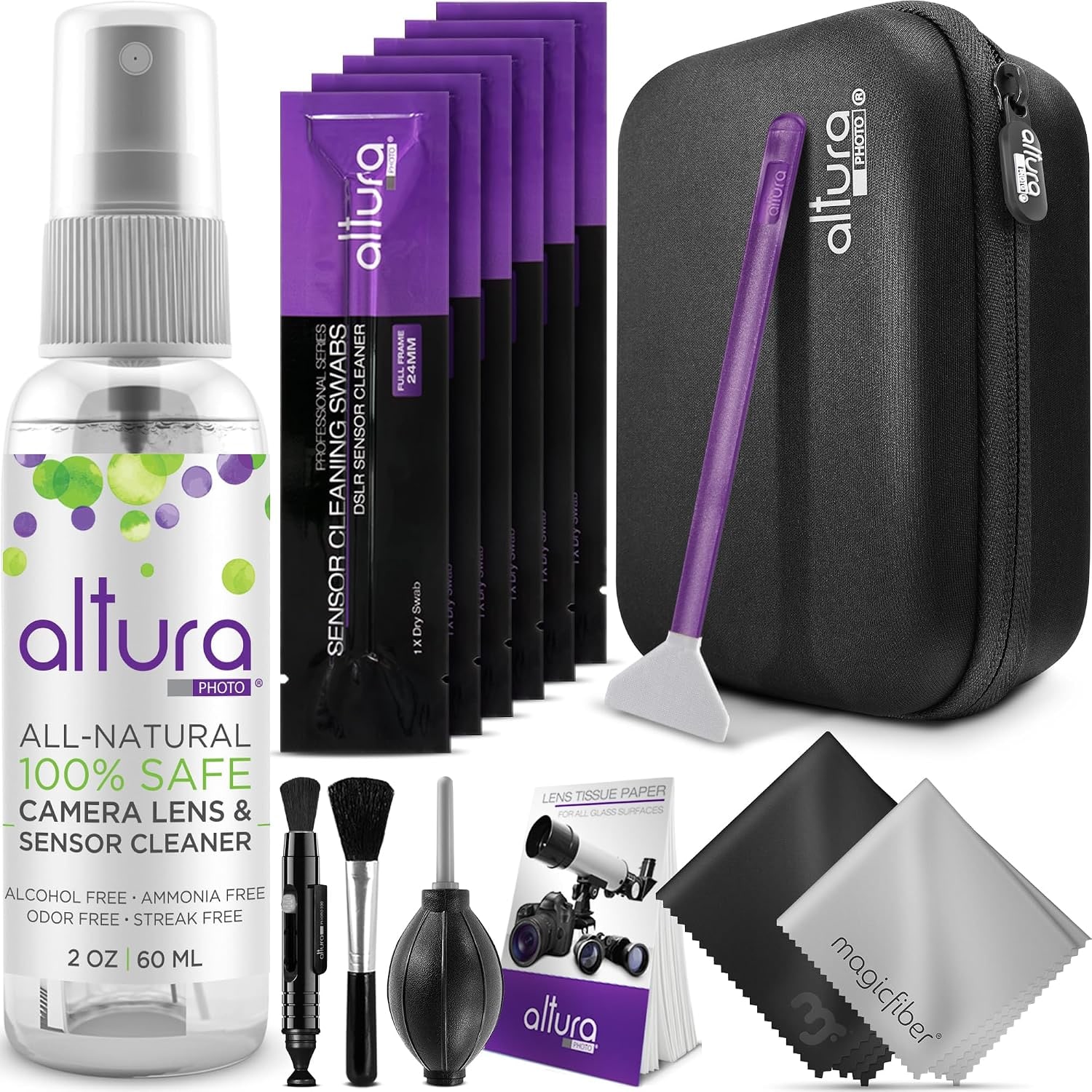
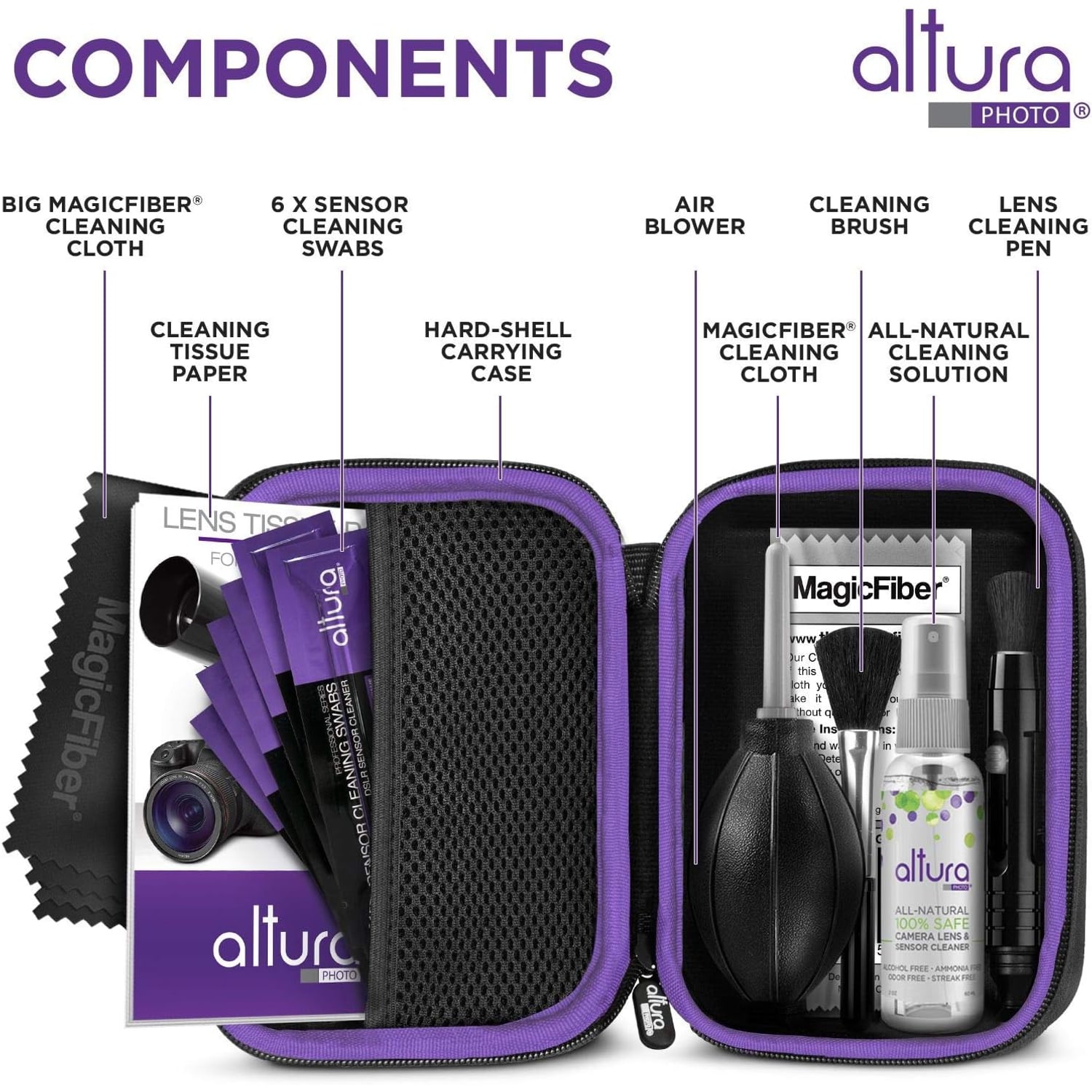
Everything packs into a hard-shell case that zips shut. Here is what the maker lists inside.
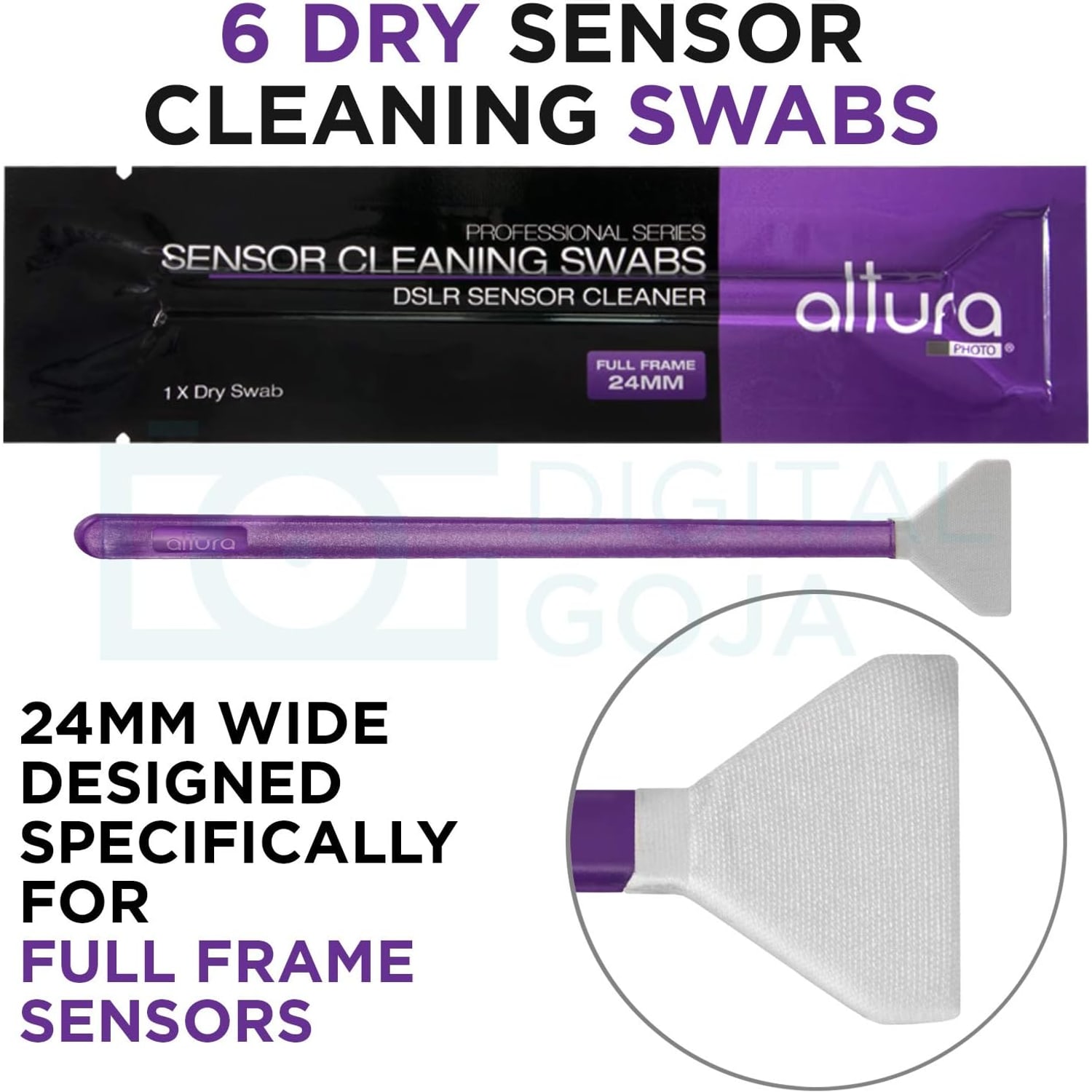
There are six sensor cleaning swabs, each 24mm wide. They are dry, individually wrapped and vacuum sealed, and the maker says they are produced under factory-sealed conditions so that they are clean when you open them.
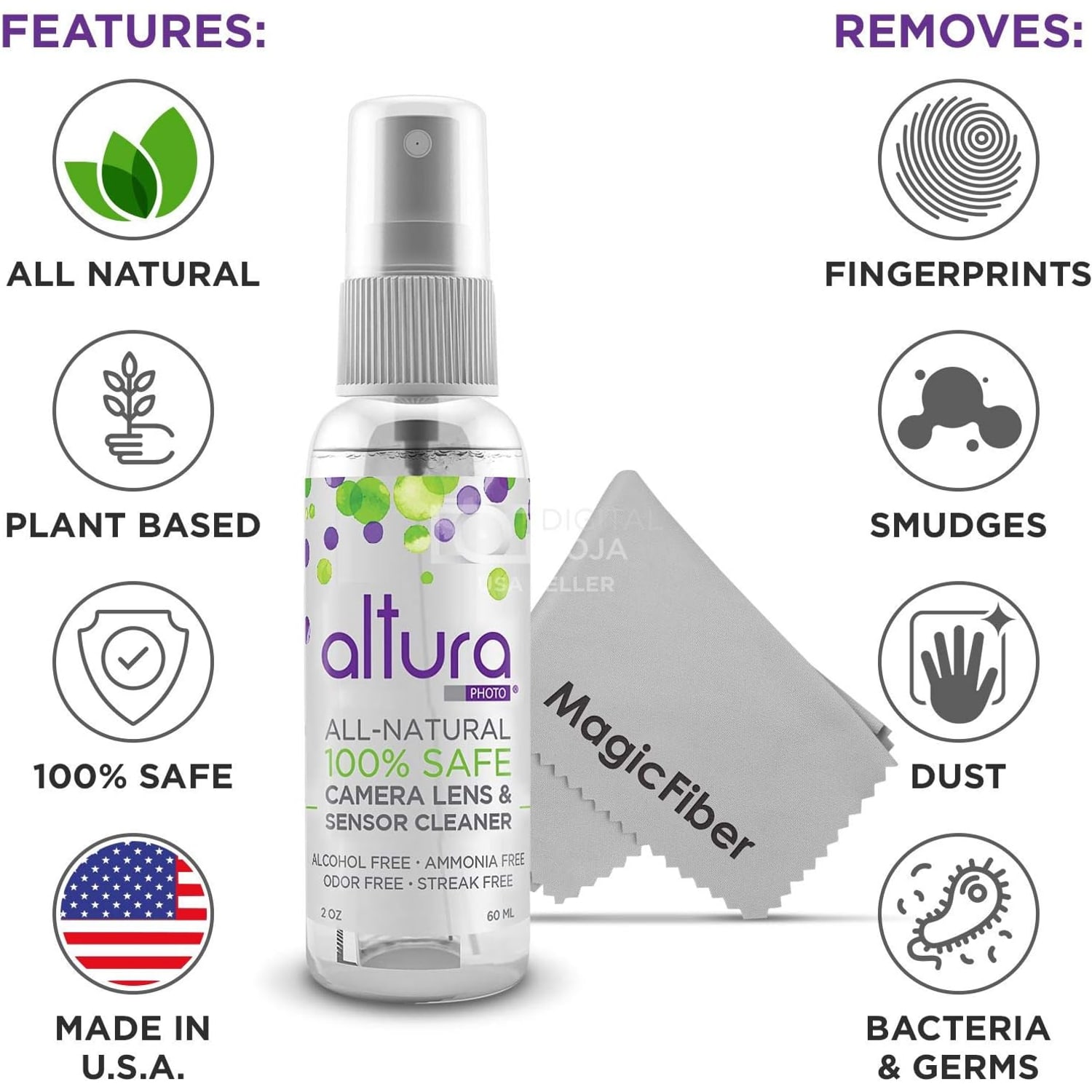
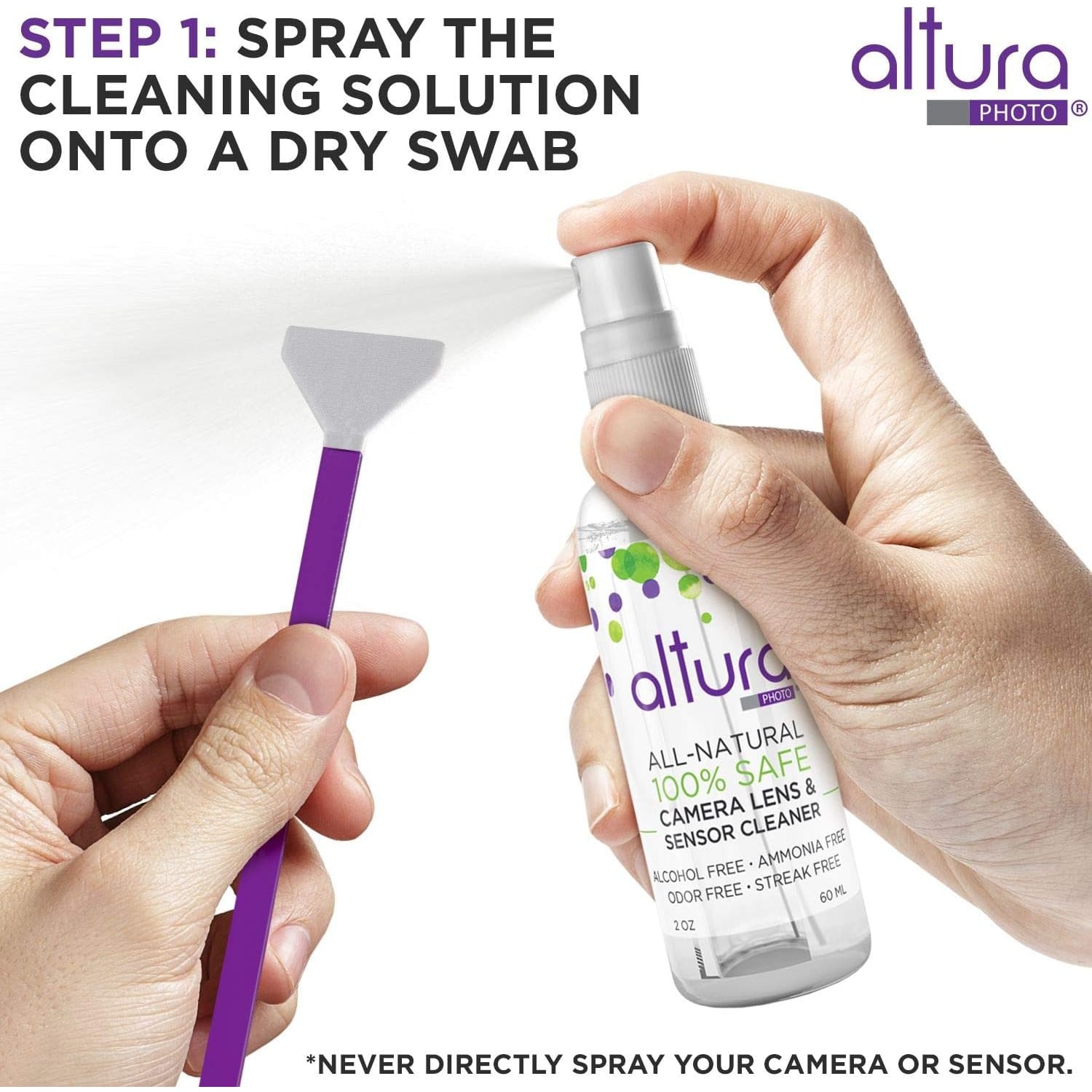
There is one bottle of cleaning solution holding 60 ml. The maker states it contains no alcohol or ammonia and describes the formula as plant based. A full ingredient list is not published.
For glass, you get an air blower, a lens cleaning pen, a lens brush, 50 sheets of lens tissue paper and microfibre cloths. The number of cloths is not stated.
Altogether the kit weighs 340 g. The colour is listed as black and the materials as microfibre and paper. The maker gives no case dimensions, only that the case is compact and meant to sit in a camera bag.
Getting the swab size right
A sensor swab should match the sensor so that a single stroke covers the whole surface, with no missed strip and no overlap marks. The maker sizes these 24mm swabs for full frame sensors.
The cameras it names are the Canon EOS 6D Mark II, EOS 5D Mark IV and EOS-1D X, the Nikon D610, D750, D780, D810, D4 and D5, and the Sony A7 III, A7R IV and A7S II, plus similar full frame cameras. If yours is not on that list, the check is simple. Look up the sensor format in your manual. If it says full frame, or 35mm format, a 24mm swab is the size intended.
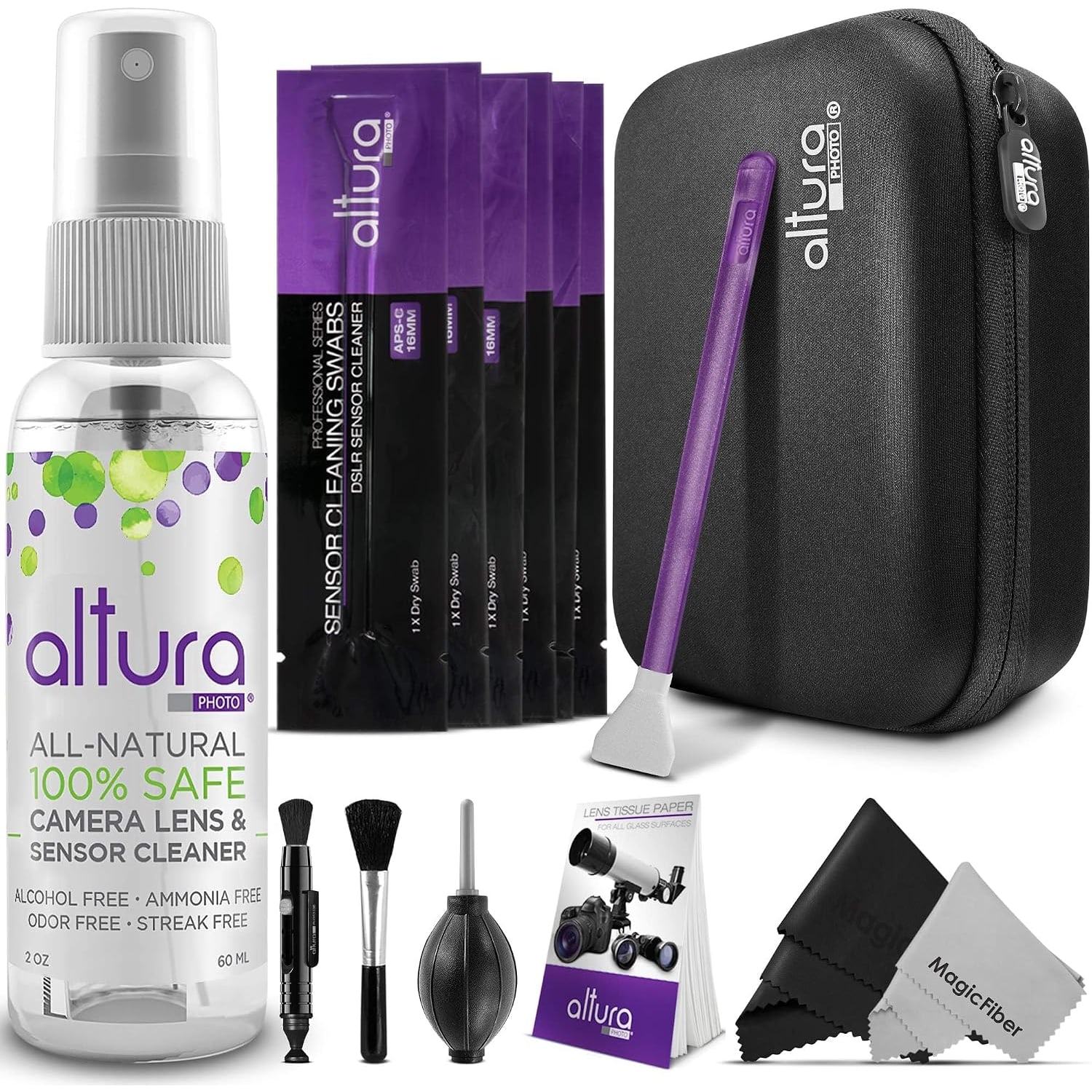
On an APS-C camera these swabs are too wide for the smaller sensor. The maker offers a separate APS-C kit with 16mm swabs for those bodies. It also asks buyers to verify sensor size before ordering, which is good advice, because an opened swab cannot go back in its wrapper.
A sensible order for a clean
Experienced photographers treat sensor cleaning as a ladder. You climb only as far as you need to.
The first rung costs nothing. Many cameras have a built-in sensor cleaning function. Run it, then take a test frame of a blank wall at a small aperture and inspect it on a large screen.
The second rung is the air blower. With the sensor exposed as your manual describes, point the mount at the floor and puff air across it from just outside the opening. Loose dust falls away. Test again.
The third rung is a wet clean with a swab and the solution. This is the only step that touches the sensor, so it is the one to take slowly. Read your camera maker's instructions first and follow them over anything written here. Some makers set out a procedure. Others ask owners not to touch the sensor at all and to use a service centre, and bodies with in-body stabilisation can have their own handling notes. Check too whether self-cleaning affects your warranty.
If you go ahead, moisten the swab lightly, make one slow pass, and use a fresh swab for any second attempt. Then test again.
No kit can promise a perfect sensor. Some marks are oil, some particles are stuck fast, and those are jobs for a technician. Knowing when to stop is part of doing it well.
What the solution is, and is not
It helps to be plain about the bottle, since fluid is the part people worry about. It holds 60 ml. The maker states it is free of alcohol and ammonia and describes it as intended for coated lenses and digital imaging sensors.
That is the extent of what is published. The maker does not give a shelf life, and we will not guess one. Use the fluid sparingly. Most streaks on glass come from too much liquid, so a small amount on a tissue or swab is the place to start. Do not pour it onto a lens or into a camera.
Looking after lenses with the rest of the kit
Most days you will reach for the lens tools, not the swabs.
Grit comes first. Blow it away, then flick off anything stubborn with the lens brush. Only then wipe. Dragging a cloth over a dusty lens grinds that dust into the coating.
The lens pen handles fingerprints on front and rear elements, and it is quick enough to use between shots. For heavier smears, such as dried sea spray or sunscreen, fold a sheet of lens tissue, add a drop of solution and wipe from the centre outwards. Throw the sheet away afterwards. The microfibre cloths are for a final dry polish and for the rear screen and viewfinder.
Life in a humid city
Singapore's air is warm and wet nearly every day of the year, and photographers here plan around it. Lens fungus is the concern you hear about most. It grows where moisture and darkness sit together for a long time, like a lens forgotten in a wardrobe or a camera bag left zipped after a rainy shoot.
Two habits are common among local shooters: keep gear in a dry cabinet, and clean it regularly. This kit helps with the second. It wipes away the sweat, salt and fingerprints that build up on outer surfaces.
It does not prevent fungus and it cannot treat fungus inside a lens. If you see fine branching threads behind the front element, that lens needs a repair technician. Keep your expectations of any cleaning kit at that level and it will not let you down.
One practical point: let a camera adjust before you clean it. Carrying gear from an air-conditioned room out to a balcony fogs the glass in seconds. Clean indoors, with the fan off and the windows shut, once any mist has cleared.
Is this the right kit for you
It is a good match if you shoot a full frame DSLR or mirrorless body and want lens and sensor tools in one case. Event and wedding photographers who change lenses all day, landscape shooters who work at small apertures, and anyone packing for a trip will use most of what is here.
It is a poor match in a few cases. APS-C owners need the 16mm version. Owners of fixed-lens cameras cannot use the swabs. Photographers who already own a blower, pen and cloths may only need a pack of swabs.
There is also the question of nerve. If you would never touch your own sensor, buy the kit only if the lens tools alone justify the price to you, and leave sensor work to a service centre.
Storage and restocking
Keep the case zipped, dry and out of the heat. A car parked in the sun is a bad place for a bottle of fluid. Leave swabs sealed until the second you need them, cap the lens pen after use, and keep fingers off the brush bristles.
Wash microfibre cloths by hand or on a gentle cycle without fabric softener, and let them air dry. When the six swabs and fifty tissues run out, the blower, brush, pen and case are still good. Buy more 24mm swabs and carry on.
The short version
This full frame camera cleaning kit packs six sealed 24mm dry sensor swabs, a 60 ml bottle of solution the maker says is free of alcohol and ammonia, an air blower, a lens pen, a lens brush, 50 lens tissues and microfibre cloths into a zipped hard case weighing 340 g.
Check that your camera is full frame. Climb the ladder one rung at a time: built-in cleaning, blower, then swab. Put your camera maker's instructions ahead of everything else, and use a service centre if a wet clean feels like too much. A dry cabinet handles humidity. This kit handles the dust and fingerprints.