
The complete guide
How To Choose A Wireless Endoscope For Pipes, Engines And Tight Gaps
The trouble you cannot see
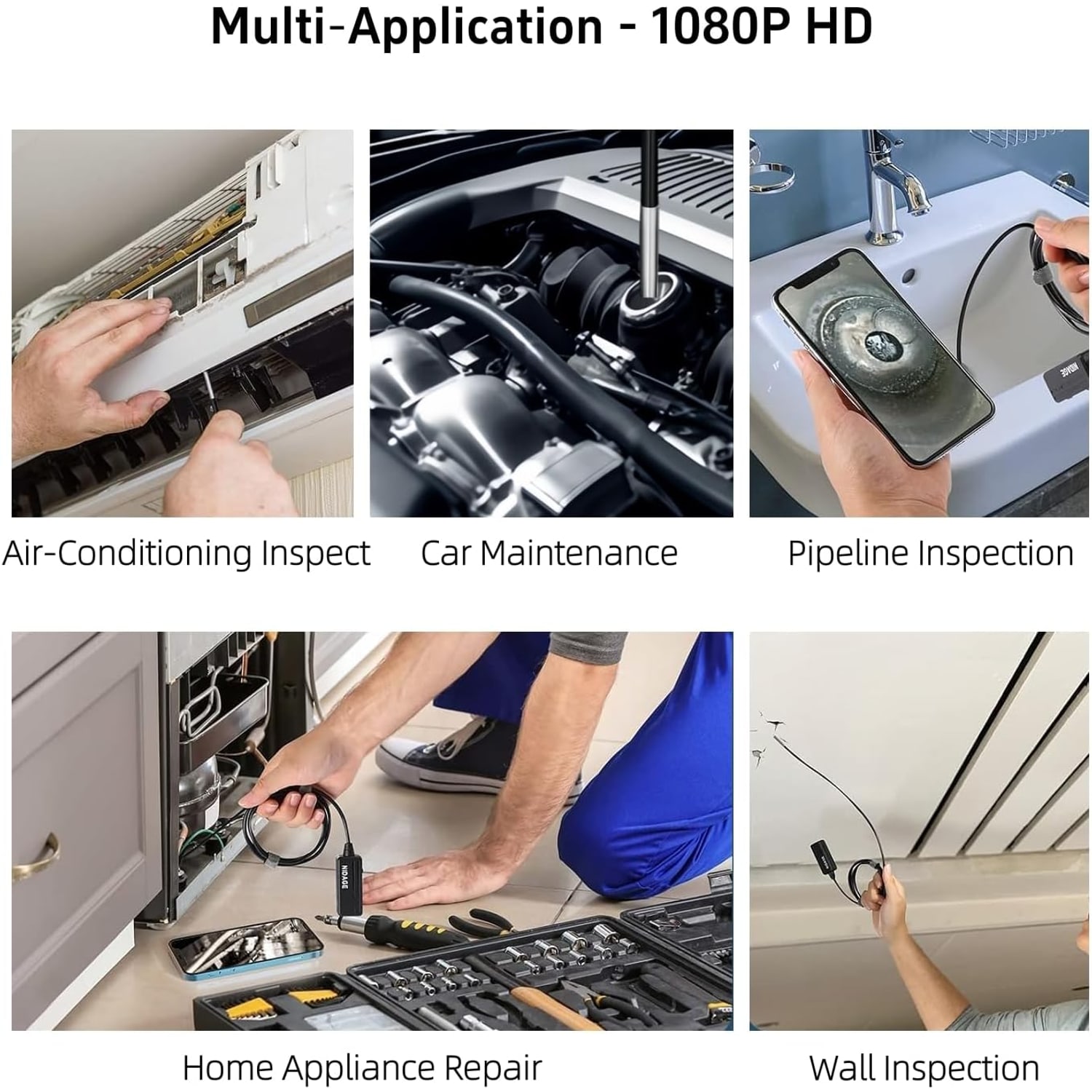
Most small repairs at home are easy once you know what is wrong. The slow part is finding out. Water backs up in the kitchen sink and you do not know if it is grease near the top or something lodged further down. A bolt slips off the spanner and vanishes into the engine bay. A brown stain appears on the false ceiling below the aircon and nobody can say where the drip starts.
The usual answer is to take things apart. Pull the trap off, remove the engine cover, cut an inspection hole. Sometimes that is needed. Often it is half an hour of work to learn something a camera could have shown you in two minutes.
That is the whole case for an inspection camera. It is a small lens with its own lights on the end of a cable. You feed it in, you look, and then you decide what to take apart, if anything. This guide covers how the wireless type works and which figures matter when you pick one.
One thing first. The word endoscope is borrowed from medicine, but this is a tool for pipes, machines and cavities. It is not a medical device. It must never be used on a person or an animal.
How a WiFi endoscope works
There are two common designs. One has a screen built into a handset. The other has no screen at all and uses your phone. This model is the second kind.
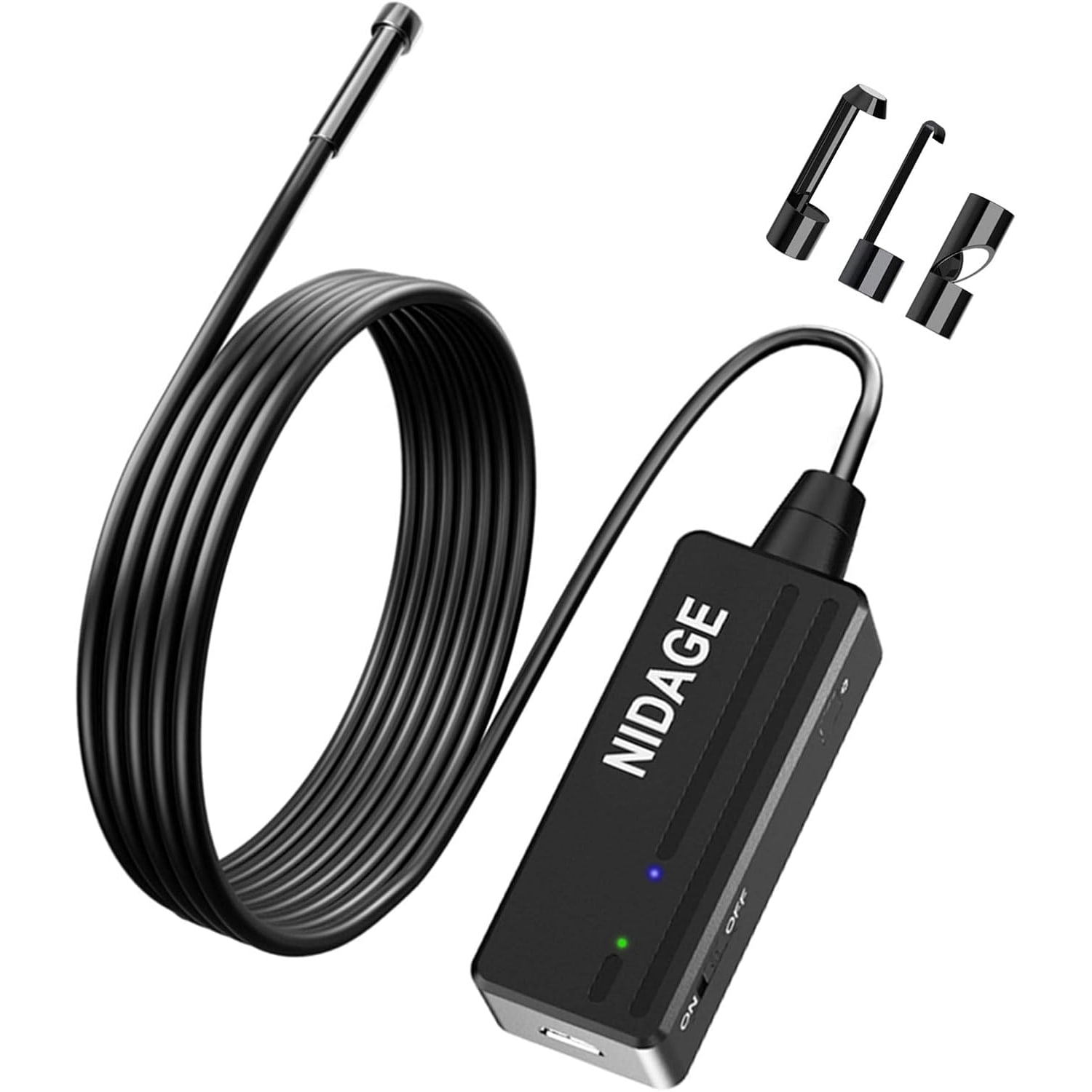
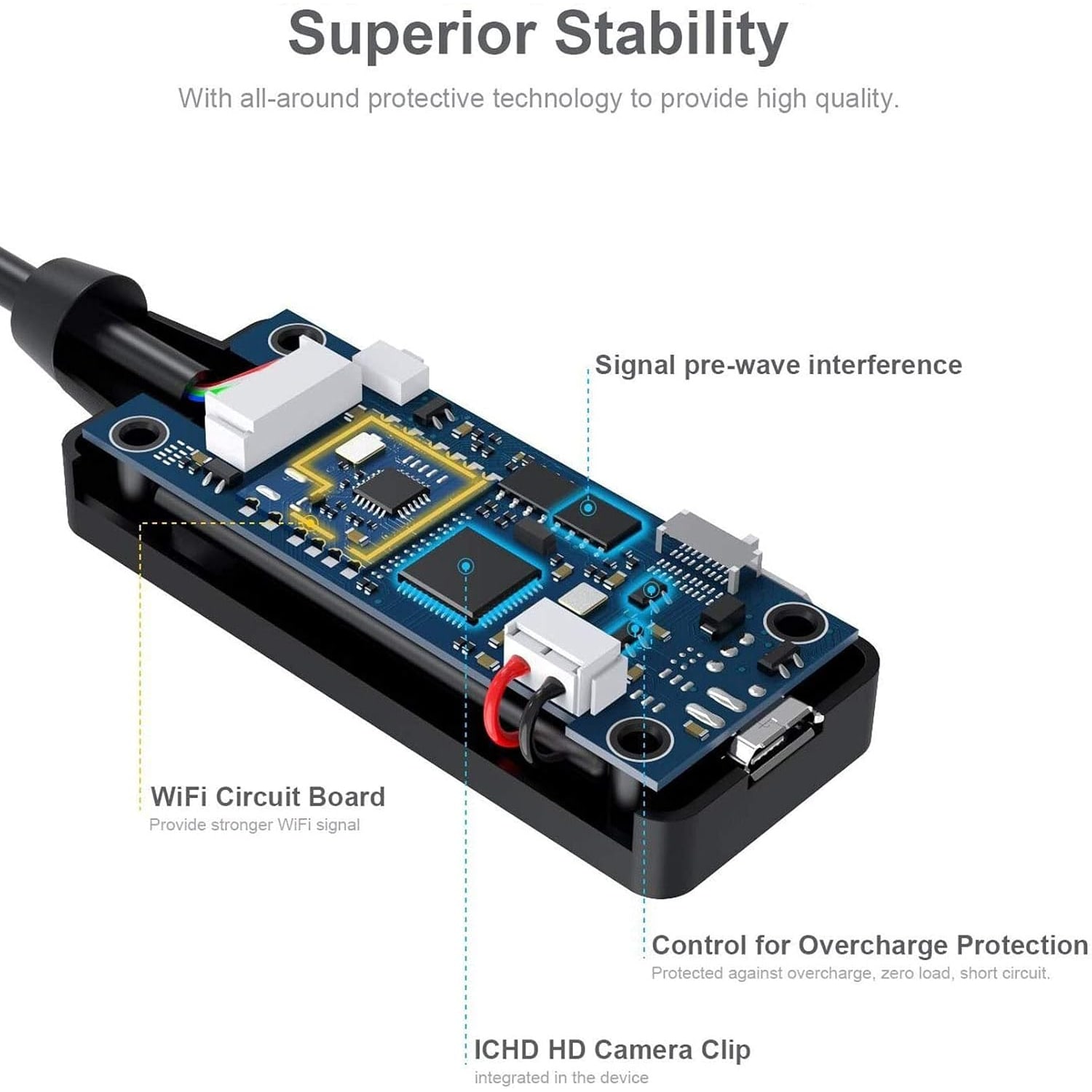
The cable runs from the camera head back to a small transmitter with a battery inside. Hold the button for about five seconds, a blue light comes on, and the transmitter starts broadcasting its own WiFi signal. You join that signal from your phone or tablet, open the maker's app, and the live view fills the screen.
Because the camera makes its own signal, you do not need a router or mobile data. It works the same at the kitchen sink as it does in a multi-storey car park. The maker supports Android 2.3 or later and iOS 6.0 or later, gives a range of within 10m, and says one or two devices can connect together. That last point is more useful than it looks. Feeding a cable and watching a screen at the same time is awkward, so having a second person watch on a tablet makes the job calmer.
The trade-off is simple. A phone screen is larger and sharper than most built-in displays, and you already own it. But you need a free hand for the phone, and you will not want to hold it with greasy fingers. A cheap phone stand, or a helper, fixes that.
Probe diameter comes first
If the camera head does not fit the hole, nothing else about the camera matters. So start with diameter.
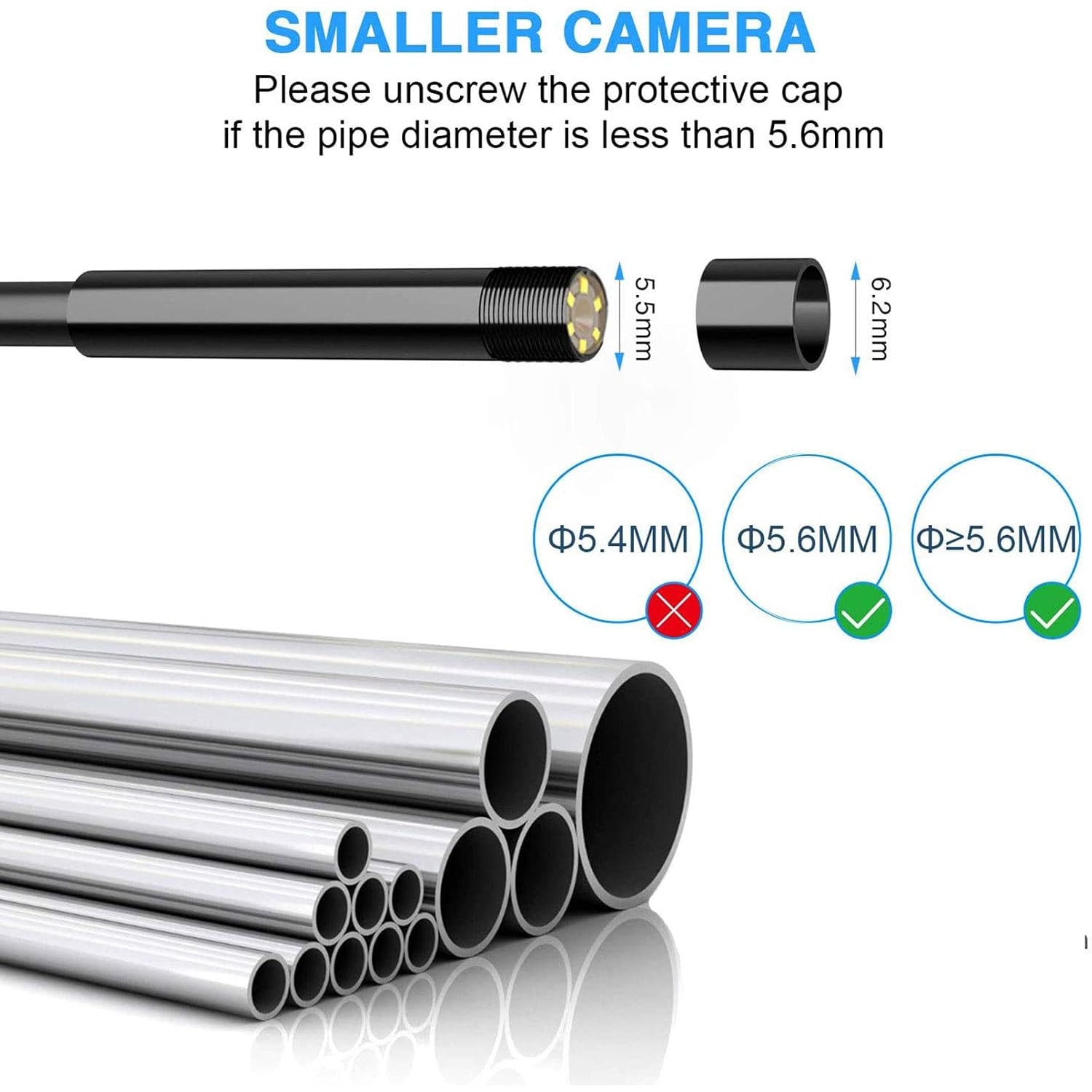
Many inspection cameras use a head of around 8mm. This one is 5.5mm. The difference sounds small on paper and is large in practice, because openings in real equipment are rarely generous. Think of the gap beside a cabinet carcass, a small drain outlet, the space between hoses in an engine bay, or a cable entry in trunking. A slimmer head simply gets through more of them.
Measure before you buy. Find the narrowest point on the route, not the opening itself, and leave a little spare room. A probe that fits with nothing to spare will jam the moment the cable has to turn.
Cable length and stiffness
The cable here is 1.5m long and semi-rigid. Both facts shape what you can do with it.
Semi-rigid means the cable bends by hand and then holds its shape. A soft cable is fine for dropping straight down a vertical pipe, but push it sideways and it folds up. A semi-rigid cable lets you form a curve first, then slide it in so the lens points where you want. It is the difference between steering and guessing.
Length is about matching the job. At 1.5m you can reach through a sink trap, deep into an engine bay, behind a washing machine, or along a short run of aircon trunking from an access panel. That covers most household and car work. It does not cover a long drain line running under a floor. If you need to follow a pipe for several metres, choose a 5m model. A short cable is easier to control and store, so do not buy more length than the job needs.
Picture, focus and light
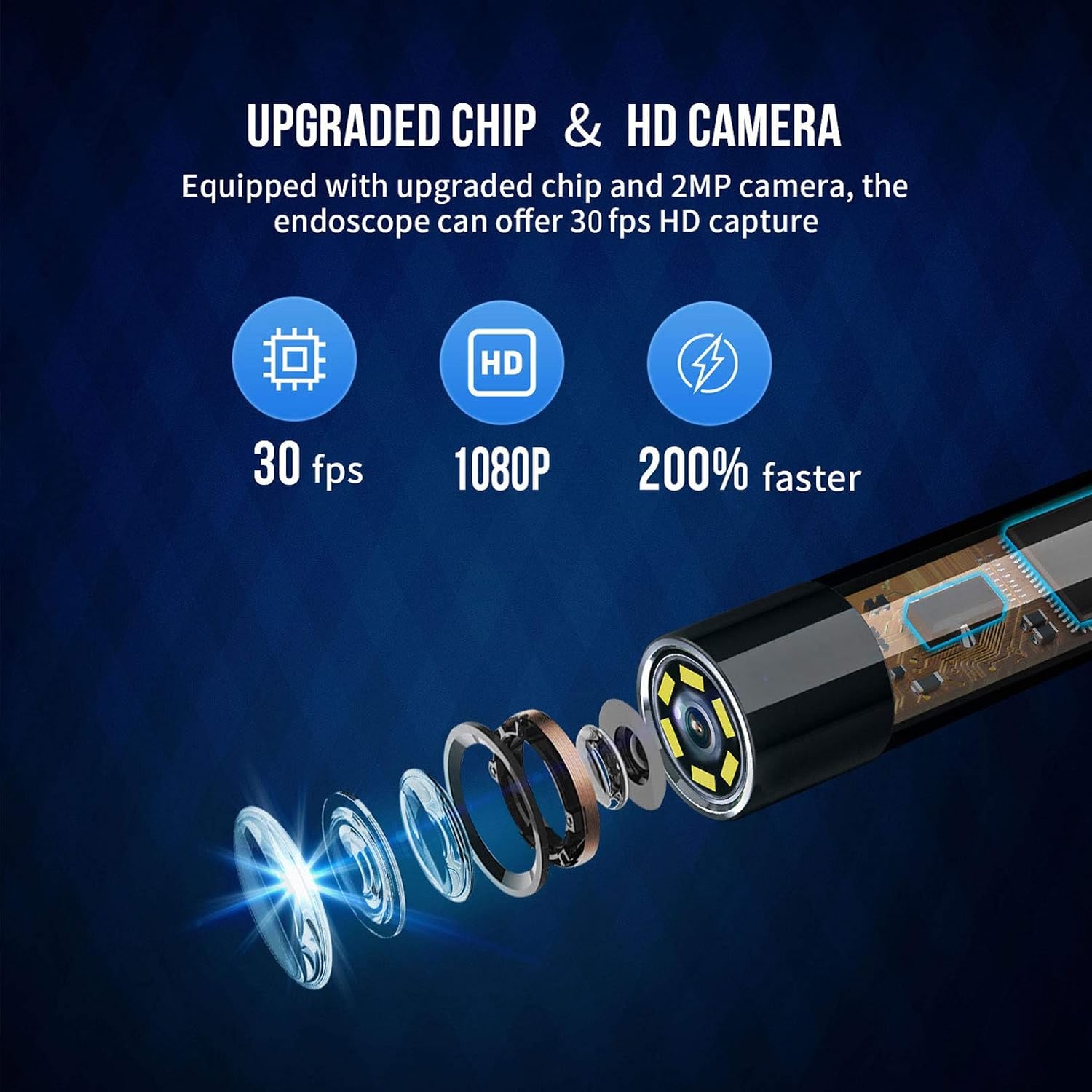
The sensor is a 2MP CMOS with three settings, 1920 x 1080, 1280 x 720 and 640 x 480. Use the highest one when you are hunting for fine detail like a hairline crack or the first signs of corrosion. If the live view lags on an older phone, a lower setting usually smooths it out.
Focus is fixed, and the maker gives a focal distance of 3 to 10cm. That suits the way these cameras are used. Inside a pipe, the wall is only a few centimetres from the lens. If the picture looks soft, you are either too close or too far, so ease the probe back or forward until the target sharpens. The angle of view is listed as 90 degrees.
Lighting decides whether you see anything at all. Six LEDs surround the lens and the brightness is adjustable. New users tend to run them at full power, then wonder why the screen is white. Wet pipe walls, chrome and polished metal throw the light straight back. Turn the LEDs down until the surface shows texture again.
You can save what you see as AVI video or as still snapshots. There is no sound recording. A saved clip is useful when you want a second opinion from a plumber or mechanic, since you can send it instead of describing it.
Water, heat and where not to use it
The maker lists this camera as waterproof and says it suits damp or wet areas. It does not give an IP rating, a depth or a time limit, and it does not say which parts are covered. The sensible reading is that the probe can go into a wet pipe, while the transmitter, with its battery and charging port, stays dry and out of the water.
Heat is a separate question. The maker does not state a heat rating. Let an engine cool fully before you put the probe near it, and keep the cable away from fans and belts.
Take care around electricity too. Switch off the circuit before you feed any cable into trunking, a switch box or a ceiling void near wiring.
Battery and charging
Power comes from a 450mAh rechargeable lithium-ion battery inside the transmitter. The maker does not state how long a charge lasts, so top it up before a job that might run long. A charge cable is in the box. No wall charger is listed, so use a USB charger or a computer port you already own.
Who it suits
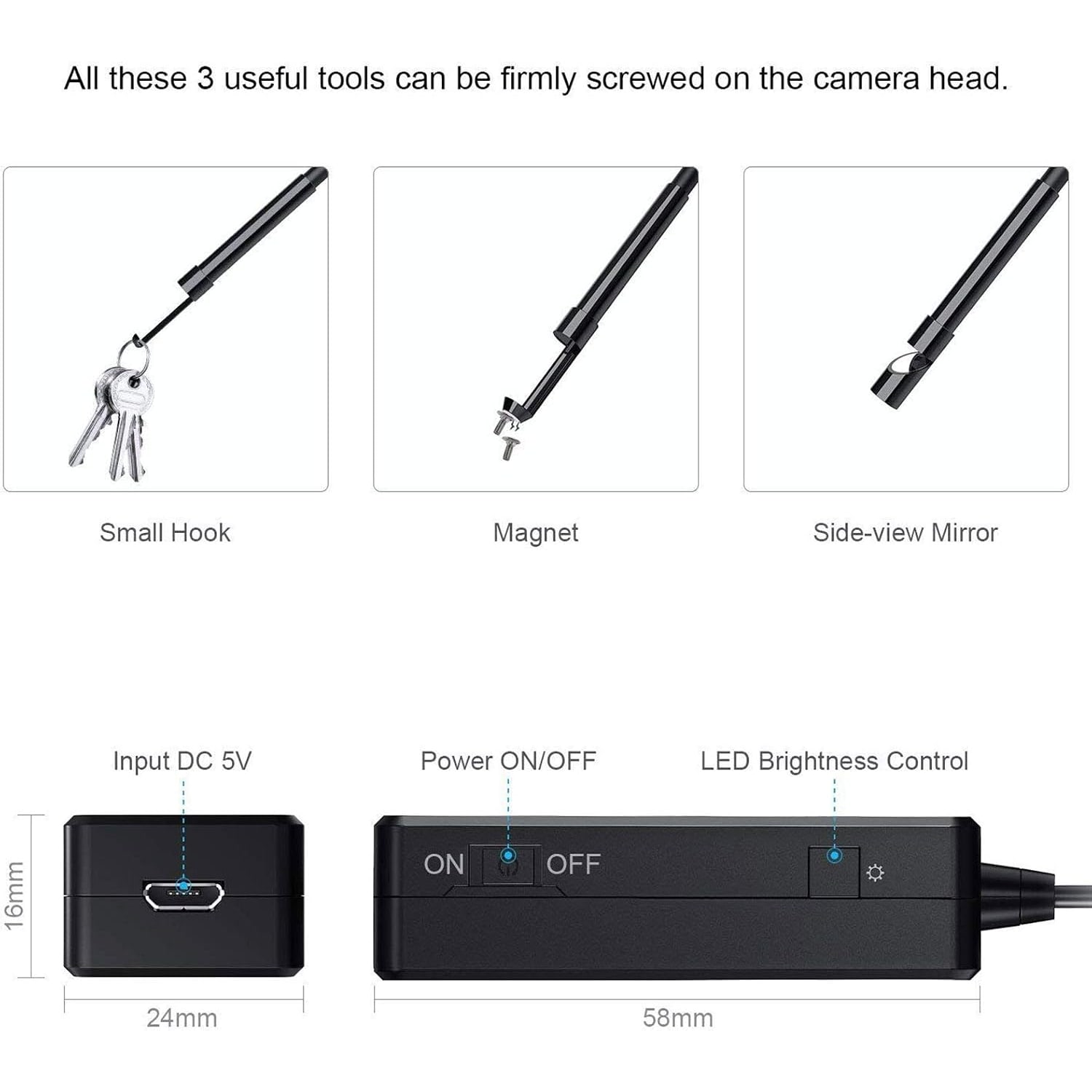
This camera fits people who do their own small repairs and want to see before they dismantle. Home owners in a flat or condominium will use it on sinks, floor traps, aircon drains and the dead space behind built-in furniture. Car and motorbike owners will use it in the engine bay and under seats. The clip-on hook and magnet earn their place the first time a screw or an earring drops somewhere awkward.
Look elsewhere if you need to follow a long drain, since 1.5m will not get you there. A tradesperson who inspects pipes all day may prefer a model with its own screen, so the phone stays clean in a pocket. And if you need a stated IP rating for regular underwater work, pick a model whose maker gives one.
Care in a humid climate
Humidity is hard on small electronics, and a cable that has been down a drain is worse. Wipe the probe and cable with a damp cloth after each dirty job, then dry them fully. Clean the lens with a dry microfibre cloth. Coil the cable in wide loops, because a sharp kink weakens it at that point. Store everything in a dry cupboard, away from direct sun and not in a hot car boot.
The short version
Pick an inspection camera by fit first. This one has a 5.5mm head on a 1.5m semi-rigid cable, which suits narrow openings and short reaches. It shows a picture of up to 1920 x 1080 on your own phone over WiFi, lights the view with six adjustable LEDs, and comes with a hook, a magnet and a side mirror.
Check three things before ordering: the narrowest gap on your route, how far in you need to see, and whether you are happy using your phone as the screen. If all three line up, it will save you taking things apart just to have a look.