
The complete guide
How to Choose a Battery Security Camera with Floodlight for the Porch or Gate
The trouble with the dark
Most outdoor cameras are bought for what happens after sunset. That is also when they perform worst. Without light, a camera falls back on infrared, which gives a grey, flat picture. You can tell that someone was there. You often cannot tell much more than that.
There is a second problem. An infrared camera does nothing for the person standing at the gate. A visitor fumbles for the bell in the dark, and you fumble for your keys.
A battery security camera with floodlight deals with both. It brings its own light, and it switches that light on when someone arrives.
What the floodlight actually does
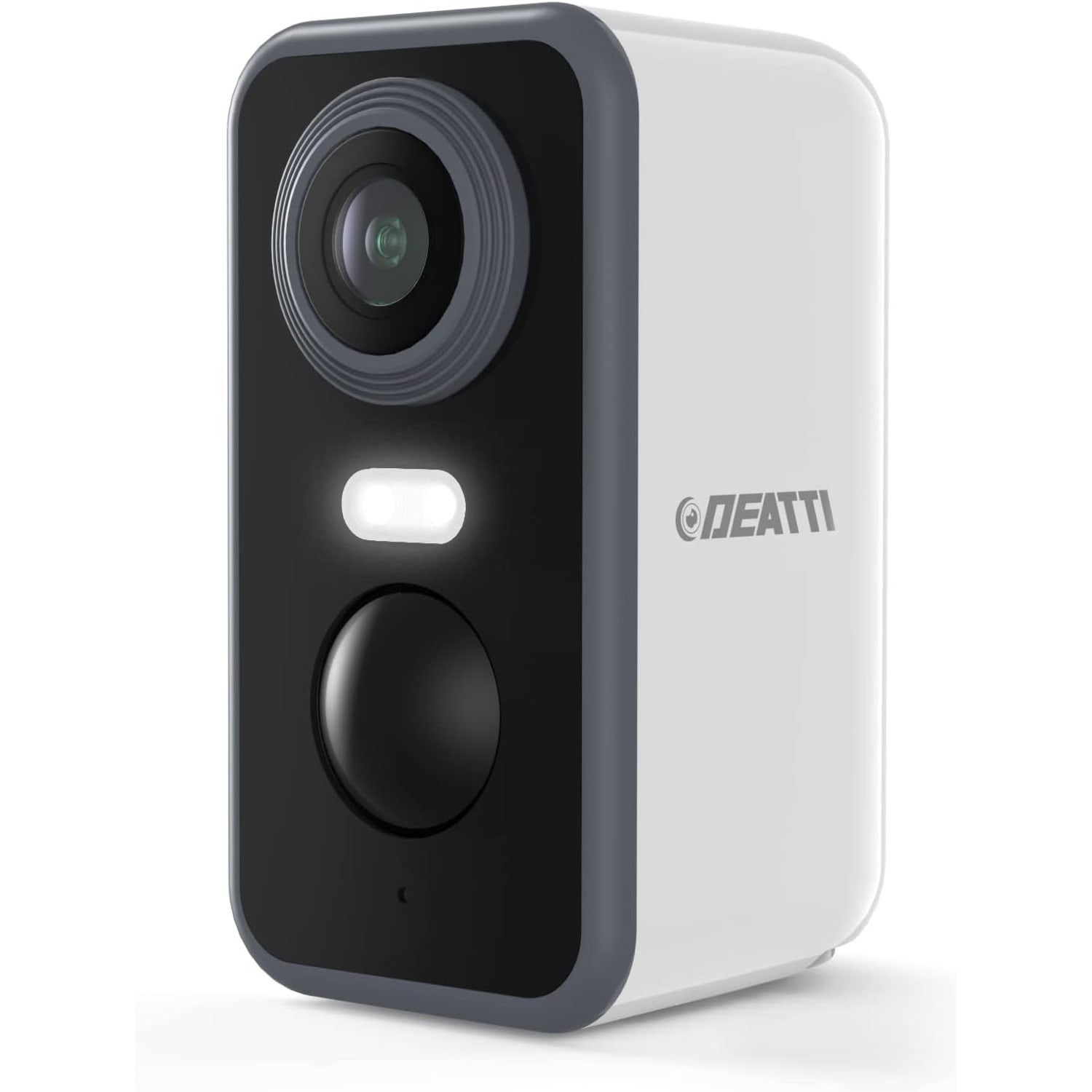
This camera has spotlights built into its body. When the motion sensor triggers at night, they can come on. Two things follow.
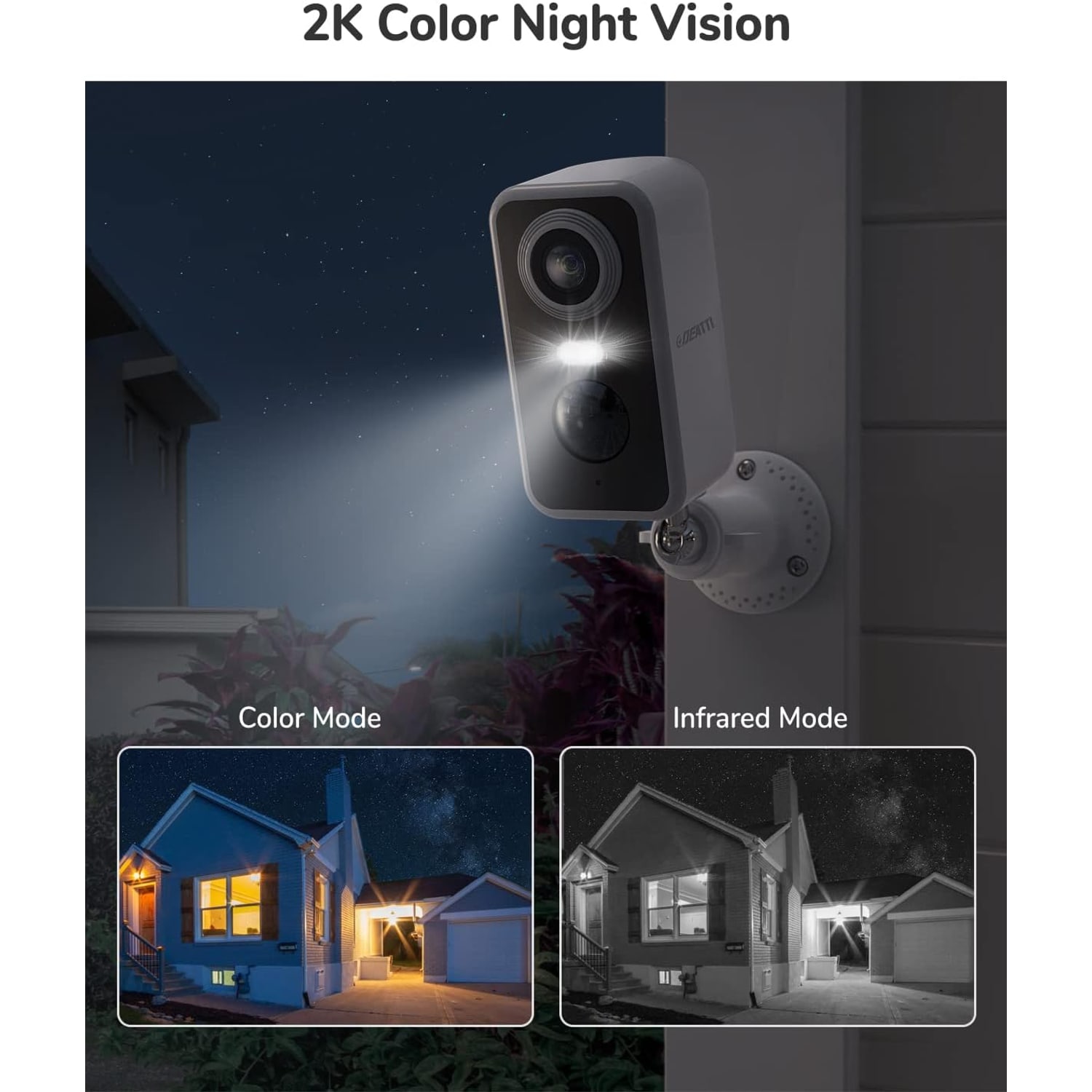
First, the camera can record in colour. The maker lists 2K colour night vision using the spotlights. Colour tells you a lot that grey does not: the shirt, the car, the logo on a delivery bag.
Second, the area in front of the camera is lit for the person standing in it. If that person is you, coming home late with shopping bags, the light is simply useful. You can see the keyhole.
The maker does not state how bright the light is in lumens, and it is powered by a battery, so think of it as a light for a doorway, a gate or a car porch. It will not replace your porch lamp.
The siren, and when to leave it off
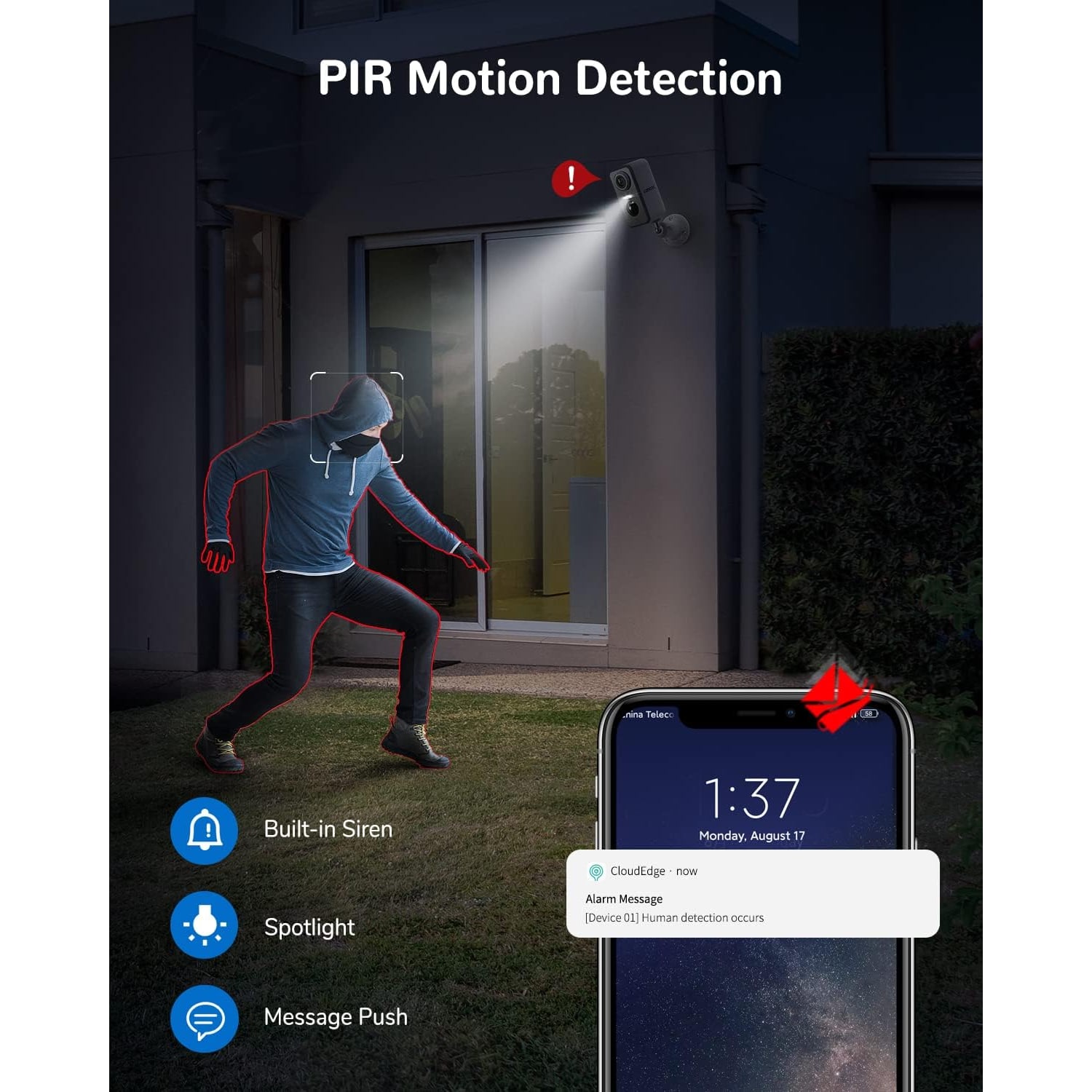
The camera also has a siren. The maker describes a smart siren alarm that works together with the floodlight and a phone notification.
A siren is a blunt tool. On a detached house with space around it, some owners like having it. In a terrace row, a cluster development or anywhere with shared walls, a siren triggered by the neighbour's cat at 3 am will not make you popular. Our suggestion is to go through the alarm settings in the app on the first day, and to think hard about your neighbours before you let the siren sound.
Wire-free, with options
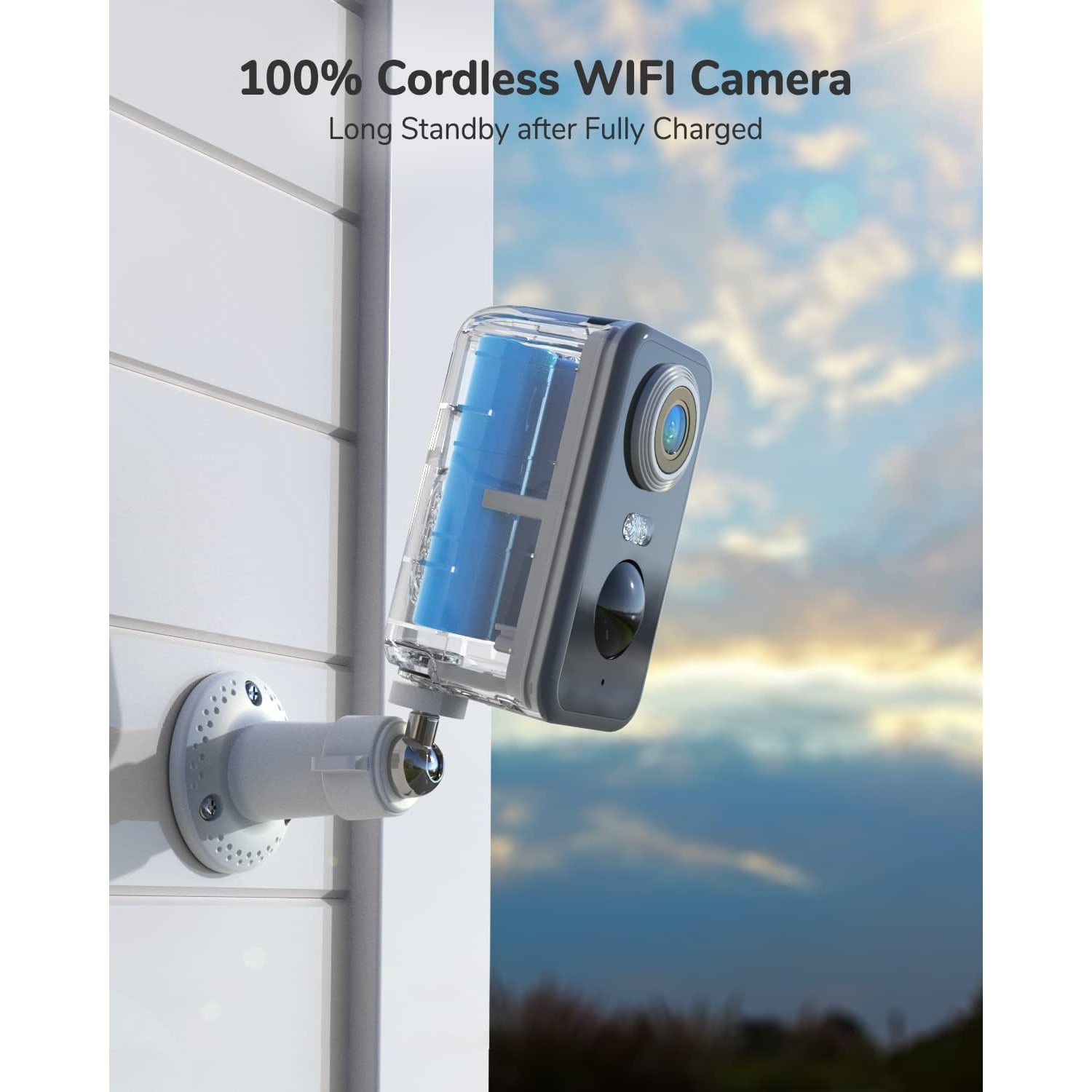
Power comes from a built-in 5200 mAh rechargeable battery. Nothing is wired in, and at 200 g the camera hangs comfortably on its bracket.
The maker does not give a battery life figure. With a floodlight camera that is fair, because the light changes the sums. Every time the spotlights fire, the battery gives up more than it would for a plain recording. A camera on a quiet gate could go a long while. One that lights up for every passer-by will need charging much sooner.
That is where the other power options come in. The maker says the camera is compatible with a solar panel and with a power bank, though neither is included. A small panel in a sunny spot can keep a battery camera topped up between events. The maker does not state which panels fit, so ask us before you buy one.
The box contents list the camera and bracket. No charging cable or mains adaptor is listed.
Smarter detection means fewer pointless alerts
A light that comes on for every gust of wind is worse than no light. The detection system matters more on this kind of camera than on any other.
This one uses a PIR sensor, which reacts to moving heat, with what the maker calls AI motion detection layered on top. According to the maker, the combination reduces false alarms from rain, vehicles, pets and insects. Those four are the usual culprits here. Afternoon storms, cars on the road outside, community cats and the moths that gather round any light after dark.
No filter is perfect. Help it along by aiming the camera across your own porch or path, and keeping the public road out of the frame as far as you can.
Picture and sound
Video is 2K from a 3 MP CMOS sensor, with a 120 degree field of view. The maker describes the image as sharper and smoother than 1080p. A 120 degree view from a corner covers a typical gate and the approach behind it.
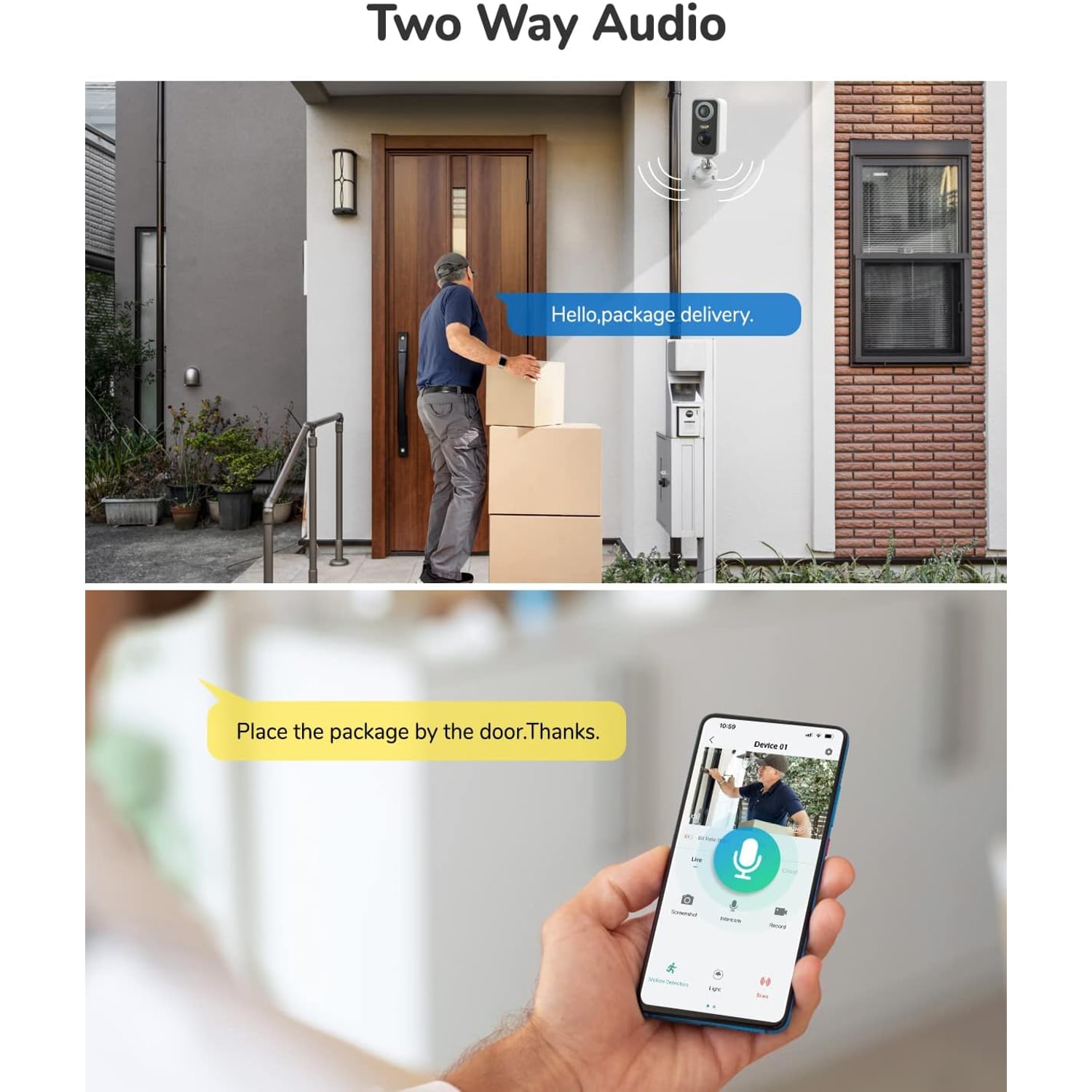
For sound there is a built-in microphone and speaker with noise cancelling. Outdoor audio is always a fight against traffic and wind, so noise cancelling is a welcome detail. You talk through the app, and the alert type is listed as audio and motion.
Storage and sharing
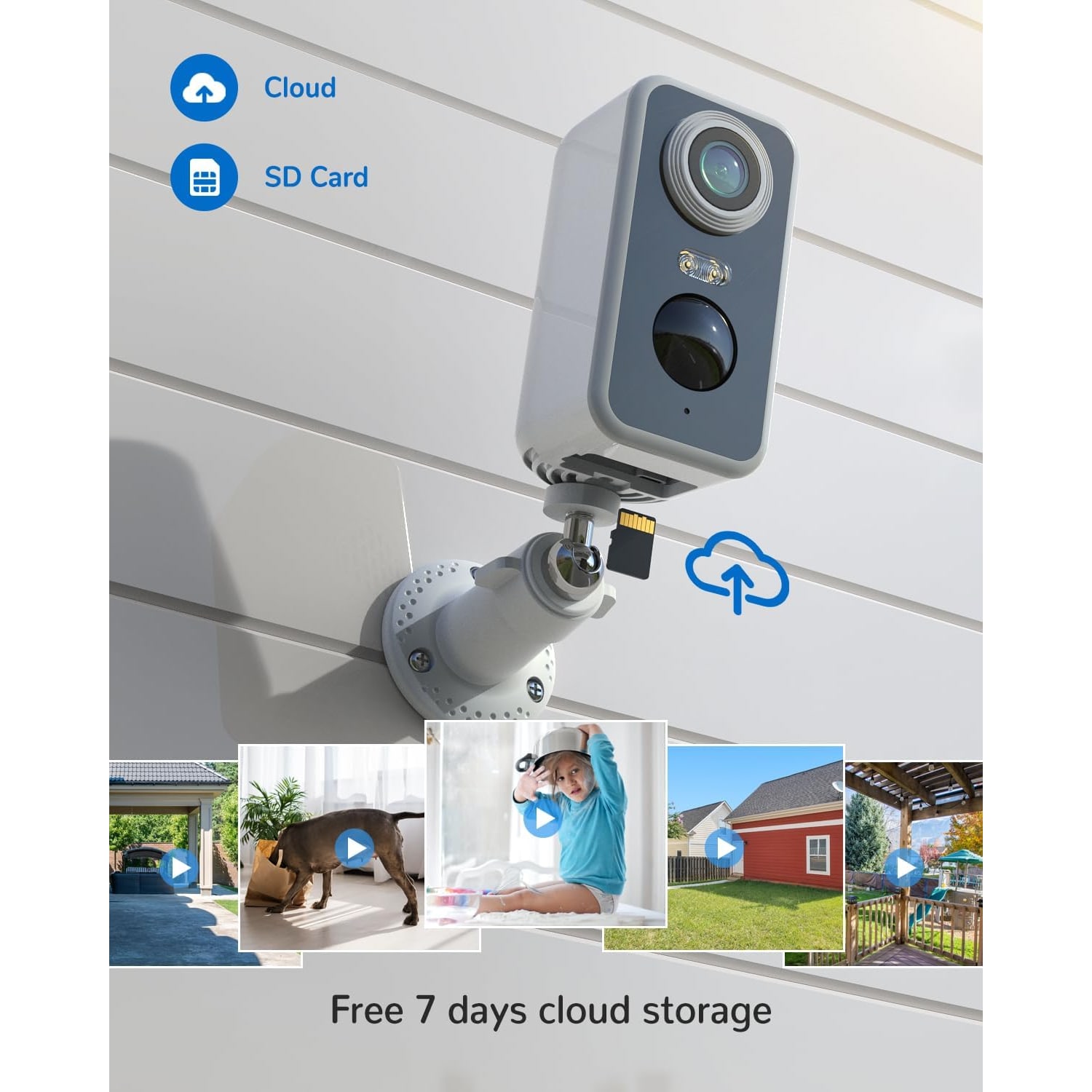
You can record to a microSD card of up to 128 GB or to the maker's cloud storage, which is an optional extra. The card is not included.
The camera overwrites its oldest recordings when the storage is full. That is the behaviour most people want, since nobody remembers to clear a card. Just save anything important to your phone when it happens.
Sharing is built in. You can give family members access so that they see the live video on their own phones. In a household where different people are home at different times, that is more useful than it sounds.
WiFi and setup
The camera connects over WiFi and is run from a smartphone app. The maker does not state the band. Most cameras of this type use 2.4 GHz, which reaches further outdoors and copes with walls, so make sure your router offers it.
Before mounting, add the camera to the app indoors, near the router. Then take it to the spot and check the live view. If the picture stalls, the signal is too weak there, and a mesh point near the front of the home will solve it.
Weather, heat and where to put it
The specifications give an IP66 rating, and the maker's description also mentions IP65. Either way the camera is sealed for dust and for rain hitting an outdoor wall. The maker gives a working range of -30 to 50 degrees Celsius.
Mount it above head height, angled down. Under a roof edge is ideal: the camera is out of the worst of the sun and the rain, and the light spreads down over the entrance. The mount is a screw-in wall bracket, so have a drill and masonry bit ready for concrete.
Recording other people is covered by Singapore law, including the PDPA, and a camera that faces a shared corridor comes under HDB, Town Council or condominium rules.
Getting the angle right
Light changes how you should aim a camera. With an infrared model you only think about what the lens sees. With a floodlight model you also think about where the light lands and who else it reaches.
Point the camera down and across your own entrance. Keep the beam off the neighbour's bedroom window and off the road, where it would catch drivers in the eyes. A downward tilt also keeps the lens out of the rain and stops the low evening sun from flaring across the picture.
Then test it after dark. Walk in from the gate the way a visitor would and note where the light comes on. If it triggers too late, turn the camera a little toward the approach. If it triggers for people who are only passing by, turn it away from the path or look at the detection settings in the app.
Looking after it
Outdoor lights attract insects, and insects leave marks. Every month or so, wipe the lens and the light panels with a soft cloth. A clean lens makes more difference to a 2K picture than any setting.
Keep an eye on the battery level in the app, and recharge before it runs flat. After a week of storms, check that the bracket screws have not worked loose. That is all the upkeep it asks for.
Who it suits
This camera is a natural fit for a landed home: the gate, the car porch, a side passage, a back door. It also works for a ground-floor patio or the entrance to a small office or shop.
It is a less obvious choice for a high-rise corridor. A light and siren in a shared space affect other people, and the rules for such spaces apply.
If you never want light or sound and only want a quiet recording, a plain battery camera will last longer per charge and cost you less attention.
The short version
Choose this camera if the place you want to watch is dark and has no power point. You get 2K video, spotlights that allow colour recording at night, a built-in siren, PIR detection with AI filtering for rain, vehicles, pets and insects, and two-way audio. The 5200 mAh battery keeps it wire-free, with a solar panel or power bank as optional ways to top it up. Add a microSD card of up to 128 GB, check your 2.4 GHz WiFi at the mounting spot, and go easy on the siren.