Camera Company
Company
Shop By Category
T&Cs
Shop Online
  • The maker's specifications on every page
  • Free tracked delivery across Singapore over $150
  • 14-day returns

APS-C Sensor Cleaning Kit | Camera cleaning kit | Lens and sensor cleaner

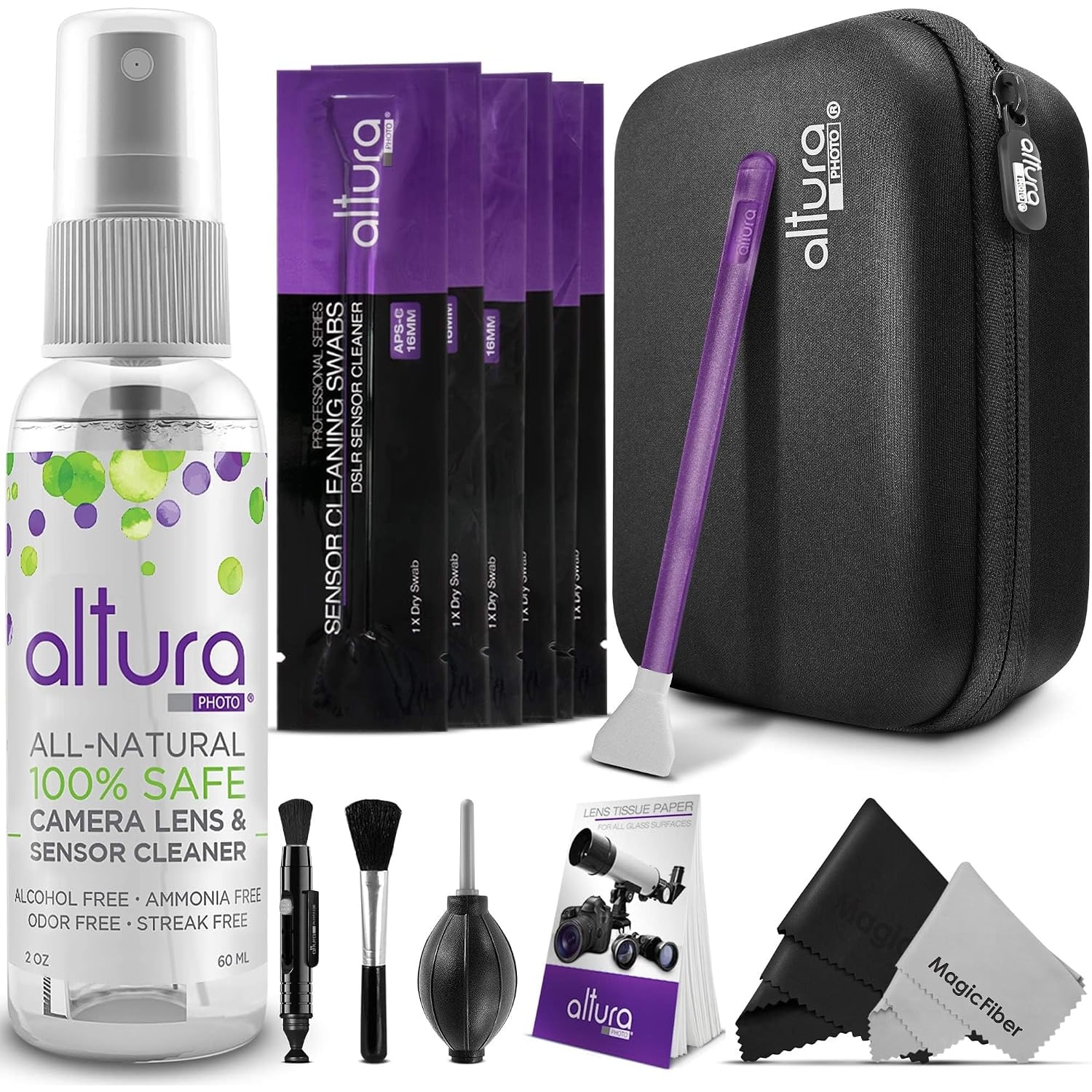
APS-C Sensor and Lens Cleaning Kit with 16mm Swabs and Hard Case

$107.99 $129.99 Save $22
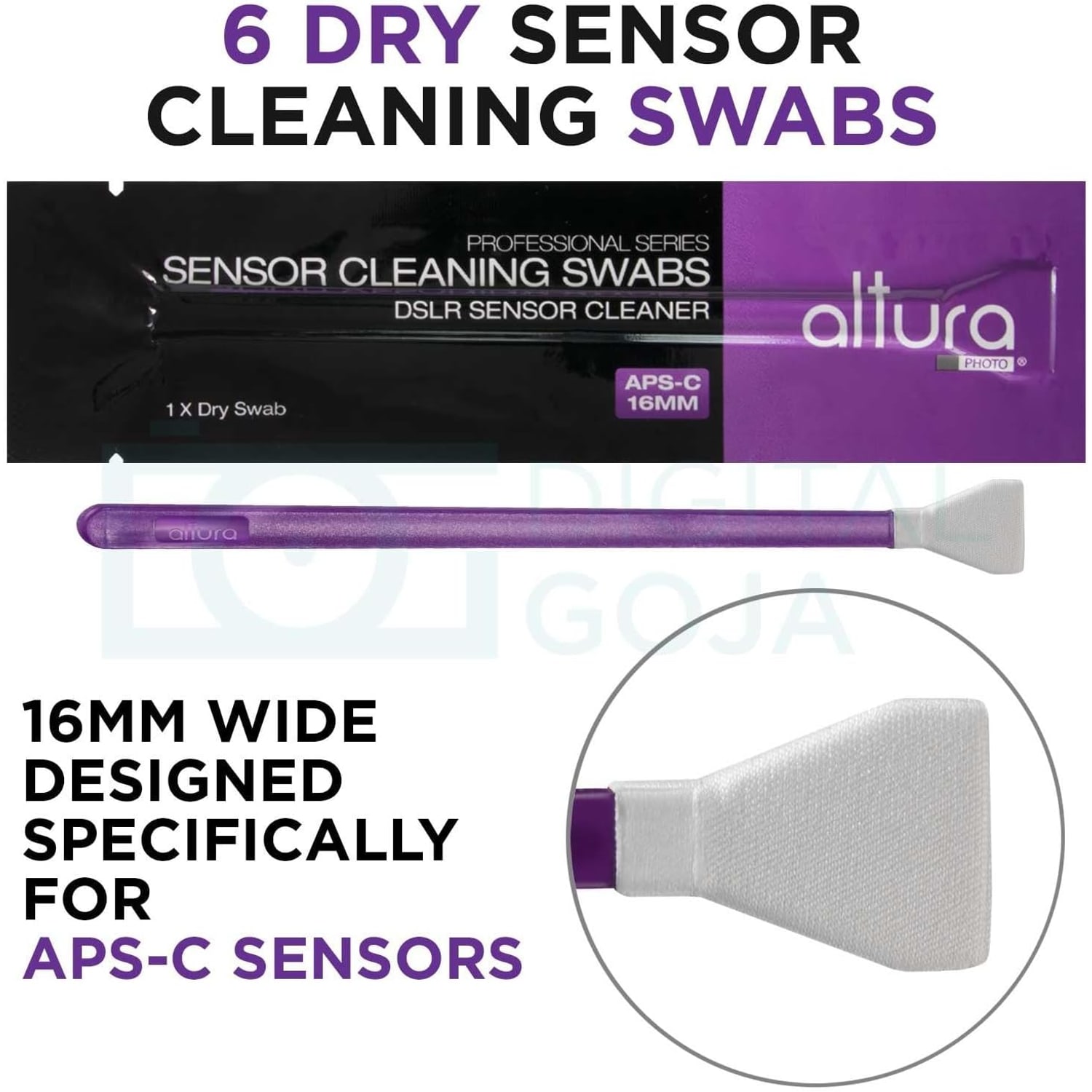
  • Six 16mm Swabs
  • 60 ml Solution
  • Blower, Pen And Brush
  • Hard Zipped Case

Price: $107.99 $129.99

  • Free tracked delivery across Singapore on orders $150+, otherwise a flat $20
  • Pay by card or PayPal, handled by the payment provider
  • 14 days to change your mind, plus your statutory rights
Product specifications
Kit TypeCamera lens and sensor cleaning kit
Sensor Swabs6, dry, individually wrapped and vacuum sealed
Swab Width16 mm
Sensor FormatAPS-C (maker states 23.6 x 15.6 mm)
Cleaning Solution60 ml
Solution NotesMaker states no alcohol or ammonia
Air BlowerIncluded
Lens Cleaning PenIncluded
Lens BrushIncluded
Lens Tissue Paper50 sheets
Microfibre ClothsIncluded (quantity not stated by the maker)
Carry CaseHard, zipped
MaterialsPaper, microfibre
ColourPurple
Water ResistanceNot water resistant
Weight363 g
Compatible Cameras (Maker's List)Canon EOS Rebel T7, T7i, T8i, EOS 80D, EOS 90D; Nikon D3300, D3500, D5500, D5600, D7500, D500; Sony A3500, A5100, A6300, A6500; other APS-C cameras with a 23.6 x 15.6 mm sensor
Model NumberQM0855
Weight363 g
Shipping & returns

Tracked delivery anywhere in Singapore. It is free on orders of $150 or more, and a flat $20 below that.

If it is not right for you, send it back within 14 days of delivery in resaleable condition and we refund the price you paid, including standard delivery. That is a voluntary policy we offer on top of your legal rights. You cover the cost of returning it unless the item is faulty.

If it arrives faulty, damaged or not as described, we put it right at no cost to you, return postage included, and your protection under the Consumer Protection (Fair Trading) Act 2003 is unaffected.

Shipping details · Refunds and returns

Six 16mm SwabsDry, individually wrapped and vacuum sealed, sized for APS-C sensors.
60 ml SolutionThe maker states the cleaning fluid contains no alcohol or ammonia.
Blower, Pen And BrushTools for loose dust and fingerprints on lenses and filters.
Hard Zipped CaseEverything packs into one case that sits in a camera bag.

Deal with dust spots and smudged glass using an APS-C sensor cleaning kit that keeps every tool in one zipped case.

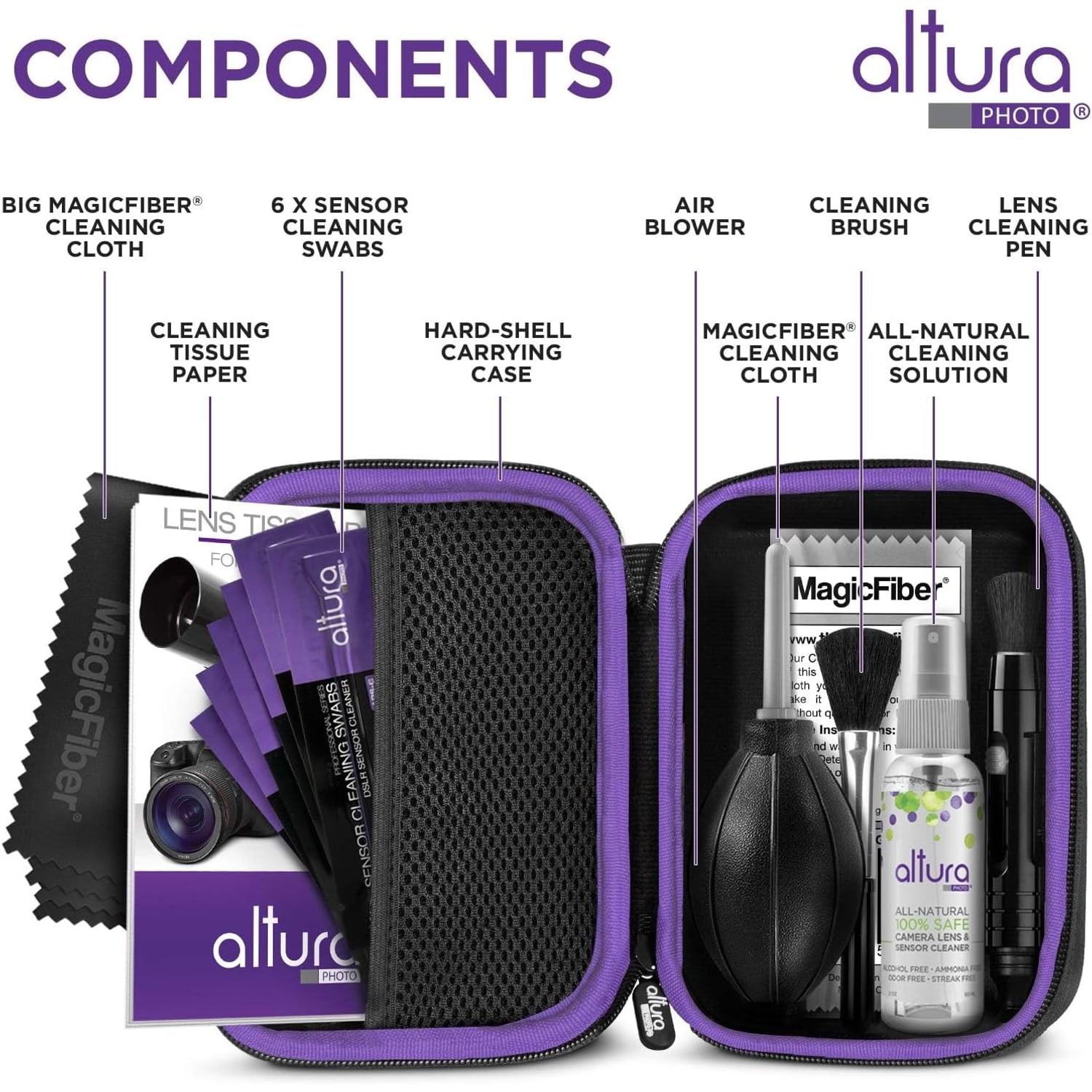
Six sealed 16mm sensor swabs, a 60 ml bottle of cleaning solution, an air blower, a lens pen, a lens brush, 50 sheets of lens tissue and microfibre cloths, packed in a hard zipped case.

This APS-C sensor cleaning kit puts sensor and lens tools in a single hard zipped case, so nothing rolls around loose in your bag.

It includes six dry 16mm sensor swabs, each individually wrapped and vacuum sealed, which the maker sizes for APS-C sensors of 23.6 x 15.6 mm.

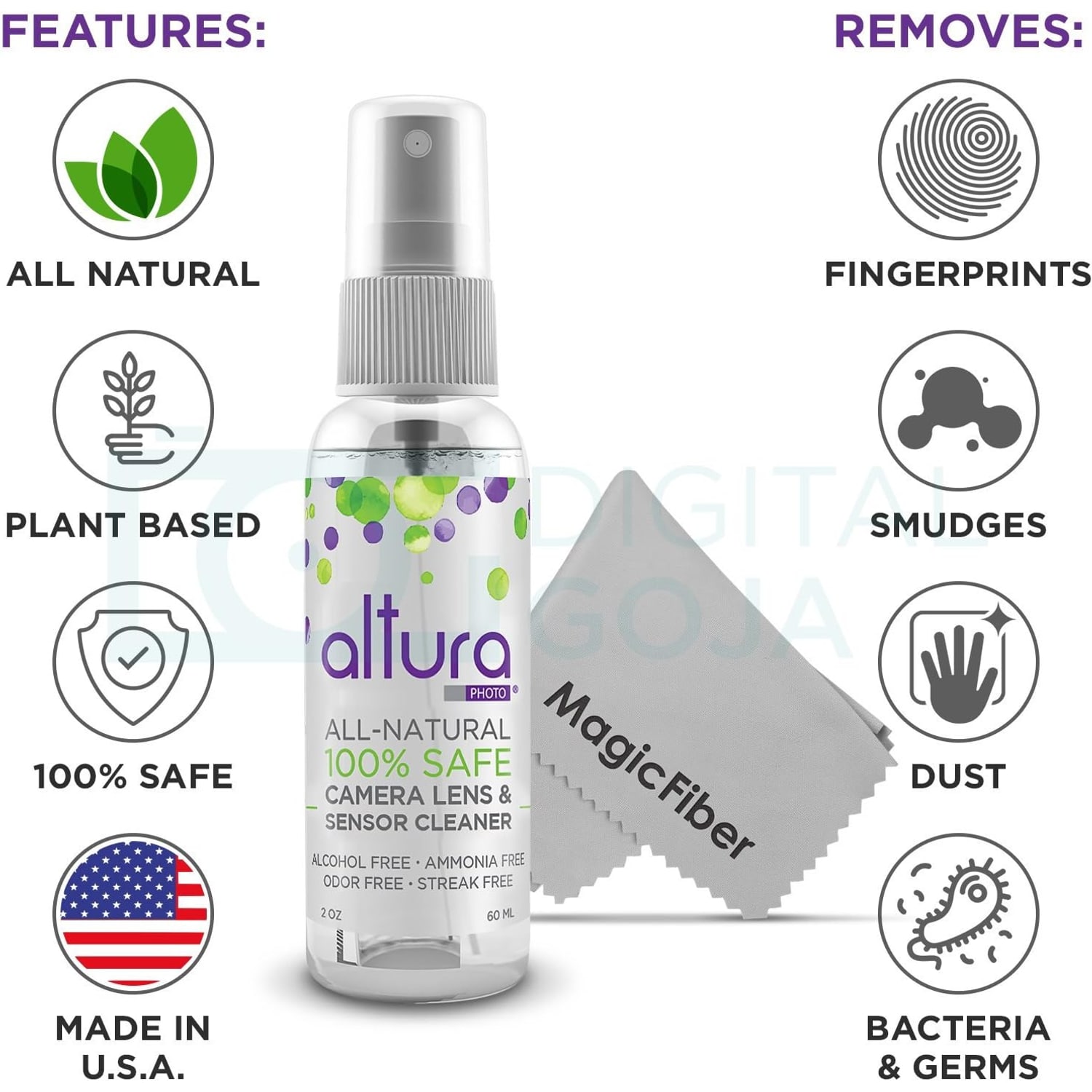
A 60 ml bottle of cleaning solution is included, and the maker states it contains no alcohol or ammonia.

For lenses and filters there is an air blower, a lens cleaning pen, a lens brush, 50 sheets of lens tissue paper and microfibre cloths.

The whole kit weighs 363 g, and sensor cleaning should always follow your camera maker's own instructions.

APS-C Sensor and Lens Cleaning Kit with 16mm Swabs and Hard Case

Dust gets into every camera that has a removable lens. It shows up as soft grey dots in the same place on each photo, usually against a clear sky. This APS-C sensor cleaning kit gathers the tools for dealing with it, along with the tools for everyday lens care, in one hard zipped case.

APS-C Sensor and Lens Cleaning Kit with 16mm Swabs and Hard Case

For the sensor there are six dry swabs, each 16mm wide, individually wrapped and vacuum sealed. The maker sizes them for APS-C sensors measuring 23.6 x 15.6 mm. A 60 ml bottle of cleaning solution comes with them, and the maker states it contains no alcohol or ammonia.

APS-C Sensor and Lens Cleaning Kit with 16mm Swabs and Hard Case

For glass there is an air blower for loose dust, a lens brush for grit that will not blow away, a lens cleaning pen for fingerprints, 50 single-use sheets of lens tissue paper and microfibre cloths for a dry polish. The maker does not say how many cloths are in the kit.

APS-C Sensor and Lens Cleaning Kit with 16mm Swabs and Hard Case

Sensor cleaning is a careful job. Use the blower first, read what your camera maker says about cleaning the sensor, and follow those instructions over any general advice. No kit can promise a spotless result, and a service centre is the right choice if you are unsure.

APS-C Sensor and Lens Cleaning Kit with 16mm Swabs and Hard Case

In Singapore's humidity, regular cleaning and a dry cabinet are common habits among photographers. This kit helps with the cleaning part. It does not prevent lens fungus, and it cannot reach the inside of a lens.

Not sure yet? That is fine.

A camera has to suit the job you bought it for, and you cannot always judge that from a photograph. If it is not right for you, send it back within 14 days of delivery in resaleable condition and we refund the price you paid, including standard delivery. That is a voluntary policy we offer on top of your legal rights.

If it turns up faulty, damaged or not as described, that is on us. We pay the return postage, with your protection under the Consumer Protection (Fair Trading) Act 2003 unaffected. Read the full detail on our refunds and returns page, or ask us anything before you order.

Frequently Asked Questions

What comes in this cleaning kit?

The maker lists six dry 16mm sensor swabs, a 60 ml bottle of cleaning solution, an air blower, a lens cleaning pen, a lens brush, 50 sheets of lens tissue paper and microfibre cloths. All of it sits in a hard zipped carry case. The number of cloths is not stated.

Which sensor size are the swabs made for?

The swabs are 16mm wide and made for APS-C sensors. The maker gives the matching sensor size as 23.6 x 15.6 mm. A swab should span the sensor in one pass, which is why the width matters.

Which cameras does the maker list as compatible?

The list names the Canon EOS Rebel T7, T7i and T8i, the EOS 80D and 90D, the Nikon D3300, D3500, D5500, D5600, D7500 and D500, and the Sony A3500, A5100, A6300 and A6500. It adds other APS-C cameras with a 23.6 x 15.6 mm sensor. Treat the list as examples, not a full register.

My camera has a different model name in Singapore. How do I check it?

Some names on the maker's list are the ones used in other markets, and the same camera can be sold here under another name. Ignore the name and check the sensor format in your manual or on the camera maker's website. If it says APS-C, the 16mm swabs are the intended size.

Can I use these swabs on a full frame camera?

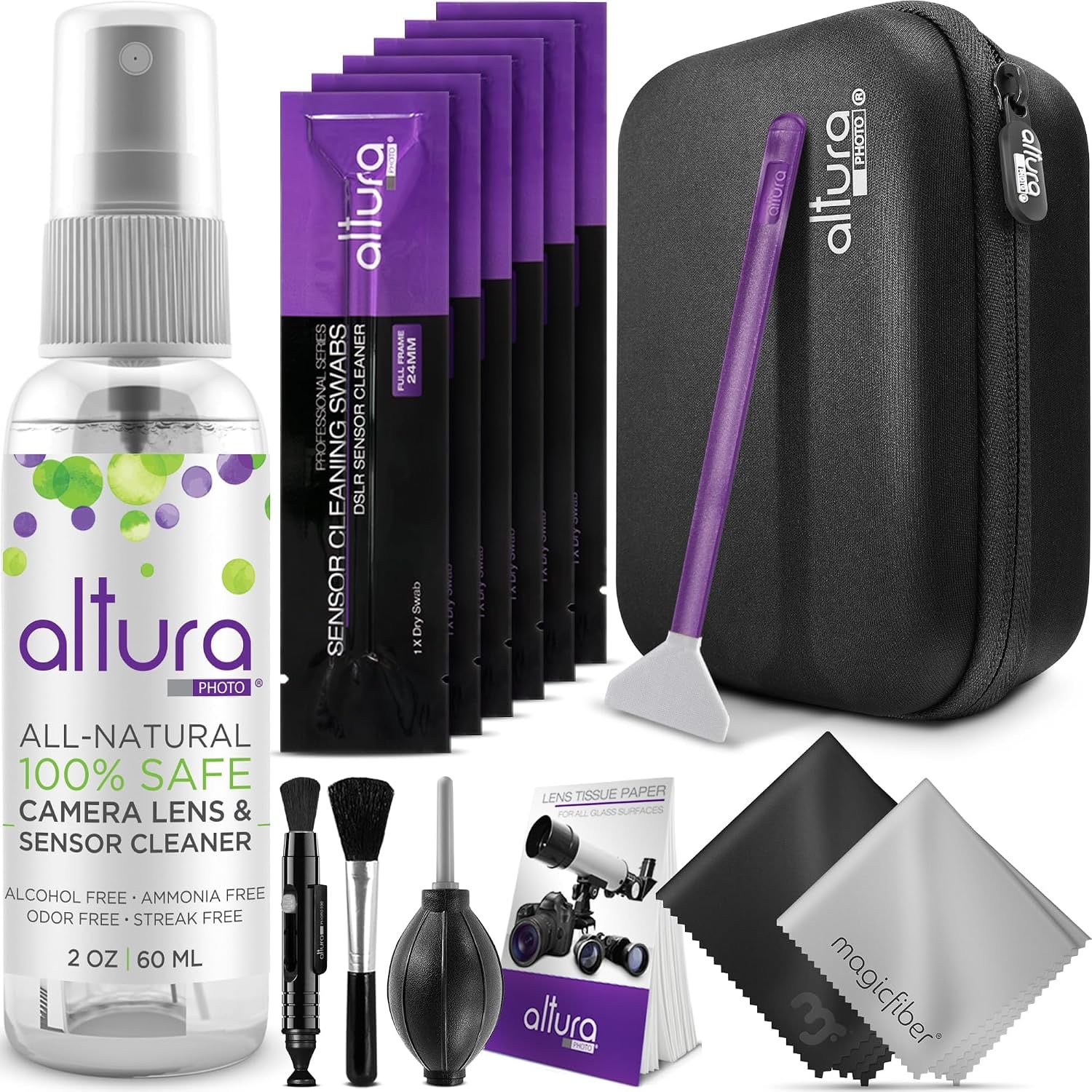
No. A 16mm swab is too narrow to cover a full frame sensor in one pass. The maker offers a separate full frame kit with 24mm swabs for those cameras.

Do they suit Micro Four Thirds or 1 inch sensor cameras?

The maker gives guidance for APS-C only and does not state a fit for smaller sensors. A swab that is wider than the sensor is awkward to use inside a small mount. Choose swabs sold for your own sensor size.

Are the swabs wet or dry when they arrive?

They are dry. Each one is individually wrapped and vacuum sealed, and you add the cleaning solution yourself just before use. Open a swab only when you are ready to clean.

Can I reuse a sensor swab?

Common practice is to use a swab once and then bin it. A used swab can carry the grit it just picked up back onto the sensor. The kit has six, so there is no need to stretch one.

What does the maker say about the cleaning solution?

The bottle holds 60 ml. The maker states the solution contains no alcohol or ammonia and describes it as made from plant-based ingredients. No full ingredient list or shelf life is published.

How much solution should go on a swab?

Follow any directions supplied with the kit and the guidance from your camera maker. As a general rule less is more, and a swab that drips is carrying too much. Excess fluid is the usual cause of streaks.

Is it sensible to clean my own sensor?

Many owners do, but it is your call and it needs care. Read your camera maker's instructions first and follow them, because some makers prefer that anything beyond a blower goes to a service centre. If you are not confident, a service centre clean is the safer route.

Will this kit remove every spot from my sensor?

We cannot promise that, and no kit honestly can. Loose dust usually comes off with the blower, and a wet clean lifts much of the rest. Oil spots and particles that are stuck fast may need a technician.

How do I tell if the dust is on the sensor or the lens?

Set a small aperture such as f/16 and photograph a plain bright surface, then view the picture on a computer. Dark spots that stay in the same place with a different lens fitted are on the sensor. Marks that change when you swap lenses are on the lens.

Should I use the air blower before a swab?

Yes. Start with the step that touches nothing. Hold the camera with the mount facing down, puff air across the sensor without touching it, then take a test shot. A wet clean is only for spots that remain.

What is the lens cleaning pen for?

It is a small tool for lifting fingerprints and smears from lens glass and filters. Blow or brush loose grit away first so the pen does not drag it across the coating. Put the cap back on after each use.

When would I use the lens brush?

Use it after the blower, for dust and sand that will not blow off. Sweep lightly from the centre outwards. Keep your fingers off the bristles so skin oil does not end up on the next lens.

What are the 50 tissue sheets for?

They are single-use lens tissue paper for wiping glass. Add a little solution to a folded sheet, wipe gently from the centre out, then throw the sheet away. Do not pour fluid straight onto a lens.

How many microfibre cloths are in the kit?

The maker lists microfibre cloths as included and does not state how many. They suit dry polishing of lenses, rear screens and viewfinder eyepieces.

Can I use the kit on filters, screens and binoculars?

The blower, brush, pen, tissue and cloths are general tools for optical glass, so filters and binocular lenses are natural uses. The maker describes the solution as intended for coated lenses and imaging sensors. For anything else, test on a small area first.

What is the carry case like?

It is a hard case that closes with a zip and holds every item in the kit. The maker does not publish its dimensions, only that it is meant to fit a camera bag. The kit is listed as not water resistant, so keep it under cover in the rain.

How heavy is the full kit?

The kit weighs 363 g. That is close to the weight of a small lens, so it is easy to carry on a trip. Leave it in the bag and it is there when you need it.

What colour is the kit?

The colour is listed as purple. The maker does not say which parts carry that colour, so refer to the product photos for the look of the case and tools.

Does this kit stop fungus growing on my lenses?

No. It cleans dust, fingerprints and smears from surfaces you can reach. Fungus is linked to damp storage, which is why a dry cabinet and regular cleaning are common habits among photographers in Singapore. Fungus inside a lens needs a technician.

How often should I clean my sensor?

Only when you see spots in your photos. There is no schedule to follow, and every wet clean carries a small risk, so cleaning for the sake of it is not wise. Lenses can be wiped as often as they get dirty.

Will cleaning the sensor myself affect my camera warranty?

That depends on the camera maker's terms, which vary. Check the warranty booklet or ask the service centre before your first wet clean. Using only the air blower does not touch the sensor at all.

Where in my flat should I do the cleaning?

Pick a clean, well lit room with the fan off and the windows shut, away from the kitchen. Still air means less dust landing in the open mount. Start with a charged battery, as your camera manual will advise for its cleaning mode.

How should I store the kit between uses?

Keep the swabs sealed, the bottle tightly closed and the case zipped. Store it somewhere dry and out of direct sun, and never in a hot car. The maker does not state a shelf life for the solution.

How long does delivery take?

We deliver to addresses across Singapore with a tracked courier. Most orders arrive within 7 to 12 working days of the order date, because our cameras and accessories are sent from overseas warehouses. Delivery is free on orders of $150 or more and a flat $20 under that.

Is it a good present for someone with a new camera?

It is a practical one, provided their camera has an APS-C sensor. New owners rarely buy cleaning tools until the first dust spot appears. If you do not know the sensor size, ask them or message us with the camera model.

What if I order it and it is not right for my camera?

You can return it within 14 days of delivery in resaleable condition. Opened swabs or a used bottle are no longer resaleable, so check your sensor size before breaking any seals. Contact us first and we will guide you to the right kit.

A Buyer's Guide To Cleaning An APS-C Camera Sensor And Lenses

6 min read Camera Company

Dust shows up when you least want it

You change lenses at a hawker centre, on a windy afternoon at Marina Barrage, or beside the car with the boot open. A few days later you photograph a clear sky and there they are: soft grey dots in the same place on every frame. That is dust on the sensor, and every camera with a removable lens picks it up sooner or later.

Lens glass has its own troubles. Fingerprints, sunscreen, sea spray, and the fine film that settles on anything left out in humid air.

A camera cleaning kit does not make any of this go away for good. What it does is put the right tools in one place, so that when the dots appear you are not wiping a lens with the hem of your T-shirt.

What is in the case

The maker lists the contents as follows. Six dry sensor swabs, each 16mm wide, individually wrapped and vacuum sealed. One 60 ml bottle of cleaning solution. An air blower. A lens cleaning pen. A lens brush. Fifty sheets of lens tissue paper. Microfibre cloths, though the maker does not say how many. And a hard zipped case that holds all of it.

The kit weighs 363 g in total. The materials are listed as paper and microfibre, the colour as purple, and the kit as not water resistant. The size of the case is not published.

On the fluid: the maker states the solution contains no alcohol or ammonia and describes it as made from plant-based ingredients. That is as far as the published detail goes. There is no full ingredient list and no stated shelf life.

Which cameras the 16mm swabs fit

This is the detail to get right before ordering. Sensor swabs are sized to the sensor so that one pass covers it from edge to edge. These are 16mm swabs, which the maker says are made for APS-C sensors measuring 23.6 x 15.6 mm.

The maker's compatibility list names the Canon EOS Rebel T7, T7i and T8i, the EOS 80D and 90D, the Nikon D3300, D3500, D5500, D5600, D7500 and D500, and the Sony A3500, A5100, A6300 and A6500, along with other APS-C cameras of that sensor size.

Some of those model names are the ones used in other markets, and the same camera can carry a different name on a box bought in Singapore. So do not rely on the name alone. Open your camera manual or the camera maker's website, find the sensor format, and confirm that it says APS-C.

If your camera is full frame, these swabs are too narrow. The maker sells a separate full frame kit with 24mm swabs for that. For Micro Four Thirds and smaller sensors the maker gives no guidance, so this is not a kit to guess with.

Start with the least contact

Good cleaning follows one rule: touch the surface as little as you can. Most dust is loose, and loose dust does not need a wet swab.

Check first. Set a small aperture such as f/16, photograph a plain bright surface like a white wall or an overcast sky, and look at the picture on a computer. Dark spots that stay put from frame to frame are on the sensor. Spots that move or vanish when you change lenses are on the lens.

Then use the air blower. Follow your camera manual to expose the sensor, hold the camera with the mount facing down, and give a few firm puffs without letting the nozzle touch anything. Take another test shot. Very often that is the end of the job.

Do not use canned air or your breath. Canned air can spit propellant, and breath carries moisture.

Wet cleaning the sensor, and when to hand it over

If spots survive the blower, the swabs and solution come in. Before you open a swab, read what your camera maker says about sensor cleaning. Most manuals have a section on it, with a cleaning mode that holds the shutter open and a note about battery level. Some makers prefer that owners leave anything beyond a blower to a service centre. Their instructions come first, and it is worth checking how your warranty treats self-cleaning.

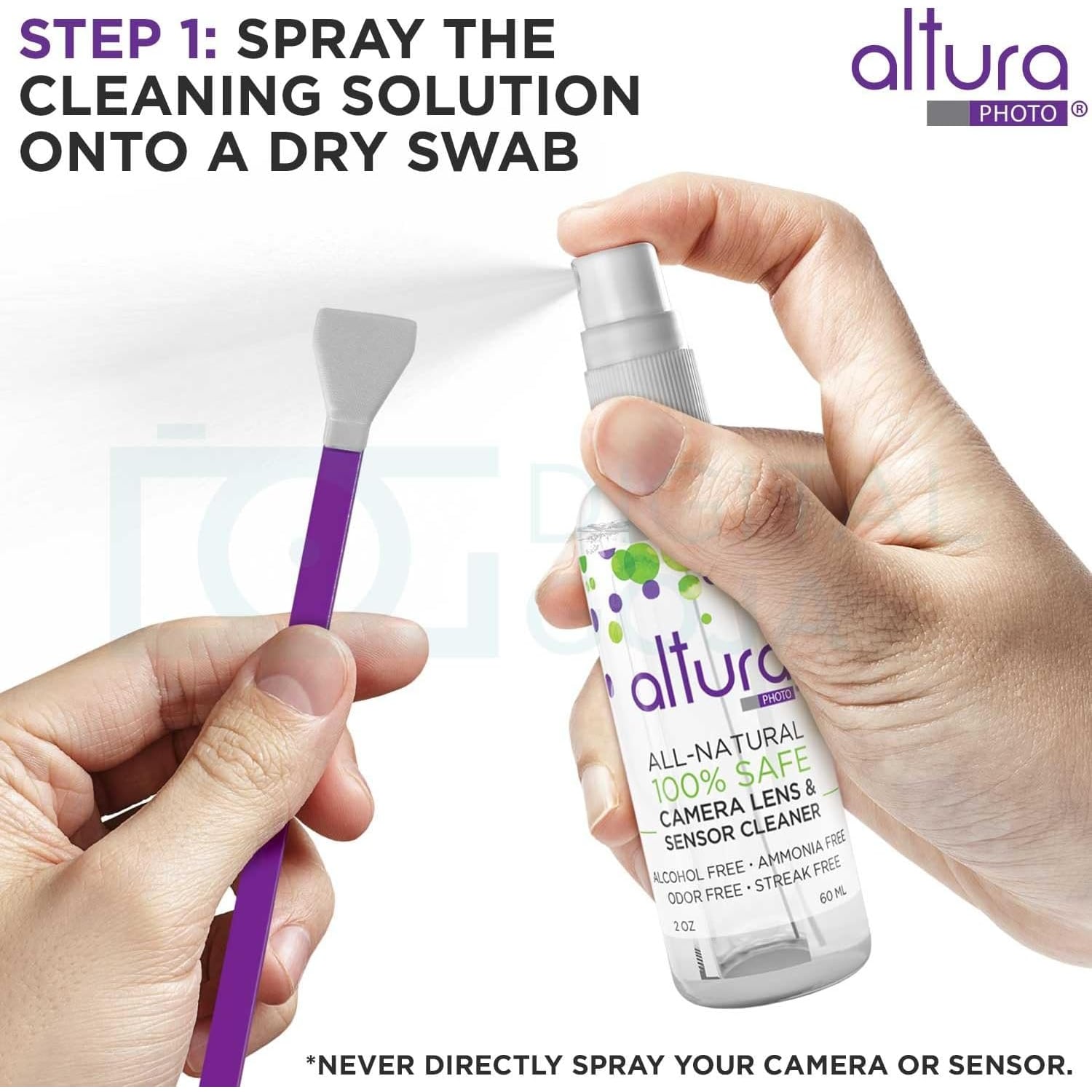
The swabs arrive dry and sealed. You add the solution yourself, sparingly, following any directions supplied with the kit. A swab that is dripping is carrying too much. Draw it across the sensor in a slow, even pass, and treat each swab as single use. That is why there are six.

We cannot promise a spotless sensor, and nobody honestly can. Stubborn specks and oil spots sometimes need a technician. If you feel unsure at any point, stop and book a sensor clean at a service centre. It costs less than a mistake.

Lenses, filters and screens

The rest of the kit is for glass you can reach easily.

Work in order. Blow loose grit off first so you do not drag it across the coating. Sweep what is left with the lens brush. For fingerprints and smears, use the lens cleaning pen, or a sheet of lens tissue with a little solution, wiping gently from the centre out. Put the fluid on the tissue, never straight onto the lens, so it cannot run under the front ring.

The fifty tissue sheets are single use, so there is no need to be precious with them. The microfibre cloths are for dry polishing, rear screens and viewfinder eyepieces. Wash them now and then without fabric softener, because a cloth full of grit or softener does more harm than good.

Humidity and fungus in Singapore

Ask any local photographer about lens fungus and you will get a story. Warm, damp air is what fungus likes, and a lens left for months in a cupboard or a zipped bag can grow fine, web-like threads on the inner glass.

The common habits here are a dry cabinet for storage and regular cleaning of the outer surfaces. Wiping off fingerprints, sweat and salt spray after a day out is part of that routine, and this kit covers that part.

Be clear about the limits, though. A cleaning kit cleans. It does not prevent fungus, and it cannot reach fungus growing between the elements inside a lens. That job needs a technician to open the lens. Controlling humidity is the work of a dry cabinet, not a bottle of solution.

It also helps to pick your moment. Gear carried from an air-conditioned room out onto a balcony will fog over within seconds. Let it clear before you clean, and do sensor work indoors with the fan off.

Who should buy this, and who should not

This kit suits owners of APS-C DSLR and mirrorless cameras who want one tidy set of tools instead of a blower in one drawer and a cloth in another. It suits students and hobbyists doing their first sensor clean with the manual open beside them. It also suits anyone who travels with a camera and wants a case that drops into the bag.

Look elsewhere if your camera is full frame, since the swabs will not span the sensor. Think twice if your camera has a fixed lens, because you cannot get to the sensor. The lens tools would still be useful, but you would be paying for six swabs you cannot use. And if the idea of touching a sensor makes you nervous, there is no shame in using only the blower and leaving the rest to a service centre.

Looking after the kit

Keep the swabs sealed until the moment you use them. Close the solution bottle firmly and store the case out of direct sun and away from a hot car boot. The case is not water resistant, so keep it inside your bag when it rains.

Keep the blower and brush clean too. Do not touch the brush bristles with your fingers, since skin oil ends up on the next lens. Replace the lens pen cap after each use.

Six swabs will not last forever. Once they are gone, the blower, pen, brush and case carry on, and you can restock with swabs of the same 16mm width.

The short version

This is an APS-C sensor cleaning kit in a hard zipped case. Inside are six sealed 16mm dry swabs, 60 ml of cleaning solution that the maker says has no alcohol or ammonia, an air blower, a lens pen, a lens brush, 50 sheets of lens tissue and microfibre cloths. It weighs 363 g.

Confirm your camera has an APS-C sensor before you order. Use the blower first, follow your camera maker's instructions for anything that touches the sensor, and hand the job to a service centre if you are unsure. No kit can promise a perfect result, but having the right tools in one place makes a careful clean much easier.

Browse the shop

Not sure your camera is APS-C?

Send us your camera model and we will confirm the sensor size and the swab width it needs before you order.

Ask us a question

Page summary

An APS-C camera sensor and lens cleaning kit supplied in a hard zipped case. Contents as listed by the maker are 6 dry sensor swabs (16mm wide, individually wrapped, vacuum sealed), a 60 ml bottle of cleaning solution, an air blower, a lens cleaning pen, a lens brush, 50 sheets of lens tissue paper and microfibre cloths (quantity not stated). The maker states the solution contains no alcohol or ammonia. The swabs are sized for APS-C sensors measuring 23.6 x 15.6 mm and are not suitable for full frame sensors. Total weight is 363 g, colour is listed as purple, and the kit is not water resistant. Model number QM0855. Case dimensions, shelf life of the solution and warranty are not stated by the maker. Sensor cleaning should follow the camera maker's own instructions, and no cleaning result is promised.