
The complete guide
How To Choose A Memory Card Case For SD And MicroSD Cards
Small cards go missing in small ways
A memory card weighs almost nothing and is about the size of a postage stamp. A microSD card is smaller than a fingernail. That is handy inside a camera and a nuisance everywhere else. Cards end up loose in a bag pocket, in a pair of jeans that goes through the wash, or in the thin plastic sleeve they were sold in, which cracks after a month.
Losing a blank card is annoying. Losing a full one hurts. A wedding dinner at a hotel ballroom, a family holiday, or a week of drone footage can sit on something small enough to fall down the gap beside a car seat.
A dedicated memory card holder fixes the simple part of that. Every card has one home. You open one case, you see all of your cards, and you know at a glance if one is missing.
What this case holds
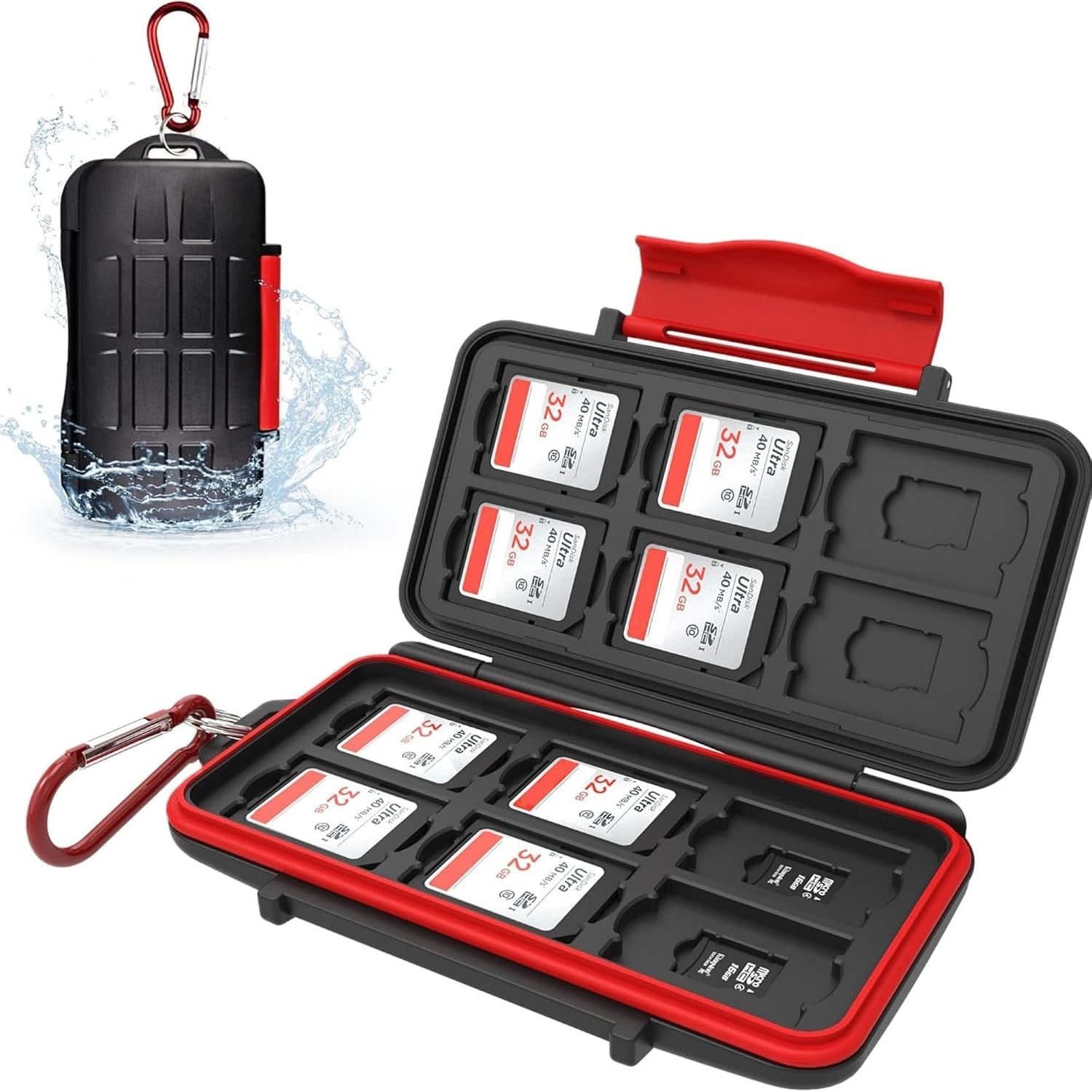
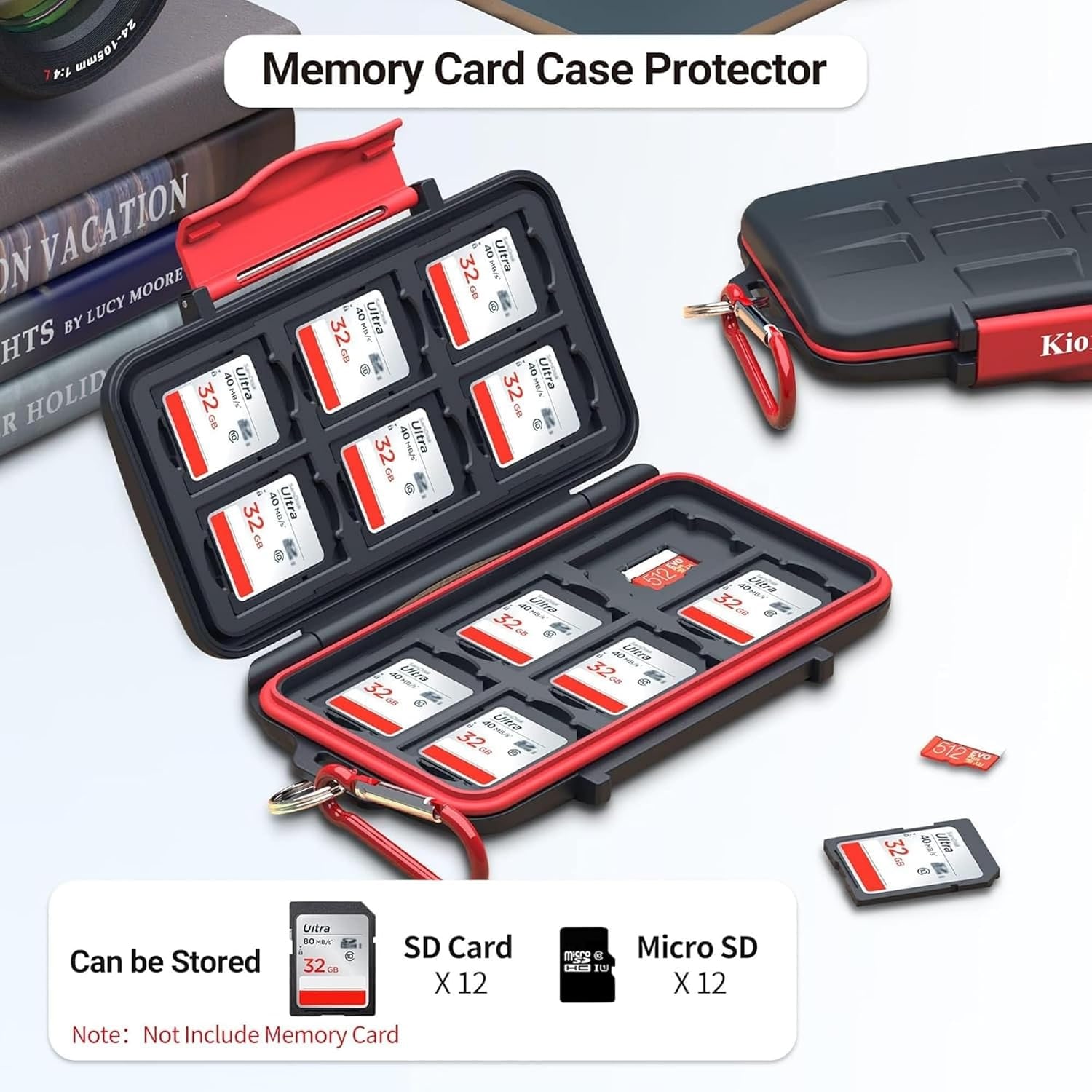
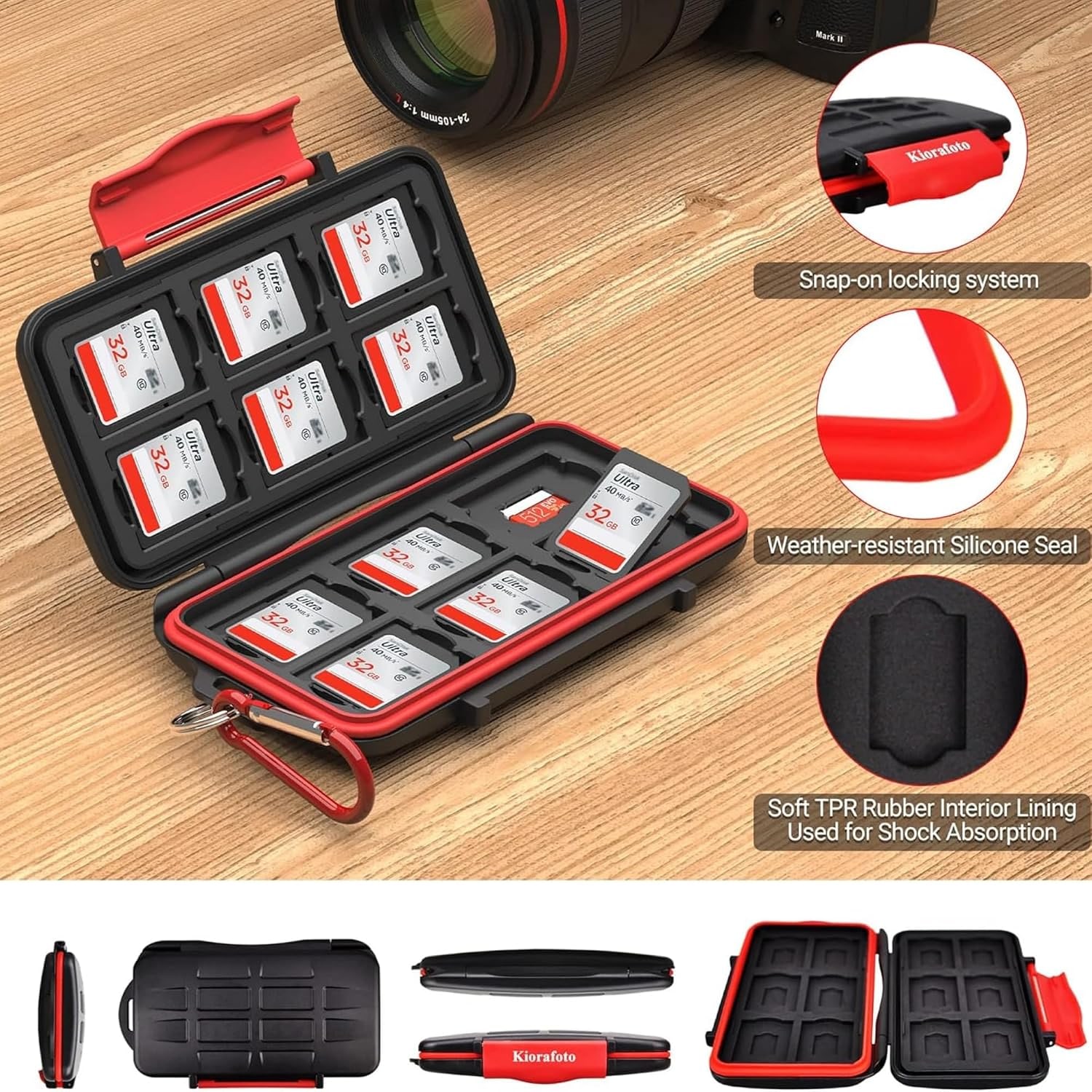
The layout is 24 slots in total. Twelve are sized for full-size SD cards and twelve for microSD cards, which some makers call TF cards. That split is fixed by the moulded lining, so it is worth counting what you own before you buy.
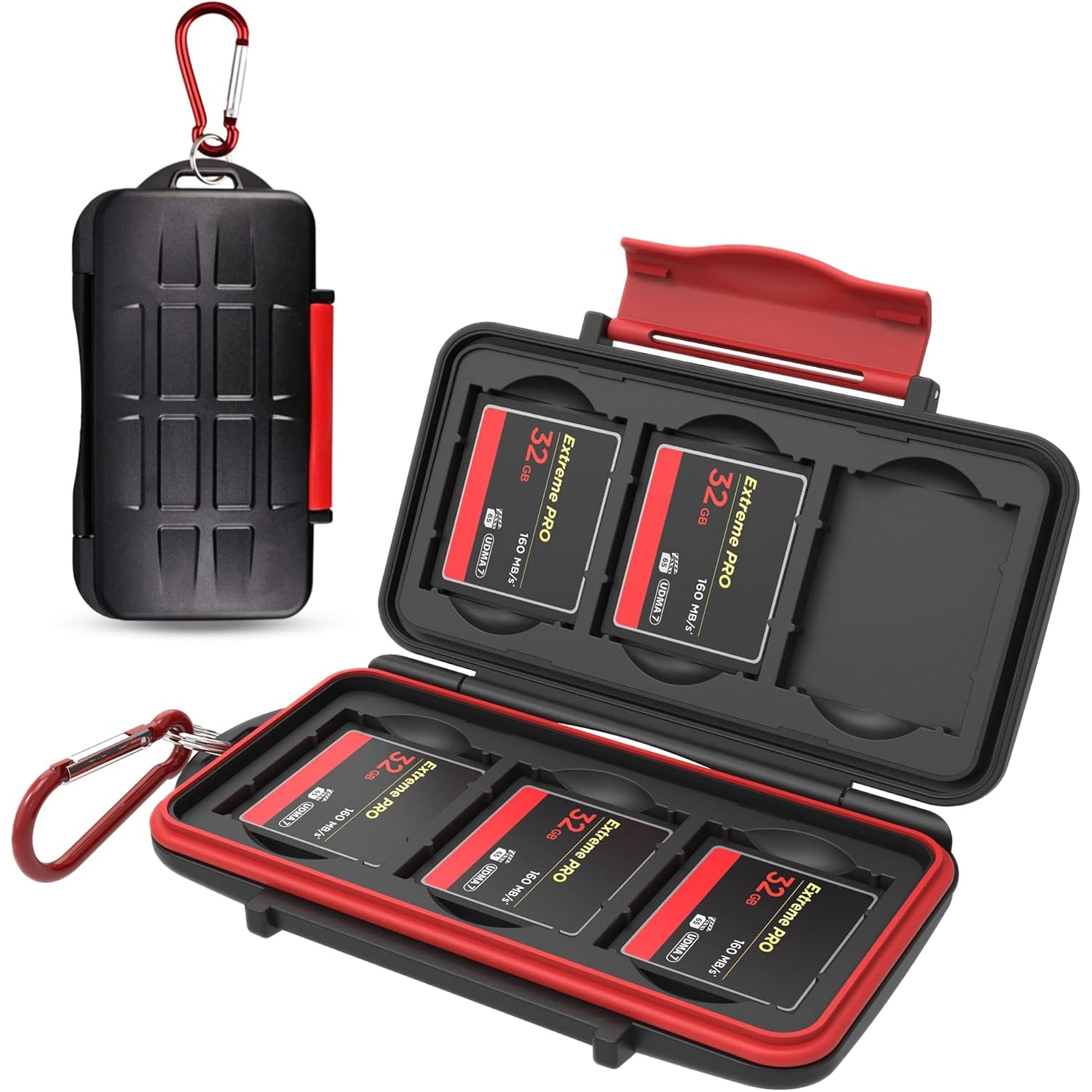
SDHC and SDXC cards share the same outer shape as standard SD, so they sit in the SD slots. A microSD card inside a full-size adapter is also SD-shaped. There are no slots for CompactFlash, CFexpress or XQD cards, and the maker does not list them, so photographers on those formats need a different case.
Closed, the case measures 14.3 x 8.2 x 2.8 cm and weighs about 139 g. Picture a slim paperback cut in half. It goes in a camera bag pocket, a sling or a jacket pocket without much thought. The maker lists one case in the pack. No memory cards are listed as included.
The shell, the lining and the seal
Three parts do the work.
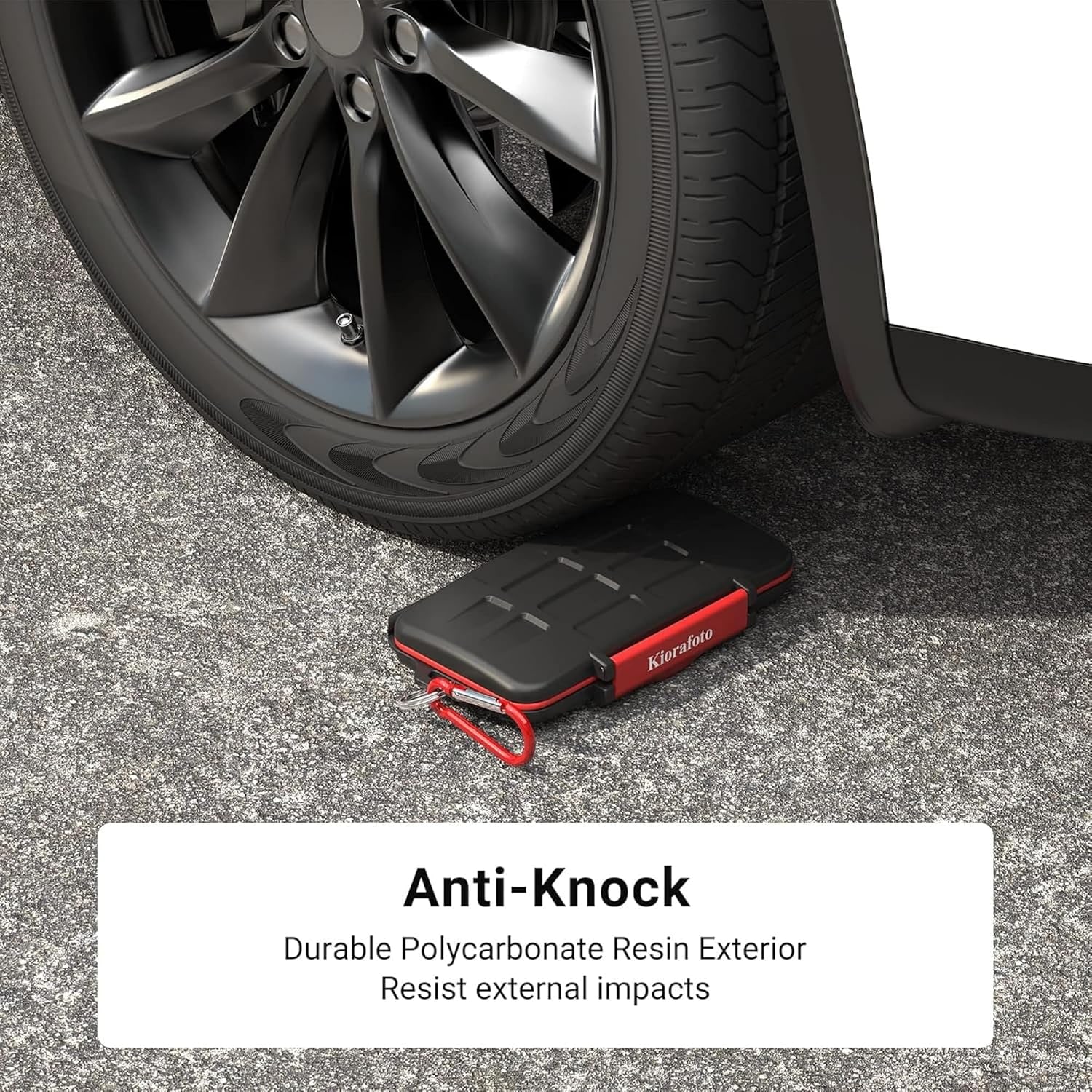
The outside is polycarbonate, a hard plastic resin. A hard shell matters because cards are thin. They can flex and crack under the weight of a lens or a laptop in a packed bag, and a soft pouch does little to stop that.
The inside has a moulded rubber lining with a shaped slot for every card. Rubber grips. Cards press in and stay put instead of rattling around, and the gold contacts are not rubbing against bare plastic. The maker describes the case as protection against shock and moisture. It does not publish a drop height or any test standard, so treat it as a sturdy everyday case and not as proof against every accident.
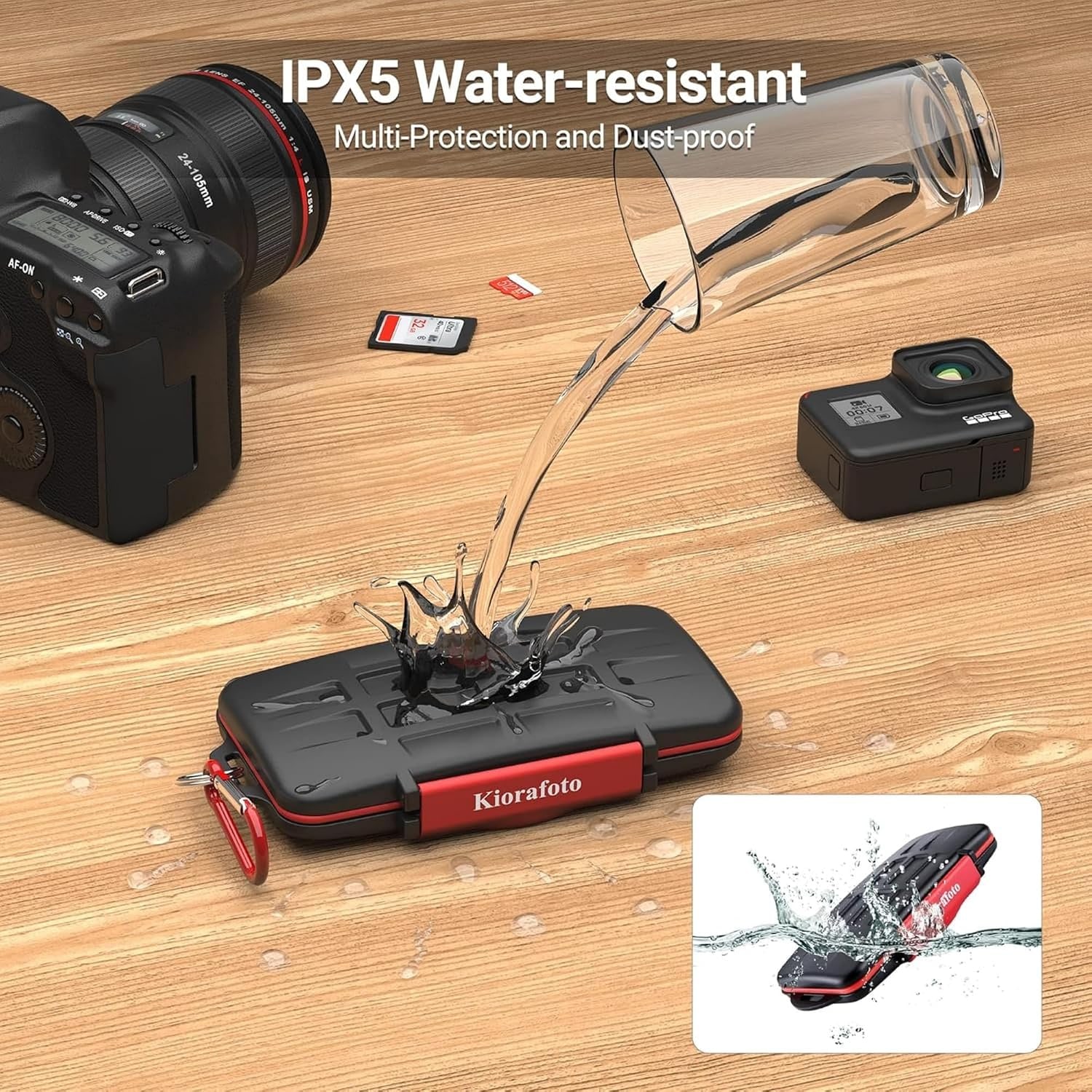
Around the rim sits what the maker calls a weather-resistant seal, meant to keep out water, dust and debris. The lid closes with a snap-on lock. It is a latch, with no key or combination, so it keeps the lid shut in a bag but will not stop a curious person opening it.
Water resistant, in plain terms
The maker rates the case as water resistant. No ingress protection (IP) code is stated, and neither is a depth or a time under water.
In practice, read that as help with everyday wet. A sudden downpour on the walk to the MRT. A wet table at a hawker centre. Spray at East Coast Park, or a damp bag after the bumboat to Pulau Ubin. It is not a promise that cards stay dry in every situation, and it is not a case to dunk on purpose. If the outside does get wet, dry it fully before you open it, so water on the rim does not drip onto the cards.
The seal only works when the lid is fully latched and the rim is clean. Sand or grit on the seal can stop it closing flat. A quick wipe now and then is all it takes.
Sorting full cards from empty ones
Each slot holds a card either way up. That small detail gives you a free filing system, and plenty of photographers already use one like it.
Put fresh, formatted cards in label side up. When a card comes out of the camera full, put it back label side down. Open the case in the middle of a shoot and you can see which cards are safe to use without reading a single label. On a long day with two cameras or a drone, that saves real confusion and makes it much harder to format the wrong card.
The twelve microSD slots suit people who run action cameras, drones, dash cams or handheld game consoles. The twelve SD slots suit most mirrorless and DSLR shooters. Anyone who uses both sizes gets one case instead of two.
Carrying it around Singapore
A moulded eyelet is built into the case so it can hang from a strap or a hook. The maker does not list a strap, lanyard or clip as included, so plan to use one you already own. Clipped inside a bag, the case is harder to leave behind on a café table.
Heat is worth a thought. A car left in an open-air car park gets very hot inside, and the maker does not state a temperature range for the case. Memory card makers publish their own storage limits as well. The simple habit is to take the case with you, as you would a camera.
On flights, most photographers keep their cards in hand luggage instead of a checked bag. A case this size fits a seat pocket or a small sling, so the day's photos stay with you.
Humidity, dry cabinets and card care
Singapore is humid all year. Local photographers know the routine for lenses: a dry cabinet at home, regular cleaning, and no gear left zipped in a damp bag for days. Fungus on lens glass is the main worry. Cards are less fussy than glass, but the same tidy habits do no harm.
Two points are worth knowing. First, a sealed case keeps in whatever goes in. If you shut a card away while it is wet from rain or sweaty hands, that moisture stays inside with it. Wipe cards and fingers dry first. Second, this case is not a dry cabinet. It has no drying function, and the maker does not list a silica gel pack with it. If you want cards kept dry for long storage, the whole case is small enough to sit on a dry cabinet shelf next to your lenses, with the lid unlatched so the dry air gets in.
Who it suits, and who should look elsewhere
This case makes sense if you own more than a handful of cards and use both sizes, or expect to. Wedding and event photographers, frequent travellers, drone pilots, students on film or photography courses, and parents with years of family photos on old cards all fit that picture. It also works as a home archive box for cards you have retired but do not want to wipe.
It is less useful in a few situations. If you shoot on CFexpress, XQD or CompactFlash, there are no slots for you here. If you own two or three cards, a smaller holder takes up less room. If you need a case with a stated IP code or one rated for diving, this is not it, because the maker gives no such rating. And if you want a particular colour, note that the maker does not name one, so go by the product photos.
One more check before you buy: think about where the case will live. In a bag pocket, the 2.8 cm thickness matters more than the length. In a drawer or on a shelf, nothing about the size will trouble you.
Looking after the case
Care is simple. Wipe the shell with a soft, slightly damp cloth and dry it. Keep solvents and alcohol away from the rubber lining and the seal, as they can dry rubber out over time. Brush crumbs and sand out of the slots before they reach a card's contacts.
Check the seal now and then for grit or damage, and make sure the latch clicks fully shut. Do not leave the case in direct sun on a balcony ledge or a car dashboard. Hard plastic and rubber both last longer out of the heat.
Handle the cards with the same care. Hold them by the edges, keep fingers off the contacts, and push each one fully into its slot so the lid closes without pressing on it.
One habit helps more than any case: copy your cards to a computer or drive soon after a shoot. A case looks after the card. A backup looks after the photos.
The short version
This is a hard polycarbonate memory card holder with a moulded rubber lining, a weather-resistant seal and a snap-on lock. It holds 12 SD and 12 microSD cards, measures 14.3 x 8.2 x 2.8 cm and weighs about 139 g. An eyelet lets you hang it from a strap or hook.
Water resistant is the maker's description, with no IP rating behind it, so treat it as cover for rain and splashes and keep it out of the sea. Use the either-way-up slots to mark full cards, keep the seal clean, and back up your photos. For anyone juggling a pile of cards in both sizes, it is a tidy way to keep them in one place.