
The complete guide
How To Choose A Small Camera Backpack For Everyday Shooting
Too much bag for too little gear
Walk into any camera shop and the backpacks are enormous. They are built for the person with two bodies, five lenses, a drone and a lighting kit. Most hobby photographers do not own that much. They have one camera, the lens it came with, maybe a telephoto zoom and a small prime.
Put that modest kit into a large pack and three things happen. The gear slides about in half-empty compartments. You carry a kilogram or two of bag you do not need. And because the bag is big and awkward, you start leaving it, and the camera, at home.
A small camera backpack solves a different problem from a big one. Its job is to make carrying the camera so easy that you take it with you. This guide covers what this 12 litre bag offers and how to tell whether it is the right size for you.
Size and weight in plain numbers
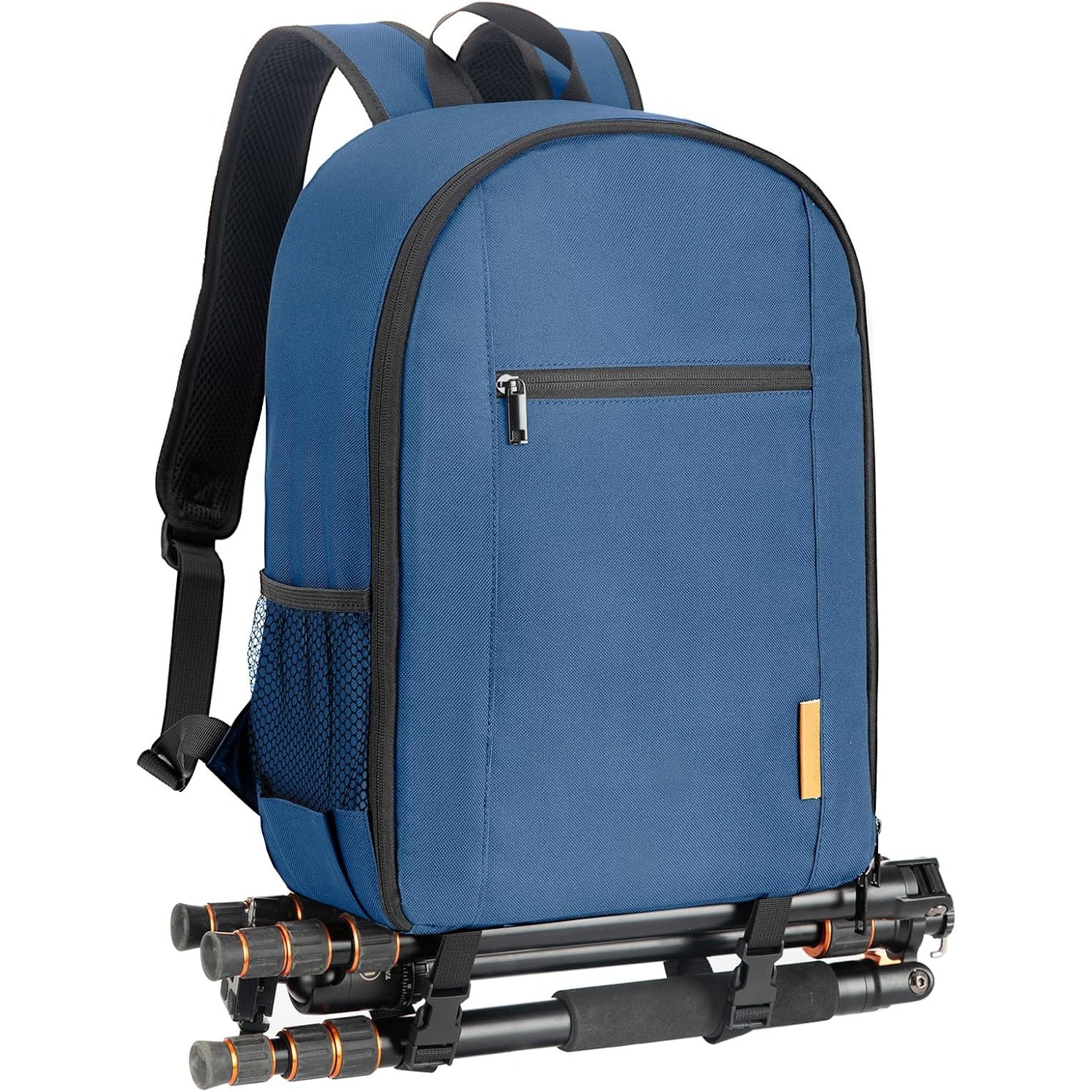
The capacity is 12 litres and the bag weighs 816 g empty. The maker's size works out to about 37.1 cm high, 28.4 cm wide and 14 cm deep. The item dimensions are listed separately as 36.8 x 27.9 x 13 cm, which is close to the same thing.
To picture it, think of a bag about as tall as a ruler and a bit, and no wider than your back. It is listed as size S with a slim fit, and the length from the shoulder to the base is about 37.1 cm. People with a shorter torso often find full-size camera packs hang too low. This one should sit above the hips.
The maker does not state internal dimensions or a maximum load. If your kit includes a long lens or a body with a battery grip, ask us before you order.
Seven dividers and how to use them
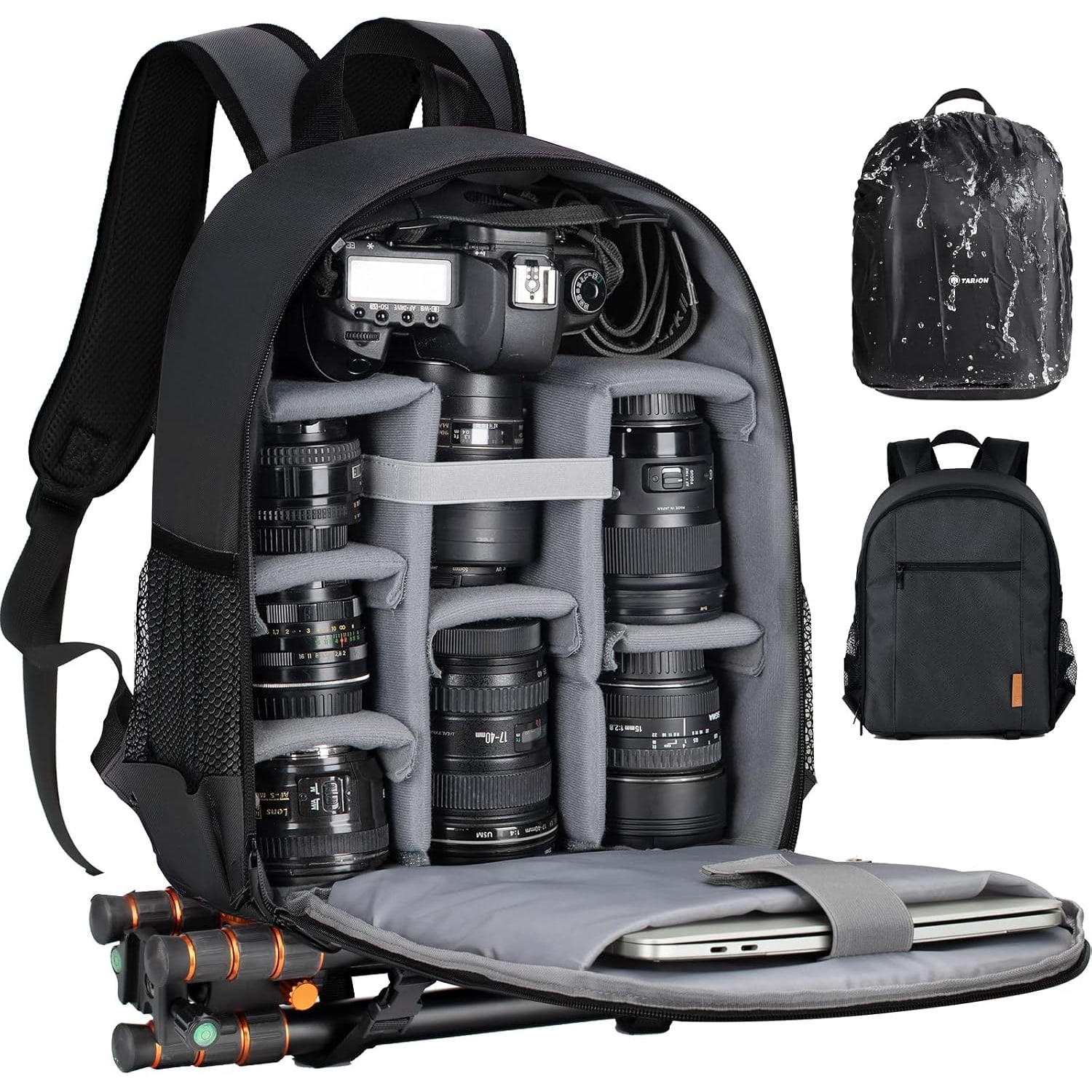
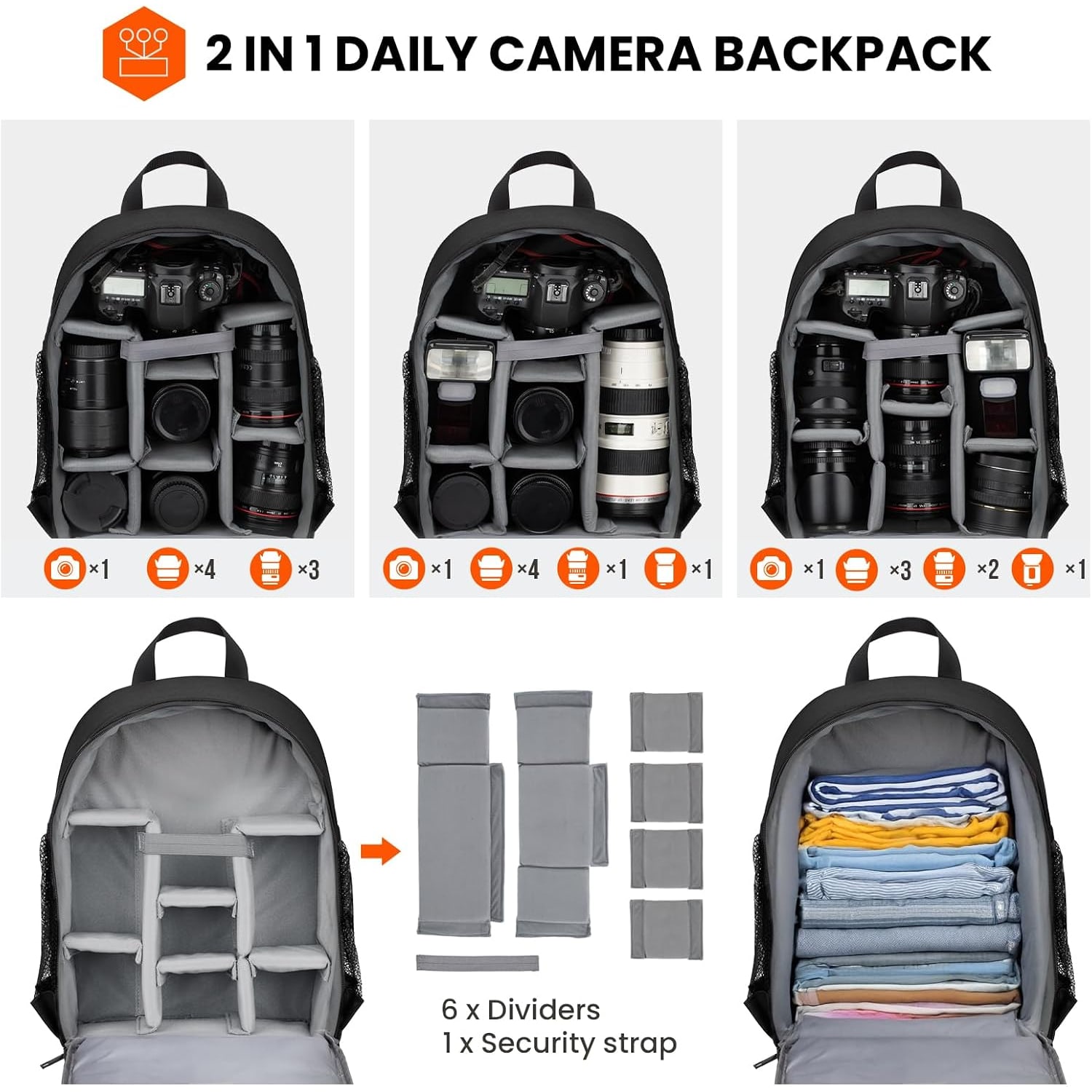
The camera section has seven adjustable dividers. The maker lists DSLR and mirrorless cameras, lenses and flash units as the intended contents.
Dividers only protect your gear if you set them up properly. Start with the camera, lens attached, in the middle. Build a snug cell round it. Then give each extra lens and the flash a cell of its own. Nothing should be able to touch its neighbour or move when you shake the bag gently.
Redo the layout when your kit changes. A new lens with a different length needs a new cell. It takes five minutes and saves you from the slow damage that comes from gear rubbing together on every walk.
All seven dividers come out. The maker points out that the empty bag then works as a daily backpack, and that the compartments also suit drones and card game decks. That flexibility is worth having in a small flat, where one bag that does two jobs saves cupboard space.
The laptop compartment
There is a dedicated compartment for a 13 inch laptop or a tablet. For many people this is what makes the bag usable on a weekday. You can carry your work machine and your camera together, go straight from the office to a shoot at Marina Bay at dusk, and edit a few frames on the train home.
Be strict about the size. Thirteen inches is the stated limit. A 15 or 16 inch laptop is not going to fit.
Five layers between your camera and the world
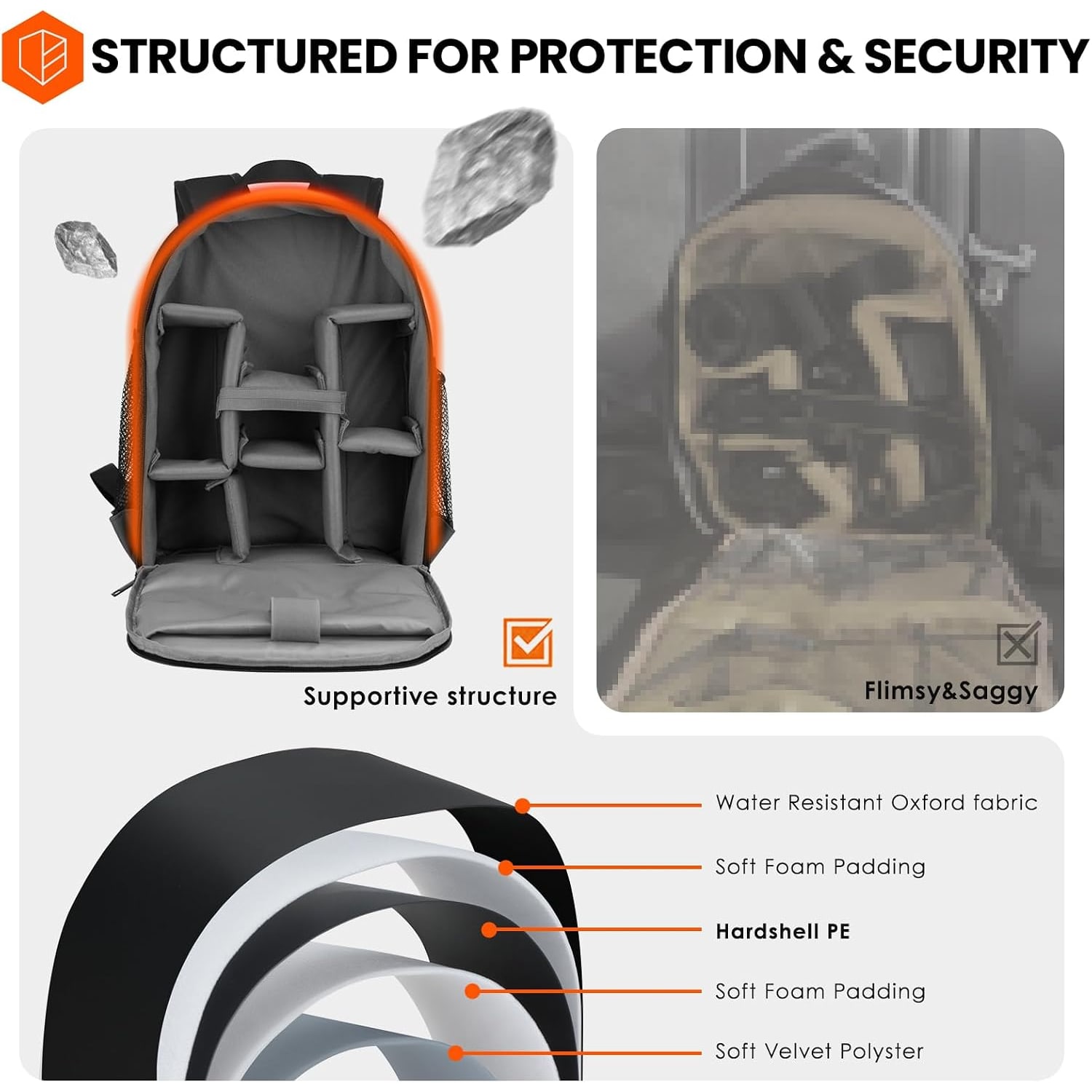
The maker describes the wall of the bag as a five-layer structure. On the outside is water-resistant Oxford fabric. Next comes soft foam padding. In the middle is a hardshell PE sheet. Then another layer of foam, and last a soft velvet polyester lining. The product details list the outer material as nylon and the lining as polyester.
Each layer has a job. The fabric takes the scuffs and turns away light rain. The foam cushions knocks. The hard sheet keeps the bag from folding or being crushed inwards, and the maker says it prevents deformation. The soft lining stops screens and lens barrels getting scratched.
That is more structure than a plain soft bag. It is still a fabric backpack, so do not sit on it, and do not check it into an aircraft hold with a camera inside.
Rain and the cover
Singapore's weather sets the test for any camera bag. A bright morning can turn into a thunderstorm by mid-afternoon, and the rain is heavy when it comes.
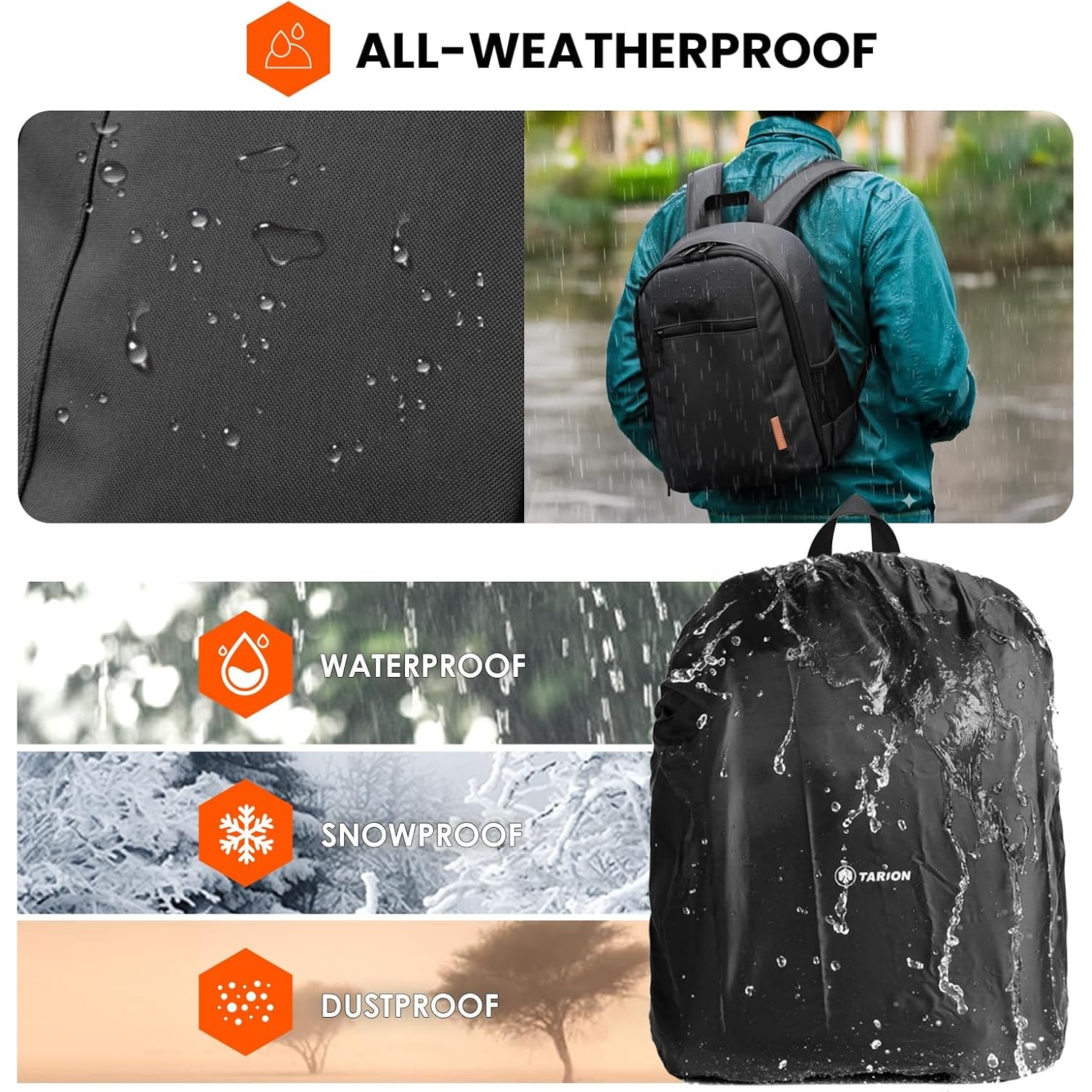
This bag has two lines of defence. The outer fabric is water resistant, which deals with drizzle and splashes. For proper rain, a rain cover is included. Pull it over the bag as soon as the sky darkens.
Keep your expectations sensible. A rain cover protects the front, top and sides of a pack. The back panel against your body and the straps are still exposed, and wind-driven rain gets everywhere in time. Use the cover to reach a covered walkway, a bus shelter or a void deck, then wait. Do not treat it as a reason to keep walking through a storm. When you get home, hang the cover up to dry before folding it.
The tripod goes underneath
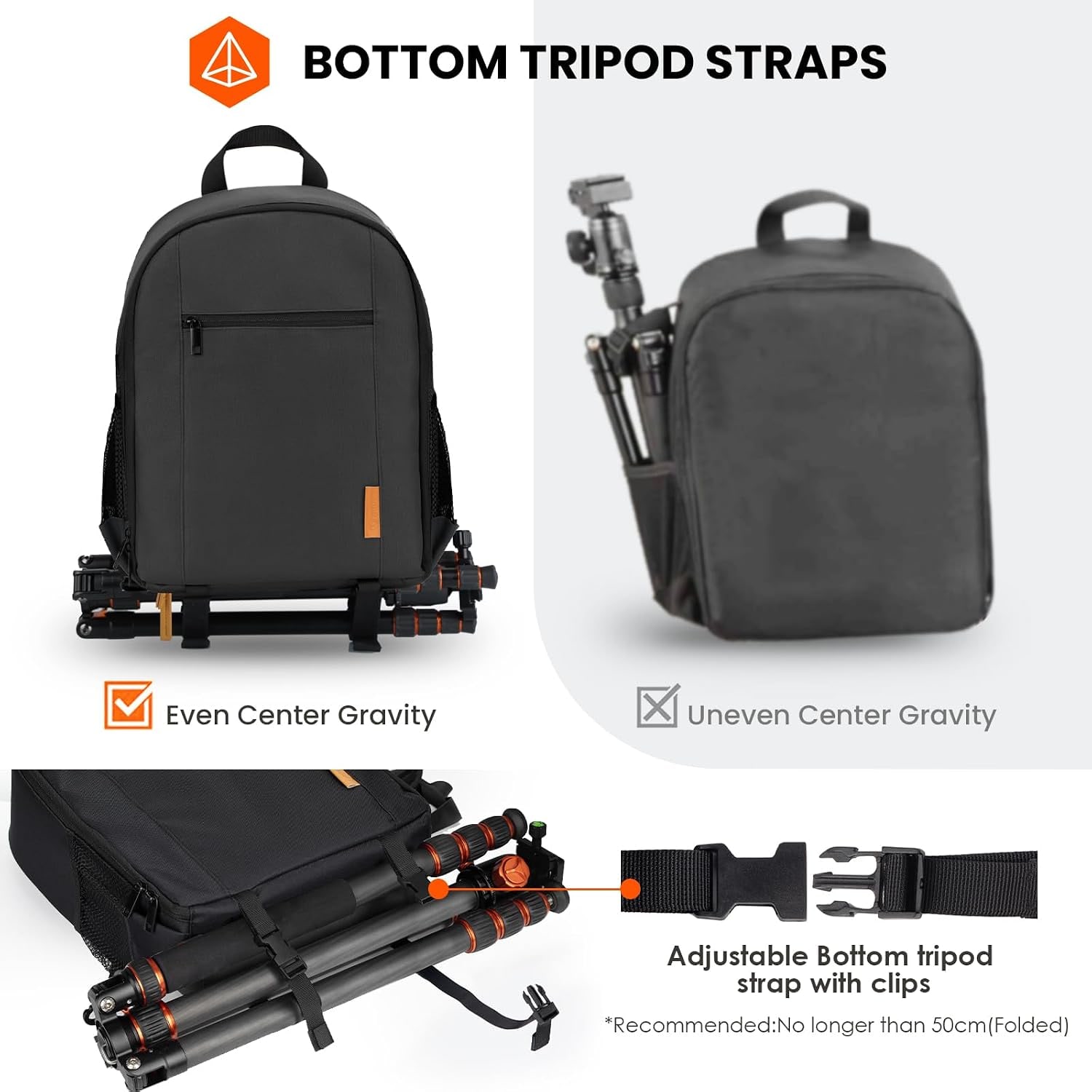
Many small bags hang a tripod from a side pocket. It works, but the bag then pulls to one side and the tripod swings into door frames and other passengers.
Here the tripod is carried across the base, held by two adjustable straps with clips. The maker says this centred position gives better stability and balance. It is a tidy arrangement for a travel tripod. Tighten both straps firmly, and unclip the tripod before you put the bag down so it does not rest on the legs.
Pockets and small items
Mesh pockets sit on the front and the sides. The maker suggests them for cables, batteries, SD cards and water bottles. Keep a routine. Charged batteries go in one pocket and flat ones in another. Cards live in a small case, not loose in the mesh.
A water bottle belongs in a side pocket, never in with the camera. Cold bottles sweat in humid air, and that moisture should stay on the outside of the bag.
On the train, at work and on a flight
A slim 12 litre pack is easy to live with in a crowded city. On the MRT, slip it off one shoulder and hold it in front of you at peak hour. At a hawker centre it fits on your lap or between your feet. In the office it slides under a desk.
For travel, the maker describes the bag as light and sized for airline carry-on. It is certainly small. Even so, airlines write their own rules for size, weight and the number of items, so check before you leave for Changi. On the plane, a bag this size will often fit under the seat in front, where your camera stays within reach.
Humidity, washing and storage
The care instruction is hand wash only. Empty the bag, remove the dividers, and wash it gently in cool water with mild soap. Rinse well and hang it in the shade until it is dry right through. Foam holds water longer than you expect, so give it a full day or more.
Humidity deserves more attention than dirt. A closed bag in a warm cupboard is a good home for lens fungus. Take your camera and lenses out after each trip and keep them in a dry cabinet or an airtight box with silica gel. Leave the bag unzipped so the lining can air.
Is it the right size for you
Choose this bag if you carry one camera with two or three compact lenses, want your laptop or tablet along, and care about weight. It suits commuters, students, travellers and anyone with a smaller frame.
Look at a larger bag if you carry two bodies, a long telephoto lens, or a laptop bigger than 13 inches. Look elsewhere too if you need a published maximum load or a chest strap, as the maker does not state either.
The short version
This is a lightweight photo backpack of 12 litres and 816 g. It has seven adjustable dividers, a 13 inch laptop compartment, a five-layer padded wall with a hard sheet in the middle, tripod straps under the base, mesh pockets and an included rain cover.
Lay your gear out and be honest about how much there is. If it is a small kit, a small bag will get used more. Most orders arrive in 7 to 12 working days by tracked courier, and you can return the bag within 14 days of delivery in resaleable condition.