
The complete guide
How To Choose A 4K PTZ Webcam With AI Tracking
The trouble with a camera that cannot move
Most webcams are designed for someone sitting in a chair. Clip one to the monitor, sit down, and it does its job. Stand up and the picture cuts you off at the neck. Walk to the whiteboard and you are gone.
Plenty of people do not work sitting down. Tutors write on boards. Trainers pace. Cooking, craft and fitness instructors move around a room. Worship leaders, product demonstrators and people running hybrid meetings all need a camera that covers more than one chair.
There are two old answers. One is a wide lens that shows the whole room, which leaves you small and far away. The other is a friend who holds the camera. A PTZ webcam is the third answer. The camera turns to follow you by itself.
How this one moves
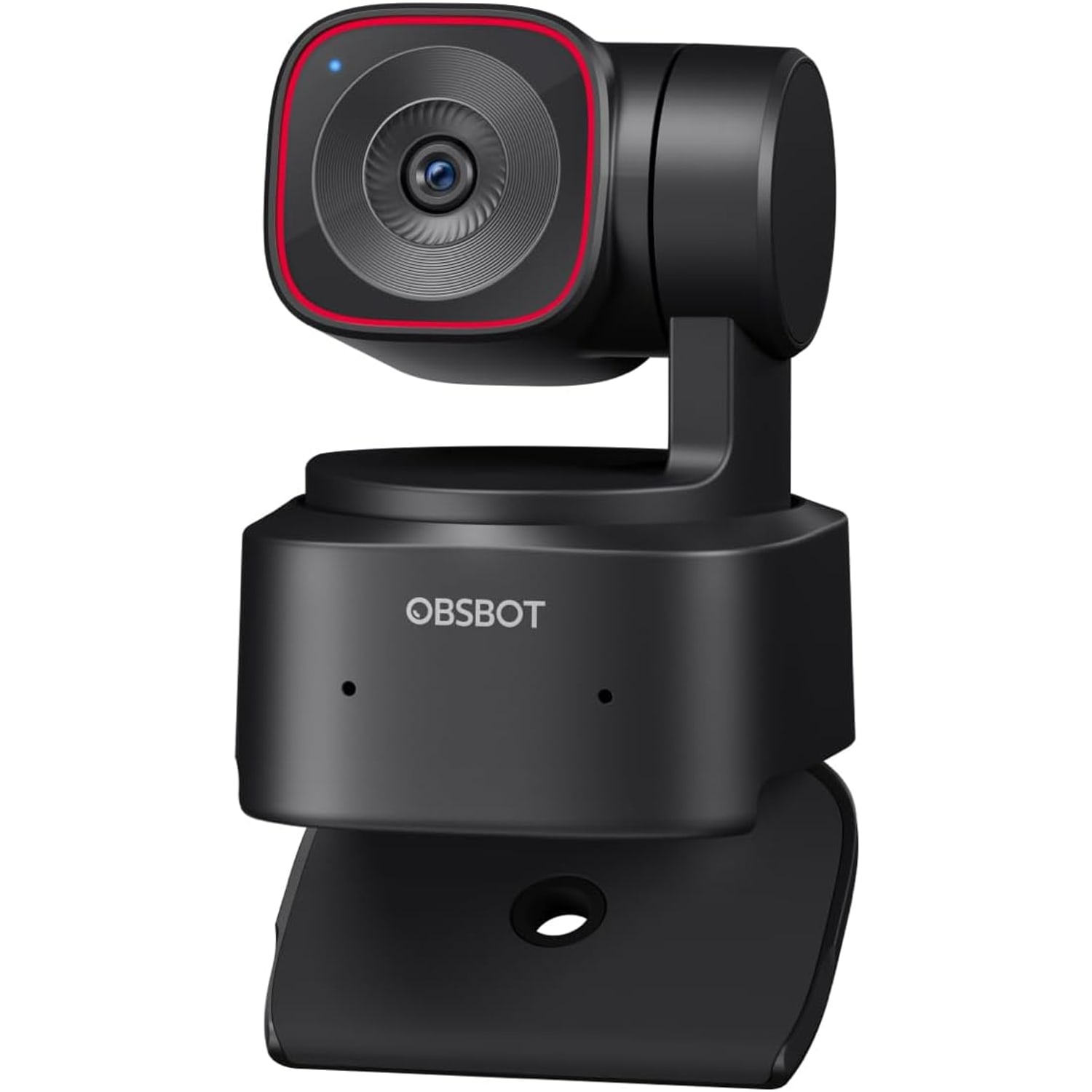
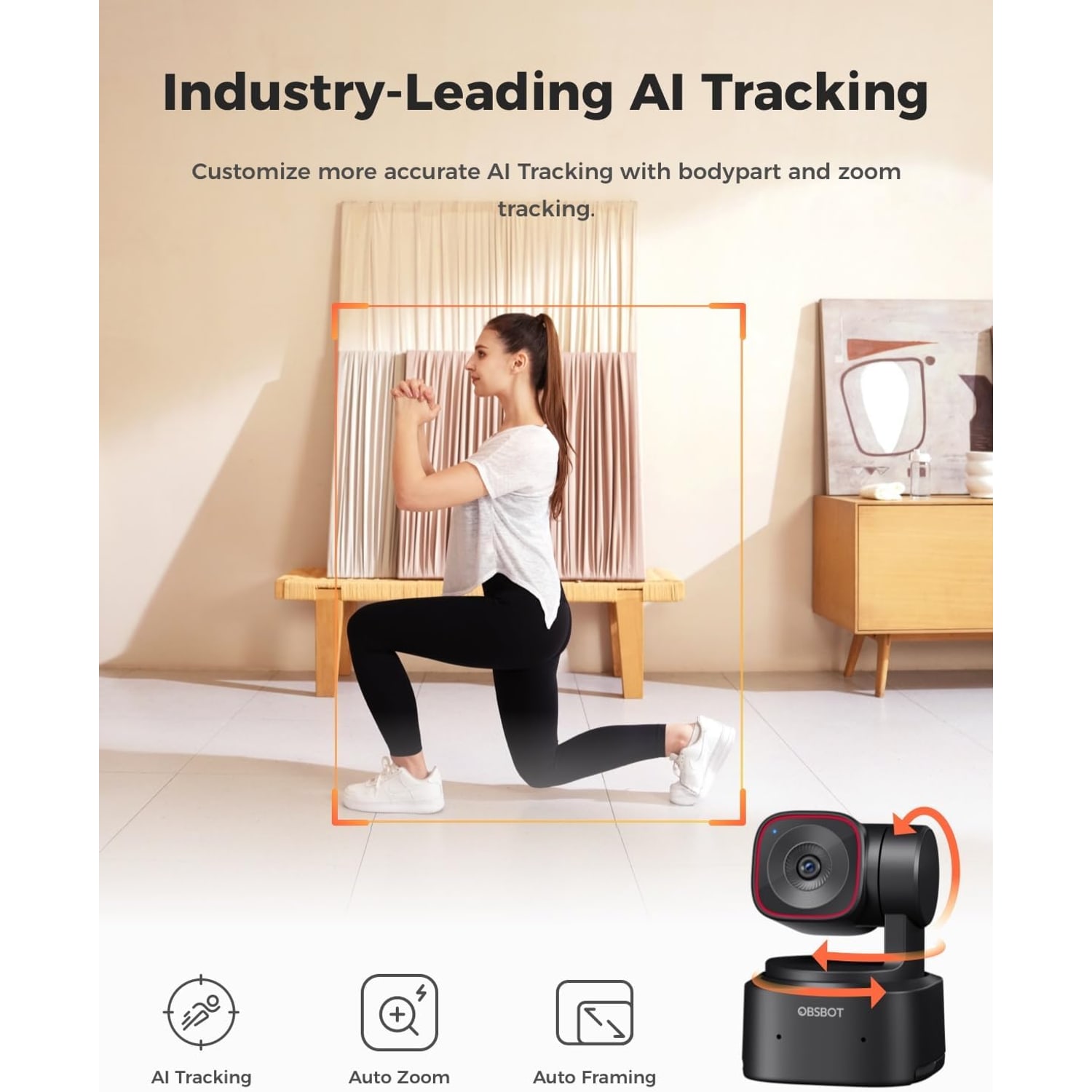
PTZ stands for pan, tilt and zoom. On this model the camera head sits on a 2-axis gimbal. It rotates 300 degrees horizontally and 180 degrees vertically.
In plain terms, it can swing most of the way round and tilt from low to high. In a typical tuition corner or meeting room, that covers every place you are likely to stand. Because the lens itself turns, the camera is not limited to one fixed view of the room.
The whole unit measures 4.6 cm deep, 6.4 cm wide and 4.8 cm high, and weighs 250 g. It is small for a camera with motors in it, though heavier than a simple clip-on webcam.
AI tracking and the three framing modes
A moving camera is only useful if it knows where to look. This one uses AI tracking with auto zoom. You choose how tight the shot should be.
Full body keeps you in frame from head to toe. That is the mode for fitness, dance and anything where footwork matters. Upper body suits teaching and presenting, where hands and gestures carry meaning. Close-up holds on your face for a talk or an interview.
As you step closer or further away, the camera adjusts the zoom to keep the chosen framing. You carry on with your lesson.
Tracking of this kind works on what the camera can see, so give it a fair chance. Light your face. Avoid standing in front of a bright window. If several people are in the room, lock the camera onto yourself with the gesture described below.
Presets for people who change scene
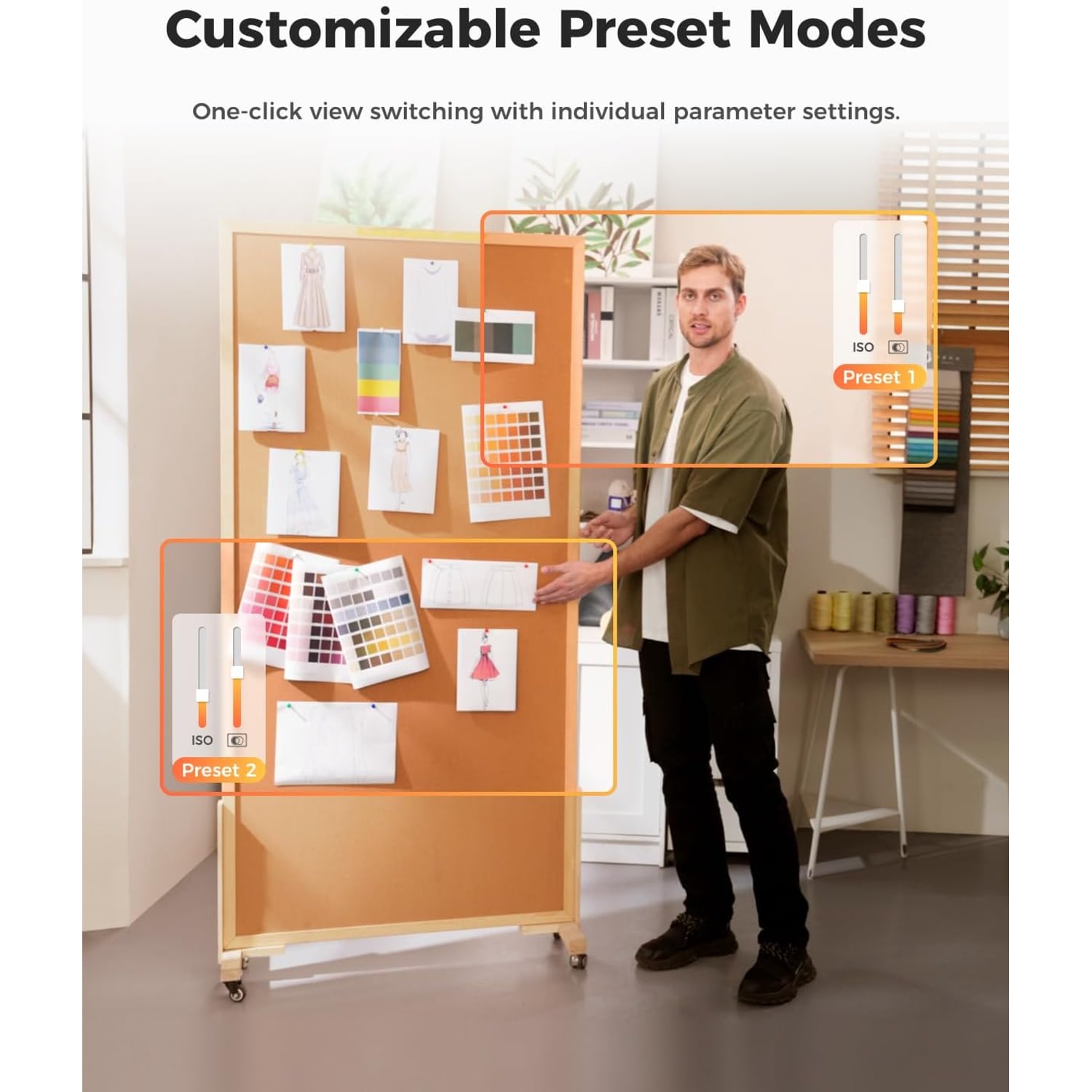
The maker says this version improves the preset function. A preset saves a camera position together with its settings and a tracking mode, and you can store several.
Think of a maths tutor in a study room. Preset one is a close view at the desk for the greeting. Preset two points at the whiteboard with tracking off, so the working stays in view while the tutor steps aside. Preset three is a wide shot with full body tracking for a demonstration. Moving between them takes a moment.
For streamers, the camera also supports SDK, OSC, Stream Deck and global hotkeys. That means a preset can sit on a button or a keyboard shortcut. If those terms mean nothing to you, that is fine. The camera works without any of them.
Gesture control
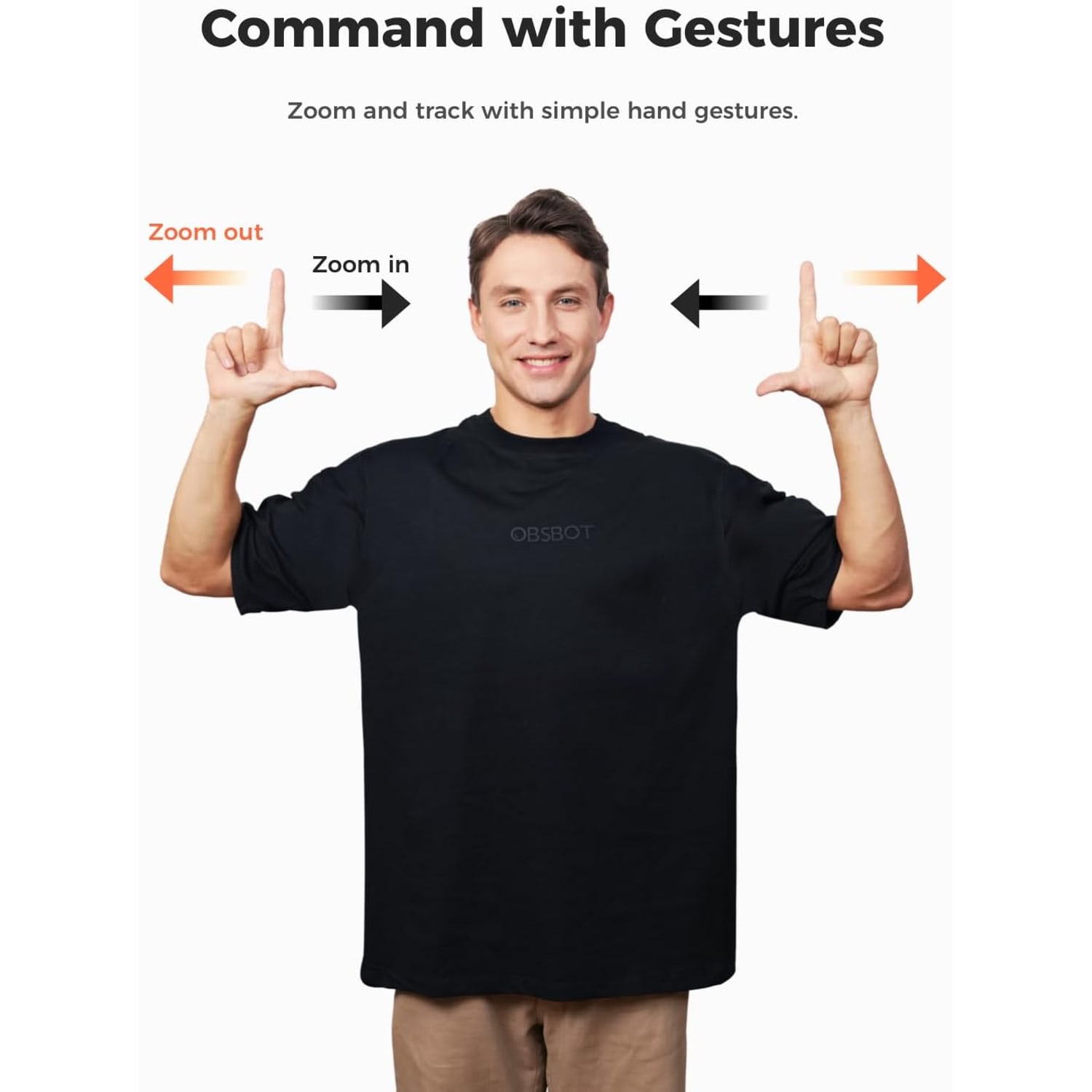
Two gestures are built in. One fixes you as the tracking target, which matters when other people are in the shot. The other controls the zoom.
The maker gives one piece of advice. Do not cover your face with your hand while you gesture, because it can affect face recognition. Hold your hand out to the side, pause for a second and let the camera respond.
Picture quality
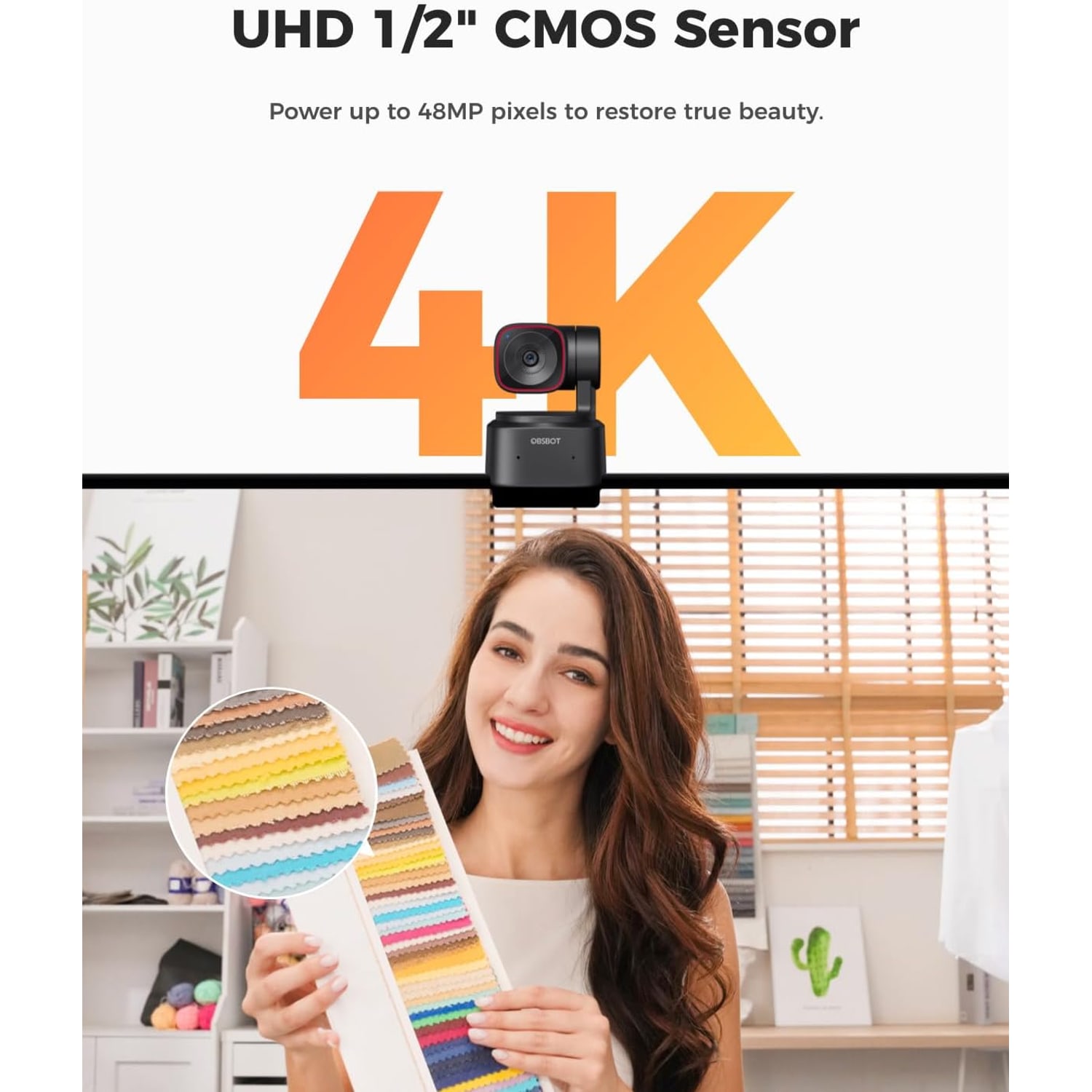
The camera uses a 1/2 inch CMOS sensor behind a lens with a maximum aperture of f/1.8. It focuses automatically, sets exposure automatically and lists HDR among its features. Zoom is listed at 4x. The maker's details put that figure under both digital and optical headings, so we simply call it 4x zoom.
You have two recording choices. 4K at 30 frames per second gives the most detail. 1080p at 60 frames per second gives smoother motion. For a lecture, 4K is the natural pick. For a workout or a fast demonstration, 1080p at 60 will look better.
Remember that meeting apps often send 1080p or less, even from a 4K camera. If your work is mostly live calls, the tracking will matter more to your audience than the resolution. The 4K pays off in recordings and streams, where you control the output.
Landscape, portrait and upside down
The camera supports horizontal, portrait and upside-down shooting modes. The maker says it adjusts the picture to landscape or portrait automatically, depending on how the camera is placed, without losing image quality.
Portrait matters for vertical video platforms. Upside-down mode lets you fix the camera under a shelf or high on a wall bracket and still get an upright picture. The maker does not state what mount or thread the camera has, so ask us before planning a ceiling or wall setup.
Connecting it
It connects by USB-C and takes its power from the computer's USB port. The box includes a USB-C to USB-C cable and a USB-C to USB-A 3.0 adapter. That covers a new laptop and an older desktop tower alike. A user guide and a warranty card are also in the box, though the maker does not state the warranty term.
The maker says the video stream is available without downloading an app. Plug it in and pick it in your meeting or streaming software. The compatible devices listed are personal computers, laptops and desktops. Operating system versions are not stated.
Microphones are on the feature list, without detail on number or type. For anyone who walks around while speaking, a clip-on microphone is worth having. A camera can follow you across the room, but a microphone on the camera stays where it is.
A first-day routine
Spend ten minutes with the camera before your first real session. Stand it where it will live and plug it in. Walk to each spot you use, such as the desk, the board and the far side of the room, and watch the preview to see how the tracking keeps up.
Then save a preset for each spot and try each framing mode once. Practise the two gestures until they work every time. Last, record a minute of yourself speaking while you walk, and play it back. You will hear at once whether the built-in microphones are enough or whether a clip-on microphone is needed.
What this version leaves out
The maker is open about one thing. Compared with its sister model, this version drops voice control and whiteboard mode, along with some streaming functions. In return it adds adjustable preset parameters and is aimed at teaching and conference use.
Some other points are simply not stated. They include the field of view, the mount type, the cable length and any privacy cover. The colour is listed as black or white, so check with us if the colour matters. Recording other people is covered by Singapore law, including the PDPA.
Who should buy it
Buy it if you present standing up, teach at a board, run classes with movement or host hybrid meetings where the speaker changes. It suits tuition centres, training rooms, home studios and small offices.
Do not buy it if you sit still at a desk for every call. A fixed webcam will do the same job for less money. Think twice as well if your laptop lid is very thin, since 250 g is a lot to hang on it. A shelf or a small stand behind the screen is a safer place.
Placement and care
Give the camera a stable, level surface with a clear view of the room. Leave space around it so the head can turn freely. Never twist the head by hand or stop it while it is moving.
The camera is not water resistant. Keep it indoors, away from drinks and from windows left open in a downpour. Wipe the lens with a dry microfibre cloth, and skip alcohol wipes. In humid weather, store it in a drawer or pouch when it is not in use so dust and haze do not settle on the glass. For travel, use a padded pouch so nothing presses on the gimbal.
The short version
This is an AI tracking webcam for people who move. A 2-axis gimbal turns the lens through 300 degrees horizontally and 180 degrees vertically. Tracking holds you in full body, upper body or close-up framing, and presets let you jump between scenes. It records 4K at 30 frames per second or 1080p at 60, and plugs into USB-C or USB-A with the parts in the box.
Ask us about mounting and colour if they matter. Most orders arrive in 7 to 12 working days by tracked courier, and you have 14 days from delivery to return it in resaleable condition.