Camera Company
Company
Shop By Category
T&Cs
Shop Online
  • The maker's specifications on every page
  • Free tracked delivery across Singapore over $150
  • 14-day returns

195cm Aluminium Tripod | 2 in 1 tripod and monopod | Camera tripod with ball head

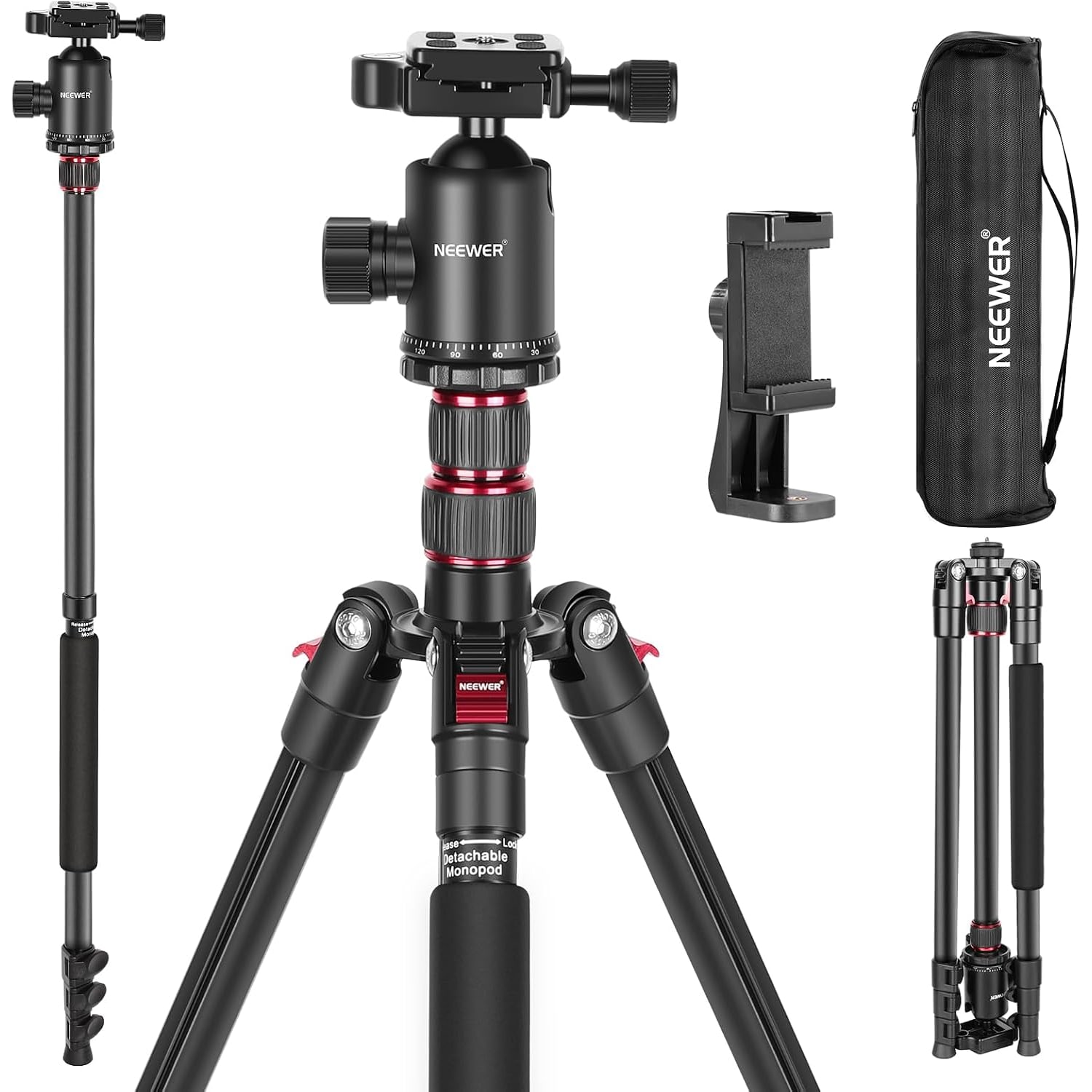
195cm Aluminium Tripod and Monopod with 36 mm Ball Head

$167.99 $201.99 Save $34
  • Up To 195.58 cm
  • 36 mm Ball Head
  • Becomes A Monopod
  • Low And Macro

Price: $167.99 $201.99

  • Free tracked delivery across Singapore on orders $150+, otherwise a flat $20
  • Pay by card or PayPal, handled by the payment provider
  • 14 days to change your mind, plus your statutory rights
Product specifications
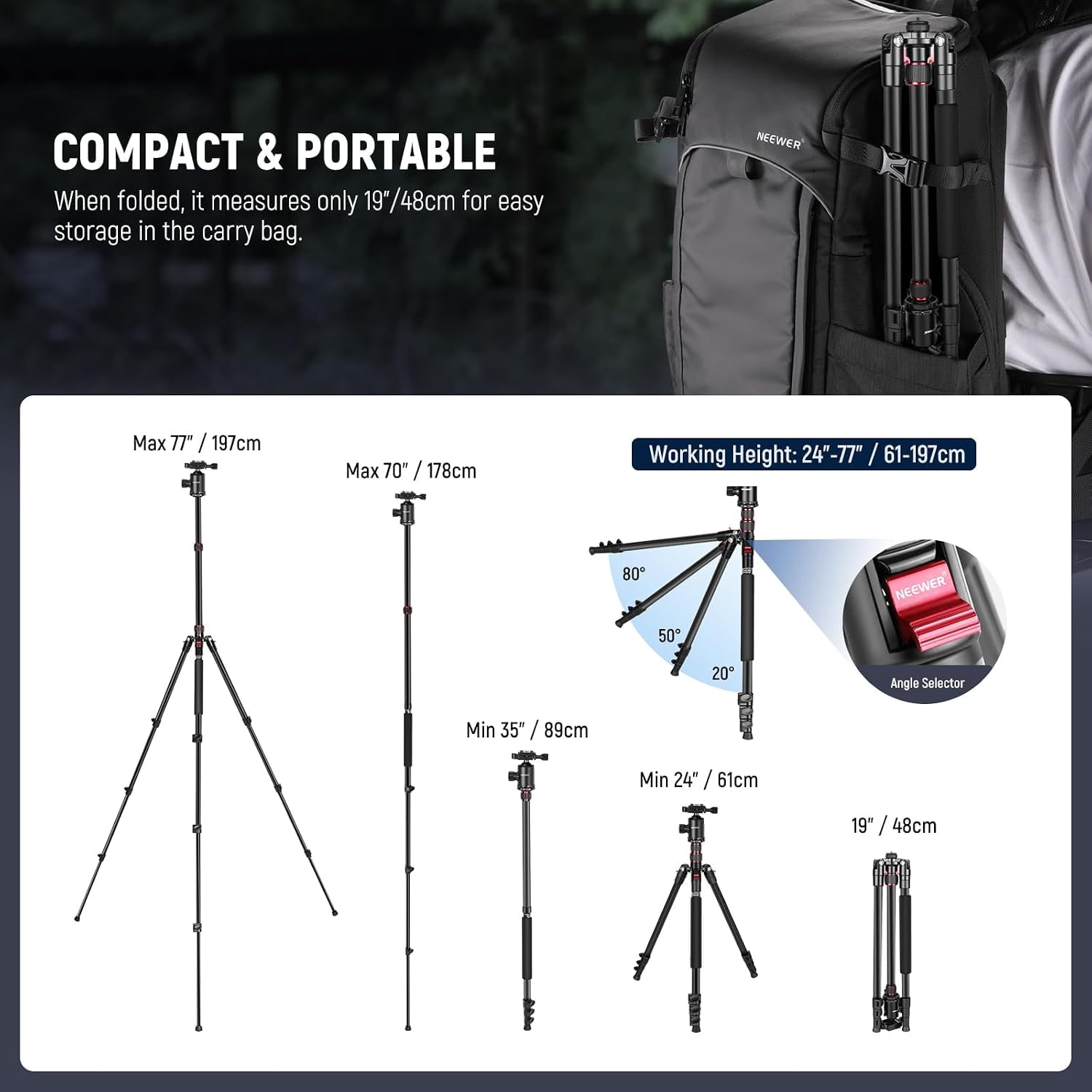
Maximum Height195.58 cm
Minimum Height48.3 cm
Folded Length48.3 cm
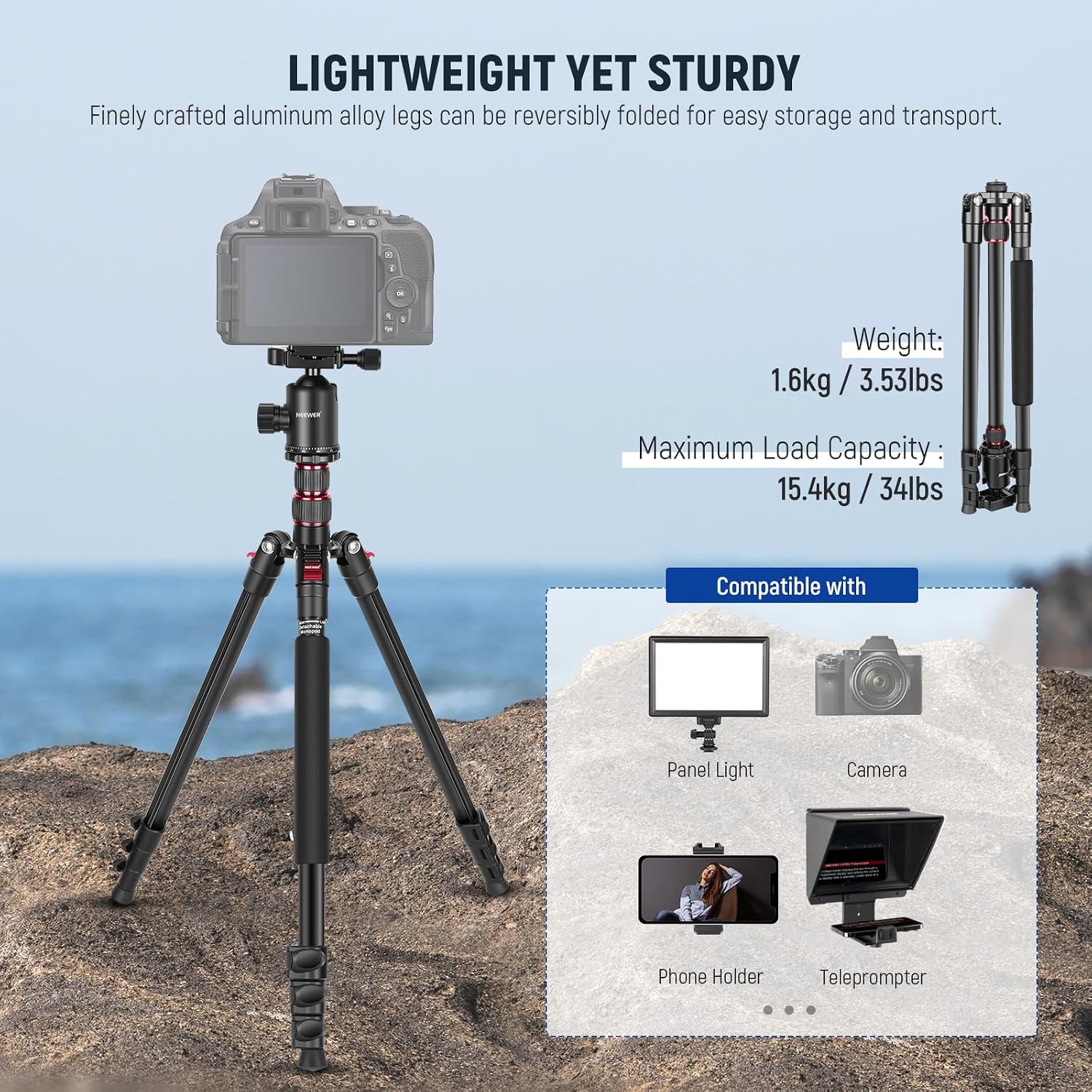
Weight1.42 kg (the maker's description also gives 1.6 kg net)
Weight Limit8 kg (the maker's description also gives a 15.4 kg maximum)
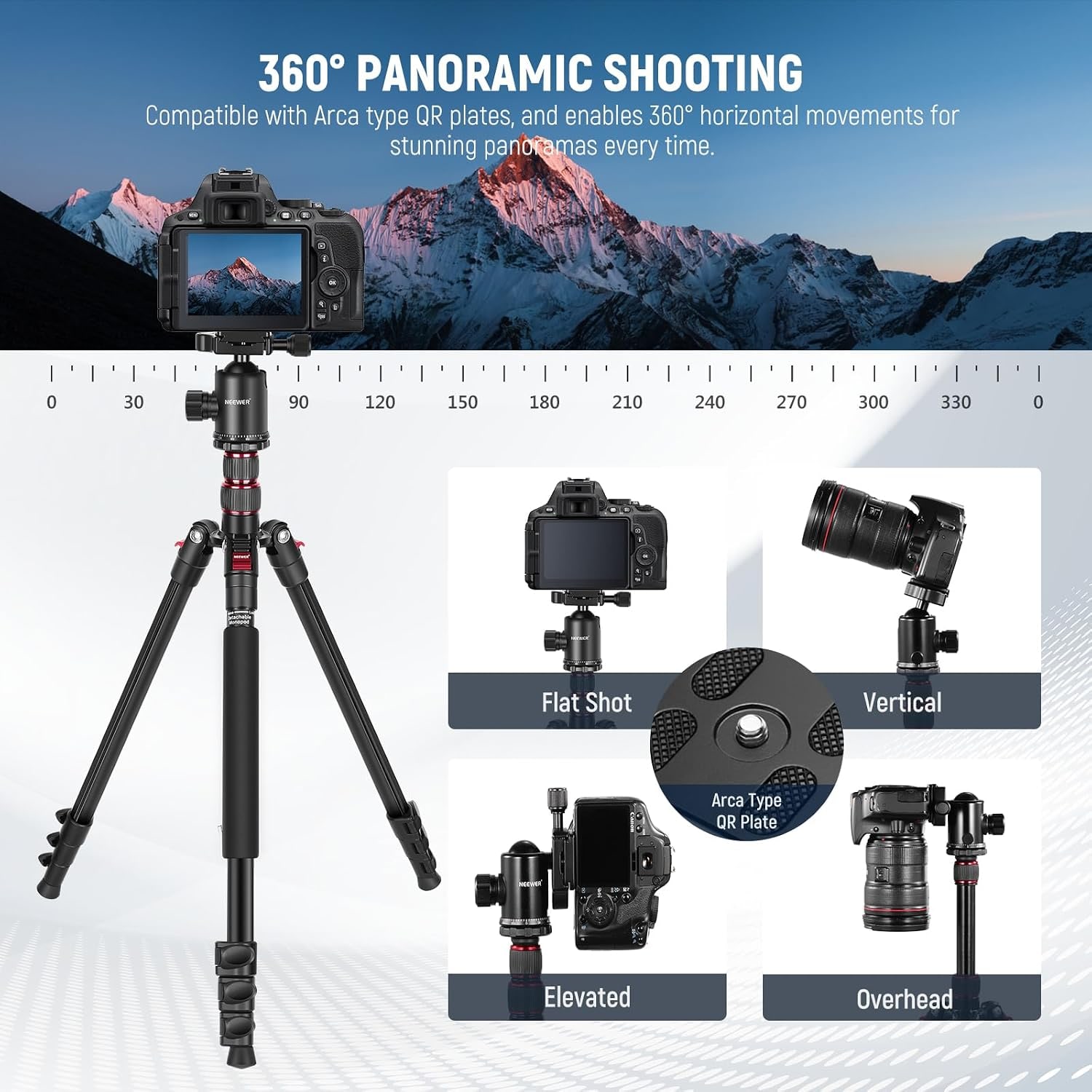
Head TypeBall head, 36 mm, rotates 360 degrees
Head ControlsTwo independent knobs
Bubble LevelYes, on the ball head
Leg Sections4
Leg Angles3 opening positions
Monopod Height88.9 to 177.8 cm
Centre ColumnInvertible for macro, with a hook for a sandbag
Leg MaterialAluminium alloy
ColourBlack
Compatible DevicesMirrorless and DSLR cameras, phones
In The BoxTripod with ball head, carry bag
SandbagNot included
Water ResistanceNot water resistant
Model NameTP77
Weight1.42 kg
Shipping & returns

Tracked delivery anywhere in Singapore. It is free on orders of $150 or more, and a flat $20 below that.

If it is not right for you, send it back within 14 days of delivery in resaleable condition and we refund the price you paid, including standard delivery. That is a voluntary policy we offer on top of your legal rights. You cover the cost of returning it unless the item is faulty.

If it arrives faulty, damaged or not as described, we put it right at no cost to you, return postage included, and your protection under the Consumer Protection (Fair Trading) Act 2003 is unaffected.

Shipping details · Refunds and returns

Up To 195.58 cmTall enough for eye-level shooting and folds to 48.3 cm.
36 mm Ball HeadRotates 360 degrees, with two control knobs and a bubble level.
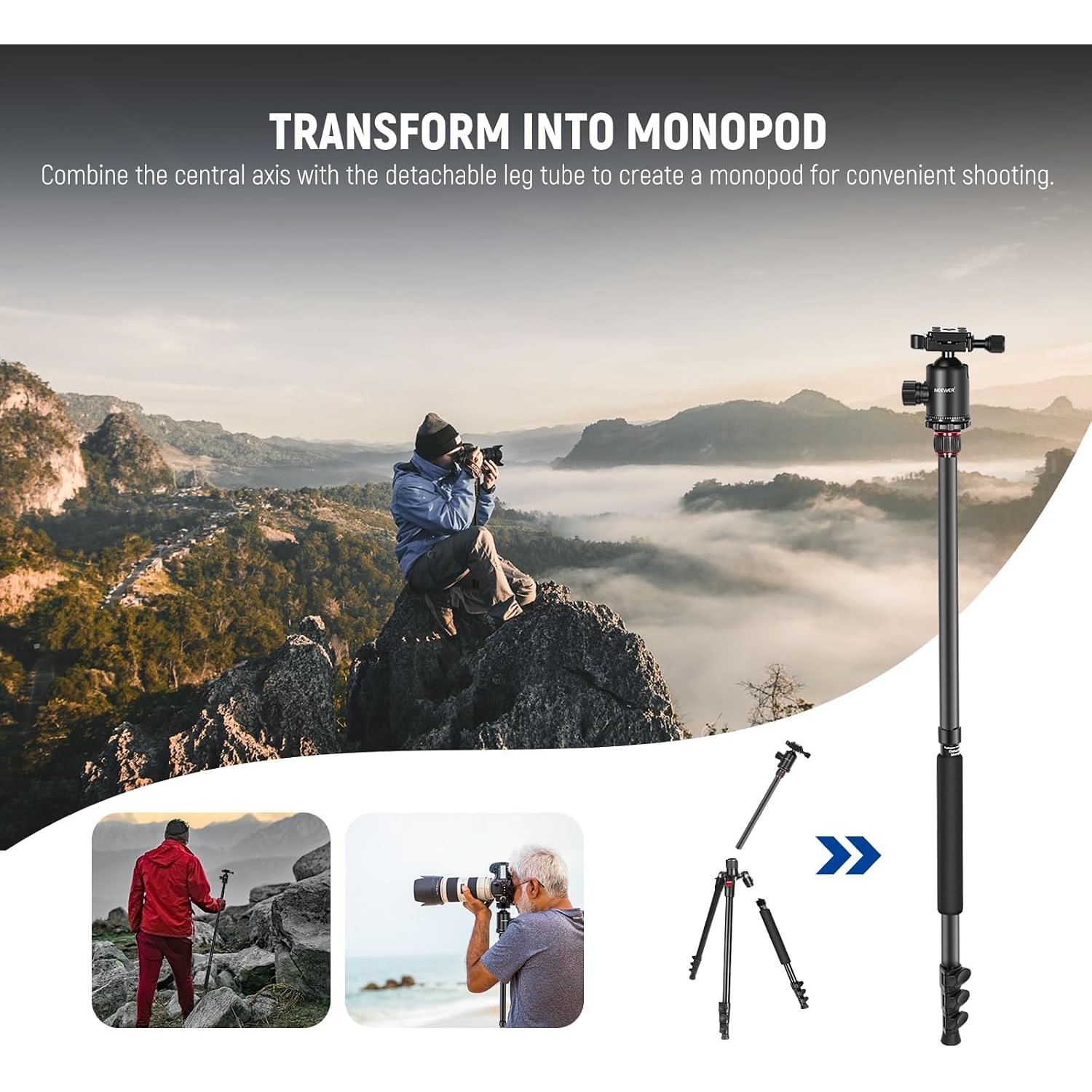
Becomes A MonopodOne leg and the centre column join into a pole from 88.9 to 177.8 cm.
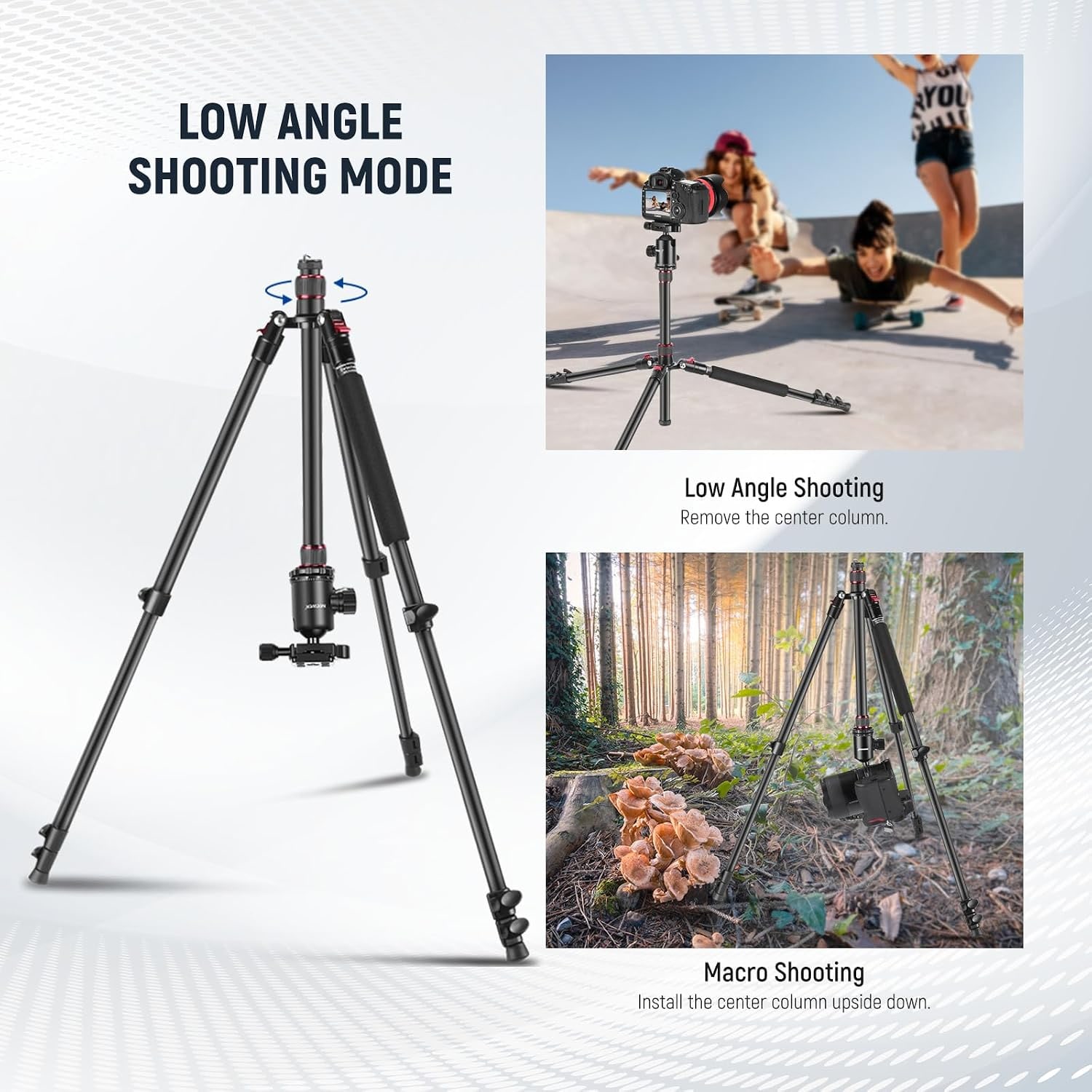
Low And MacroThree leg angles and an invertible centre column for ground-level work.

A 195cm aluminium tripod for sharper landscapes, night skylines and close-ups, with one leg that comes off to make a monopod.

Four-section aluminium alloy legs, a 36 mm ball head with two control knobs and a bubble level, a centre column that inverts for macro work and a carry bag.

This 195cm aluminium tripod extends to a stated 195.58 cm and folds to 48.3 cm, so it covers eye-level shooting for tall photographers and still fits a carry bag.

The 36 mm ball head rotates through 360 degrees, has two independent control knobs and carries a bubble level for straight horizons.

One leg detaches and joins the centre column to form a monopod that adjusts from 88.9 to 177.8 cm.

The legs open to three angles for uneven ground, and the centre column inverts to hang the camera low for macro photography.

The legs are aluminium alloy in four sections, the centre column has a hook for a sandbag (not included) and a carry bag comes in the box.

195cm Aluminium Tripod and Monopod with 36 mm Ball Head

There comes a point where a light phone tripod stops being enough. You buy a camera with a proper lens, you start shooting at dusk, and the pictures need the camera to hold perfectly still for a second or more. This 195cm aluminium tripod is made for that stage. It extends to a stated 195.58 cm, stands on four-section aluminium alloy legs and folds to 48.3 cm.

195cm Aluminium Tripod and Monopod with 36 mm Ball Head

The head is a 36 mm ball head. It rotates through 360 degrees for panoramas, and the maker fits it with two independent control knobs so one movement can be adjusted without disturbing the other. A bubble level on the head shows when the camera is sitting flat, which saves straightening every horizon afterwards.

195cm Aluminium Tripod and Monopod with 36 mm Ball Head

It is also a monopod. One leg tube comes off and connects to the centre column, giving a single pole that adjusts from 88.9 to 177.8 cm. A monopod takes the weight of the camera in places where three legs will not fit, such as a crowded viewing deck or the side of a sports pitch.

195cm Aluminium Tripod and Monopod with 36 mm Ball Head

For awkward ground the legs open to three angles, so one leg can sit higher on a step or a kerb while the others stay low. For close-ups the centre column inverts, hanging the camera between the legs near the ground. That is how macro photographers get level with a flower or an insect.

195cm Aluminium Tripod and Monopod with 36 mm Ball Head

The maker gives two load figures. Its specification lists a weight limit of 8 kg, and its description quotes a maximum of 15.4 kg. We suggest planning around the lower one. A hook on the centre column takes a sandbag for extra steadiness (the sandbag is not included). A carry bag is included, and the tripod is not water resistant.

Not sure yet? That is fine.

A camera has to suit the job you bought it for, and you cannot always judge that from a photograph. If it is not right for you, send it back within 14 days of delivery in resaleable condition and we refund the price you paid, including standard delivery. That is a voluntary policy we offer on top of your legal rights.

If it turns up faulty, damaged or not as described, that is on us. We pay the return postage, with your protection under the Consumer Protection (Fair Trading) Act 2003 unaffected. Read the full detail on our refunds and returns page, or ask us anything before you order.

Frequently Asked Questions

What does 2 in 1 tripod and monopod mean?

It means the same product works in two forms. With three legs it is a normal tripod that stands by itself. Take one leg off, join it to the centre column and you have a monopod, which is a single pole you hold upright.

What is the maximum height?

The maker states 195.58 cm. That puts the camera at or above eye level for nearly everyone, so tall photographers do not have to stoop. Most people will use it a little lower than full height.

What is the lowest it stands?

The stated minimum height is 48.3 cm with the legs in their normal position. To go lower, the legs open to wider angles and the centre column can be inverted so the camera hangs beneath. The maker gives no figure for the lowest camera position in that mode.

How long is it when folded?

It folds to 48.3 cm. That fits inside a cabin-size suitcase and straps to the side of a camera backpack. It goes into the included carry bag for the trip.

How much does the tripod weigh?

The maker gives two figures. Its specification lists 1.42 kg, and its description gives a net weight of 1.6 kg. Either way it is light for a tripod of this height, and it is fair to plan for the heavier number.

What load can it carry?

Two figures appear here too. The maker's specification lists a weight limit of 8 kg, while its description quotes a maximum load of 15.4 kg. We suggest treating 8 kg as your ceiling.

My camera and lens weigh about 2 kg. Is that fine?

Yes, that sits well under the lower of the two stated figures. A mirrorless or DSLR body with a standard zoom is the kind of load it is meant for. With a long telephoto lens, balance matters as much as weight, so tighten the head fully.

What head is fitted to this tripod?

It has a 36 mm ball head. The ball lets the camera tilt in any direction, and the head rotates through 360 degrees for panning. It is the common choice for stills because it is quick to aim.

Why are there two knobs on the head?

The maker describes them as independent control knobs for adjusting each angle precisely. In practice it means you can change one movement, such as the pan, and leave the rest of the framing locked. That helps a lot when you are stitching a panorama.

Does it have a spirit level?

Yes. There is a bubble level on the ball head. Centre the bubble before you shoot and your horizons come out straight, which matters for seascapes and skylines.

How do I turn it into a monopod?

One of the leg tubes is made to come off. You detach it and connect it to the centre column, and the ball head stays on top. The maker describes the change as quick, with no tools mentioned.

How tall is the monopod?

It adjusts from 88.9 to 177.8 cm. The low end suits kneeling or sitting, and the top end brings the camera to eye level for most adults.

When is a monopod more useful than a tripod?

When there is no room or no time for three legs. Think of a crowded festival, a school sports day or a walk where you stop for a few seconds at a time. A monopod carries the weight and cuts down shake, though it will not stand up alone.

How many sections do the legs have?

Each leg has 4 sections. More sections mean a shorter folded length for the same height, which is how this tripod reaches 195.58 cm and still packs to 48.3 cm. The maker does not state the type of leg lock.

What are the three leg angles for?

They let each leg open to a normal, wider or widest position. On stairs, a slope or rocks by the sea, you set each leg to suit the ground. The wider angles also bring the whole tripod lower.

How does the inverted centre column help with macro shots?

You fit the centre column upside down so the camera hangs between the legs, close to the ground. That gets the lens level with small subjects like flowers, insects or coins. The camera is upside down in that position, so you rotate the pictures afterwards.

What is the hook on the centre column for?

It is for hanging weight under the tripod to make it steadier. The maker mentions a sandbag, which is not included. A camera bag or a full water bottle in a tote does the same job.

Will it hold steady in wind?

It will do better if you help it. Use less height, keep the centre column down, open the legs wide and hang a bag from the hook. In strong gusts, stay beside it with a hand on the camera strap.

What are the legs made of?

The legs are aluminium alloy. Aluminium is the usual choice for tripods that need to be strong without costing as much as carbon fibre. The finish is black.

Can I use my phone on it?

The maker describes the tripod as suitable for phones as well as cameras. It does not list a phone holder among the contents, so plan to supply your own phone clamp with a tripod socket.

What cameras is it built for?

The maker names mirrorless and DSLR cameras from the major brands. Any camera with a standard tripod socket should mount on the ball head. The maker does not describe the mounting plate in detail.

Is there a quick-release plate?

The maker does not state whether the head uses a quick-release plate or what type. If you already own plates for another system, do not assume they will fit. Ask us before ordering if this decides it for you.

Is it water resistant?

No, it is listed as not water resistant. Wipe rain off promptly, and if water gets inside the leg sections, dry them out the same day. After the beach, wipe off salt.

What arrives in the package?

The tripod with its ball head, and a carry bag. The maker refers to included accessories without itemising them. A sandbag and a phone holder are not listed.

Is it practical on the MRT or a flight?

At 48.3 cm folded and in its bag, it is easy to carry on a train. That length also fits most cabin suitcases. Airlines set their own rules for tripods and for cabin weight, so check before you fly.

Where do I keep it in a flat?

In its bag it is about half a metre long and stands in a wardrobe or behind a door. Keep it somewhere dry with some air movement. A sealed box in a damp storeroom is not a good home for metal gear.

Is it good for night skylines and long exposures?

That is exactly the kind of work a solid tripod is for. Use a low height, level the head with the bubble and trigger the camera with its self-timer so your hand is off it. No remote is listed in the box.

Is it too much tripod for a beginner?

Not really. A ball head is simple to learn, and the extra features (the monopod, the leg angles, the inverted column) can wait until you need them. It gives a new camera owner room to grow.

How soon will it be delivered, and what does delivery cost?

Most orders arrive within 7 to 12 working days of the order date. Our products are sent from overseas warehouses, so allow for that if you need it by a set date. Delivery is to Singapore addresses only, free on orders of $150 or more and a flat $20 under that, and you get tracking by email once the parcel is on its way.

What if it is not the right tripod for me?

Send it back within 14 days of delivery in resaleable condition. Try it indoors first, with the leg tips on a mat, and keep the bag and packaging clean. That way a return is simple if you decide against it.

How to Choose an Aluminium Tripod That Also Works as a Monopod

6 min read Camera Company

Where handheld runs out

Modern cameras are forgiving. Stabilised lenses and clever sensors let you shoot handheld in light that would have been hopeless ten years ago.

There is still a line they cannot cross. Blue hour over the bay, with the water smoothed to glass, needs the shutter open for several seconds. Light trails on an expressway need longer. A stitched panorama needs every frame taken from exactly the same height. A close-up of an orchid needs the camera to hold a position within a millimetre.

None of that works in your hands. It needs a tripod, and it needs one that is solid enough to trust with a camera and lens that cost real money.

What this tripod is

It is a full-height aluminium tripod with a ball head, and it has a second trick. One leg comes off to make a monopod.

The maker gives the maximum height as 195.58 cm, the minimum as 48.3 cm and the folded length as 48.3 cm. The legs are aluminium alloy in four sections. The head is a 36 mm ball head with a bubble level. A carry bag is included.

Height, and why you may not use all of it

At 195.58 cm this is taller than most people. That matters in two cases.

If you are tall, you can bring the viewfinder to your eye without bending. An evening of stooping over a short tripod is a good way to end up with a sore back.

If you need to see over something, the extra height gets the lens above a railing, a hedge or the heads of a crowd.

For everything else, lower is steadier. A tripod is at its firmest with the thickest leg sections out, the thin ones in and the centre column down. Raise it only as far as the shot needs.

The ball head

A ball head is one ball in a socket. Loosen it and the camera moves freely in any direction. Tighten it and the camera stays put. For stills it is the fastest way to frame.

This one is 36 mm and rotates through 360 degrees. The maker fits two independent control knobs, described as letting you adjust each angle precisely. The practical gain is that you can turn the camera for the next frame of a panorama while everything else stays locked.

The bubble level sits on the head. Centre it before a panorama and the frames line up. Centre it before a seascape and the horizon is flat.

The maker does not describe the plate that holds the camera. If you own plates from another system, do not count on them fitting.

From tripod to monopod

One leg tube detaches and joins the centre column. The result is a single pole with the ball head on top, adjustable from 88.9 to 177.8 cm.

A monopod does not stand up alone. What it does is carry the weight of the camera and take most of the up-and-down shake out of your shots. You can move with it, plant it for a few seconds and move again.

That suits places where a tripod is unwelcome or in the way. A packed viewing gallery. The touchline at a school match. A night market. Some venues that ban tripods allow monopods, though you should always ask.

Getting low

Two features bring the camera down.

The legs open to three angles. At the widest, the tripod squats low and wide. On uneven ground you can set each leg differently, one short on a step and two long below it, and still level the camera with the head.

The centre column also inverts. Fit it upside down and the camera hangs between the legs, close to the ground. This is the standard method for macro work. Fungi on a log at the nature reserve, a snail after rain, the texture of a leaf: all of them need the lens down at their level. The pictures come out upside down and you rotate them later.

Two load figures, and which one to use

The maker gives two different numbers for how much this tripod carries.

Its specification lists a weight limit of 8 kg. Its description quotes a maximum load of 15.4 kg.

We cannot tell you which is right, so we suggest planning around 8 kg. For most people the question is academic. A mirrorless body with a standard zoom weighs well under 2 kg. A DSLR with a fast telephoto might reach 3 or 4 kg. Both are inside the lower figure with room to spare.

There is a similar gap on the tripod's own weight, listed as 1.42 kg in one place and 1.6 kg net in another. Assume the heavier one when you are packing for a flight.

The hook on the centre column is there to add steadiness. The maker suggests a sandbag, which is not included. Your camera bag works.

A routine for a sharp long exposure

The tripod does half the work. The other half is habit.

Set the legs first and get them roughly level by eye. Mount the camera and tighten the head. Centre the bubble. Frame the shot, then lock everything and take your hands away.

Now use the camera's two-second self-timer, so the press of your finger has died away before the shutter opens. If your lens has stabilisation, check the camera manual, since many makers advise switching it off on a tripod.

Wait for a gap in the wind, and for people to stop walking past on a wooden deck or a footbridge, because footsteps travel through boards and into the legs. Take four or five frames of the same scene. One of them will be sharper than the others, and that is the one you keep.

Who it suits

It suits someone who has moved from a phone to a camera and wants the pictures to show it. Landscape, night, architecture and macro all depend on a still camera.

It suits travellers who want one support for everything, since the monopod saves carrying a second item.

It suits tall photographers, who are badly served by most budget tripods.

It is more than you need for a phone on a desk, and the maker lists no phone holder in the box, so phone users would need their own clamp.

Shooting in Singapore

The skyline is the obvious subject. From the Marina Bay promenade, the Helix Bridge or the breakwater at East Coast Park, a long exposure at dusk is the classic local photograph, and it cannot be done without a tripod.

Those spots are windy. Keep the height modest, spread the legs, push the centre column down and hang your bag from the hook. On a balcony, set up well back from the railing and keep the strap round your wrist or neck.

Crowds are the other fact of life. During festivals and fireworks, three legs spread out on a busy path are a hazard to everyone. That is when the monopod earns its place.

Getting there is easy. Folded to 48.3 cm in its bag, the tripod rides on the MRT without trouble and stores in a wardrobe at home.

The climate asks for some care. The tripod is listed as not water resistant. Wipe rain off promptly. Water that gets inside the leg sections should be dried the same day, and salt from sea air should be wiped off. Do not zip a wet tripod into its bag overnight.

How to compare tripods at this level

Look at height against folded length. Four leg sections are what let this one reach 195.58 cm and pack to 48.3 cm.

Look at the head. A ball head with a separate pan control and a level is what stills photographers want.

Look for flexibility: leg angles, an invertible column and a monopod option each solve a problem you will meet sooner or later.

Then look at the load figure and be conservative with it. A tripod should be rated for well over what you put on it.

Looking after it

Extend the legs and wipe them down after a wet or sandy outing. Let them dry fully before closing. Check the knobs are tight before mounting the camera, and loosen nothing while the camera is unsupported. Store the tripod in its bag somewhere dry.

The short version

An aluminium alloy tripod that extends to 195.58 cm and folds to 48.3 cm, with a 36 mm ball head, two control knobs and a bubble level. One leg converts it to a monopod of 88.9 to 177.8 cm. The legs open to three angles and the centre column inverts for macro. The maker gives load figures of 8 kg and 15.4 kg, and we suggest working to 8 kg. A carry bag is included. It is not water resistant.

Browse the shop

Ready for sharper low-light photos?

This 195cm aluminium tripod holds your camera still for long exposures and turns into a monopod when three legs will not fit.

Ask us a question

Page summary

This is an aluminium camera tripod that converts to a monopod (maker's model TP77). Maximum height is 195.58 cm, minimum height is 48.3 cm and folded length is 48.3 cm. The legs are aluminium alloy in 4 sections and open to 3 angles. It has a 36 mm ball head that rotates 360 degrees, with two independent control knobs and a bubble level. One leg detaches and joins the centre column to form a monopod adjustable from 88.9 to 177.8 cm. The centre column inverts for macro photography and has a hook for a sandbag, which is not included. The maker gives two weight figures (1.42 kg and 1.6 kg) and two load figures (an 8 kg weight limit and a 15.4 kg maximum). A carry bag is included. It is black and not water resistant.