

The complete guide
Choosing a 4K Dash Cam, A Practical Buyer's Guide
The problem a dash cam actually solves
Most drives are uneventful. The one that is not tends to arrive without warning, and then you are standing on the kerb trying to explain what happened to someone who remembers it differently. Two people, two versions, no way to settle it.
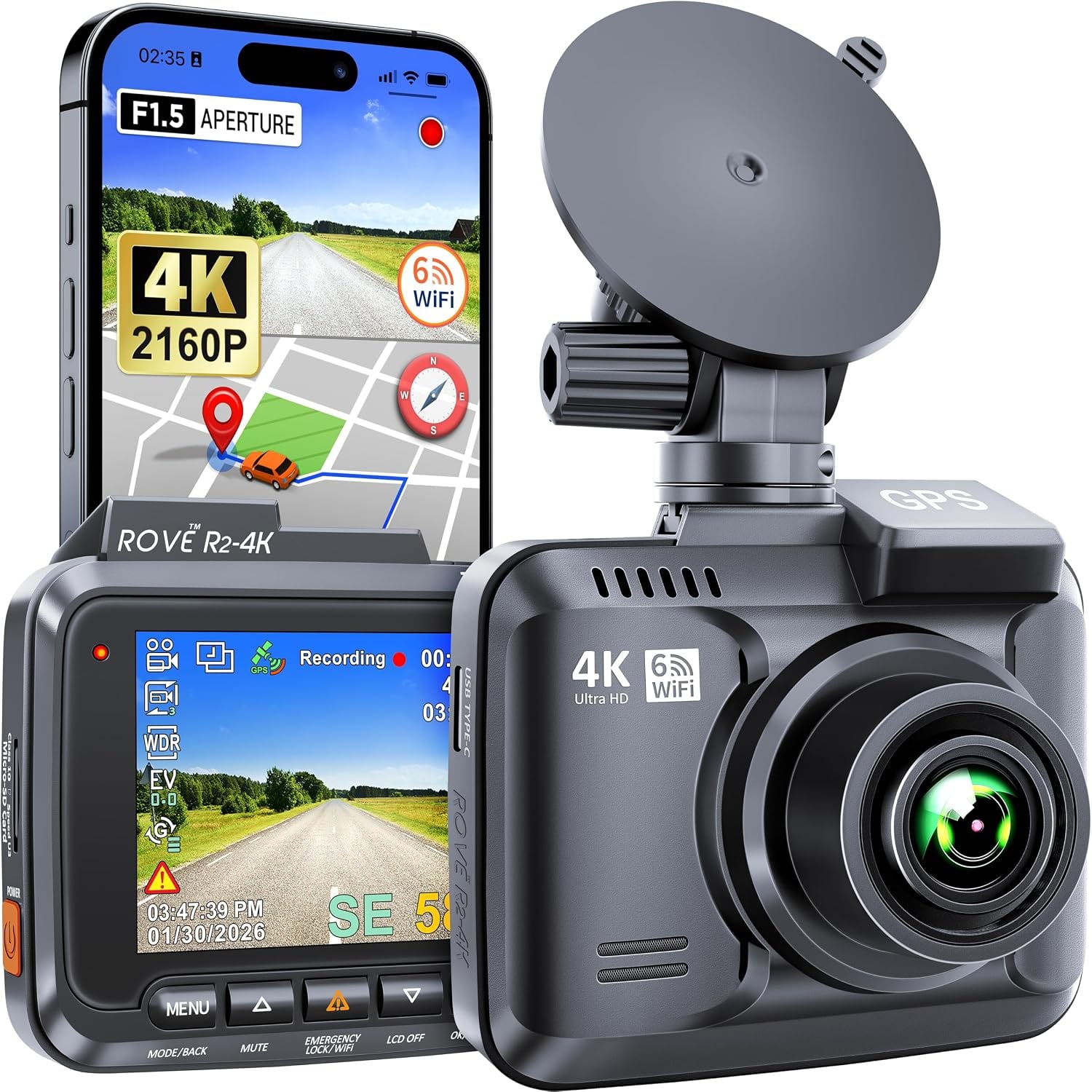
That is the gap a car dashboard camera fills. It does not stop anything happening. It just means there is a record, with a time stamp and, on this model, a GPS track showing where you were and how fast you were going. That turns a disagreement into a fact. It is also handy for the smaller annoyances: the car that clipped your wing mirror in a crowded car park, the motorcyclist who appeared from the side without looking, the delivery van that reversed a little too confidently.
A dash cam works best when you forget about it. Fit it once, plug it in, and it starts with the car and stops when you switch off. No buttons to press, no daily routine. The only time you think about it is when you need the footage.
Why 4K matters more than it sounds
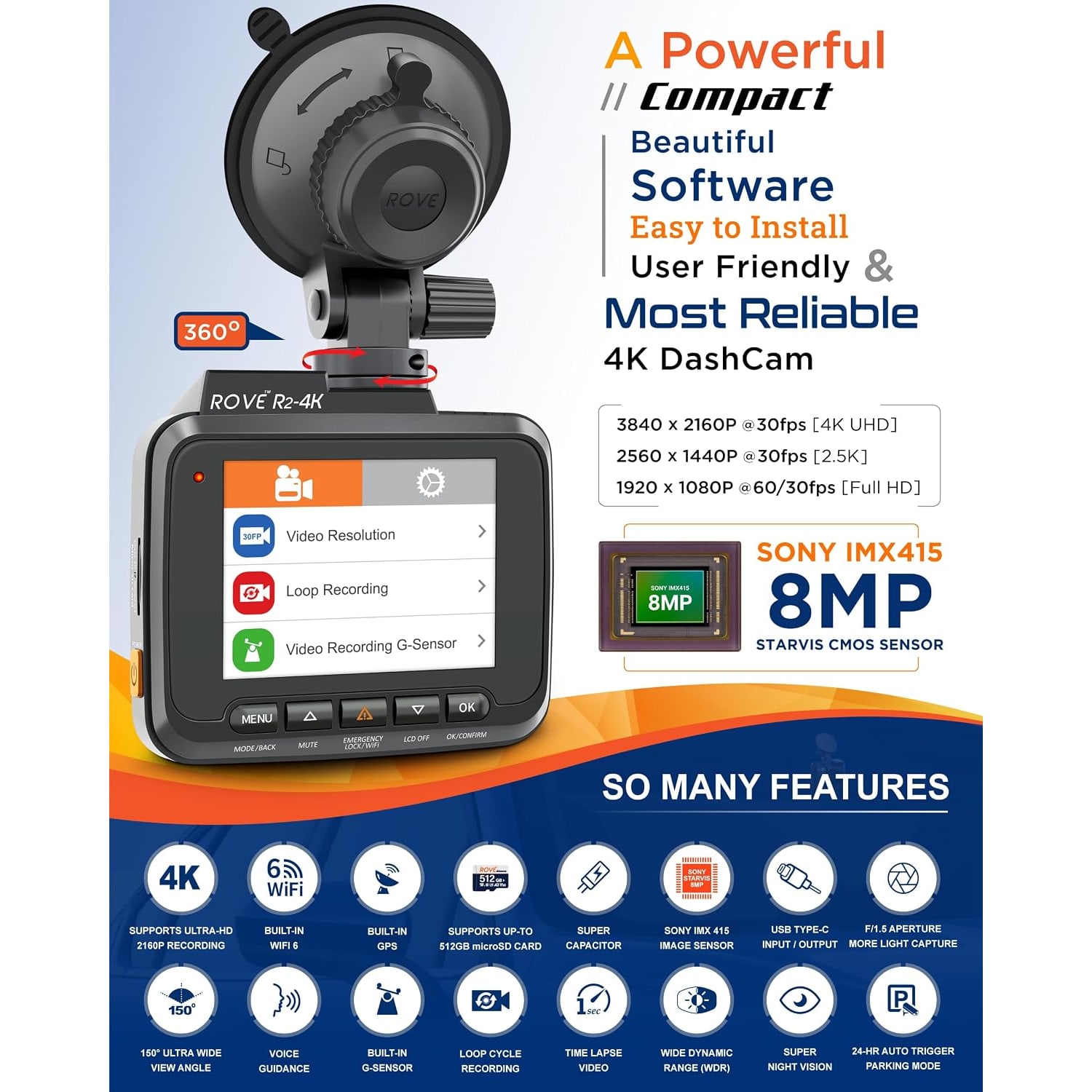
Resolution arguments get tedious fast, so here is the practical version. A 4K camera records at 2160p, which has roughly four times the pixels of a 1080p camera. Those extra pixels do not make the video look four times prettier. What they do is preserve small detail.
The small detail that matters on a dash cam is almost always a number plate. A plate four car lengths ahead occupies a tiny portion of the frame. At 1080p that might be a grey smudge. At 2160p there is a real chance of reading it. The same goes for a road sign, the livery on a van, or the face of a junction you are trying to identify later.
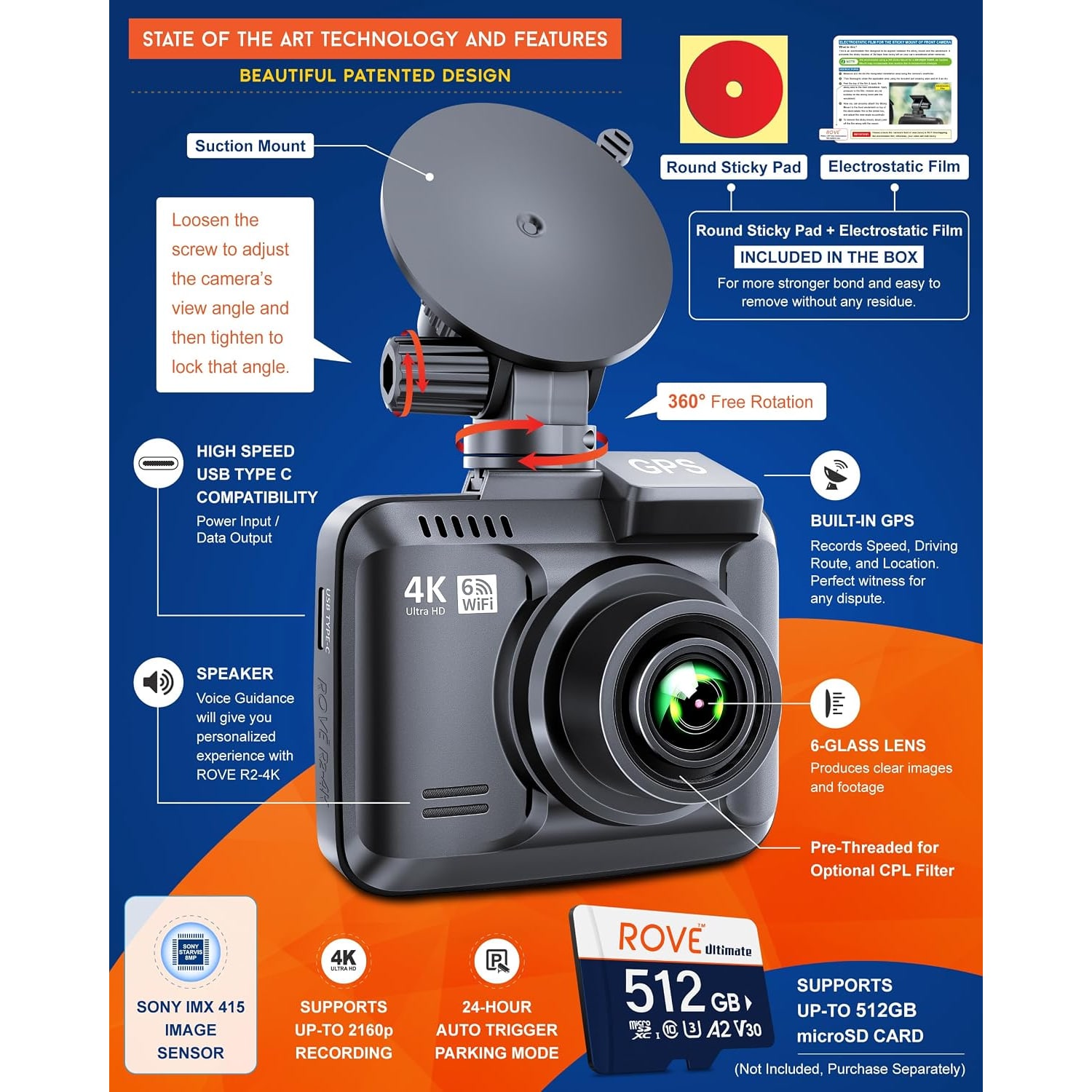
The lens matters just as much as the sensor. This camera uses a six element glass lens with an f1.5 maximum aperture. Aperture is the size of the opening that lets light in, and f1.5 is wide. A wide aperture is the single biggest reason one camera sees better than another after dark or under heavy cloud. If you drive home late, or your car park is dim, this is the spec to pay attention to, and it is why wide aperture models tend to top lists of the best dash cam for night driving.
Field of view here is 150 degrees. That is wide enough to catch the lanes either side of you plus a bit of the kerb, without the fisheye stretching that very wide lenses produce at the frame edges. Stretching is a problem because it is exactly at the edges that side-impact detail sits.
How the WiFi and GPS change daily use
Older dash cams had one weakness in common. Getting footage off them was a chore. You unscrewed the mount, worked the microSD card out with a fingernail, found a card reader, and hoped the computer cooperated. Plenty of people never did it, which rather defeats the point.
Built-in WiFi fixes that. The camera broadcasts its own connection, your phone joins it, and the free ROVE app gives you the recordings on your screen. Play one back, download the one you want, send it on. No card removal, no computer, no internet connection required for the transfer itself. If you have just had a scrape, you can hand your insurer a clip from the kerbside while the details are still fresh.
The app also handles firmware updates over the air, which quietly keeps the camera current without you doing anything technical.
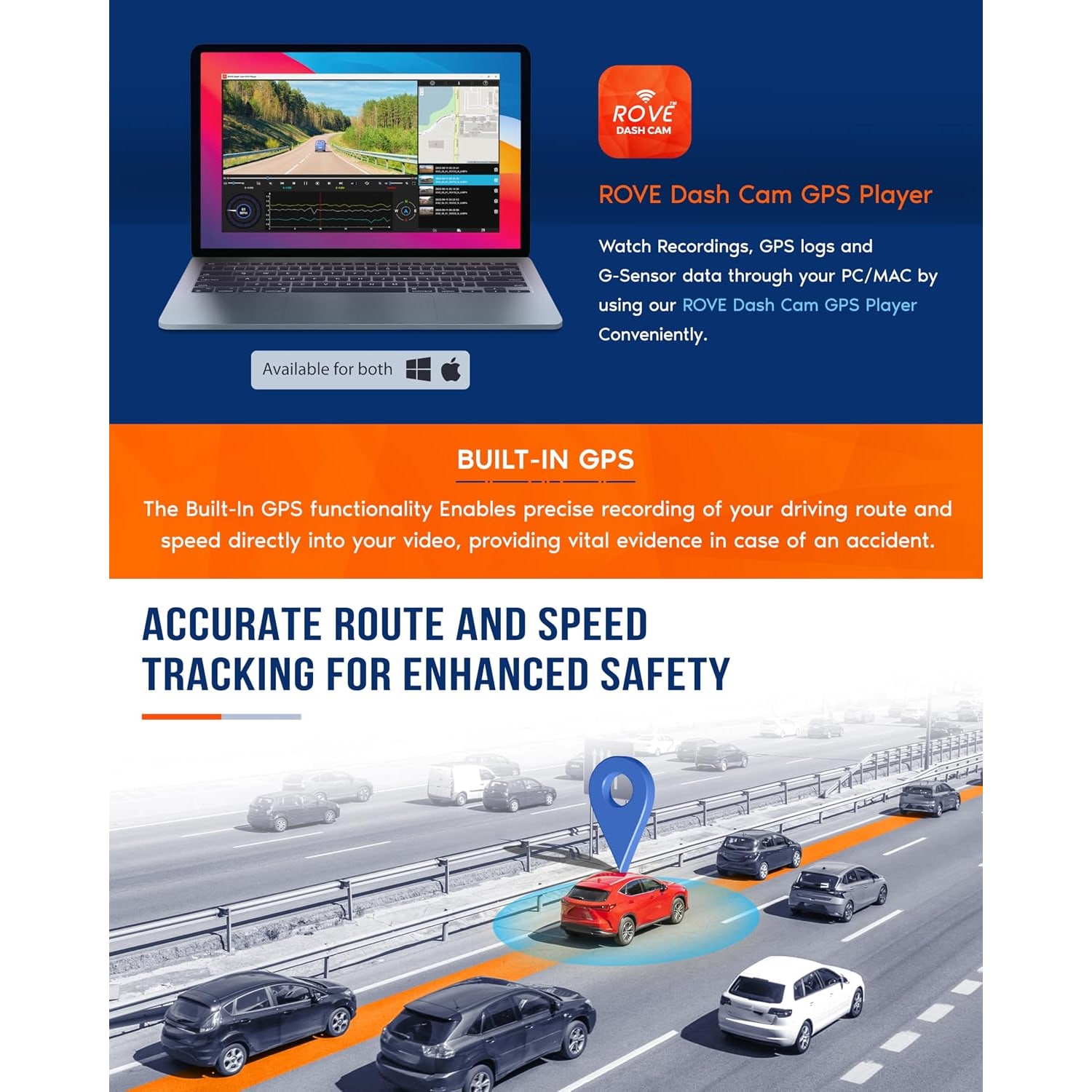
GPS is the other half of it. Every recording carries your location and speed, and you can follow the route on a map in the app or with the GPS player on a computer. Video on its own shows what happened. GPS shows where and how fast. Together they answer most of the questions anyone is likely to ask.
Who this suits
If you drive daily, especially in traffic, a front dash camera is one of the easier bits of car kit to justify. The same goes for anyone who parks in public multi-storey car parks or at an office, where door dings and reversing knocks happen with nobody around to see them.
New drivers benefit for a slightly different reason. Having a record removes a lot of the anxiety about being blamed for something, and it tends to encourage a calmer driving style. Parents buying for a young driver often cite that as the main reason.
If your car sits in a covered car porch all day and you rarely drive at night, you could get by with less camera. The 4K resolution and the wide aperture are most valuable to people who put real distance in, drive after dark, or share the road with a lot of motorcycles.
How to choose and what to buy alongside it
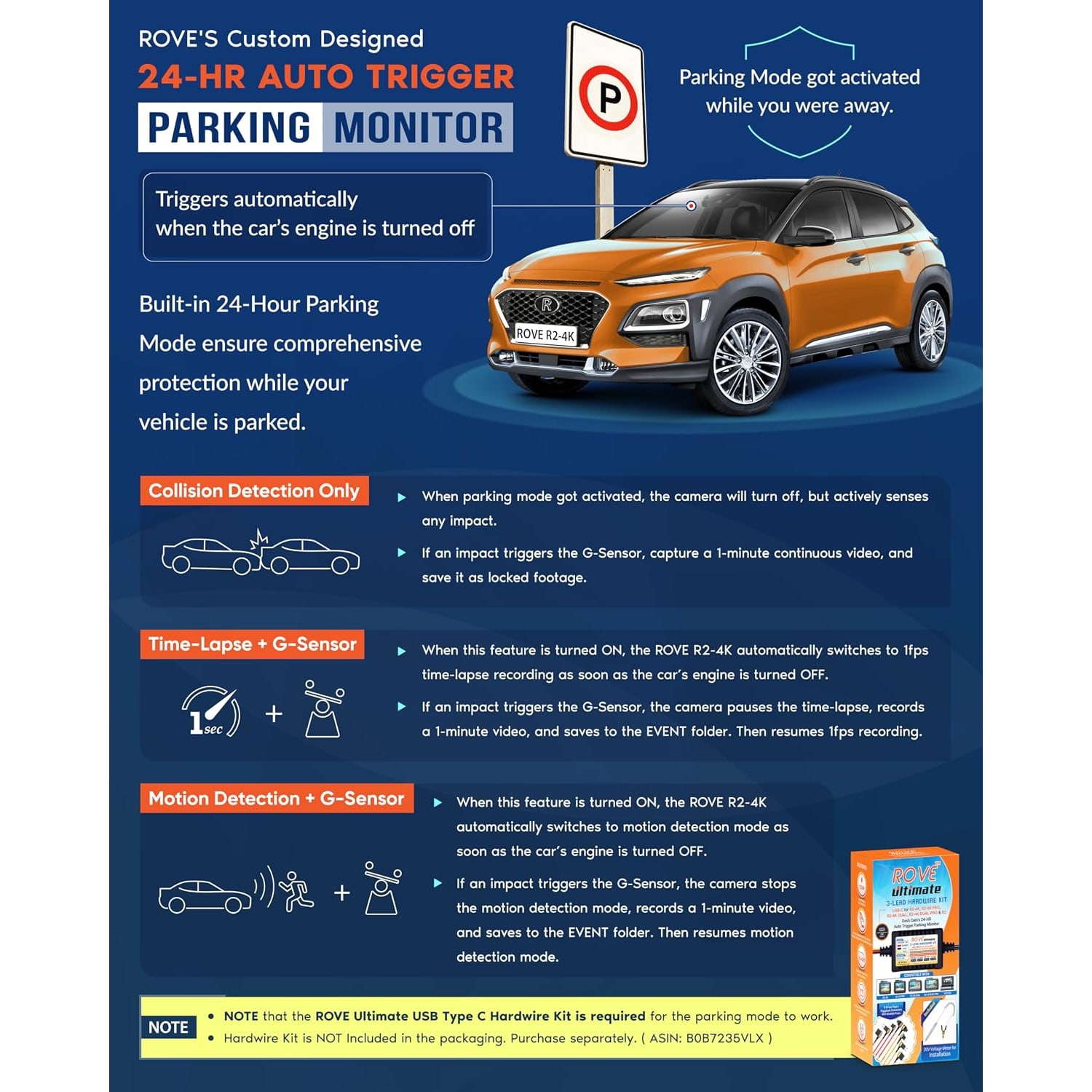
Start with resolution and lens, in that order. 2160p plus a wide aperture is the combination that produces footage you can actually use. Then look at the practical features: loop recording so the card manages itself, a G-sensor so the important clip does not get overwritten, and a parking monitor with motion detection for time spent stationary. This camera has all four.
Next, storage. The camera takes a single microSD card up to 512 GB, and no card is included. Buy one with the camera. A dash cam writes to the card constantly, hour after hour, which is harder work than a card ever gets in a phone. A high speed card built for continuous video will last considerably longer than a cheap one, and it is the difference between the best microsd dash cam setup and one that throws errors after a few months. Bigger cards simply give you more hours before loop recording circles back.
Then think about power. A car charger and cable come in the box, so running it from the 12V socket is the simple route. If you want the parking monitor to run for longer stretches while the car is off, a hardwire kit that draws from the fuse box is the usual upgrade. That is optional and most owners start without it.
Finally, consider where it will sit. High on the windscreen, behind the rear view mirror, is almost always right. The lens gets a clear view, the body is hidden from the driver's eye line, and the cable can be tucked along the headlining and down the pillar. Clean the glass properly before fitting the mount, because dust under the adhesive is the main reason mounts let go.
Keeping it working
Dash cams are low maintenance, but not zero maintenance. Two habits cover almost everything.
First, keep the glass clean. The camera looks through your windscreen, so a film of haze or a smear from the wipers lands in every single recording. Give the patch in front of the lens a wipe when you clean the car, and wipe the lens itself with a dry microfibre cloth.
Second, format the card in the camera every few weeks. Continuous writing creates small errors over time, and formatting clears them before they turn into a corrupted file on the day you need it. It takes under a minute in the menu. If a card starts refusing to format or the camera reports errors, replace it rather than nursing it along.
In hot weather, a car left in full sun gets fiercely warm inside. If yours is going to bake in an open car park all day, lifting the camera off its mount and leaving it out of direct sun is kinder to the battery and the electronics. It clips back on in seconds.
One last point on footage. Recording in public is covered by local law, including the PDPA in Singapore, so be thoughtful about storing and sharing clips that identify other people. Keeping a recording for an insurance claim is one thing. Posting it publicly is another, and worth pausing over.
The short version
A 4K dash cam with WiFi and GPS gives you three things a cheaper camera does not. Enough resolution to read a plate, a wide f1.5 lens that holds up in poor light, and a way to get the clip onto your phone in under a minute. Add the GPS route log and you have a record that answers where, when, how fast and what happened.
Fitting takes a few minutes. Running costs are nothing. Buy a good high speed microSD card at the same time, mount it behind the mirror, and then forget about it until the day it matters.