
The complete guide
How to Choose a 1080p Webcam with Privacy Cover for Calls, Classes and Work
The camera you already have is the problem
Almost every laptop has a camera in the lid, and almost every one of them is poor. The lens is the size of a pinhead. It sits below eye level, so the person you are talking to looks up your nose. In anything less than bright daylight the picture goes soft and noisy.
Many desktop computers have no camera at all. If you work on a monitor with the laptop closed, or you built your own PC, you have nothing to join a call with.
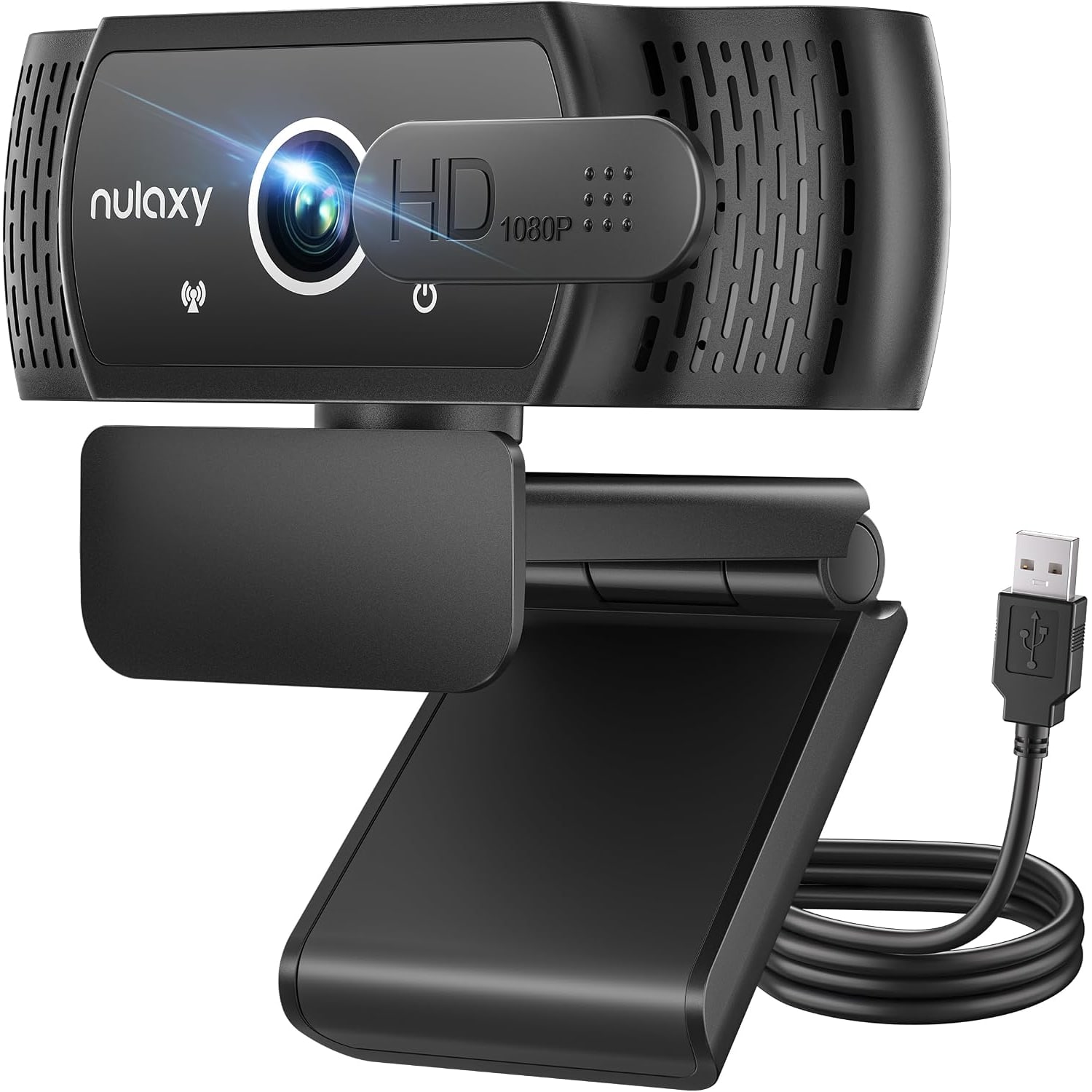
A separate webcam fixes both situations for not much money. The question is which features are worth paying attention to. This guide goes through them, using this 1080p webcam with privacy cover as the example.
What 1080p at 30 frames per second gives you
Resolution is the number on the box. This webcam records at 1080p, also called Full HD, on a 2.1 MP CMOS sensor. It can drop to 720p or 480p when needed.
In practice, 1080p is the sweet spot for calls. Most calling apps compress video heavily, and many cap the picture at 1080p or below, so a 4K webcam is often wasted. What you do notice, going from a laptop camera to a proper 1080p one, is that text on a held-up page becomes readable and faces stop looking smeared.
The frame rate is 30 frames per second. That is the normal rate for conversation and it looks natural. The maker also says the camera uses H.264 video processing, which is the format calling and streaming software expects.
Plug it in and go
Some webcams come with a control app, an account to create and a firmware update on day one. This is not one of those.
The maker describes it as plug and play, with no drivers. You connect the USB cable, the computer recognises a new camera and microphone, and you select them in your app. That is the whole setup.
It also takes its power from the computer's USB port. The maker gives the draw as under 0.5 W. There is no battery inside and nothing to plug into the wall.
The interface is USB 2.0. The maker does not state the plug shape, so if your laptop has only USB-C ports, keep an adapter or a hub handy.
The microphone matters as much as the lens
People will sit through a slightly soft picture. They will not sit through bad sound. If your voice cuts out or echoes, the call is hard work for everyone.
This webcam has a built-in stereo microphone. The maker describes it as omnidirectional, which means it listens in all directions, and says it has high sensitivity and echo cancelling.
Omnidirectional pickup is convenient, because you can lean back or turn to a second screen and still be heard. The trade-off is that it hears the room as well. In a flat with the aircon running and a television next door, close the door and the window before an important call. Soft furnishings help too. A room with curtains and a rug sounds better than a bare one.
Framing, rotation and tilt
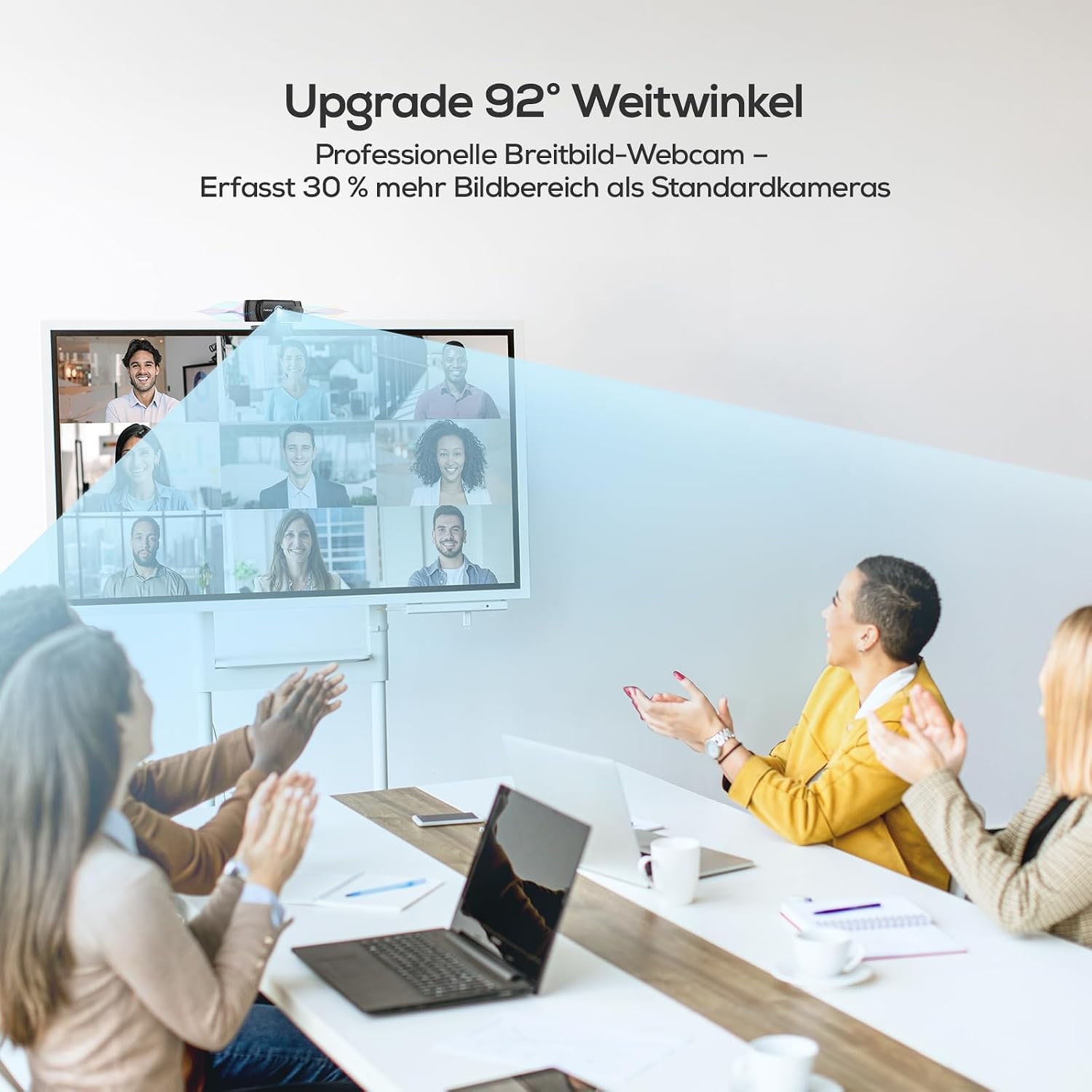
How much of the room the camera sees depends on its field of view. Here the maker gives two different figures: 92 degrees in one place and 77 degrees in another. We cannot confirm which is right. Both are in the normal range for a desk webcam, and both will frame one person comfortably. If you need a very wide view for a group, choose a camera sold for conference rooms.
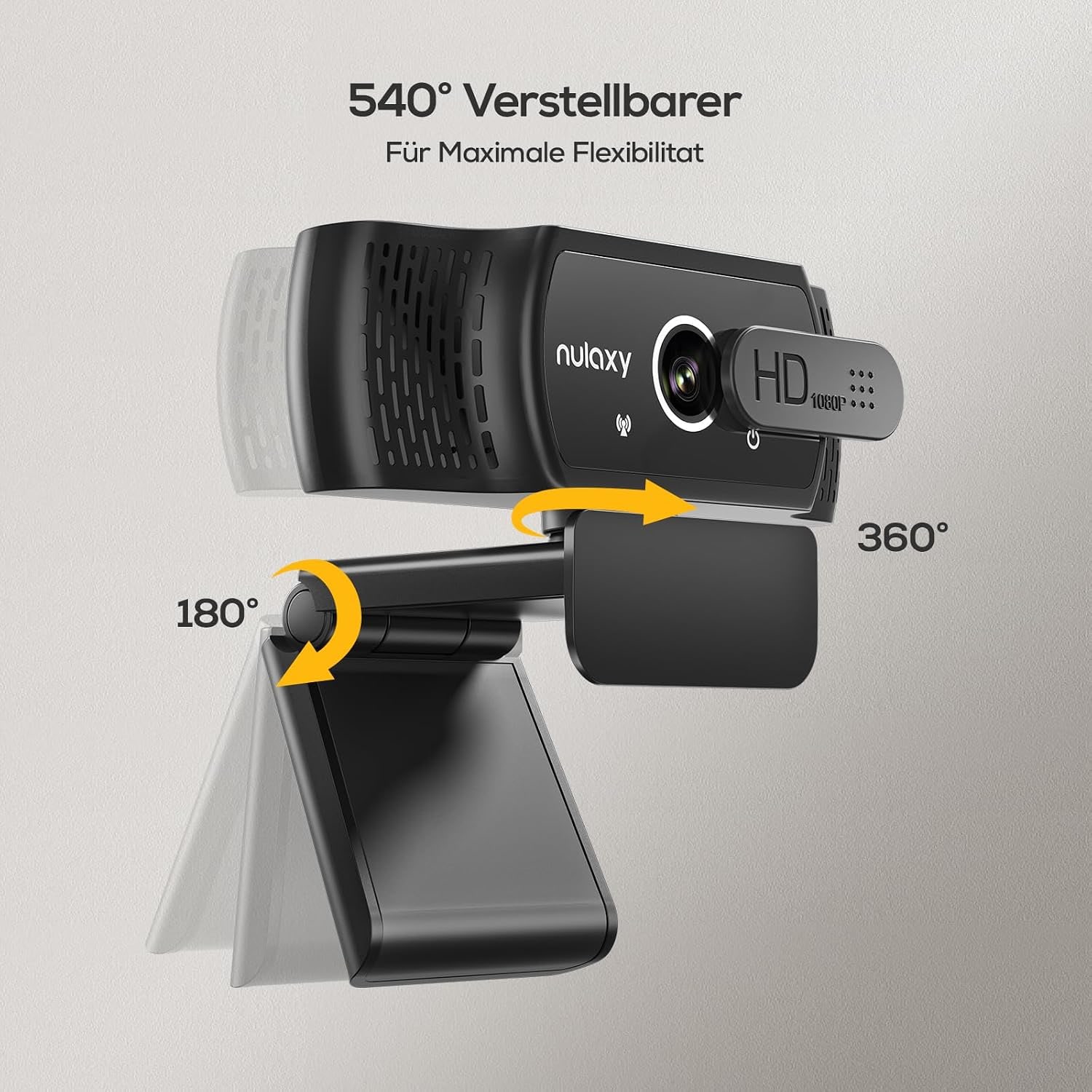
What is clear is how the head moves. It rotates through 360 degrees and tilts through 60 degrees. That flexibility is more useful than it sounds. You can turn the camera to show a visitor sitting next to you, tip it down toward a sketch on the desk, or spin it away entirely when you step out.
Try to set the lens at eye level or just above. On a monitor that usually happens by itself. On a laptop, raise the whole machine on a stand or a couple of thick books.
A cover you can see
Every laptop has a small light that is meant to show when the camera is on. Many people still stick a piece of tape over the lens, because a light is easy to miss.
A physical cover is the tidy version of that tape. This webcam's privacy cover slides across the lens. When it is shut, the lens is blocked and you can see that it is blocked from across the room. Slide it open again and you are back on camera.
Remember that a lens cover does nothing for sound. Mute in the app when you want the microphone off.
If you record calls or classes, keep in mind that recording other people is covered by Singapore law, including the PDPA.
Light does more than the camera
The webcam has automatic low-light correction. When the room is dim, it adjusts the light balance so the picture stays usable. That is helpful in a study corner at night.
Still, no small sensor can invent light. The single most effective upgrade to any webcam picture is a lamp placed in front of you, behind or beside the screen. A window in front of you works the same way during the day. Avoid sitting with a bright window behind you, because the camera will expose for the window and leave your face in shadow.
Clip, tripod and cable
The clip is adjustable and is designed for both laptop lids and monitors. It has a non-slip silicone pad, which keeps the webcam steady and stops it scuffing the screen.
On the underside of the clip is a standard tripod hole. The maker says it fits most camera tripods. No tripod is included, but a small desktop one lets you put the camera beside the screen or on a shelf.
Cable length is another detail where the maker quotes two numbers, 1.8 m and 1.4 m. Plan for the shorter one. That still reaches from the top of a monitor to a computer under the desk in most setups.
What it works with
The listed systems are Windows 7, 8, 10 and above, Mac OS 10.6, Linux 2.6.24 and Android 5.1. Laptops and personal computers are the named devices.
For apps, the maker names Skype, OBS, Twitch, YouTube, FaceTime, XSplit and WhatsApp, among others. A plug and play USB webcam normally appears in any program that lets you choose a camera. Test it in the apps you rely on as soon as it arrives.
Five minutes to set up
Clip the webcam to the top of your screen and press the clip down until the silicone pad grips. Plug the cable into a USB port. Open the app you use for calls, go to its video settings and choose the new camera. Do the same in the audio settings for the microphone.
Now look at yourself in the preview. Turn the head until you sit in the middle of the frame, and tilt it so that your eyes are about a third of the way down the picture. Slide the cover across and back once, so you know how it feels. You are ready.
Details the maker leaves unclear
It is better to know these before you buy. The focus type is listed two ways, as autofocus in one line and as no autofocus in another, so assume it is fixed focus. The field of view and the cable length each have two figures. The weight and dimensions are not stated at all.
None of these change what the webcam is: a simple Full HD camera with a microphone and a lens cover. If one of them is critical for you, ask us and we will try to find out.
Who it suits
This webcam suits someone working from home on a laptop, a student in online classes or tuition, and anyone with a desktop PC that has no camera. It is also a reasonable start for streaming.
It is not the camera for a boardroom, for fast-action streaming at high frame rates, or for anyone who needs dependable autofocus on small objects held close to the lens.
Looking after it
The webcam is not water resistant, so keep drinks at a distance. Wipe the lens with a dry microfibre cloth. Close the cover between calls to keep dust off. The maker gives a working temperature of -10 to 40 degrees Celsius, so a normal room is fine, but keep it out of direct sun on a windowsill.
The short version
This is a plug and play 1080p webcam with privacy cover. It records Full HD at 30 frames per second, has a built-in stereo microphone with echo cancelling, corrects for low light and runs from a single USB port. The head rotates 360 degrees and tilts 60 degrees on an adjustable clip, and there is a tripod hole underneath. Put a lamp in front of you, set the lens at eye level, and slide the cover shut when the call ends.