
The complete guide
How to Choose a Full-Height Tripod for a Camera and a Phone
The photo you are never in
Look through the pictures on your phone. If you are the one who usually takes them, you are missing from most of them. The group shots have a gap where you should be, or they were taken at arm's length with half a face cut off at the edge.
Video has its own version of the problem. You prop the phone against a mug, press record, sit down, and find later that the frame cut off the top of your head. Or the phone slid flat halfway through.
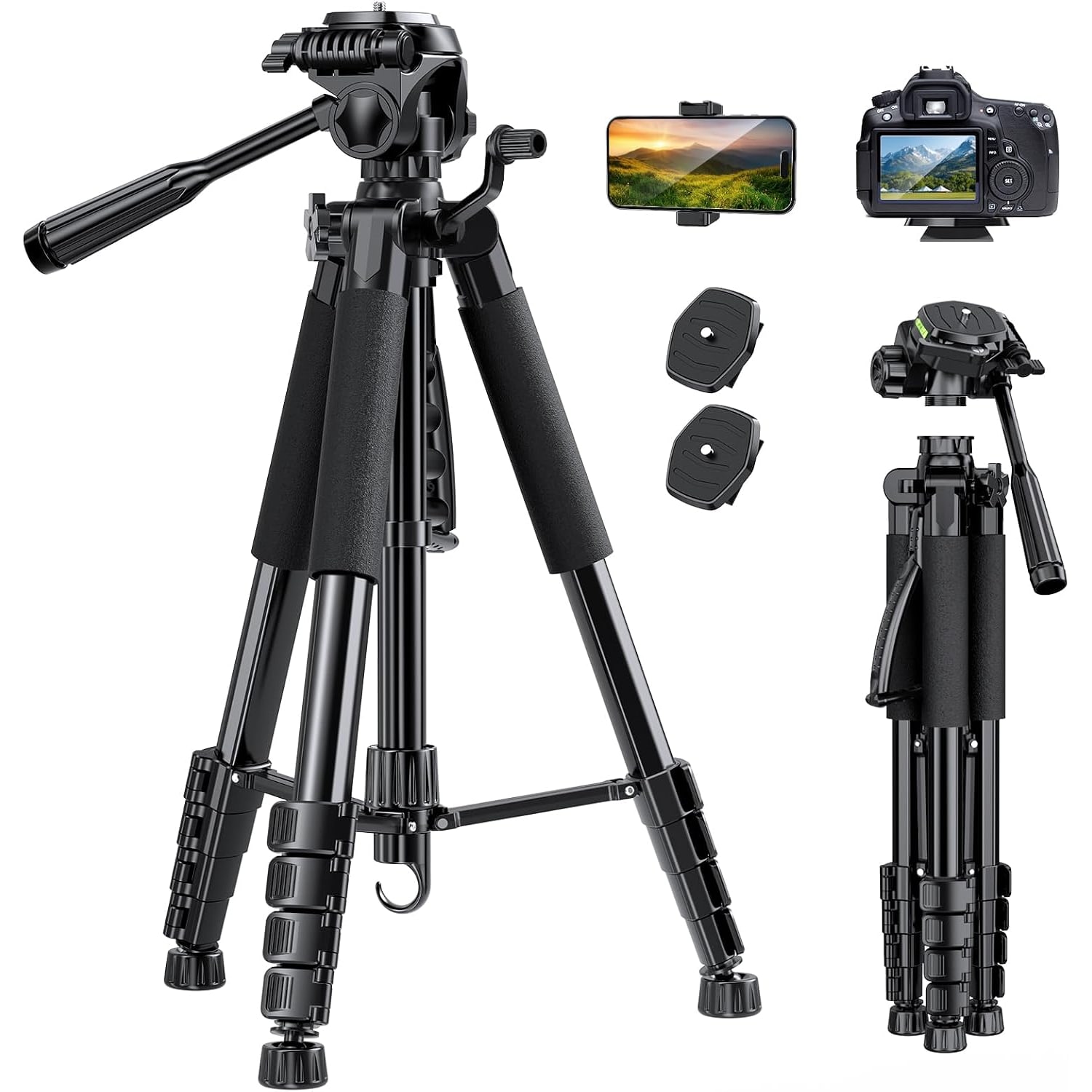
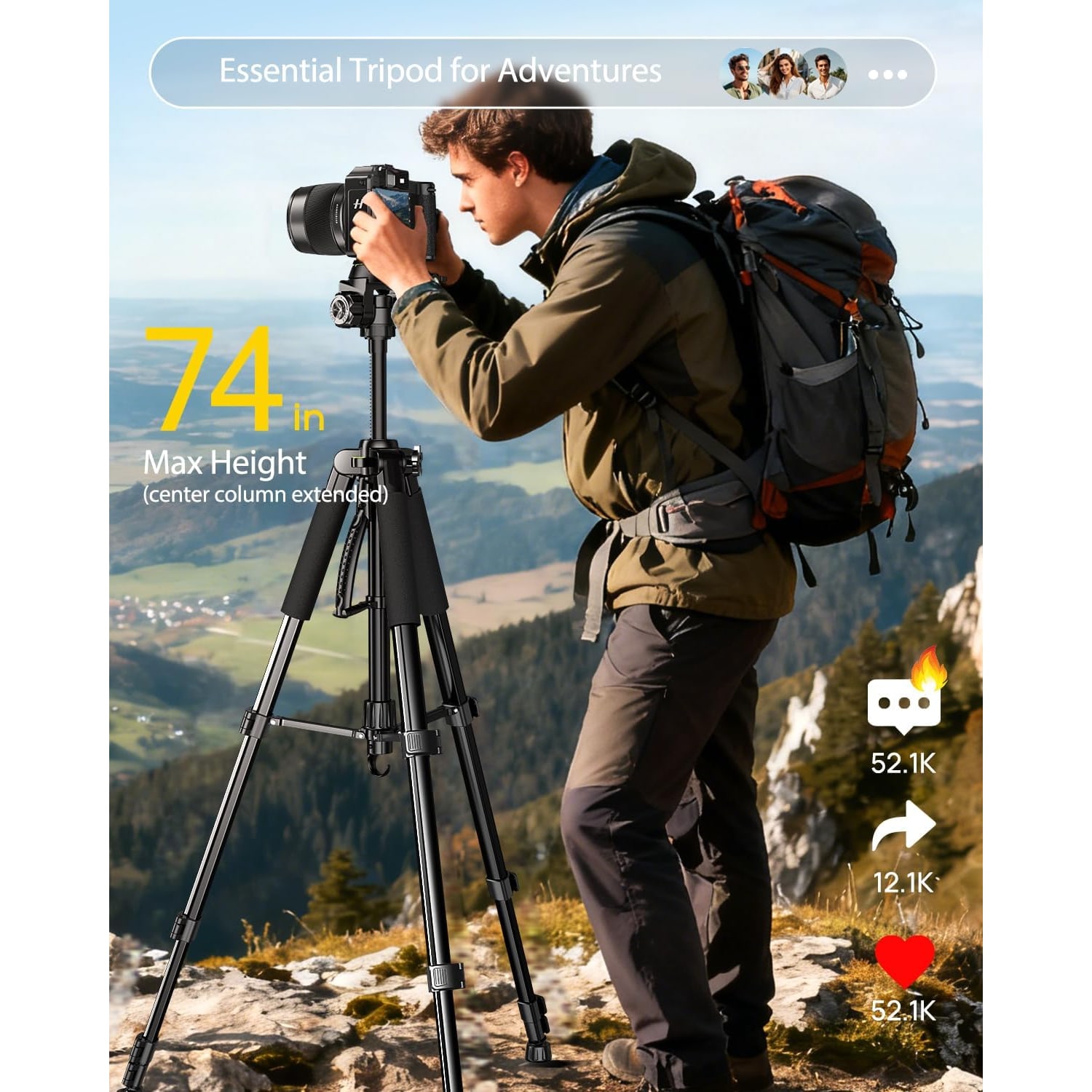
A tall tripod fixes both. It gives the camera a place to stand at the height you choose, and it stays there. This one reaches 188 cm, holds either a camera or a phone, and comes with a remote so you can press the shutter from where you are standing.
What 188 cm gets you
Height is the main thing you are paying for, so it helps to know what it does.
Shoot a standing person from chest height and the camera looks up at them. Chins get bigger and ceilings fill the frame. Raise the camera to eye level and the picture looks the way people see each other. That is why a full height tripod for portraits is worth having even if you only ever photograph your own family.
Go a little higher still and you can look down on a group. Three rows of relatives at a reunion dinner fit into one frame when the camera is above their heads. Everyone's face is visible and nobody is hiding behind an uncle.
For video to camera, the height means you can stand up. Standing presenters breathe better and move more naturally than seated ones. A fitness routine, a cooking demonstration at the counter or a product walk-through all work better on your feet.
You will not always want the full 188 cm. A tripod is steadier lower down, so use the height you need and no more.
Two handles on the head
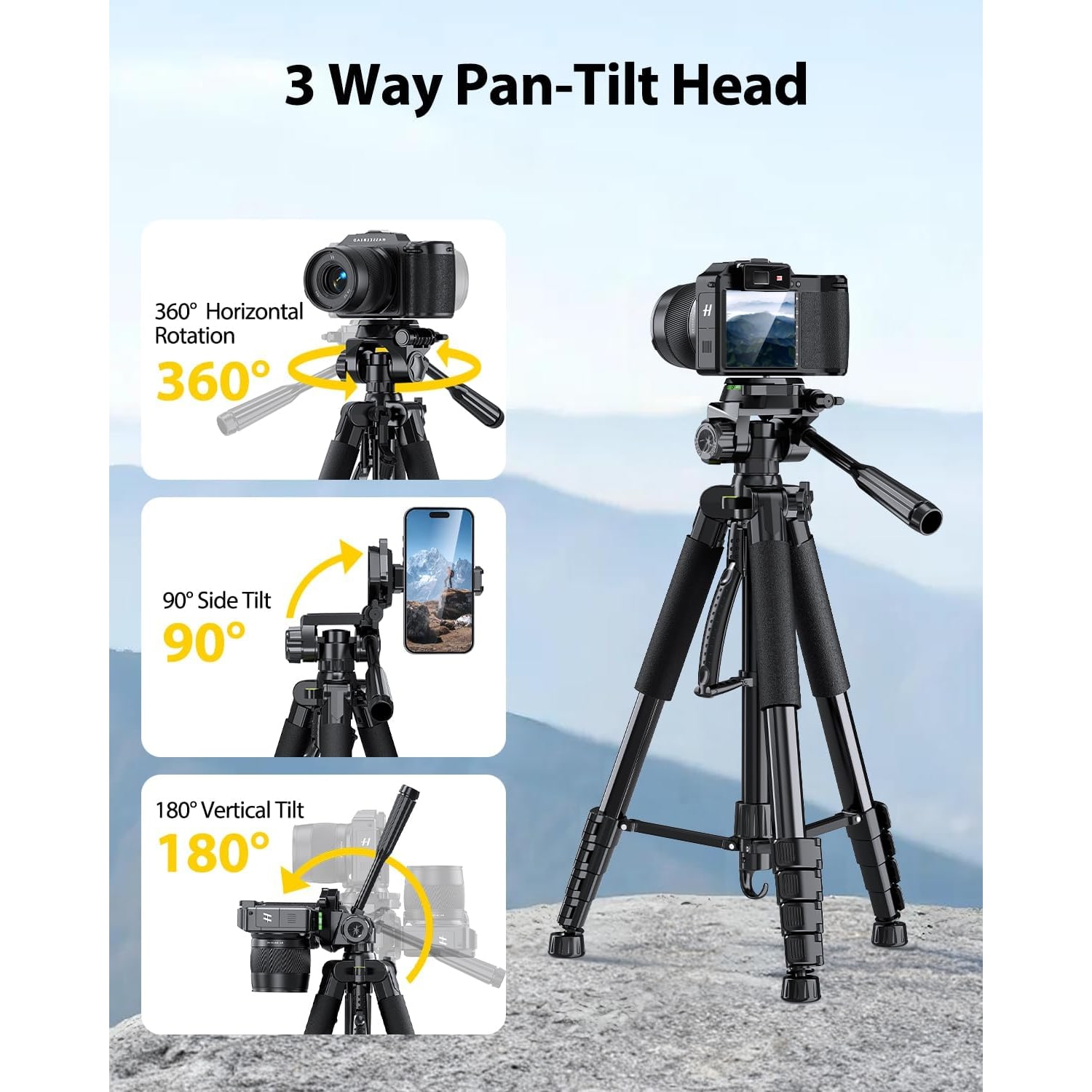
Most tripods at this size have one handle. You grip it, loosen it, aim and tighten. This one has two, and the maker builds its whole description around that.
The claim is finer control and a steadier hold while you adjust. With both hands on the head you can guide the camera round more evenly than you can with one. That matters most in video, where a pan that starts with a jolt looks amateur.
The maker lists five positions the head reaches. Landscape and portrait are the obvious two. Overhead points the camera down, which is how people film recipes, handwriting and unboxings. Upward tilts it toward a ceiling, a tall building or the sky. The last is a 360 degree pan for panoramas.
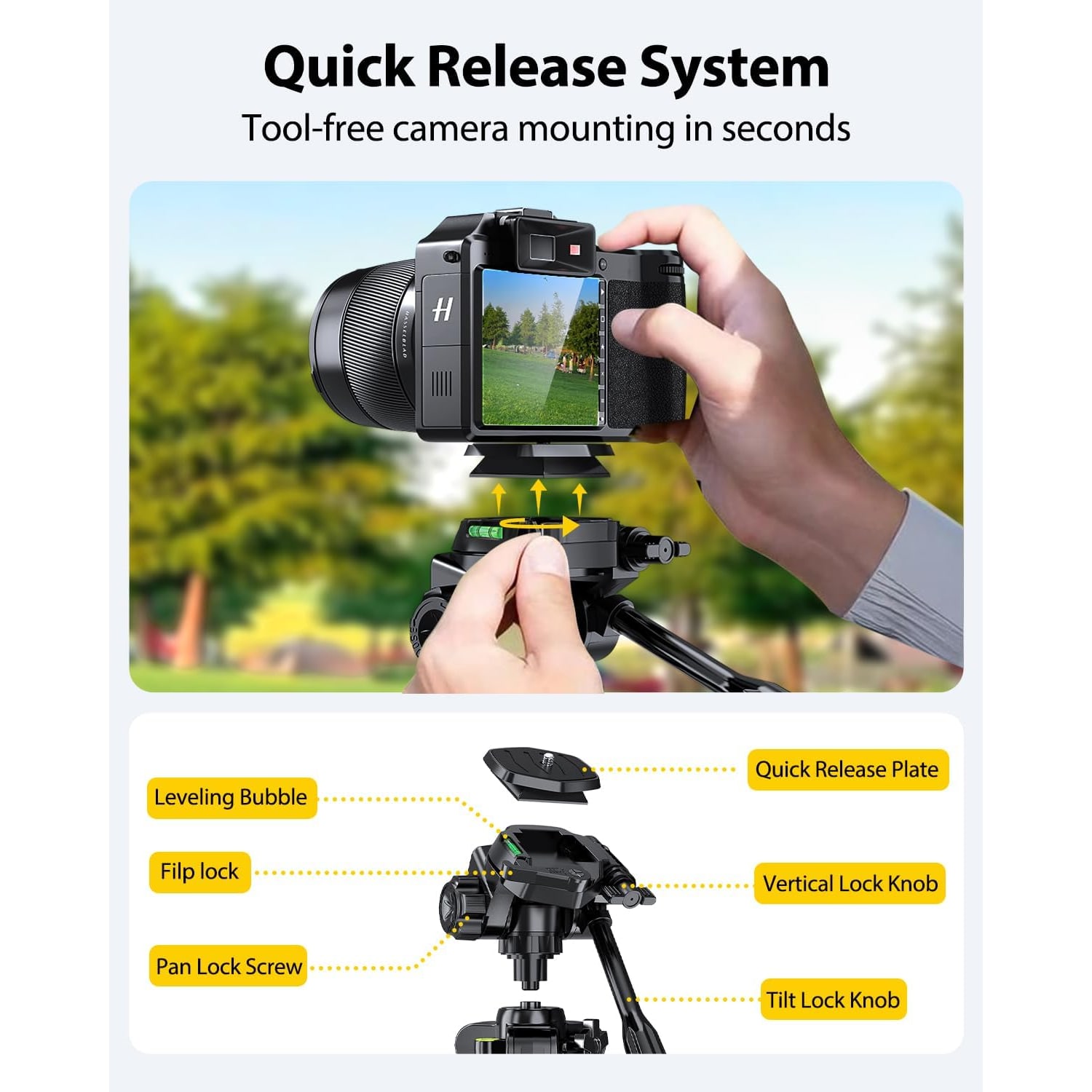
The maker does not give the head a more technical name, and does not say how the camera attaches. If you are used to a particular quick-release system, do not assume this one matches it.
The phone holder and the remote
A lot of buyers will use this mostly with a phone, and the box covers that.
The holder takes handsets from 7.1 to 14.5 cm wide. Measure yours with the case on. Most phones fall well inside that range, though a wallet case with a thick flap can push a large phone past it.
The remote is a small wireless button that pairs with your phone. The maker gives its range as up to 10 m. That is enough to stand at the far end of a function room, or across a playground, and still fire the shutter. It turns the stand into a tripod for group photos where the photographer is in the group.
Two things the maker leaves out. It does not say what battery the remote takes. And it describes the remote as working with a mobile device, so do not count on it to trigger a camera.
What the maker does not tell you
It is fair to be plain about the gaps.
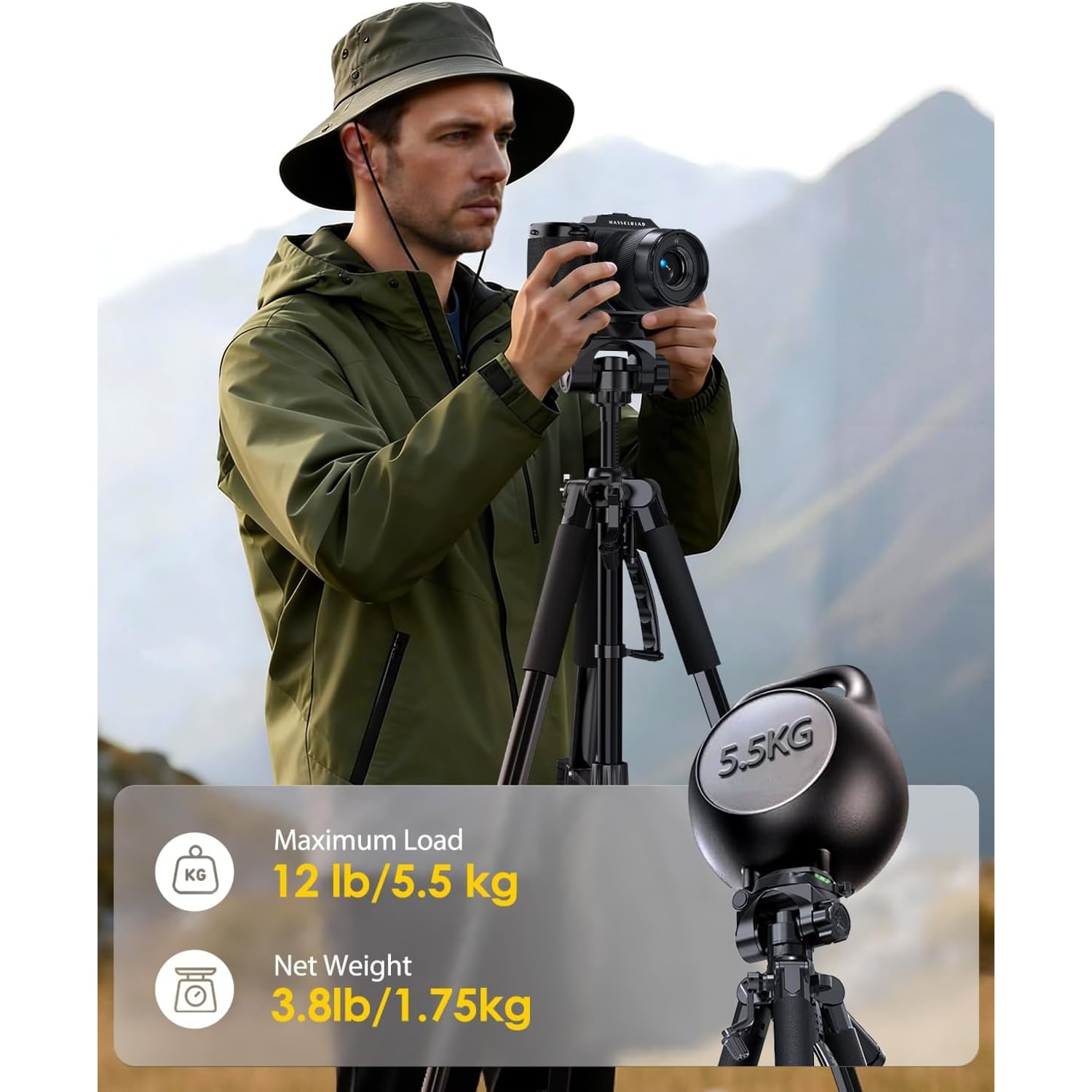
The weight is not stated. For a tripod you carry, that is a real omission. The folded size of 44.3 x 12.8 x 11.6 cm tells you how much room it takes in a bag, but not how it feels on your shoulder after a long walk.
The load rating is not stated either. The maker lists DSLR and mirrorless cameras as compatible and names a handful of models as examples, most of them entry-level. That gives you a rough idea of the intended use. It is not a number you can check your kit against.
The materials, the minimum height and the way the legs lock are also left out. None of these stop the tripod doing its job. They do mean that if you need to compare figures closely, for example to pick the lightest option for a long trip, you will not find them here.
Who it suits
It suits people who shoot with a phone most days and a camera sometimes. One stand covers both, and nothing extra is needed for the phone side.
It suits families. Festive gatherings, a birthday party at the void deck, a graduation: these are the days when a tripod and a remote put everyone in the photo, including the person who normally holds the camera.
It suits anyone starting out with video. A fixed frame at standing height and a remote in your hand remove most of the fuss from filming yourself.
It also suits a few uses that have little to do with photography. The maker lists projectors, webcams, binoculars and spotting scopes. A small projector on a tripod can be aimed at a living room wall without a stack of books under it. Binoculars on a stand are far easier to hold steady on a bird at Sungei Buloh than binoculars in tired hands, though you will need a binocular adaptor, which is not included.
It is less suited to heavy professional gear, to anyone who needs a published weight, and to desk-only use, where a small tabletop stand does the job in a fraction of the space.
Using it in Singapore
Space first. In an HDB flat or a condominium, a tripod has to earn its storage. This one folds to 44.3 cm long and lives in its bag, so it stands in a wardrobe corner or lies on a shelf. Set up at full height it needs a clear patch of floor for the legs, so move the coffee table before you start filming in the living room.
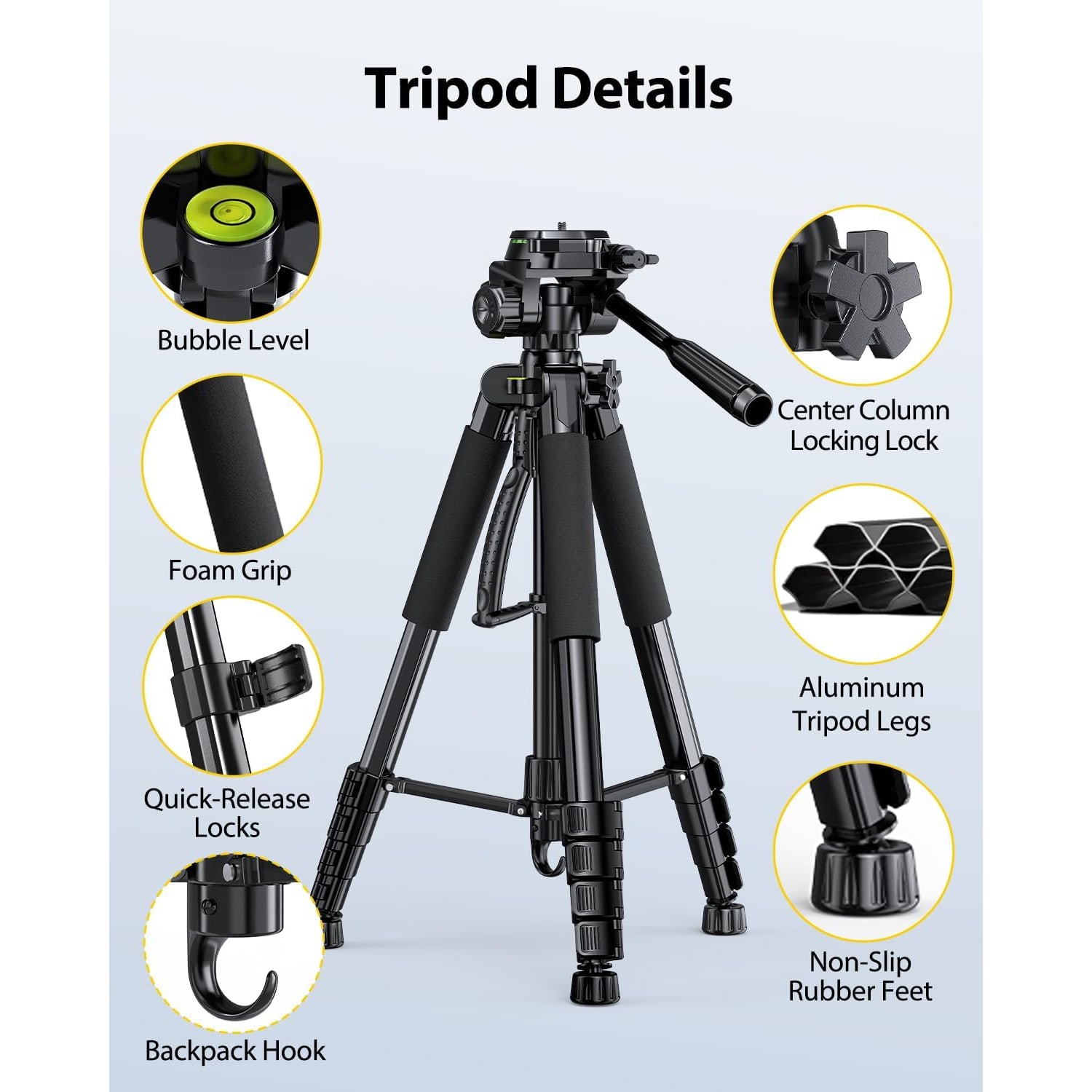
Getting it around is simple enough. In its bag it rides on the MRT like any other long parcel. There is also a carry handle for holding the tripod level in one hand between spots, which is handy when you are walking along the river and stopping every few minutes.
Wind is the thing to respect. Balconies on high floors, the Marina Bay promenade and the breakwaters at East Coast Park all get gusts. A phone or camera at 188 cm is a lever, and the wind pushes on the top of it. Bring the height down, spread the legs all the way, and hang your bag from the centre hook to add weight low down. Stay within reach. On a balcony, keep the tripod well back from the railing.
Rain is the other one. The tripod is listed as not water resistant, and afternoon storms arrive fast here. Pack up when the sky turns, and if it does get wet, dry it before it goes into the bag. A damp tripod zipped into a bag in this humidity will smell and may corrode.
One note on filming in shared spaces. Recording other people is covered by Singapore law, including the PDPA, and by HDB, Town Council or condominium rules for shared corridors.
How to compare it with other tripods
Start with height. If you want eye-level portraits or standing video, you need something close to this size. If you shoot at a desk, you do not.
Then look at what is included. A stand that ships with a phone holder, a remote and a bag is ready to use. A cheaper one that needs all of those bought separately may not be cheaper in the end.
Next, think about the head. Two handles favour video and careful framing. A ball head is quicker for stills. Choose for what you do most.
Last, check the numbers you care about. If weight and load rating decide it for you, pick a tripod whose maker publishes both. If height, phone use and a tidy carry bag decide it, this one covers them.
Looking after it
Wipe it down with a dry cloth after a day out. Sand from the beach gets into joints and grinds, so brush it off before you fold the legs. Let the tripod dry in moving air after any rain. Store it in the bag somewhere dry, away from a bathroom or a kitchen window. Check that everything is tight before you mount a camera, every time.
The short version
This is a 188 cm tripod for a camera or a phone, with a two-handle head, a phone holder for handsets 7.1 to 14.5 cm wide, a remote that works from up to 10 m and a carry bag. It folds to 44.3 cm long. It is black and not water resistant. The maker does not state the weight, the load rating or the materials, so buy it for its height and its phone kit, and test heavier cameras with care.