
The complete guide
How to Choose a Compact Camera Backpack That Also Carries Your Laptop
The bag problem nobody warns you about
You save up, you buy the camera, you buy a second lens. Then you realise you have nowhere sensible to put any of it. The camera sits in a tote with your keys scratching the screen, or it lives at home because taking it out feels like a production.
The usual fix is to buy a camera bag. The usual disappointment is discovering it only does one job. Either it is a padded case with no room for a laptop, so you end up carrying two bags to the office, or it is a work backpack with a thin sleeve and no protection, so your camera knocks around loose. Neither is a bag you reach for every day.
A compact camera backpack with a laptop sleeve is the answer to that specific annoyance. It is one bag, sized for a city, that holds the camera properly and still takes the laptop you already have to carry.
What "compact" actually means here
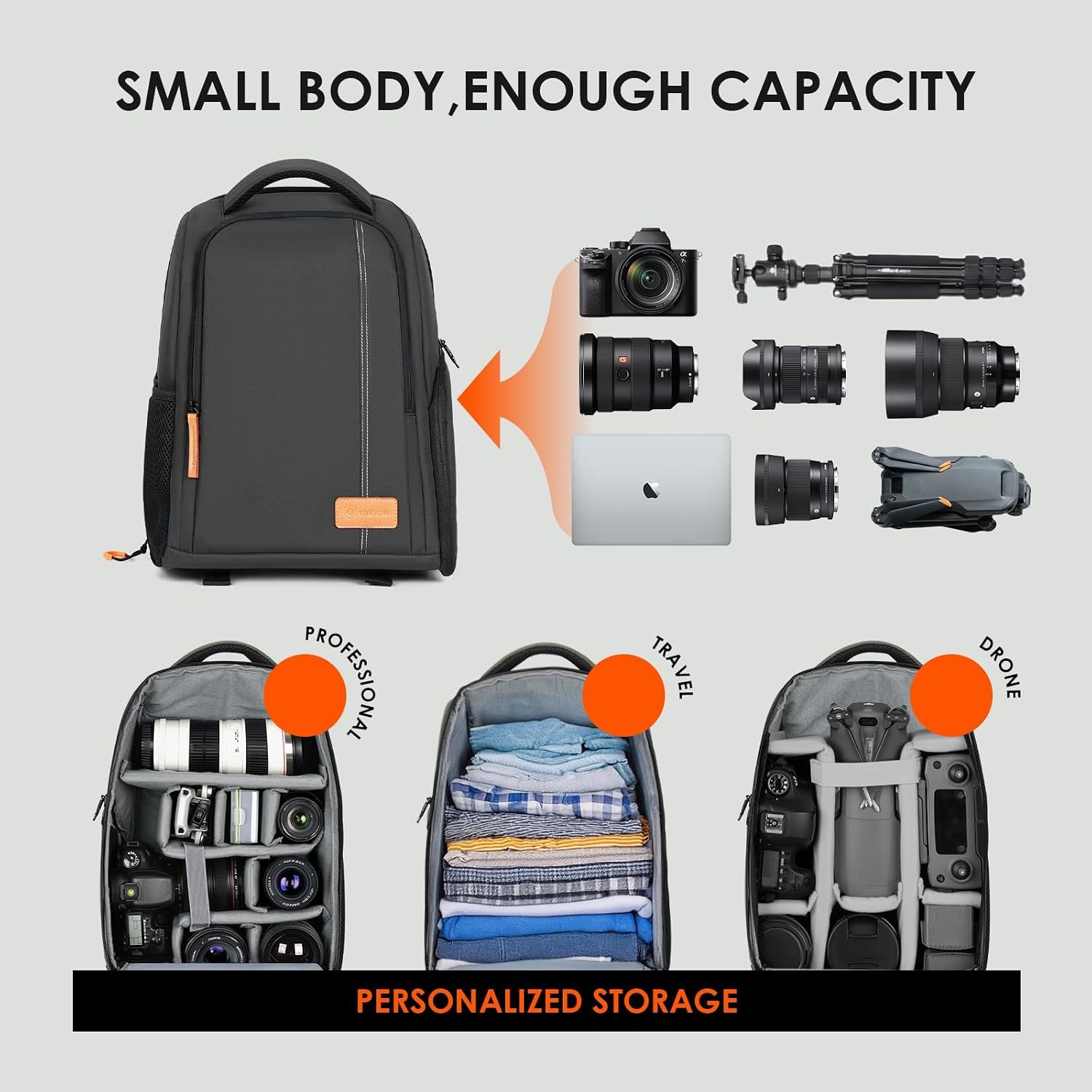
Volume numbers are easy to misread. This one is 12 litres, measuring 30 cm wide, 15 cm deep and 43 cm tall. To put that in perspective, a typical school backpack is around 20 to 25 litres. So this is noticeably smaller, slimmer front to back, and far less likely to clip someone on a packed train.
Empty weight is 0.93 kg. That matters more than people expect. Every gram the bag weighs is a gram of camera gear you cannot bring on a flight with a strict cabin allowance. A heavy bag eats your budget before you have packed anything.
The maker rates the pack to 9.98 kg. You will almost certainly run out of space before you run out of strength rating, which is the right way round for a bag this size.
How the inside works
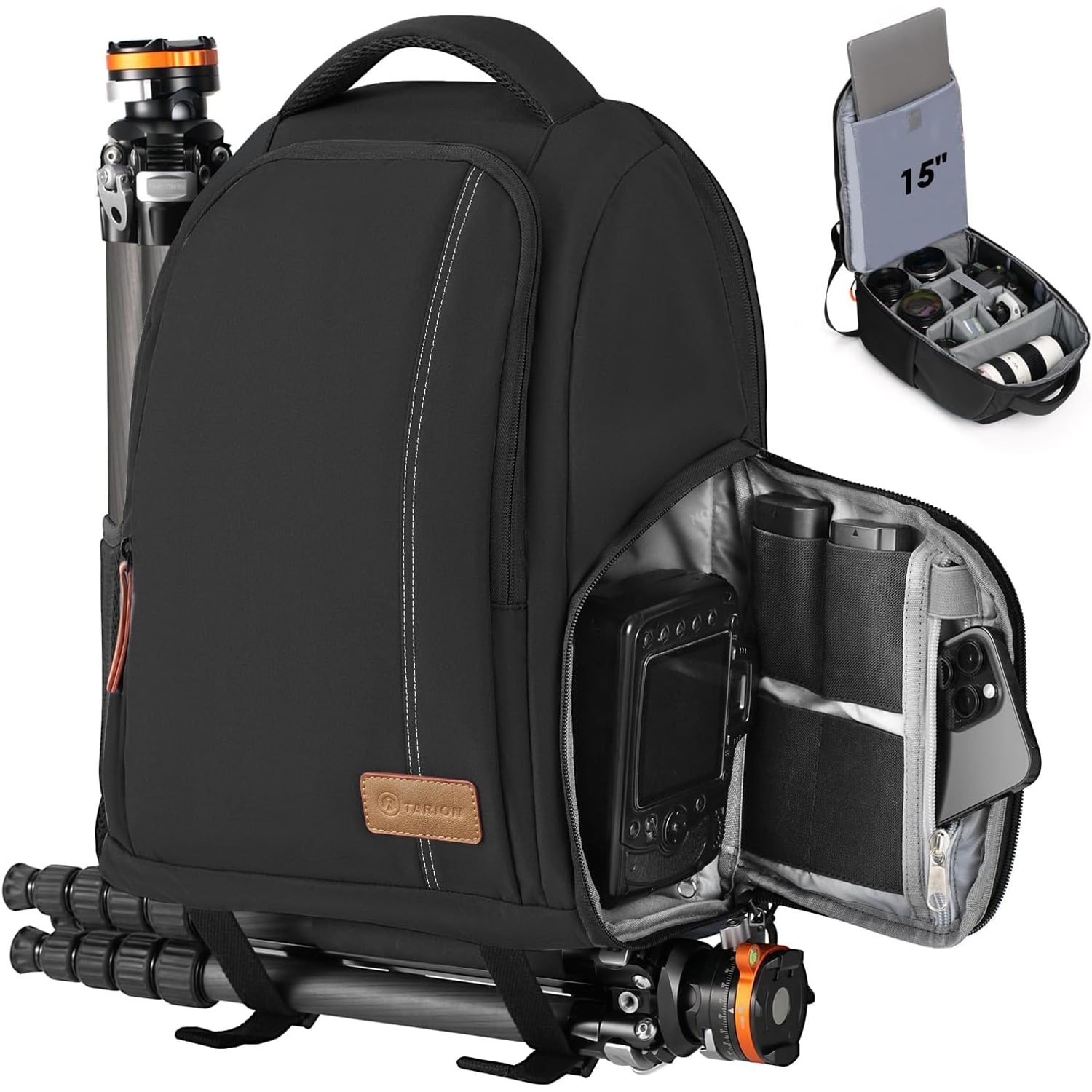
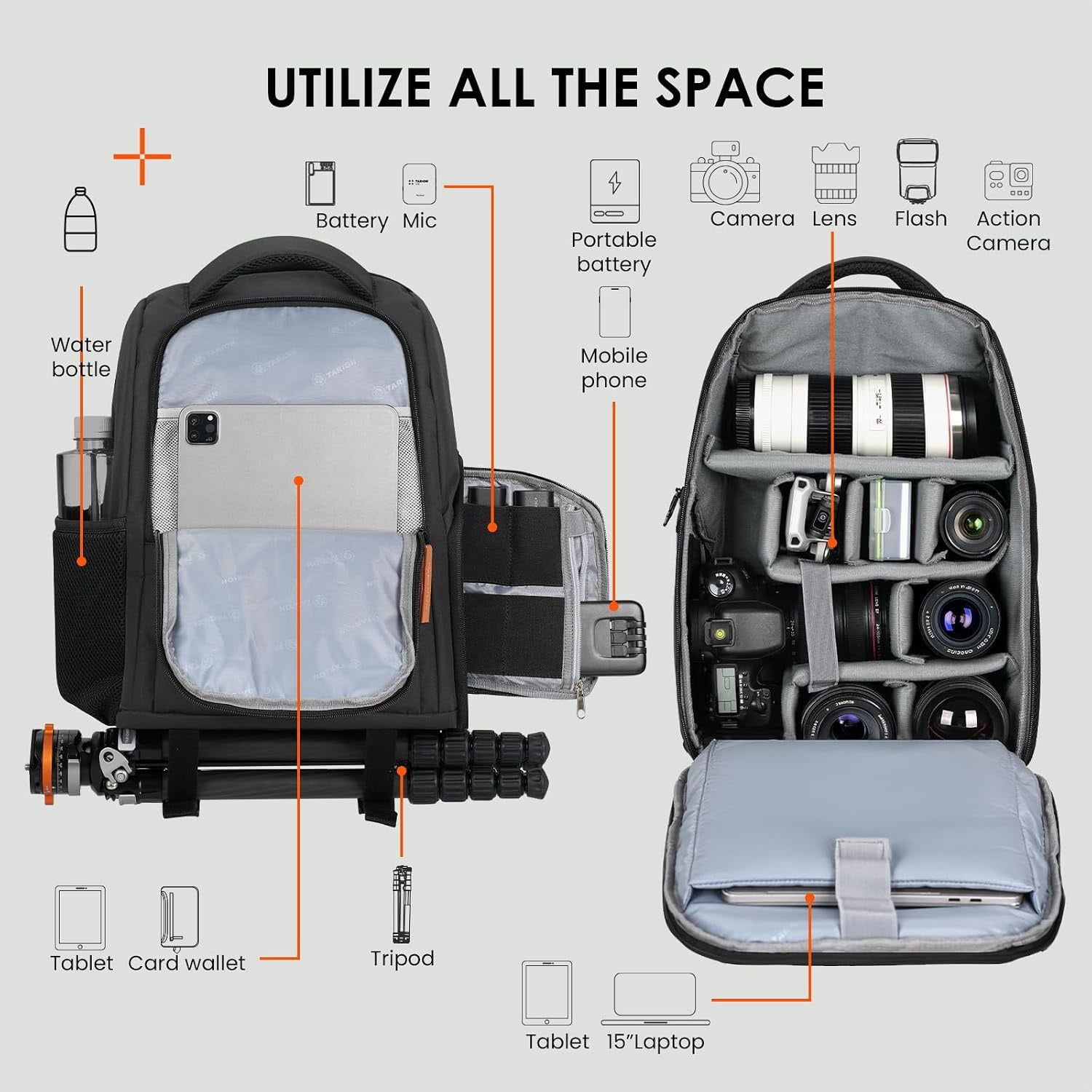
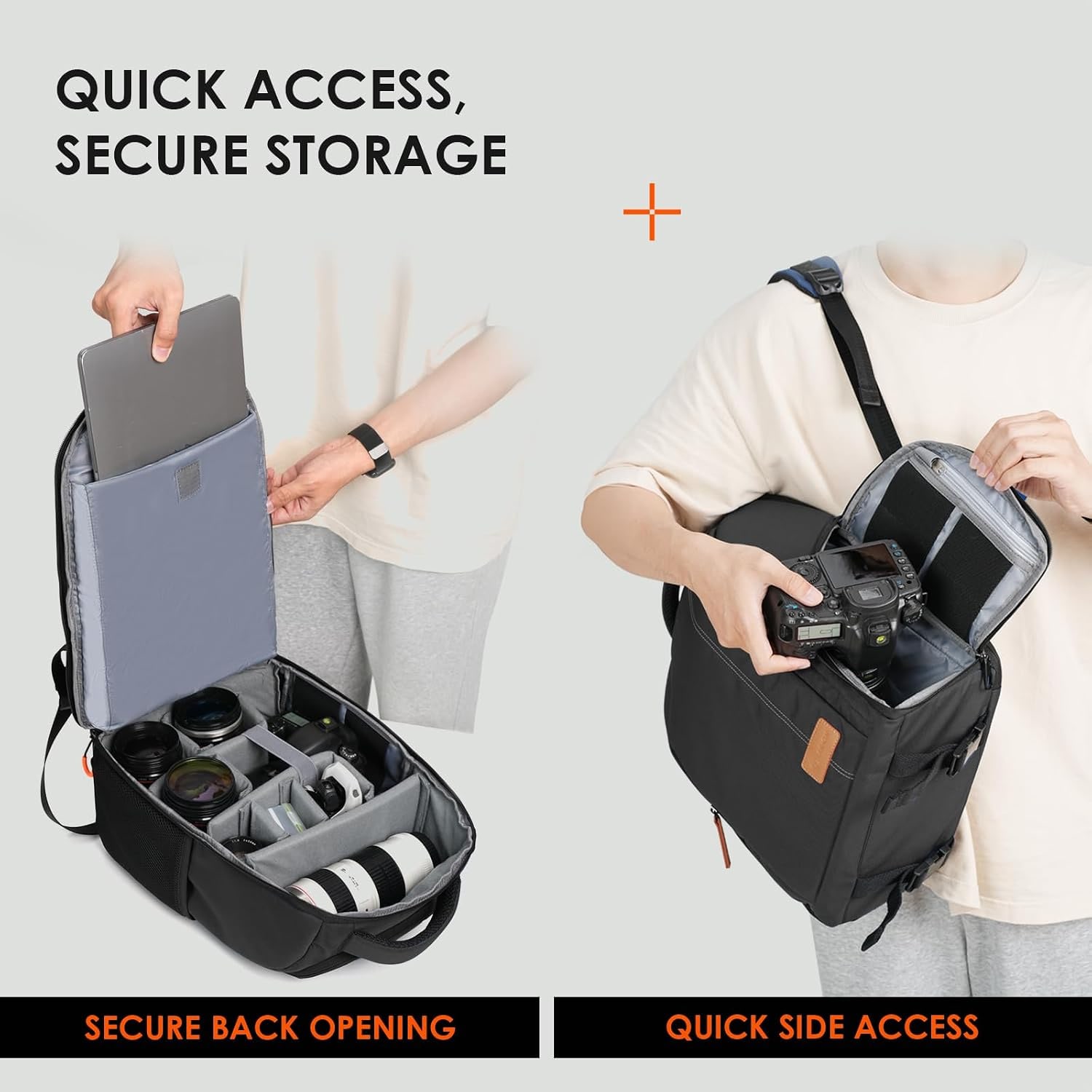
The main compartment contains eight padded dividers. They attach with hook-and-loop so you can move them, stack them or take them out. That is the whole trick. Instead of a fixed set of slots that half suit your gear, you build the layout around what you actually own.
A common setup is a body with a lens mounted lying flat, two or three spare lenses standing upright beside it, and a flash trigger or filter pouch in a shallow slot above. If you shoot mirrorless, everything shrinks and you fit more. If you own a long telephoto, it will claim a large share of the space on its own.
Pull every divider out and the bag becomes an ordinary soft day pack. That is worth knowing if you travel. One bag covers the shoot days and the beach days without you packing a second one.
Separate from the camera section is the device sleeve, rated for laptops or tablets up to 15 inches. Thirteen and fourteen-inch machines slide in with ease. Very thick models may be snug, so measure yours if you are close to the limit.
The rest of the storage is split across 11 compartments and three pockets. A zippered mesh pocket inside takes cables, cards, a passport or a small tablet. The stretch mesh side pockets handle a bottle or a folded umbrella, which is the right place for anything wet. Closure is by buckle.
Carrying it in heat and rain
Two things decide whether you keep using a backpack here. Does it breathe, and does it cope with a sudden downpour.
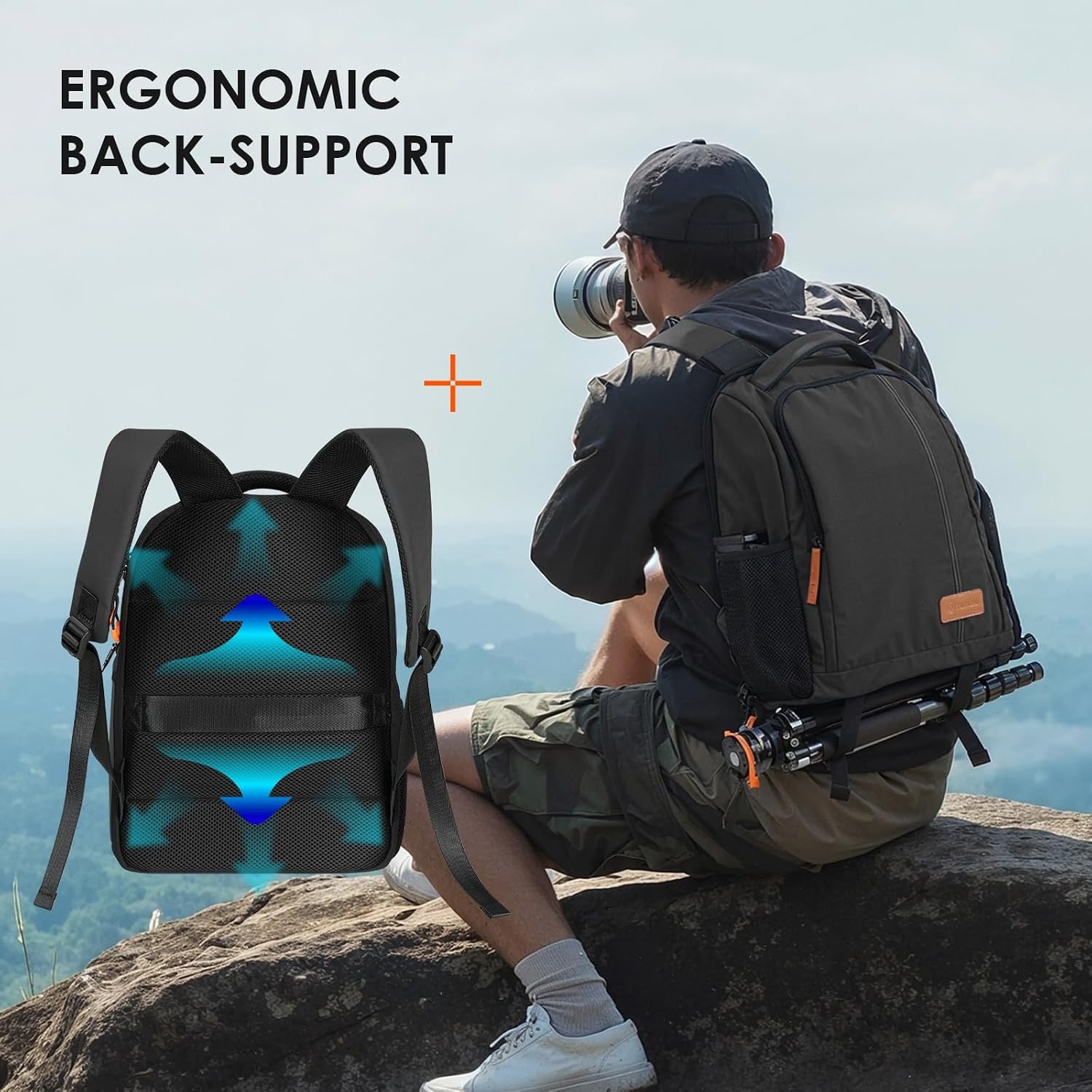
The back panel is air mesh, which holds a small gap between the pack and your shirt so air can move while you walk from the MRT to the office. The shoulder straps are padded and adjustable, so you can set the ride height to sit high on your back rather than sagging at your hips.
The outer fabric is polyester and water resistant, with a nylon lining. Water resistant means it sheds light rain and splashes. It does not mean you can stand in a storm. For that, there is an included rain cover that pulls over the whole pack. The habit worth building is putting the cover on before you leave shelter, not after the bag is already soaked.
When you get home wet, empty the pockets, open the zips and leave it to air dry somewhere with ventilation. Padding holds moisture, and a closed damp bag in a humid flat is how mould starts.
Who this suits, and who it does not
It suits the person who carries a camera alongside something else. Commuters, students, people doing a day of street photography in the city then meeting friends afterwards. It suits anyone who flies often enough that a light carry-on matters. And it suits people whose camera currently lives in a drawer because getting it out is too much hassle.
It does not suit someone carrying two bodies, four fast zooms and a pair of flash heads. That is a 25 to 30-litre job with a waist belt and a rigid frame. It also will not suit someone who needs hard-case protection for travel in cargo holds, since this is a soft shell that relies on padding.
If you sit between those two, which most people do, a compact pack is the honest choice. The best lightweight camera bag is the one you actually bring with you.
Choosing between options
A few things are worth checking before you commit to any camera backpack.
Measure your largest lens, mounted on the body, and compare it against the internal depth. A 15 cm deep bag handles most standard zooms fine, but long glass is the thing that catches people out.
Check your laptop's actual width and thickness, not just its screen size. Screen measurements say nothing about chassis thickness, and that is where sleeves fail.
Think about whether you want the camera accessible from the side or only from the main opening. A side-access bag is faster on the street. A single large opening is easier to pack neatly.
Decide if you want the bag to do a second job. If you want one bag for everything, removable dividers are essential. If you already have a day pack you love, a dedicated case may serve you better.
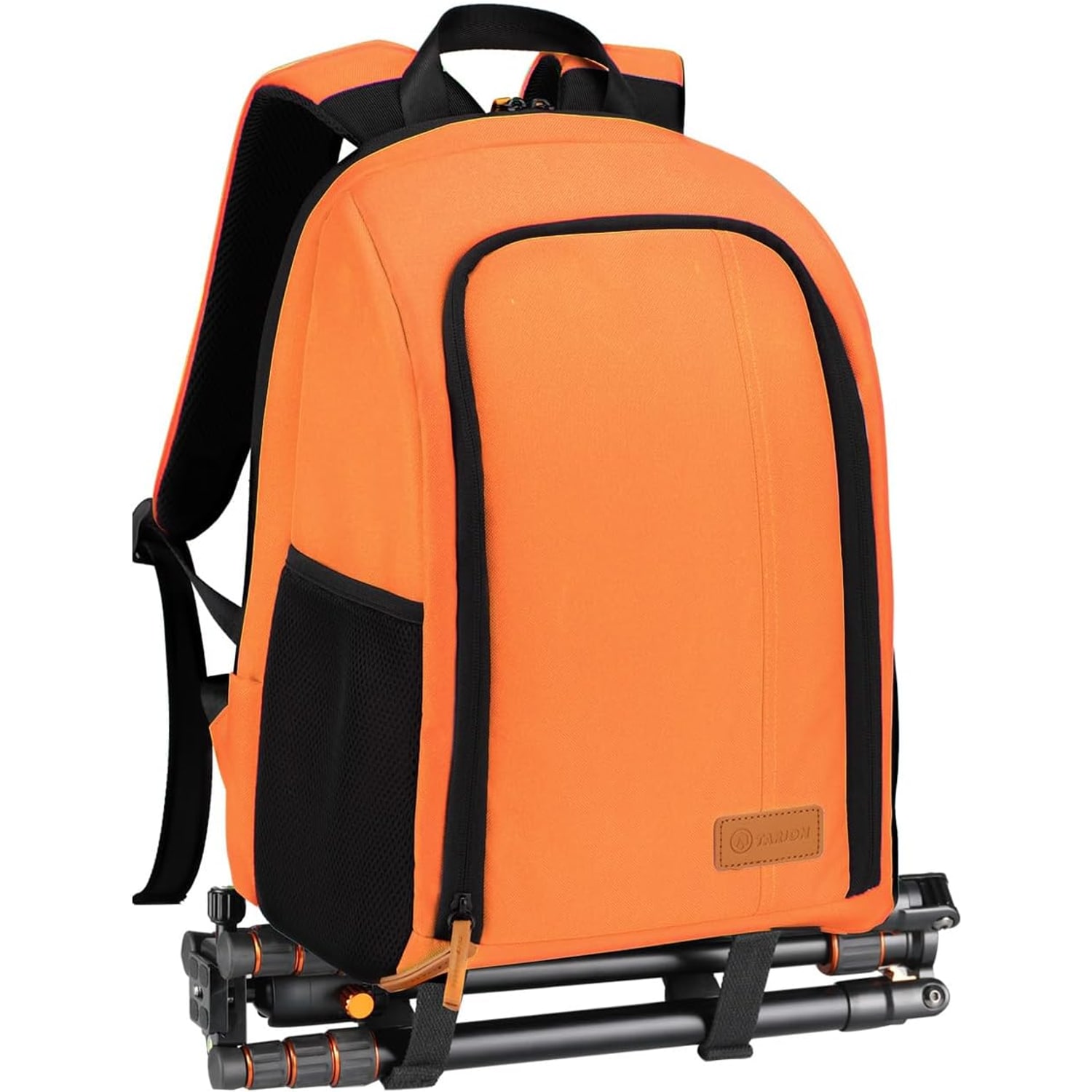
Finally, consider colour. Black is dull, and that is the point. A bag that does not announce it is full of camera gear is the sensible pick for busy public places.
Looking after it
Care is simple. Hand wash only. Wipe the outer down with a damp cloth and a little mild soap when it gets grubby, then go over it with a clean damp cloth and let it air dry out of direct sun. No machine washing, no tumble drying, no bleach and no iron.
Shake out sand and grit from the camera section now and then. Grit works its way into zip teeth and that is usually what kills a bag before the fabric gives up. A dry brush along the zip line every few months goes a long way.
Store it empty with the zips slightly open in a ventilated cupboard. If it has been rained on, dry it fully first, including the rain cover.
The short version
This is a 12-litre, 0.93 kg camera backpack with eight removable padded dividers, a dedicated sleeve for devices up to 15 inches, 11 compartments, three pockets, a water-resistant polyester shell and an included rain cover. It carries a body, a few lenses and a laptop at once, converts to a plain day pack when the dividers come out, and stays small enough to work as cabin baggage.
If you want one bag that handles the commute and the shoot, and you are not carrying professional-volume kit, this covers it. If your gear list is longer than an arm, look at something bigger with a waist belt.
Orders go out by tracked courier from our overseas warehouses and most reach Singapore in 7 to 12 working days. Delivery is free on orders of $150 or more, $20 below that. Returns are open for 14 days from delivery in resaleable condition, so you can pack your own gear in it and be sure.