
The complete guide
How To Choose A Small Camera Shoulder Bag For Day Trips And Commuting
The day you leave the big bag at home
Most camera bags are built for the day you carry everything. Two bodies, four lenses, a flash, a tripod. That day comes around a few times a year. The rest of the time you want one camera and somewhere soft to put it, and the big bag stays in the cupboard because it is too much to drag onto a train.
So the camera stays home too. Or it goes into a tote with your keys and a water bottle, and comes out with a scratch on the screen.
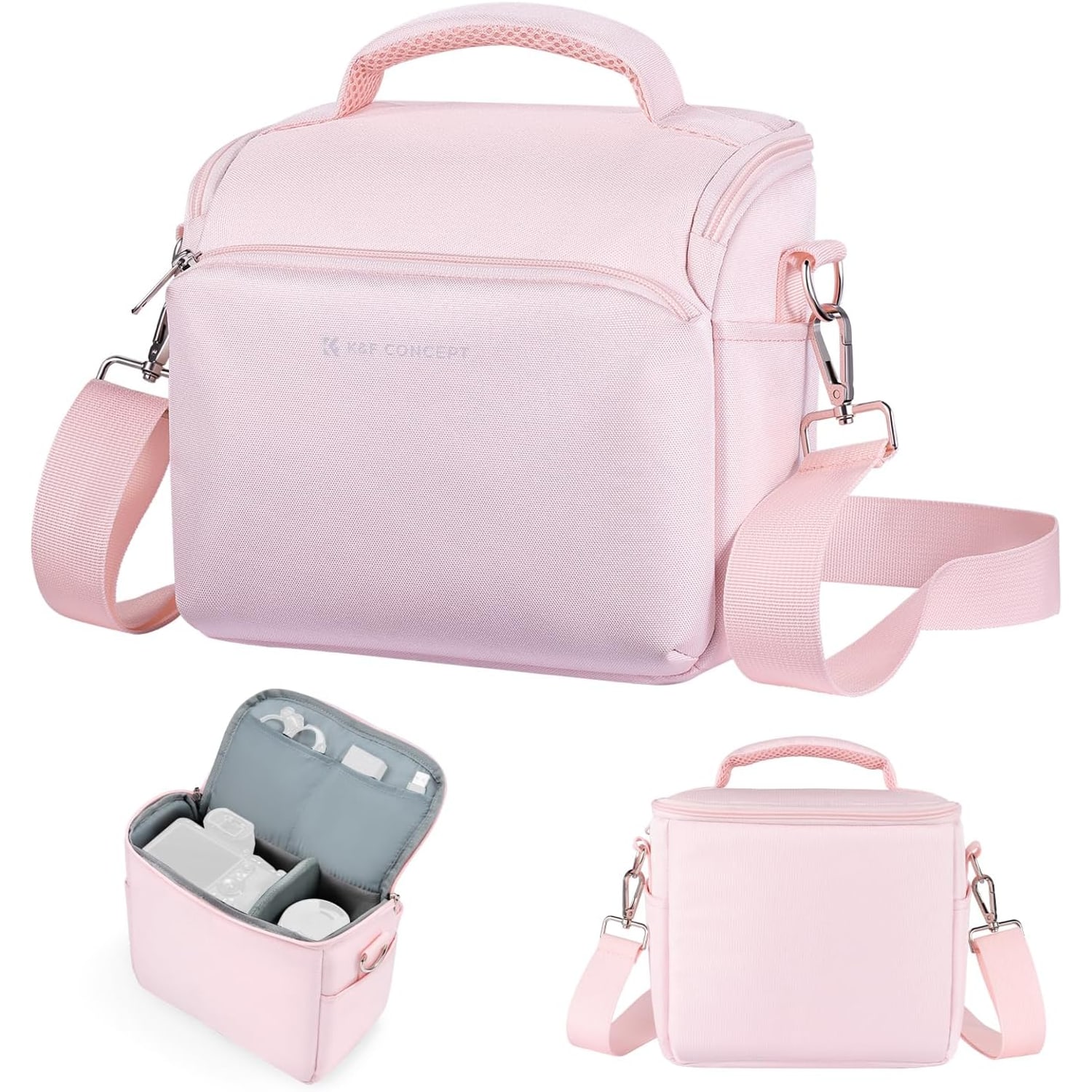
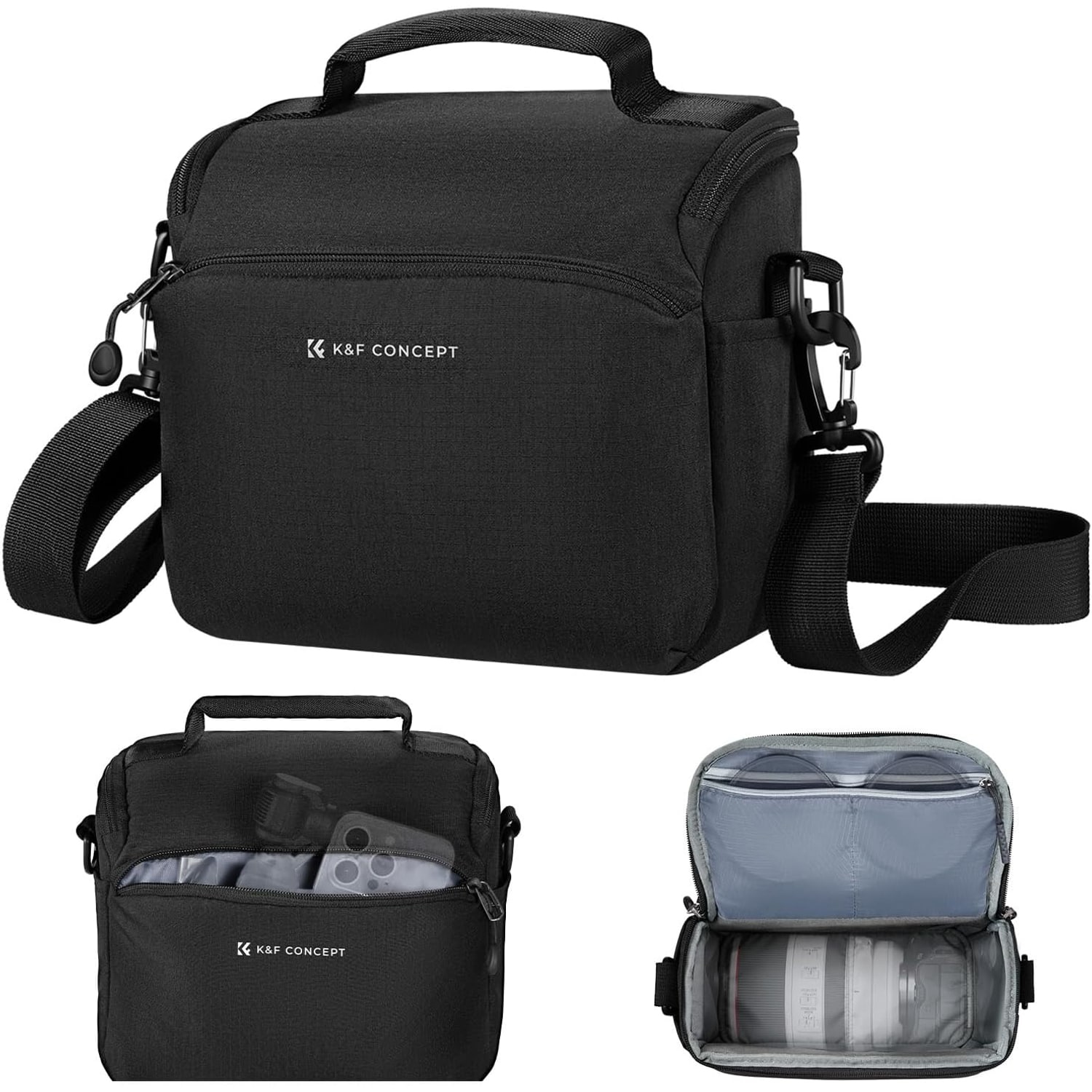
A small camera bag fixes that problem by being small. This camera shoulder bag 5L is about 23 x 18.5 x 13 cm on the outside, which is close to the footprint of a hardback book. It holds one camera. That is the whole idea, and it is worth being clear about what fits before you buy.
What you actually get
It is a pink canvas bag on a single adjustable strap. Inside is one padded compartment with one removable padded divider. The top opens wide with double YKK metal zips, and there is a top flap. The maker lists the capacity as 5 litres and describes the canvas as high density.
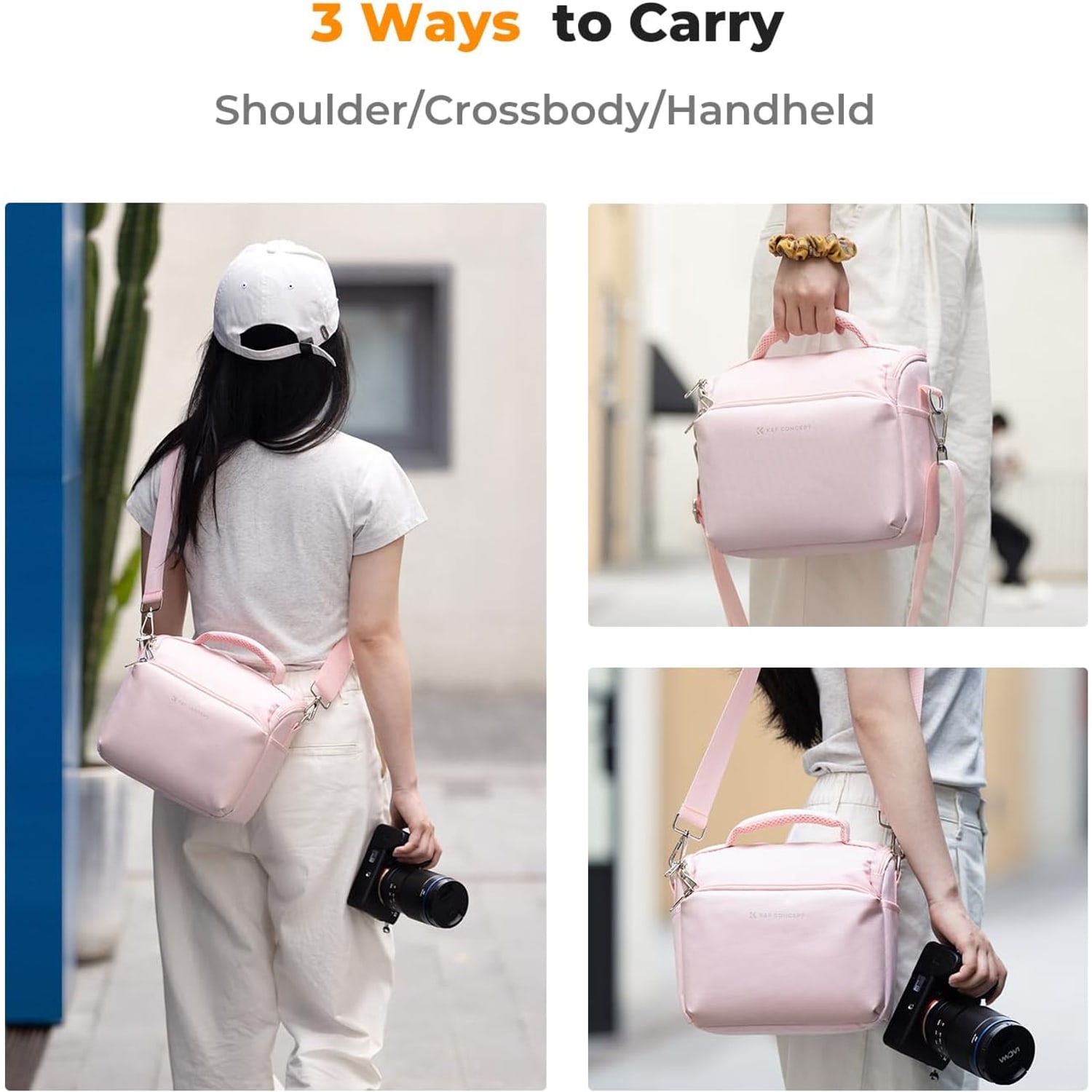
There is one strap, worn over a shoulder or across the body. If you want a bag that sits on both shoulders, this is a different kind of bag.
The maker gives two sets of outside measurements. The description says 23 x 18.5 x 13 cm, and the specification table says 23.1 x 17.3 x 10.9 cm. They are close. If you plan to drop this bag inside a larger one, allow for the bigger numbers.
Two weights are given as well. The maker's description says 0.22 kg and the specification table lists 0.4 kg. We cannot tell you which is the bare bag. Both are light for a padded bag, so it will not be the heavy part of your day either way.
Reading the size: what fits and what does not
The number that matters is the inside: 20 x 16 x 10 cm.
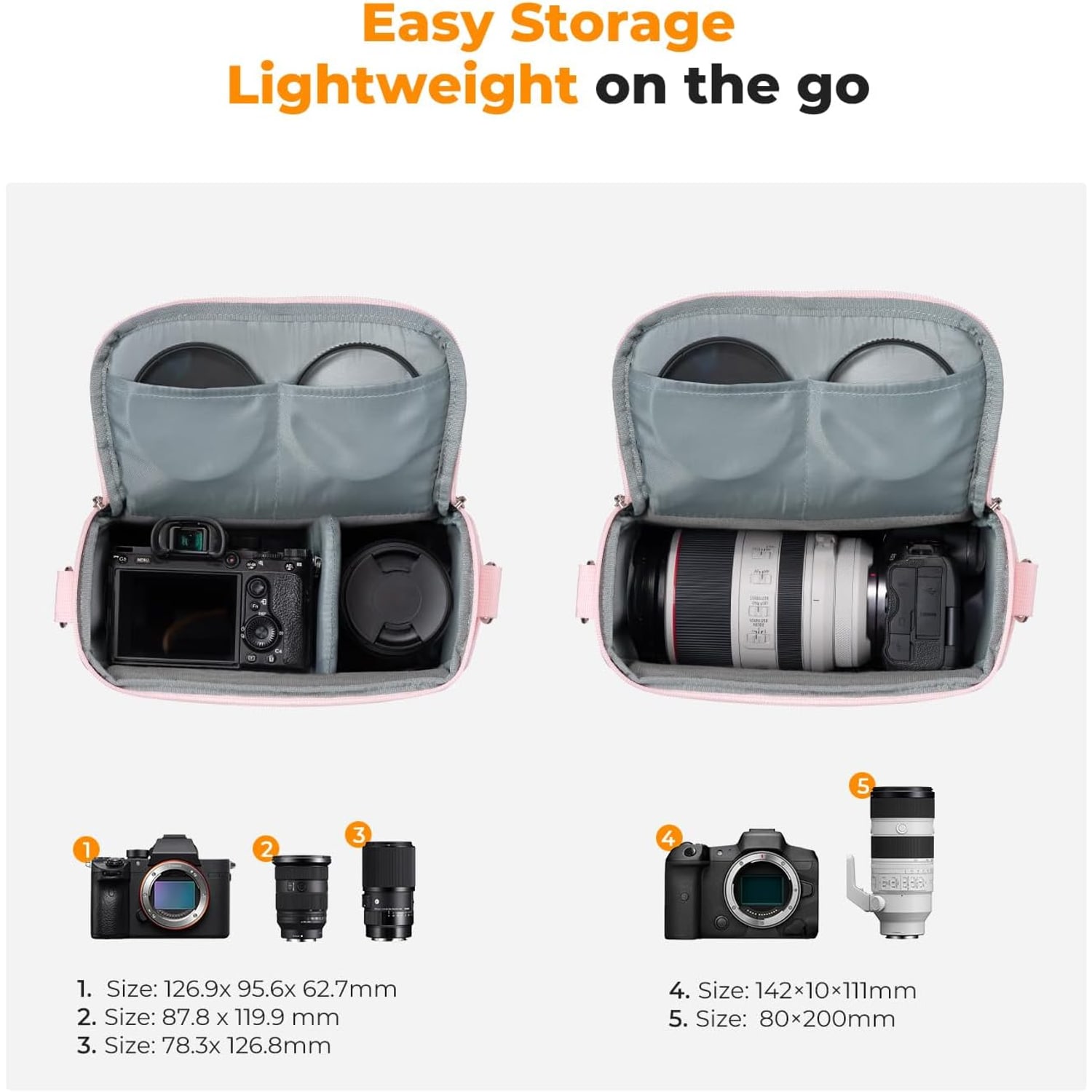
Here is how we read that. A compact camera fits with plenty of room. A mirrorless body with a small lens attached should fit, sitting lens down or on its side depending on the lens. An instant camera of the usual pocket size fits, with space beside it for film. A full-size DSLR with a long zoom attached does not, because the camera and lens together are longer than the bag.
That reading is ours, worked out from the stated internal dimensions. The maker does not publish a fit list. The maker does call it a DSLR camera bag, and a small DSLR body with a short lens may go in, but we would not order on that basis without measuring.
Measuring takes two minutes. Put the lens you actually use on the camera. Measure the widest point, the tallest point and the depth from the back screen to the front of the lens. Compare those three numbers with 20, 16 and 10 cm, and leave a centimetre or so spare for the padding and for getting your fingers in. If one number is over, the bag is too small. Padding does not stretch.
One more thing on capacity. The listed figure is 5 litres, but 20 x 16 x 10 cm works out to about 3.2 litres. The litre figure seems to describe the outside of the bag. Pack by the internal dimensions and you will not be caught out.
One divider, two ways to pack
The single padded divider gives you a simple choice.
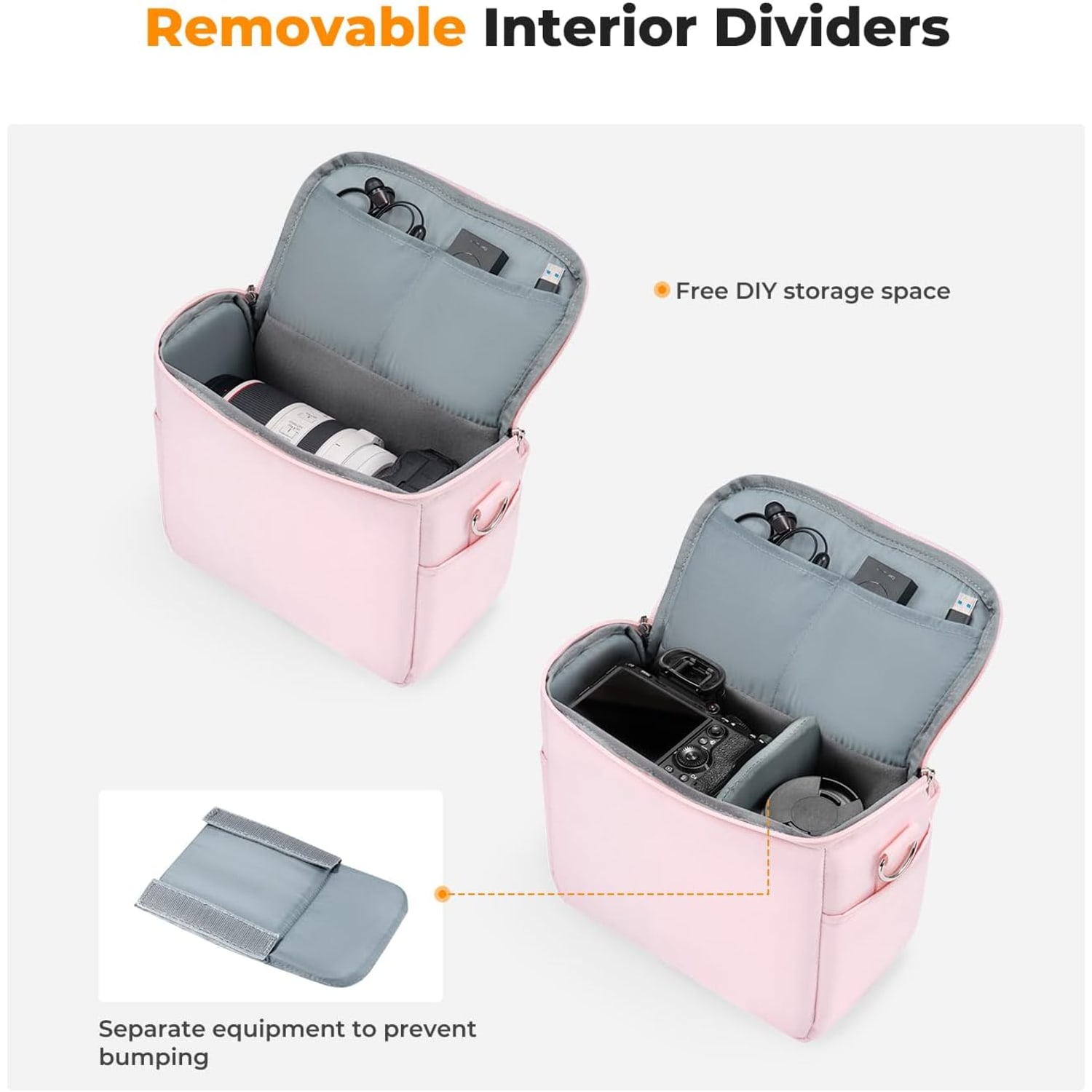
Leave it in and you get two sections. The camera goes in the larger one. The smaller one takes a charger, a spare battery, a small prime lens or a couple of film packs. The divider stops those things knocking against the camera body while you walk.
Take it out and you have one open space. That suits a camera with a slightly longer lens lying across the full 20 cm, or no camera at all. The maker says that with the divider removed the bag converts to an everyday shoulder bag. A phone, a wallet, keys and a power bank fit that interior. A laptop does not.
The specifications also mention a utility pocket, but the maker does not say where it is or how big. Do not plan your packing around it until you have the bag in your hands.
The strap, and why the length matters
The strap adjusts from 75 cm to a maximum of 134 cm, and the specifications list it as canvas.
At the short end the bag hangs from one shoulder. That is fine for a walk from the car park to a restaurant. For anything longer, let the strap out and wear it across your body. The bag stays put when you bend down, and both hands are free for the camera.
On the MRT at peak hour, slide the bag round to your front. It is small enough to rest against your stomach without annoying anyone, and you can keep a hand over the zips. Getting through the fare gates with a small crossbody camera bag is far easier than with a full pack on your back.
The maker does not state whether the strap has a shoulder pad or whether it detaches. With a load this small, a pad matters less than it would on a big bag.
Getting the camera out quickly
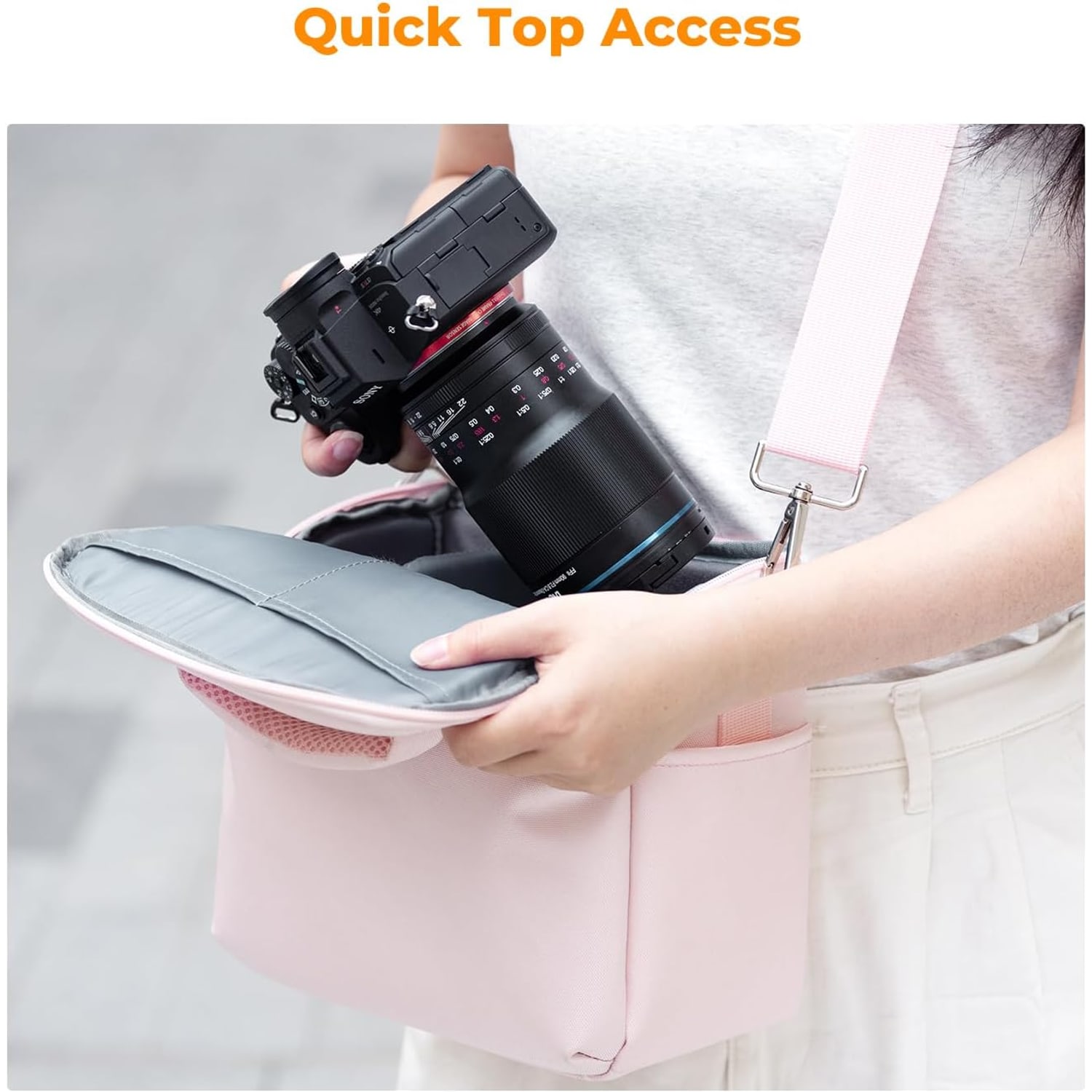
A camera you cannot reach is a camera you do not use. The maker points to the wide opening and the double metal zips as the quick-access feature. Two zip pulls let you open the top from either end, or park both pulls at one side so you always know where to reach.
A habit that helps: always put the camera back the same way round, grip side up. Then your hand finds it without looking.
Canvas, padding and what they do not promise
The maker describes the outer as high density canvas and the inner padding as thicker, and says the padding and top flap are there to cushion bumps and shocks.
That is useful on an ordinary day. A bag swinging into a door frame, or a knock against a pole on the bus. But this is a soft bag. The maker gives no drop rating, and we will not pretend it turns a fall onto concrete into nothing. Carry it like it has a camera in it.
The maker does not state the canvas fibre, the lining material or a maximum load.
Rain and humidity in Singapore
Two local facts shape how any small canvas bag gets used here.
First, the rain. It arrives fast and it arrives heavy. The maker makes no water resistance claim for this bag and lists no rain cover, so assume the canvas will soak through if you stand in a downpour. The fix is simple because the bag is small. It fits under an umbrella with you, or inside a tote. Some people keep a folded zip-seal bag inside for the camera. If the canvas does get wet, empty it and let it dry completely with the zips open before you put anything back.
Second, the humidity. A camera bag is for carrying, not for storage. Lenses left zipped in a closed bag for weeks in this climate can grow fungus, and no bag prevents that. Keep the camera in a dry cabinet or a sealed box with silica gel at home, and load the bag when you head out.
Who it suits, and who should pick something bigger
This bag makes sense if you carry one small camera and want it close. Think of a day trip to Pulau Ubin or Sentosa, a morning at the Botanic Gardens, a weekend in Johor Bahru or Bangkok with a compact in your hand luggage. It also suits anyone who shoots with an instant camera at parties and wants the film kept with it.
It is the wrong bag if your kit includes a full-size DSLR with a long zoom, more than one extra lens, a flash or a tripod. It is also wrong if you need a bag you can leave out in the rain. And the colour is pink, in a solid finish, so be sure you want pink. Screens vary, and the shade in person may differ a little from the photos.
Care
The maker gives no washing instructions, so keep it gentle. Brush off dry dirt. Spot clean marks with a soft damp cloth. Let the bag air dry in the shade with the zips open, and do not machine wash or tumble dry it. Light colours show marks sooner than black does, so deal with spills on the day. After the beach, take the divider out and shake the sand from the corners.
The short version
This is a small canvas camera bag with a divider, sized for one camera. The inside is 20 x 16 x 10 cm, the strap runs from 75 to 134 cm, and the top opens wide on double metal zips. By those dimensions it takes a compact, a mirrorless body with a small lens or an instant camera. A big DSLR kit needs a bigger bag.
Measure your camera with the lens on. If it fits inside those three numbers with a little to spare, you have a light bag you will actually take out with you. Keep it out of heavy rain, keep the camera in a dry box at home, and try the fit as soon as it arrives. If it is not right, you have 14 days from delivery to send it back in resaleable condition.