
The complete guide
How to Choose a Lightweight Tripod With a Pan Head
The weight problem
Every tripod is a trade between three things. How tall it stands, how steady it is and how much it weighs. You can have any two.
Studio tripods choose height and steadiness. They are wonderful and nobody carries them further than the lift. Pocket tripods choose weight and give up height.
For most people the right answer is in the middle. Tall enough to shoot standing up. Light enough that taking it along is not a debate. Steady enough for the camera you actually own.
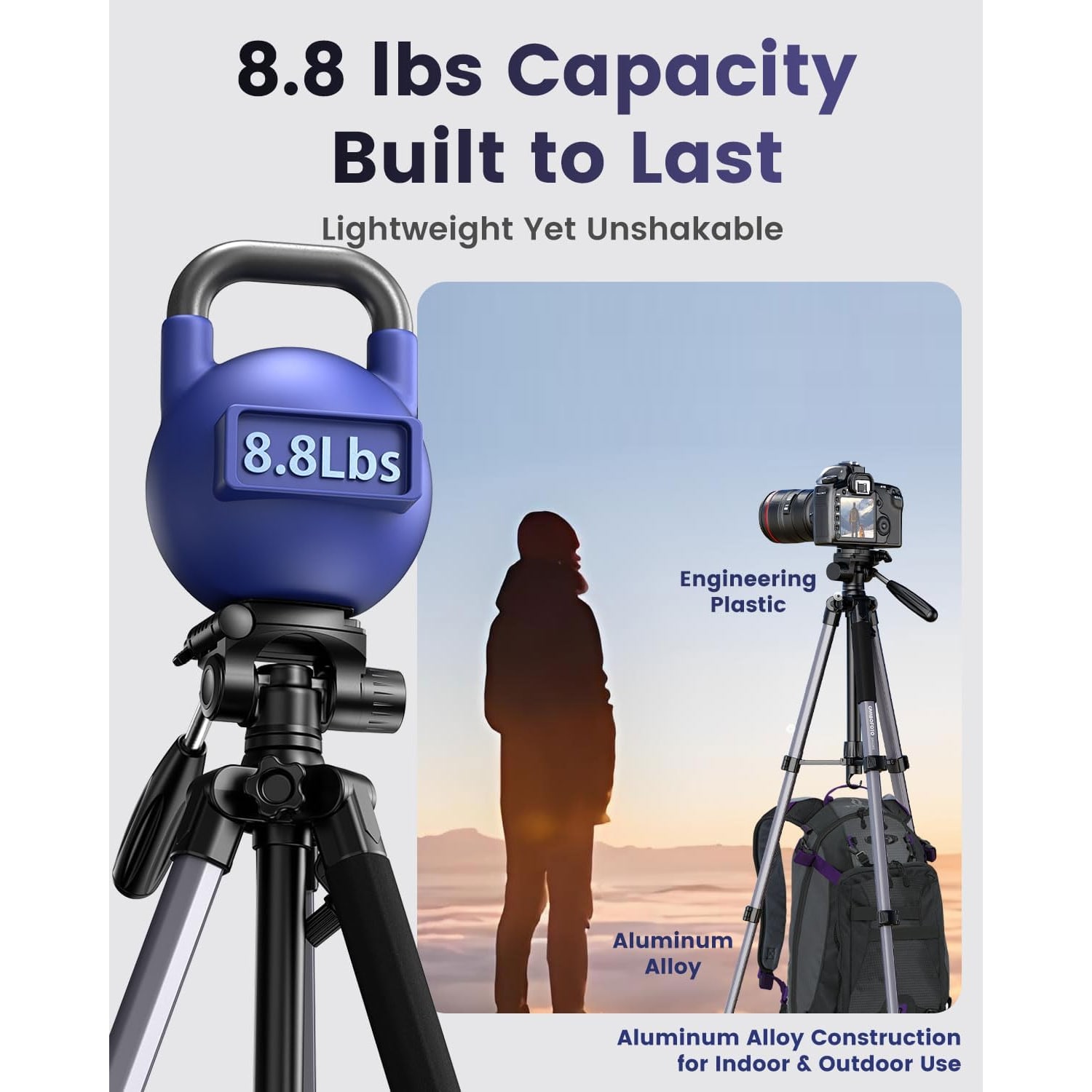
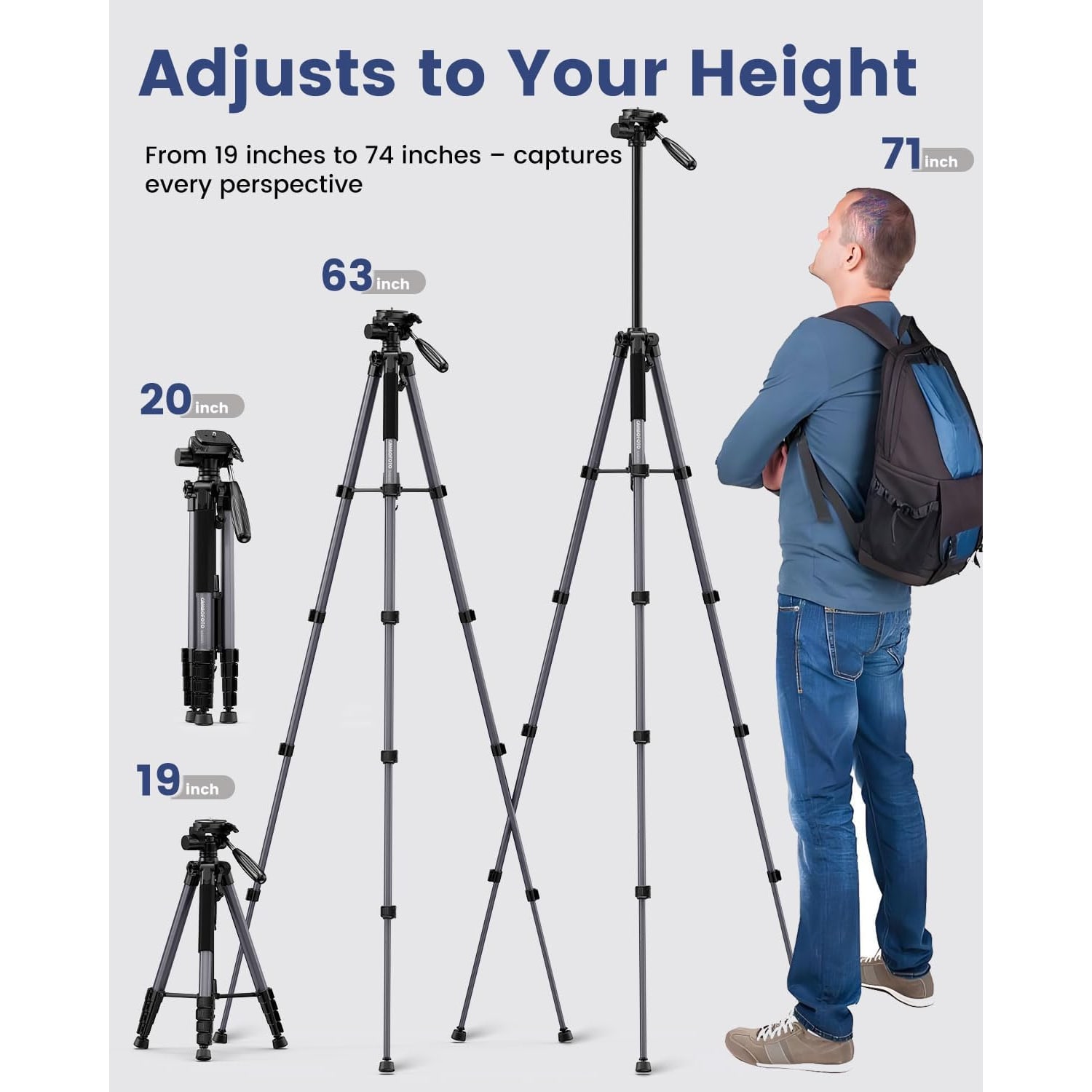
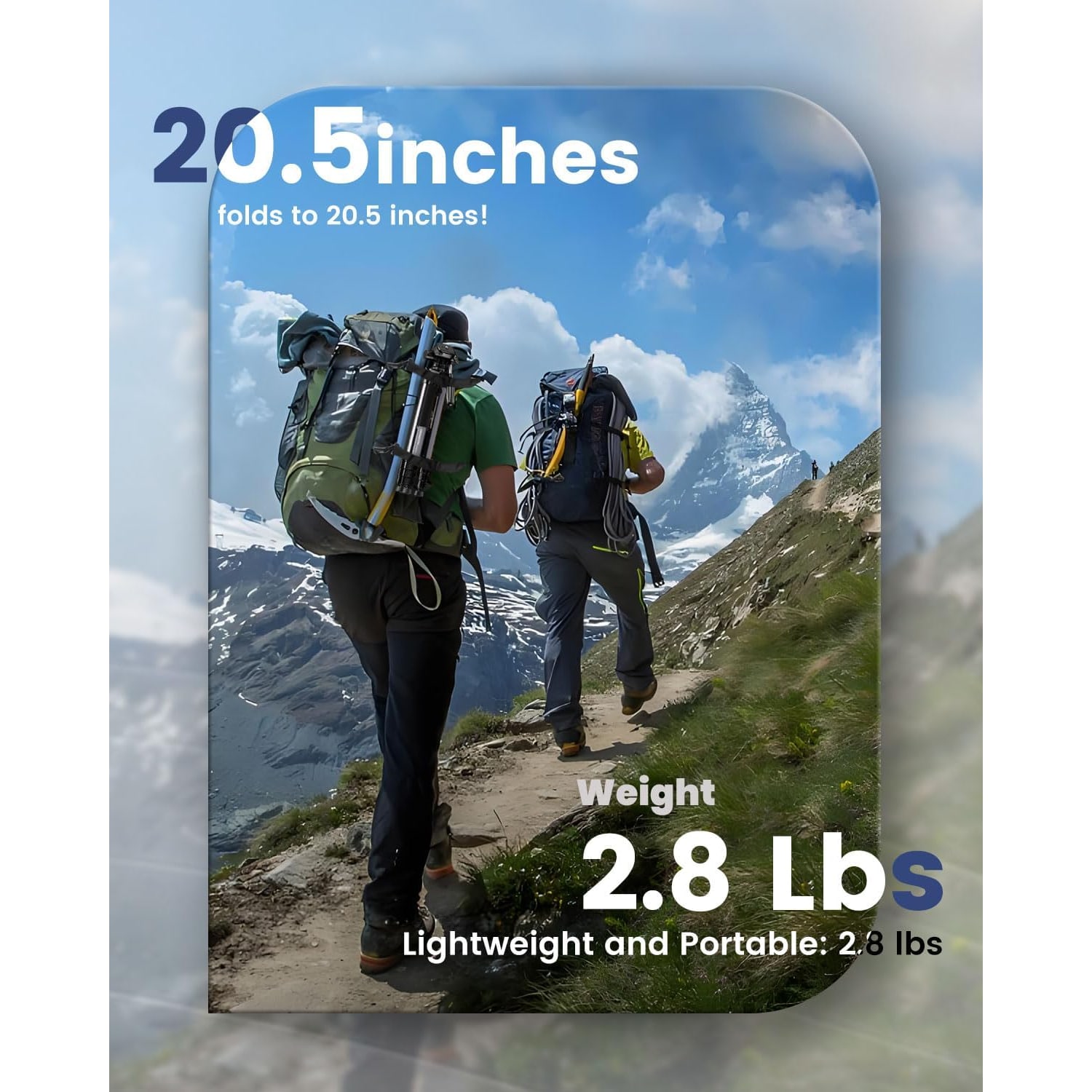
This tripod sits in that middle. It reaches 188 cm, weighs 1.27 kg and has a stated load limit of about 4 kg.
What comes with it
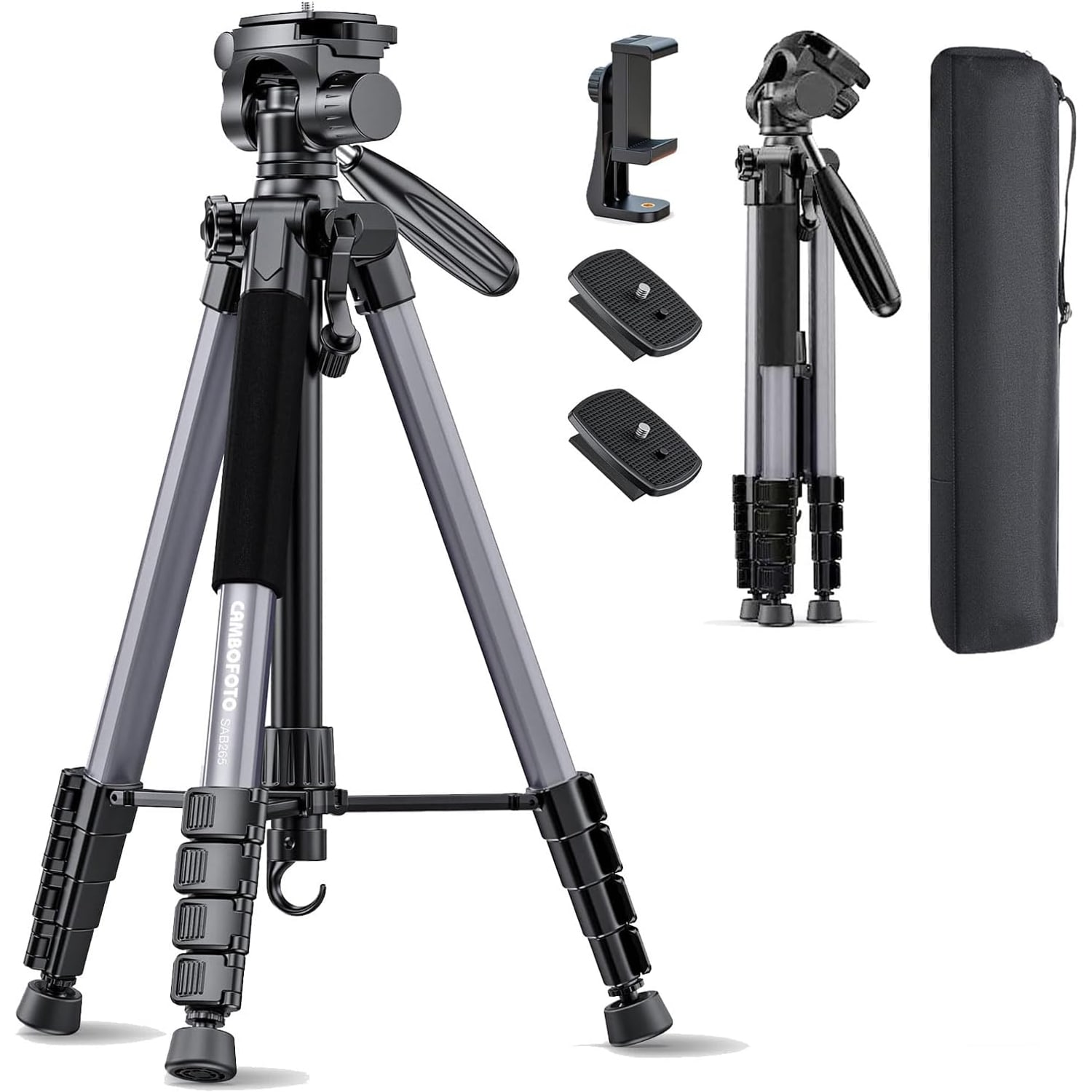
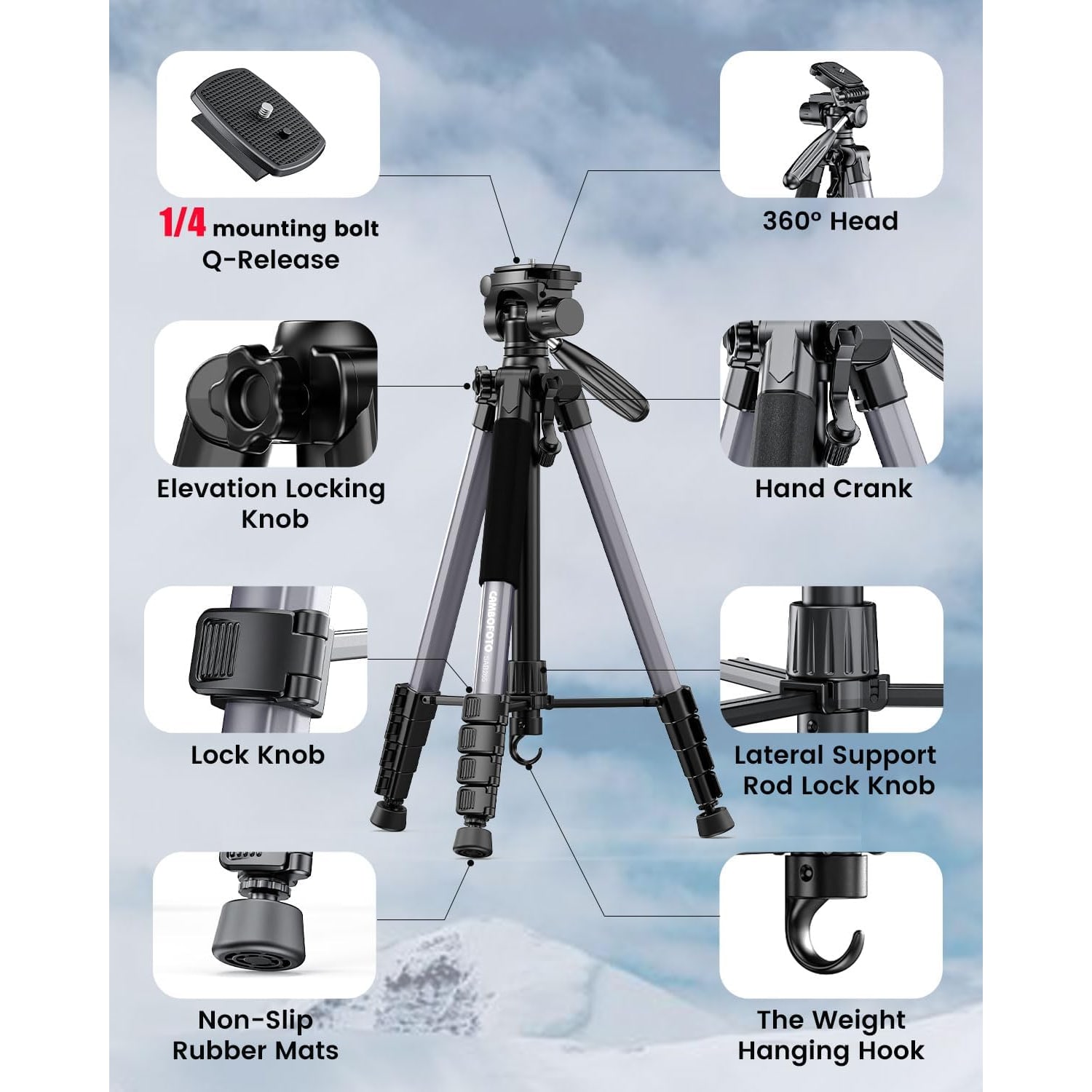
The box holds four things. The tripod with its pan head, a quick-release plate, a phone mount and a carry bag with a strap.
That list matters because it means the tripod is usable on the first day with either a phone or a camera. Nothing else has to be ordered. The maker does not list a remote shutter, so that is the one extra you might add later.
The 3-way pan head
Most questions about this tripod are really questions about the head.
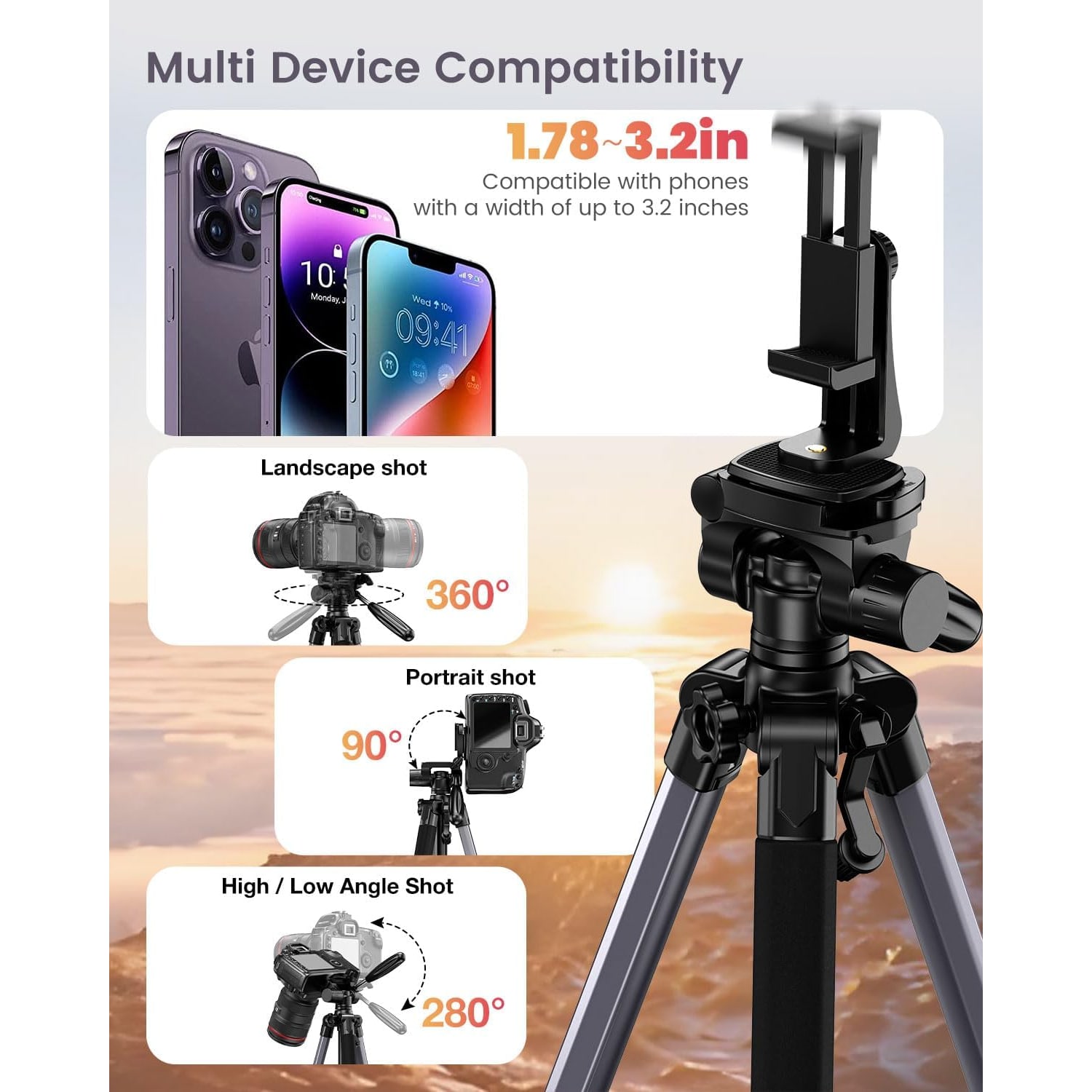
A 3-way head moves in three directions, and each direction has its own lock. Pan is the turn from left to right. Tilt is the nod up and down. The third movement tips the camera over onto its side for upright pictures.
Because the movements are separate, you can change one and leave the others alone. Level the camera once, lock the tilt, and you can pan all day with the horizon staying flat. With a ball head, loosening the one knob frees everything at once.
The handle is the other half of it. A long handle gives your hand a lever, and a lever turns a small, shaky wrist movement into a slow, even one. The maker describes the pan as 360 degrees and the movement as smooth. For following a child across a playground, sweeping across a skyline or tracking a speaker walking along a stage, that is what you want.
Be realistic about the class of product. This is a light photo and video head. It will give you clean pans for family video, travel clips and online content. It is not a weighted cinema head.
A clean pan in four steps
Good pans are mostly preparation.
Level the tripod first, using the spirit level, so the camera does not drift up or down as it turns. Lock the tilt once the frame is where you want it. Loosen the pan only as far as you need for the head to turn under light pressure from the handle.
Then rehearse. Decide where the move starts and where it ends, and run through it once without recording. Stand so that your body is comfortable at the end of the move, not the start, because it is easier to unwind into a relaxed position than to twist into an awkward one.
Record with a few seconds of stillness before and after the move. Those still seconds give you clean points to cut on. Slow is nearly always better. A pan that feels too slow while you are filming it usually looks right on screen.
The plate, the phone mount and the level
The quick-release plate is a small plate that screws to the bottom of the camera. It stays on the camera. To mount the camera, you seat the plate in the head and lock it. To take the camera off for a handheld shot, you release it. No winding a screw each time. The maker does not say which plate standard it follows.
The phone mount holds a handset where the camera would go. The maker does not give its width range.
A spirit level is listed among the features. Use it. A level tripod gives straight horizons, and it also means the camera stays level as it turns.
Legs and feet
The legs are aluminium alloy in three telescopic sections, with ABS plastic used elsewhere.
Three sections is a sensible number at this height. Each extra section adds a joint, and joints are where flex creeps in. The cost is folded length, which is why this tripod packs to around half a metre and not shorter.
The feet are large, round and rubber. The maker's reasoning is that a bigger foot has more contact with the ground and so more grip. On the smooth tiles and laminate of a typical flat, where small hard feet skate about, that is a practical detail.
Where the maker's figures disagree
We would sooner tell you than have you find out.
The folded length is 48 cm in the maker's specification and 52 cm in its description. The minimum height is 48.3 cm in one and 50.8 cm in the other. The weight is 1.27 kg in two places and 1.43 kg in a third.
None of these gaps is large. They matter only if you are working to a tight limit, such as a particular suitcase or a cabin weight allowance. If you are, use the bigger number each time and you will not be caught out.
What a 4 kg limit covers
The stated load limit is about 4 kg.
A phone is nowhere near it. An action camera is nowhere near it. A mirrorless camera with a kit lens is around a kilogram. A DSLR with a standard zoom is perhaps a kilogram and a half. A small ring light fits too.
The limit starts to matter with long telephoto lenses, heavy video rigs with monitors and microphones, and large studio lights. It is also worth remembering that a load limit is about what the head can hold, not about how steady a light tripod is in wind with that load at 188 cm.
Who it suits
It suits people who move around. If your shooting involves a train, a walk and a few flights of stairs, 1.27 kg is the feature.
It suits people who film as well as photograph, because of the pan head.
It suits households with one tripod for everything: the phone for a video call, the camera for a birthday, a ring light for a make-up tutorial.
It is less suited to heavy professional lenses, to long exposures in strong wind and to anyone who strongly prefers a ball head.
Using it in Singapore
For getting about, the bag and strap do the work. The tripod hangs from a shoulder on the MRT and leaves your hands free. At home it stands in a cupboard or lies under a bed.
Indoors, the rubber feet are welcome on tiled floors. Set the tripod behind a desk for calls and streams, or beside the dining table for a family dinner on video with relatives overseas.
Outdoors, think about wind before height. The Southern Ridges, the waterfront at Marina Bay and any high balcony can be breezy. A 1.27 kg tripod with a camera at the top is easy for a gust to move. Shoot lower, keep the strap in your hand and stay well back from a balcony railing.
Think about rain as well. The tripod is listed as not water resistant, and a shower can arrive in minutes. Pack it away when the sky darkens. If it gets wet, dry it before it goes in the bag, since a damp bag in this humidity is unkind to any gear.
Heat matters for the plastic parts. Do not leave the tripod in a parked car or on a balcony in full afternoon sun for long periods.
How to choose
Decide on the head first. If you shoot video, or like to adjust one thing at a time, choose a pan head. If you shoot only stills and want speed, look at a ball head.
Then weigh the tripod against how you travel. Under a kilogram and a half is comfortable for a day on foot.
Then check the load limit against your heaviest setup, leaving a margin.
Then look at what is included. A plate, a phone mount and a bag with a strap save you three small purchases.
Looking after it
Wipe it down after use and never store it damp. Clean the rubber feet so they keep gripping. Do not force the head against a locked control. Loosen first, move, then tighten. Keep it in its bag, away from direct sun.
The short version
A 188 cm tripod that weighs 1.27 kg, with a 3-way pan head and handle, a quick-release plate, a phone mount, a spirit level and a carry bag with a strap. The legs are aluminium alloy in three sections on large rubber feet. The load limit is about 4 kg. It folds to 48 or 52 cm depending on which of the maker's figures you read. It is gunmetal grey and not water resistant.