
The complete guide
How to Choose a 1080p Webcam for Calls, Classes and Streaming
The problem with the camera you already have
Most laptops ship with a camera that was designed to tick a box. It sits behind a pinhole above the screen, it has a sensor smaller than a grain of rice, and it has one job: prove that a human is there. The moment the ceiling light is behind you, or the blinds are half drawn against the afternoon sun, your face turns into a soft grey shape with eyes somewhere in it.
There is a second problem that nobody mentions. A laptop camera points wherever the screen points. Tilt the lid back so your wrists are comfortable, and now everyone is looking at your ceiling fan. Prop the laptop on a stand to fix your neck, and the camera is staring down at the top of your head.
A separate USB webcam solves both at once. It has a bigger lens and a bigger sensor, so it gathers more light. And it moves independently of your screen, so you can put it where a camera actually belongs, roughly at eye level, pointing straight at you.
What the numbers on the box actually mean
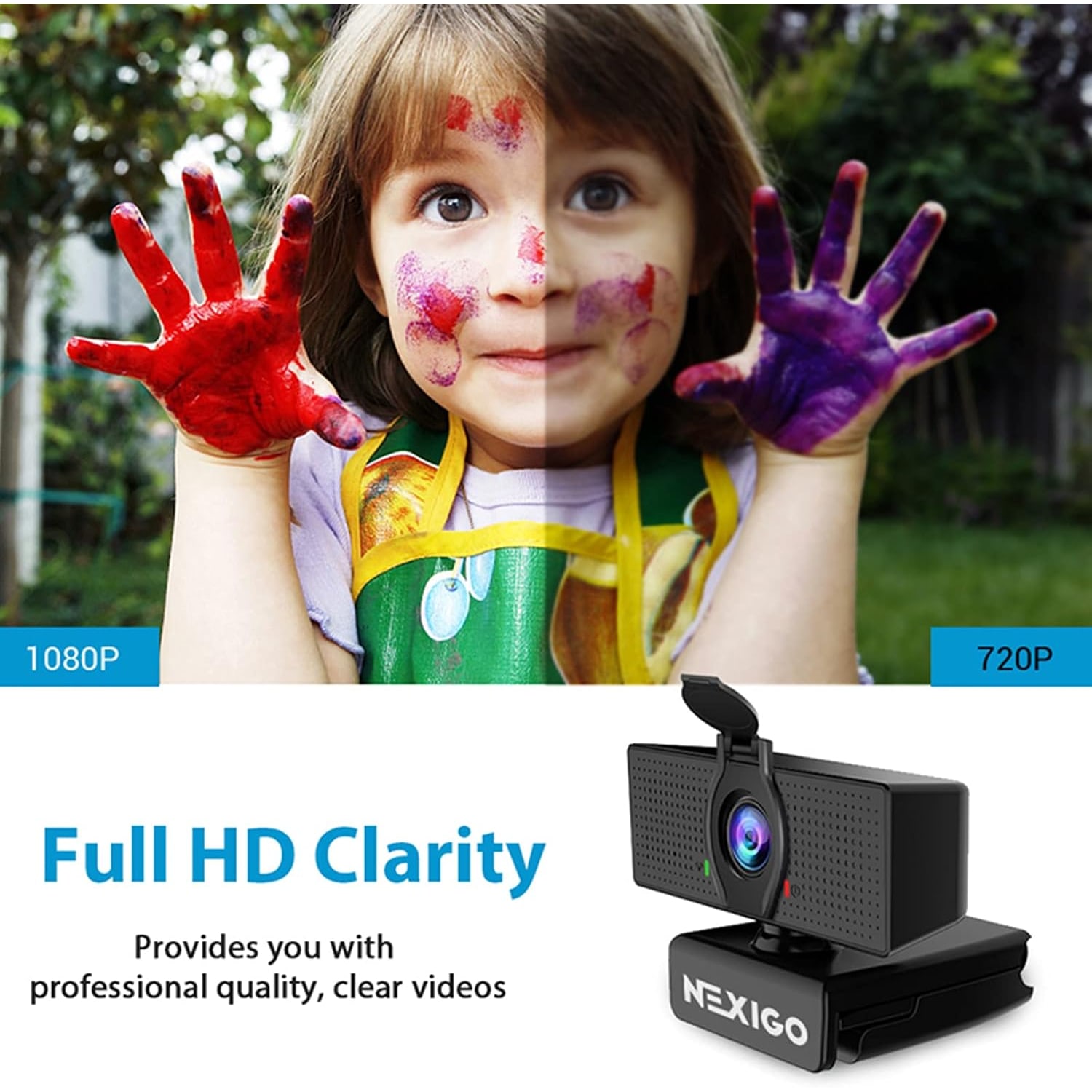
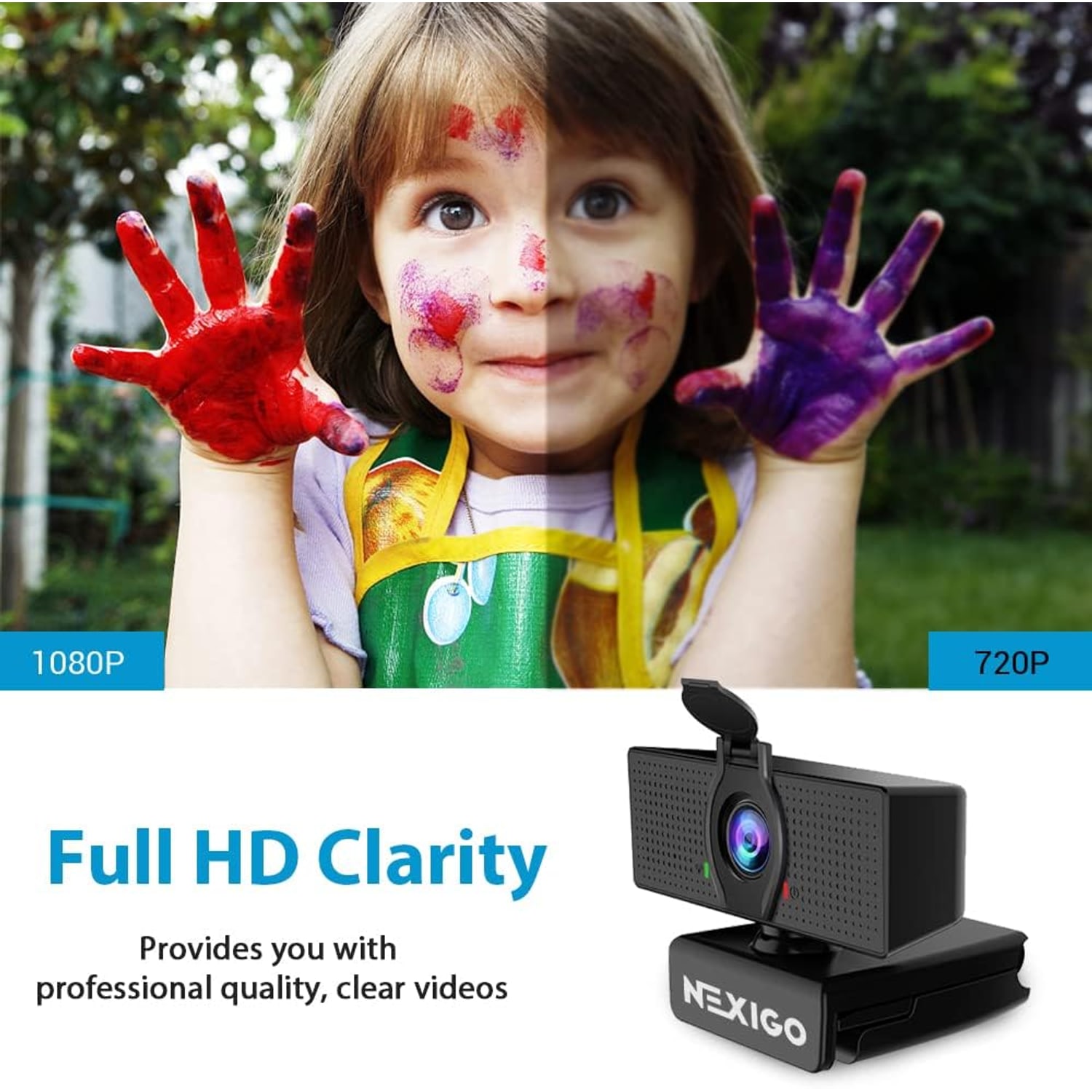
Resolution. 1080p means 1920 by 1080 pixels. That is Full HD, and it is still the sweet spot for video calls. Higher resolutions exist, but most meeting apps compress your video down anyway, and your connection speed matters far more than the extra pixels. A clean, well-lit 1080p image beats a dark 4K one every time.
Frame rate. 30 frames per second is the standard for talking-head video. It is smooth enough that your gestures look natural and your lip movement matches your voice. Higher frame rates mainly help with fast motion, which is not what happens in a meeting.
Sensor. This camera uses a 2 MP CMOS sensor at 1/3-inch. The physical size of the sensor matters more than the megapixel count, because a larger sensor collects more light per pixel. A 1/3-inch sensor is a decent size for a webcam in this class.
Field of view. This one trips people up. A 110 degree lens is wide. That is great if you want two people in frame or want to show your desk, and it is too much if you are alone in a small room and would rather not broadcast the laundry rack behind you. The fix is the digital zoom, which crops the frame tighter. Buying a wide camera and zooming in gives you options. Buying a narrow camera and wishing it were wider does not.
Fixed focus. There is no autofocus here, and that is not a flaw. Fixed focus means nothing hunts back and forth when you lean forward, and nothing goes soft when someone walks behind you. At normal desk distance, you stay sharp. It is one less thing to go wrong.
Who this suits
If you are on calls most days from a home desk and your current setup is a laptop camera, this is a clear upgrade. Same if you are teaching or studying online, where being readable for two hours straight matters more than looking cinematic.
It suits shared spaces too. In a small office or a meeting room at the end of a corridor, a wide angle webcam clipped to a monitor can cover a couple of people without anyone shuffling chairs. The 110 degree view does the work that a narrower camera cannot.
Streamers and recorders at the entry level will get on fine with it. A plug and play webcam at 1080p and 30fps drops straight into common broadcasting software as a video source. If you later want studio-grade results, the usual next step is a separate microphone rather than a different camera, because audio is almost always the weaker half of a home setup.
Who it is less suited to: anyone who needs a camera outdoors or anywhere damp. It is not water resistant and it is built for indoor use. In a tropical climate that means keeping it away from open windows in a storm and out of kitchen steam.
Lighting beats specifications
Here is the thing nobody selling cameras wants to lead with. The single biggest improvement you can make to your on-screen appearance costs nothing. Turn around.
If the brightest thing in the room is behind you, the camera exposes for that bright thing and leaves your face dark. Put the window or the lamp in front of you instead, and the same camera suddenly looks twice as good. In a flat with one big window, this usually means moving the desk, not the camera.
Failing that, a desk lamp bounced off a pale wall in front of you gives soft, even light with no harsh shadows. Avoid pointing a lamp directly at your face, which flattens everything and makes people squint. This camera does list low light correction and automatic exposure, so it will try to help, but no sensor invents light that is not there.
Mounting and placement
The folding clip is designed to sit on the top edge of a monitor or a laptop lid. Make sure it seats properly, with the rear leg resting flat against the back of the screen. A clip that is only half on will slowly tip forward over a long call.
Height is worth a minute of fiddling. The camera should be at or just above eye level, so you are looking slightly up rather than down. If your monitor is low, a couple of books under its stand sorts out both your neck and your camera angle.
If you want the camera somewhere the screen cannot go, there is a tripod thread underneath. A small desk tripod gives you freedom to put it beside the monitor, closer in, or off to one side for a more natural angle. Tripods are not included.
Leave yourself a little headroom in frame, with your eyes around a third of the way down the picture. Then set the frame width you want. If 110 degrees shows too much, tighten it with the digital zoom until it is just you and a bit of background.
The privacy cover, and why mechanical is better
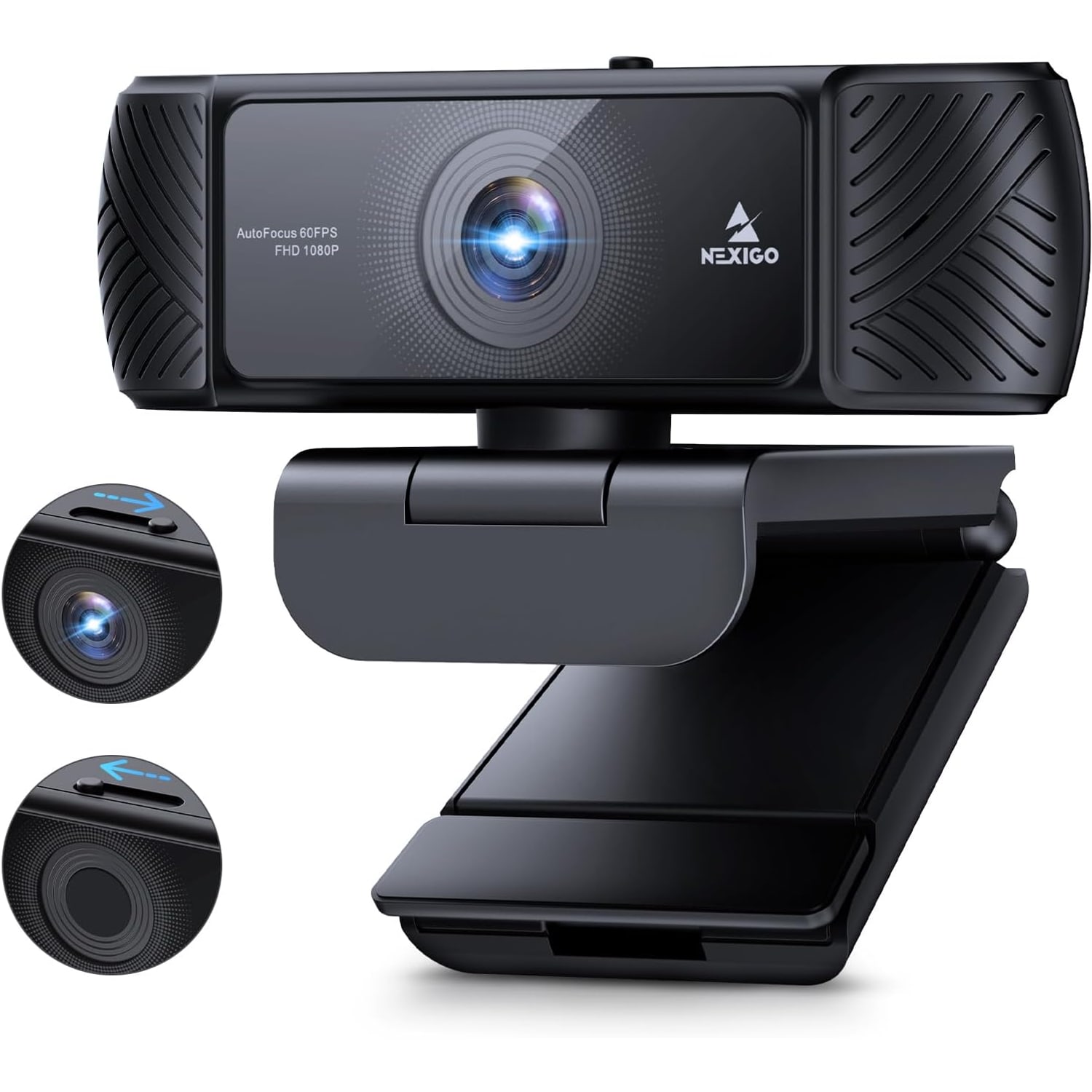
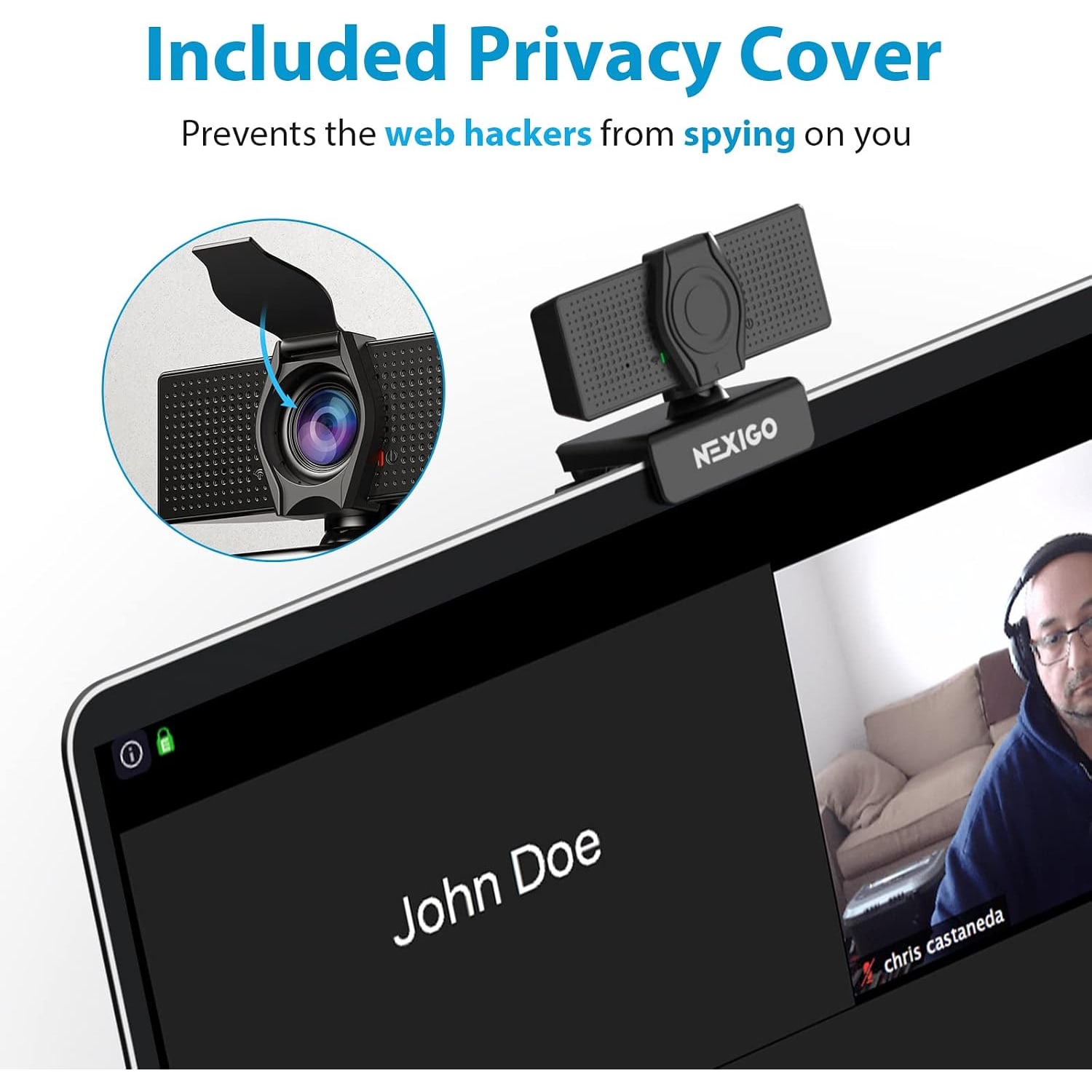
Software indicators are fine. A cover is better. When the plastic slides across the lens, the camera physically cannot see the room, and you do not have to think about which apps have permission to do what.
It also keeps the glass clean. A camera that lives on a monitor in a humid flat collects dust, and dust on a lens shows up as haze that no setting removes. Closing the cover at the end of the day is a small habit that keeps the picture crisp for years.
One thing to remember: the cover blocks video only. Mute your microphone separately if you want to be sure nothing is being picked up.
A note on recording other people
If you are recording a meeting, a class or anything with other people in it, say so before you start. In Singapore, recording other people is covered by local law, including the PDPA. The practical version is simple. Tell people, get their agreement, and do not share a recording more widely than the people in it expect.
Keeping it working
Care is light. Wipe the lens with a dry microfibre cloth when it needs it, using gentle pressure. Skip alcohol wipes and household cleaning sprays, which can cloud a lens coating permanently.
Unplug by the connector, not by pulling the cable. USB leads fail at the join more than anywhere else. Store it indoors away from direct sun and damp, and close the privacy cover between uses.
If the camera ever stops being recognised, the first two things to try are a different USB port and a restart. Some ports on laptops and hubs are charging-only or share bandwidth with other devices, and swapping ports fixes more problems than any software setting.
The short version
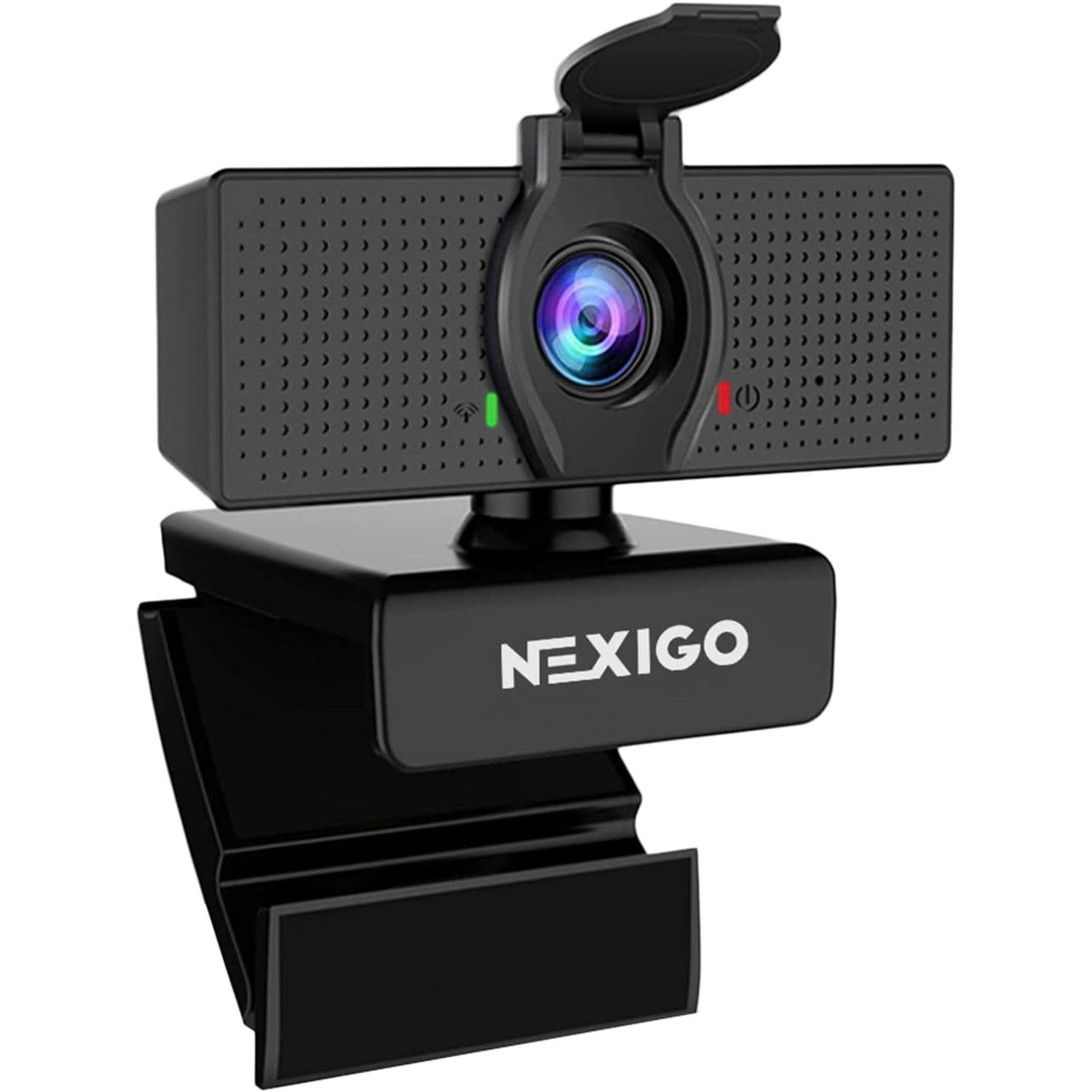
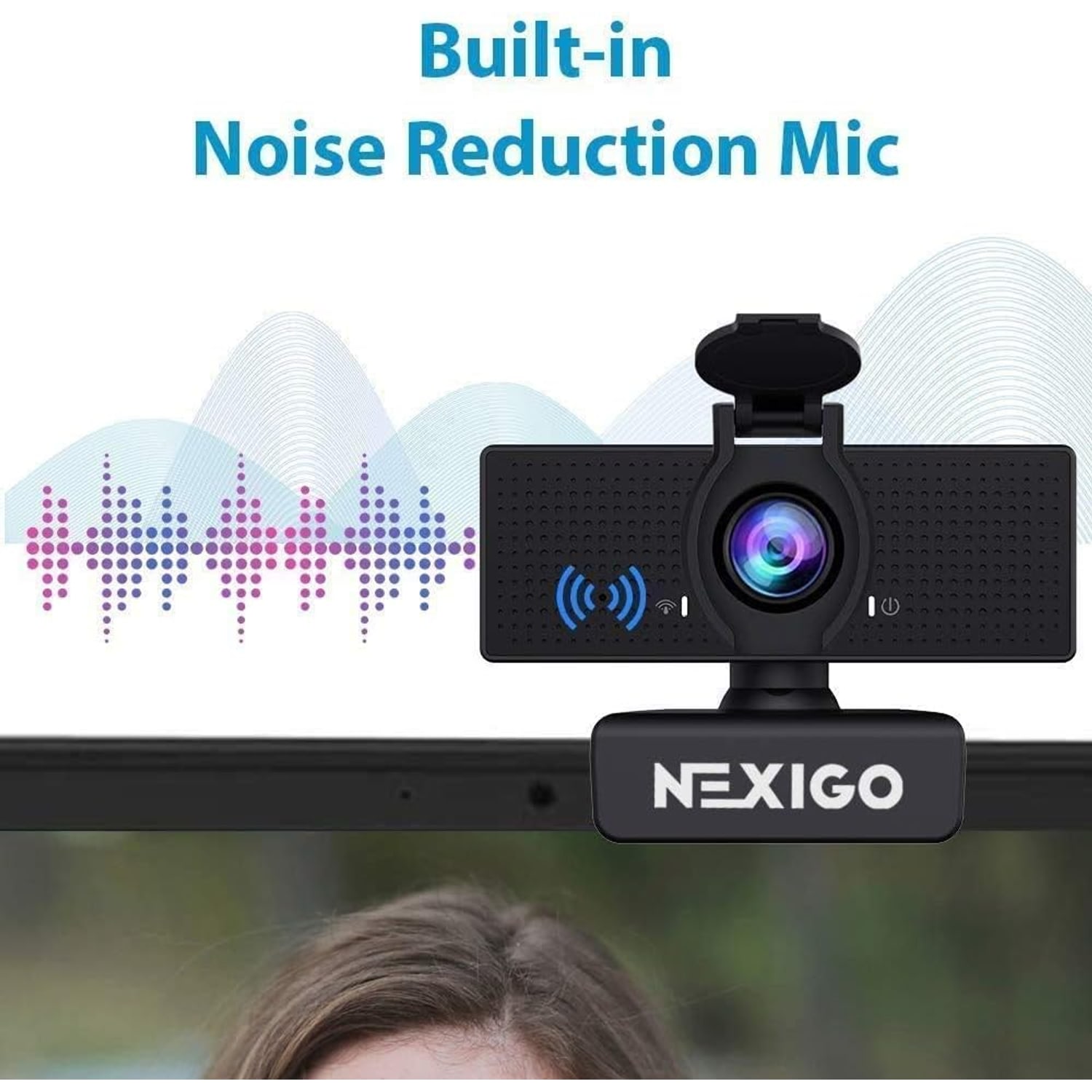
You are buying a bigger lens, a bigger sensor and freedom to put the camera where it should be. Full HD at 30fps, a 110 degree wide view that you can crop in with digital zoom, a built-in microphone so you do not need a headset for every call, and a cover that physically shuts the lens.
It plugs into one USB port, needs no drivers and works across Windows, macOS, Linux, Chrome OS and Android. Add decent light in front of you and set it near eye level, and you will look better on screen than most people in the meeting.