
The complete guide
Choosing A First Toy Camera For Kids: An Honest Guide For Parents
The phone problem
Somewhere around the age of three, children work out that the phone takes pictures. From then on they want it. They want to photograph their lunch, your feet and the neighbour's shoe rack. You want your phone back, unscratched, with no accidental calls made.
A toy camera for kids is the usual answer. It is not a great camera. It is a thing that takes pictures, belongs to the child and can be dropped on the lift floor without a crisis. It has no internet, no messaging and no app store.
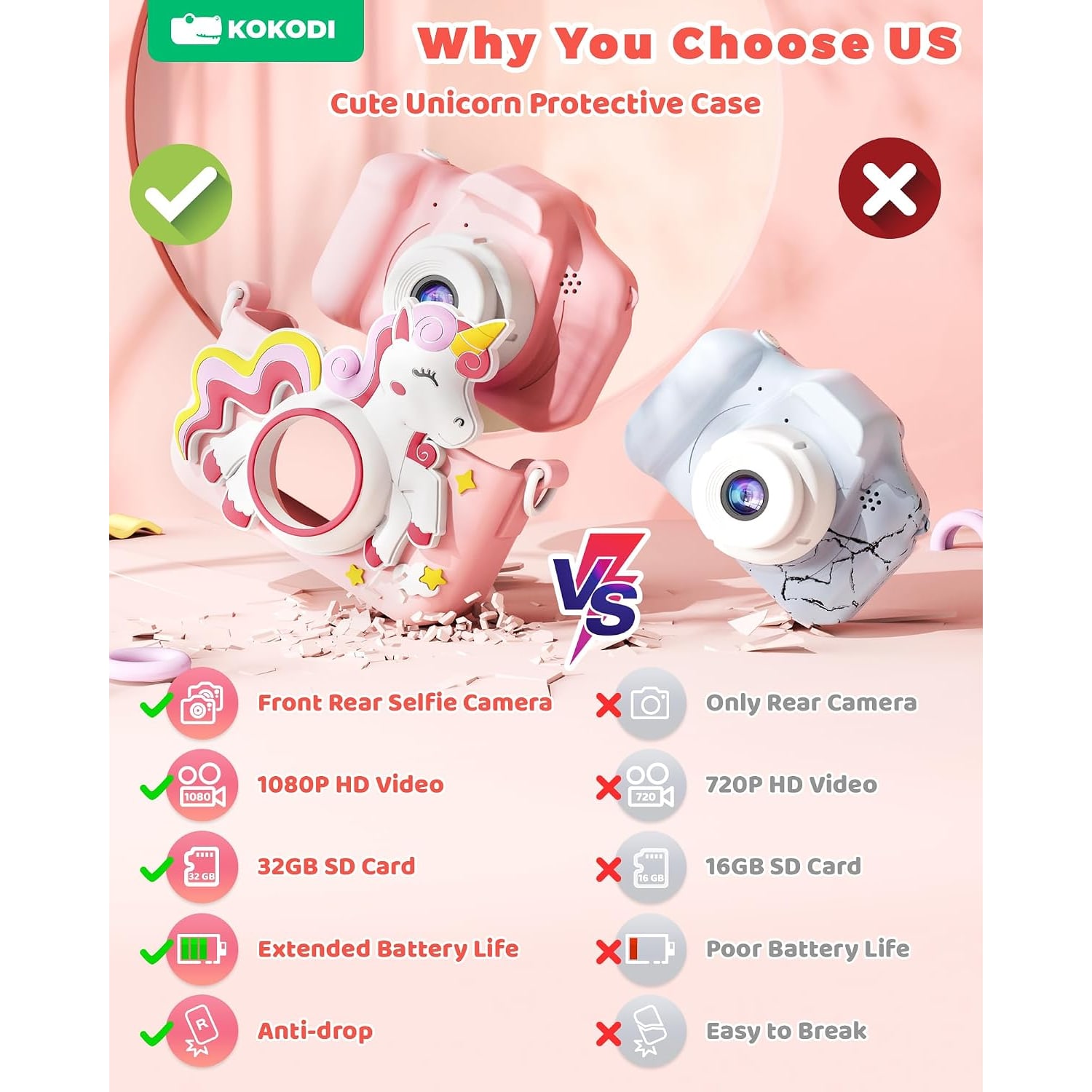
This one adds a twist that children enjoy: a second lens for selfies.
What this camera is
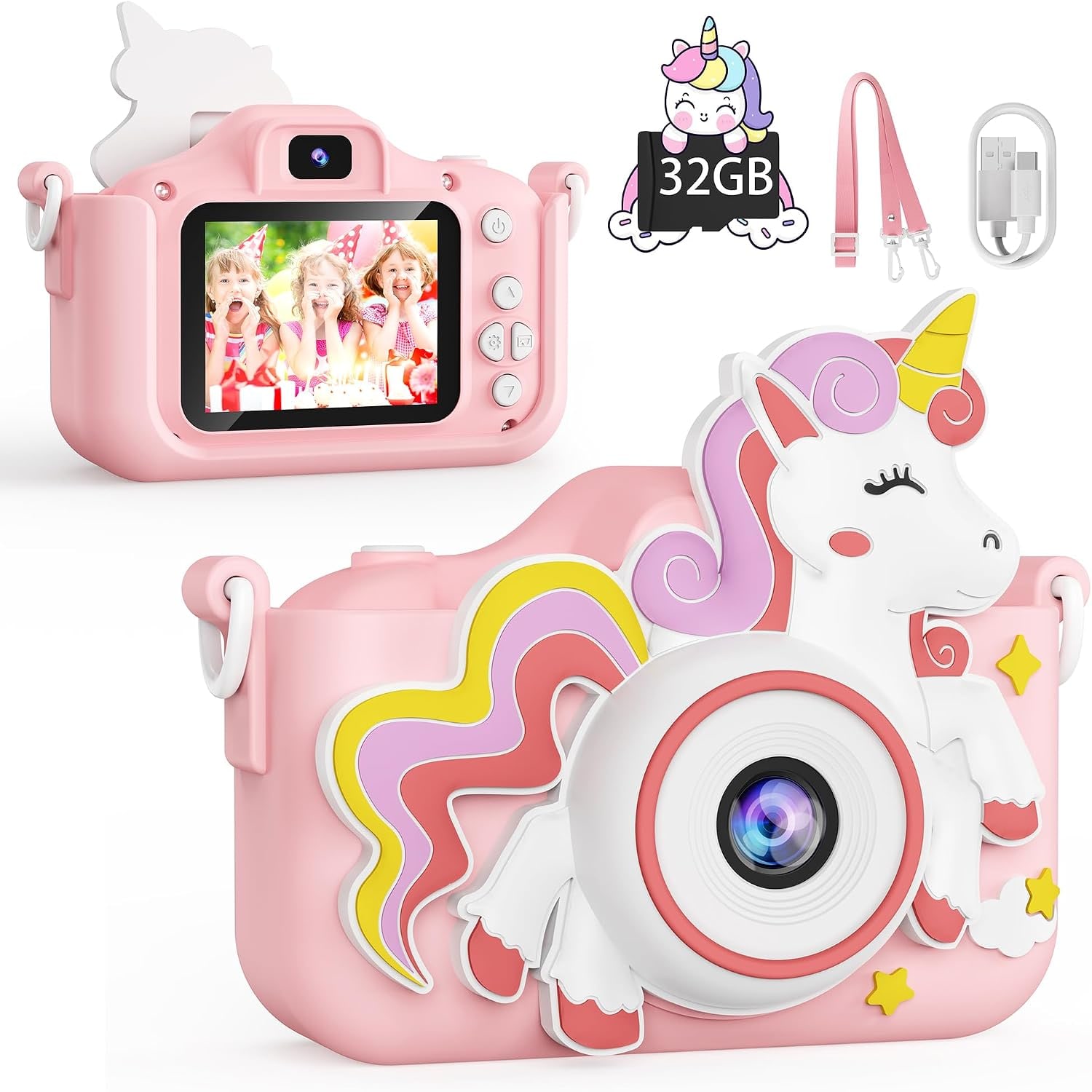
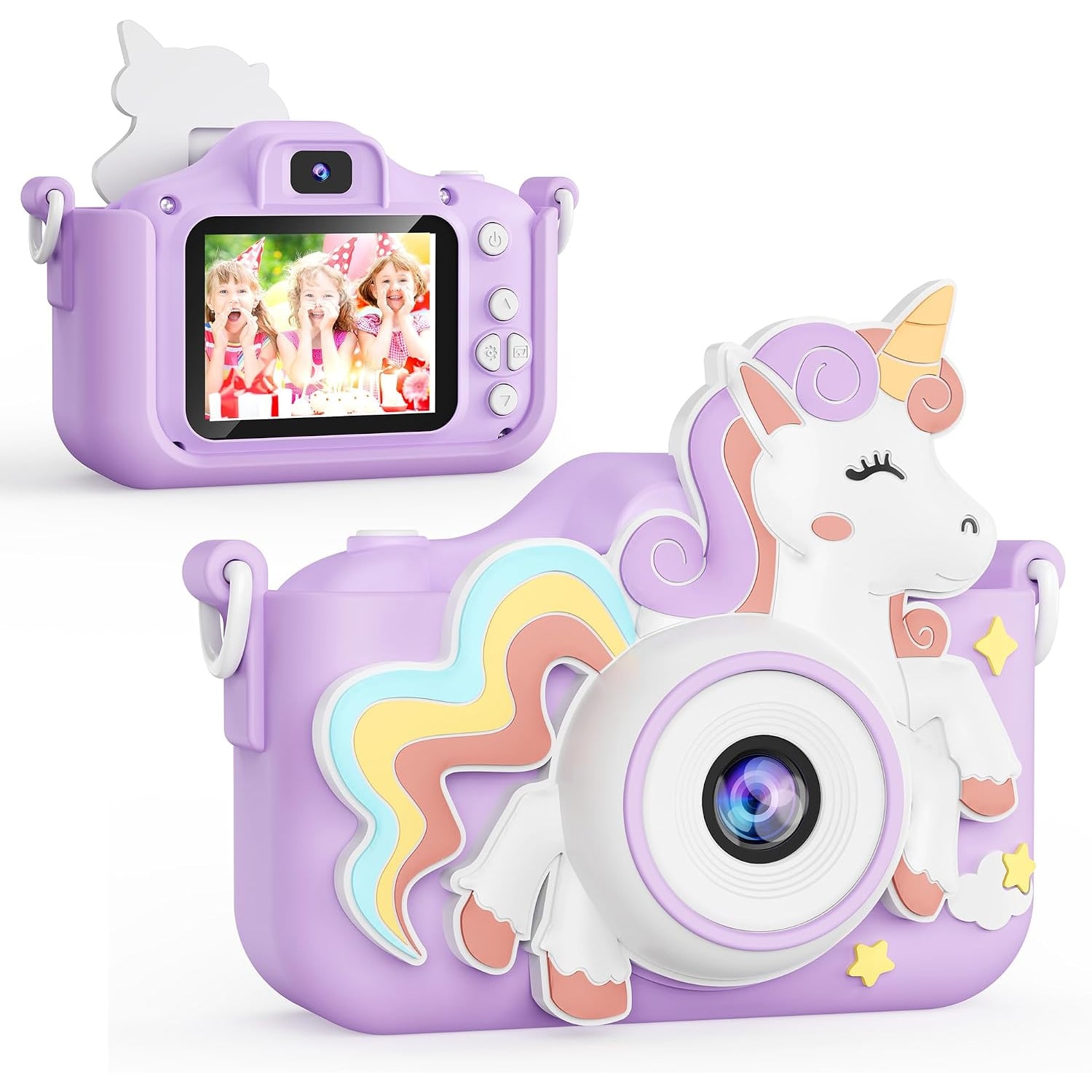
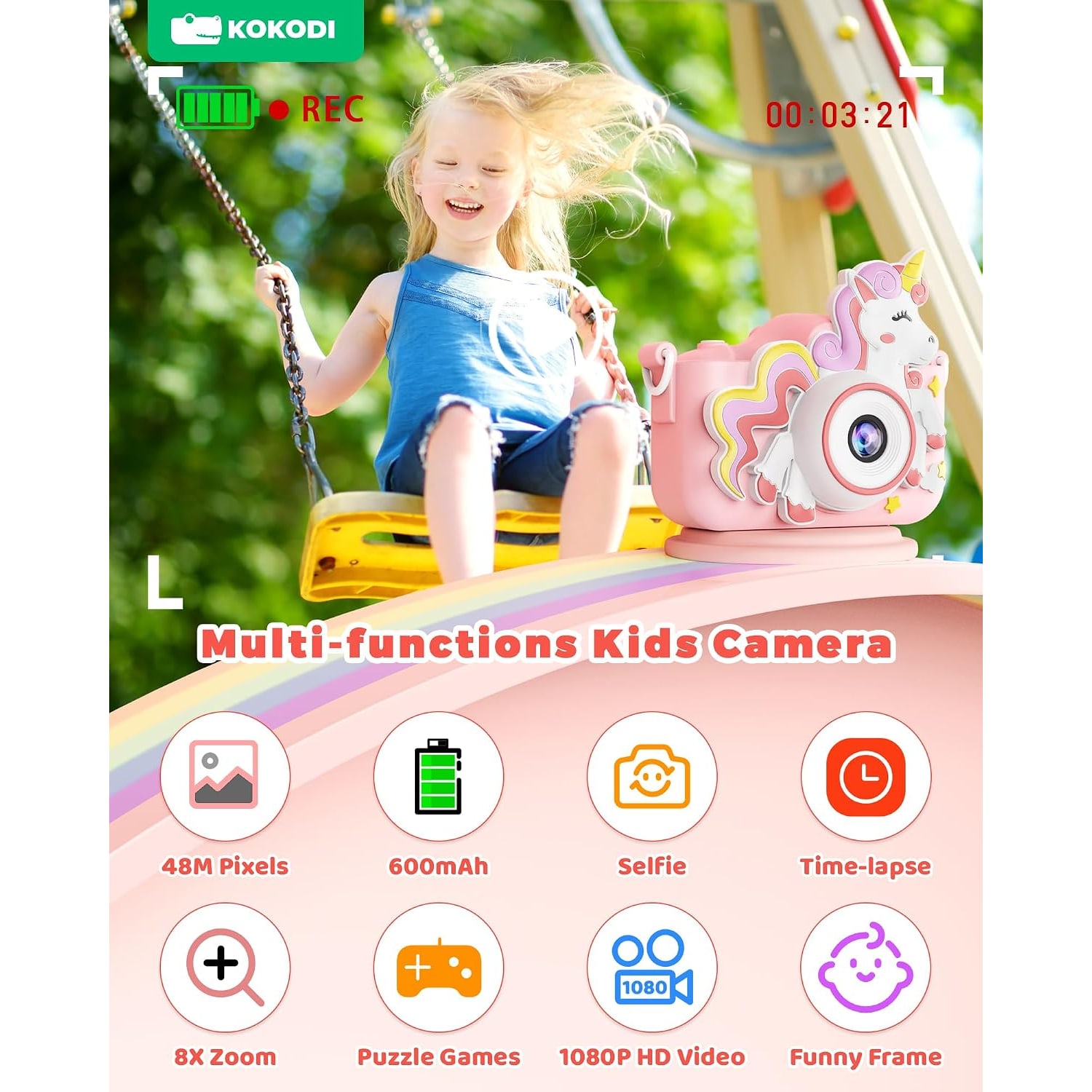
Under the soft pink unicorn case sits a small digital camera with a 2 inch IPS screen. It has a lens on the front and a lens on the back, and your child can flip between them.
The maker lists 48MP photos, 1080p video at 30 frames per second, and 8x digital zoom. Files save to a 32GB SD card that comes in the box. Photos are JPG and video is AVI.
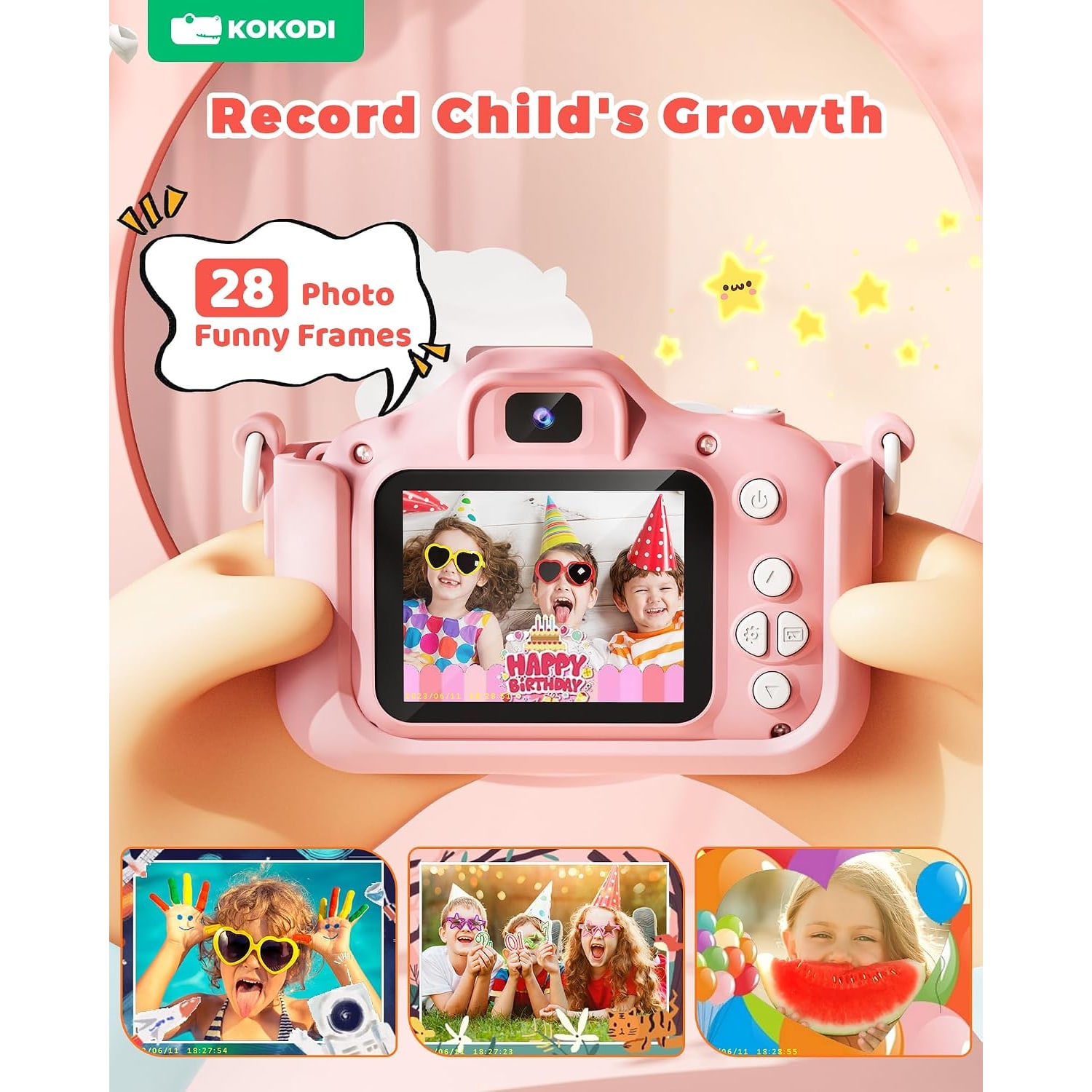
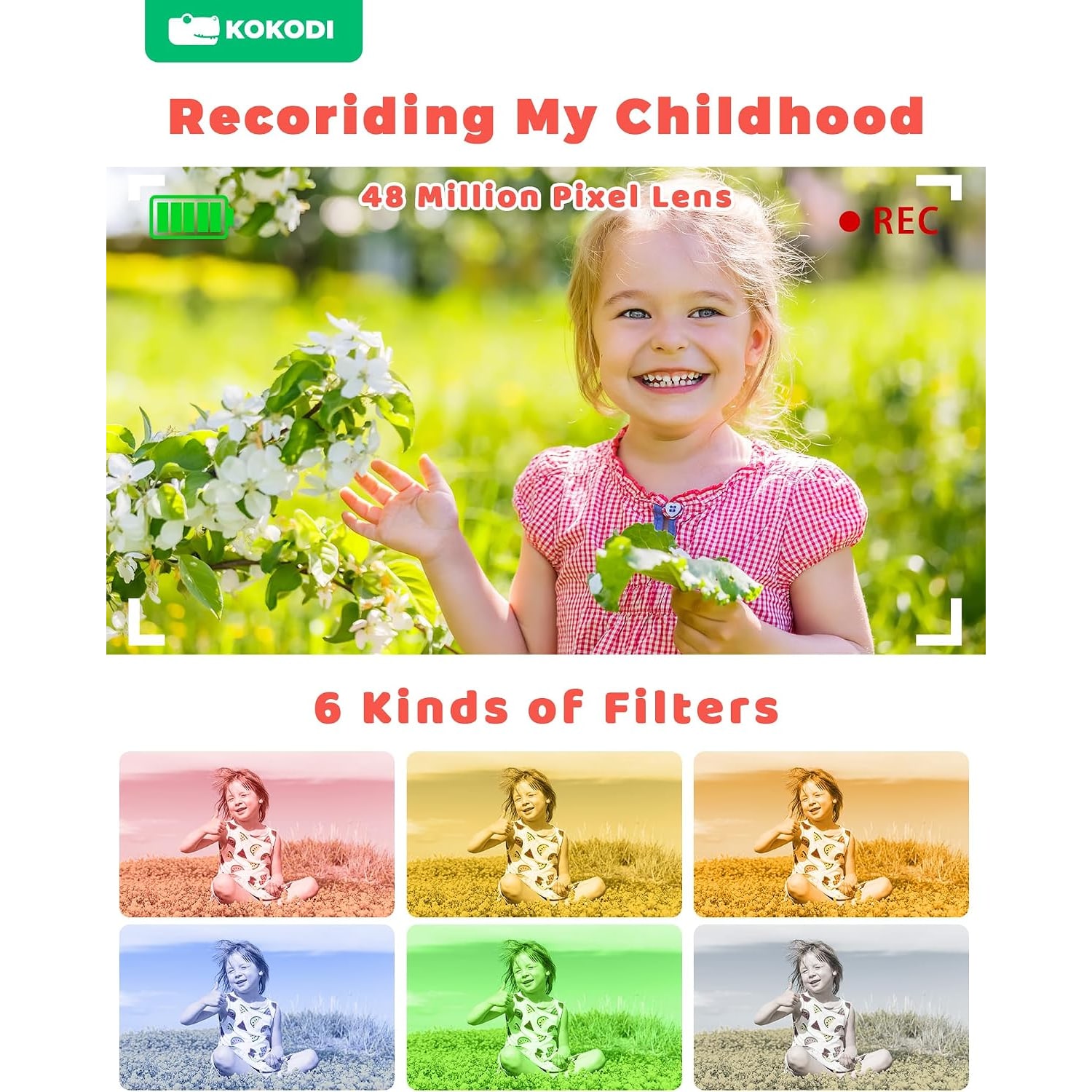
Then there are the play features: 28 photo frames, 6 filters, 3 puzzle games, a music player for MP3 files, audio recording and timed shooting.
It does not print. It is not waterproof. It has no flash, by the maker's details. It is a simple digital toy, and it is honest to describe it that way.
About that 48MP figure
Megapixel numbers on children's cameras have grown and grown. The maker lists 48MP for this kids digital camera, and we pass that on as stated.
Please do not read it as a promise of phone-quality photos. A toy camera has a tiny lens and a small sensor, and no megapixel count changes that. What you will get are bright, simple snapshots. They look good on the 2 inch screen and fine on a laptop. Zoomed in on a big monitor, they look like what they are.
The same goes for the 8x zoom. It is digital, so it enlarges the middle of the picture and the quality falls away quickly. And with no flash, evening photos indoors will be dim and grainy. Use it near a window or outside in the shade of the void deck and the results improve a lot.
The maker describes the focus as automatic. Its technical details are not fully consistent on this, so we would simply say: a child points and presses, and still subjects in good light come out sharpest.
None of this bothers a five year old. They care that the picture has their face in it with a sticker frame round the edge. On that measure the camera does well.
Selfies, frames and filters
The second lens is what sets this style of camera apart from the older one-lens toys. Children love photographing themselves, and with a rear-facing lens they can see the screen while they do it.
Expect a lot of close-ups of nostrils in the first week. Expect the 28 photo frames to be used on every single one. The 6 filters turn everything green or sepia for a while. This is normal, and it passes.
Timed shooting is worth showing an older child. Put the camera on a shelf, press the button, and run back to join the family in the frame.
What to do with all those photos
A digital-only camera fills up quietly. After a month there may be a thousand pictures on the card and nobody has looked at them.
A small routine fixes that. Once a fortnight, sit down together, plug the camera into the computer and let your child pick ten favourites. Save those to a folder with their name on it and clear the rest. If you want paper copies, a neighbourhood photo shop or a home printer can print the chosen few. Children take more care over their pictures once they know someone will look at them.
Games and music: decide your rules first
Three puzzle games are built in. Some parents are glad of them on a long bus ride. Others bought a camera so their child would look up and around, not down at another screen.
The maker mentions no setting to switch the games off. So this is a parenting decision, not a technical one. Whatever you choose, say it on the first day. "Games on the MRT only" is easier to hold to if it has been the rule from the start.
The music player handles MP3 files. The maker names the format and says no more, so we cannot describe how songs are loaded or whether headphones plug in. Count it as a small bonus if it works for you.
The unicorn case
The protective case is silicone and shaped like a unicorn. It does two practical things. It gives small fingers something soft and grippy to hold. And it cushions the knocks that every child's toy takes.
The maker calls the case resistant to shocks and falls. We would put it more modestly. It helps with ordinary bumps, and no case makes a camera indestructible. The lanyard, used with an adult watching, prevents more drops than the case absorbs.
In our climate, silicone picks up dust and a slight stickiness over time. Slip the case off every few weeks, wipe it with a damp cloth and let it dry fully before it goes back on.
Battery and memory
The battery is a built-in rechargeable lithium cell. The maker rates it at 2 to 3 hours of continuous photos or video. A child does not shoot continuously, so in ordinary use a charge tends to cover a day out. Games and music will shorten that.
Charging is through the included Micro-USB cable. There is no wall charger listed, so use a USB port on a computer or an adaptor you own. The charging time is not stated. Plug it in overnight before a trip.
The 32GB SD card holds about 4,500 photos by the maker's estimate, and 32GB is listed as the largest card the camera supports. To clear space or keep the favourites, connect the camera to a computer with the cable and copy the files over.
Who it suits
The maker's age range is 3 to 9 years.
At 3 and 4, this is a point-and-press toy. An adult charges it, keeps the SD card in place and supervises the lanyard, which should come off at the playground and at nap time. The card is tiny, so it should stay in the camera and out of small fingers.
From 5 to 7, children get the most from it. They can use the frames, switch lenses and show you their photos at dinner. Parents looking for a first camera for a 4 year old or a starter for a child in K2 or Primary 1 are the natural buyers.
At 8 and 9, some children will still enjoy it, especially the selfie side. Others will find the design young. If your child is asking about zoom lenses and editing, look at a basic compact camera instead.
On design: the camera is unicorn pink. Some children will adore that and some will not. You know which yours is.
Keeping it going
Keep it dry. The camera is listed as not water resistant, so it stays in the bag at the pool and during a downpour.
Keep it cool. Do not leave it in a parked car or on a sunny windowsill, since heat is hard on lithium batteries.
If the camera ever freezes, the maker's fix is to press the reset hole with a metal pin, which is not included. That is an adult's job. A straightened paper clip does it, and the clip goes back in the drawer afterwards.
One last point for the first outing. Recording other people is covered by Singapore law, including the PDPA, and by HDB, Town Council or condominium rules for shared corridors.
Delivery and returns
Most orders arrive in 7 to 12 working days by tracked courier, sent from overseas warehouses. Delivery is free across Singapore on orders of $150 or more, and $20 under that. For a birthday, order two to three weeks ahead.
Returns are accepted within 14 days of delivery in resaleable condition, with the case, card, cable, lanyard and manual included.
The short version
This is a kids digital camera with 1080p video, front and rear lenses and a 2 inch IPS screen, in a soft unicorn silicone case. It comes with a 32GB SD card, a lanyard and a Micro-USB charging cable. The battery runs 2 to 3 hours. There is no flash and no water resistance. The maker's age range is 3 to 9.
It is a toy first and a camera second. The photos are modest whatever the megapixel figure says, and the controls are simple on purpose. As a first camera that keeps a child off your phone, it does the job.
Charge it, set the games rule, supervise the lanyard, and let them take forty photos of the cat.