
The complete guide
How to Choose an Overhead Phone Tripod for Top-Down Video
The shot a normal tripod cannot get
Recipe videos, craft tutorials, unboxings, calligraphy, nail art, card games. All of them look right from one angle, which is straight down. The viewer sees what your hands see.
Try to get that angle with an ordinary tripod and you run into the legs. Stand it beside the table and the phone looks across the food instead of down on it. Lean the tripod over the table and it falls. Put it on the table and it is in the picture.
People solve this with stacks of books, a phone taped to a cupboard door or a selfie stick wedged under a pot. It works once, badly.
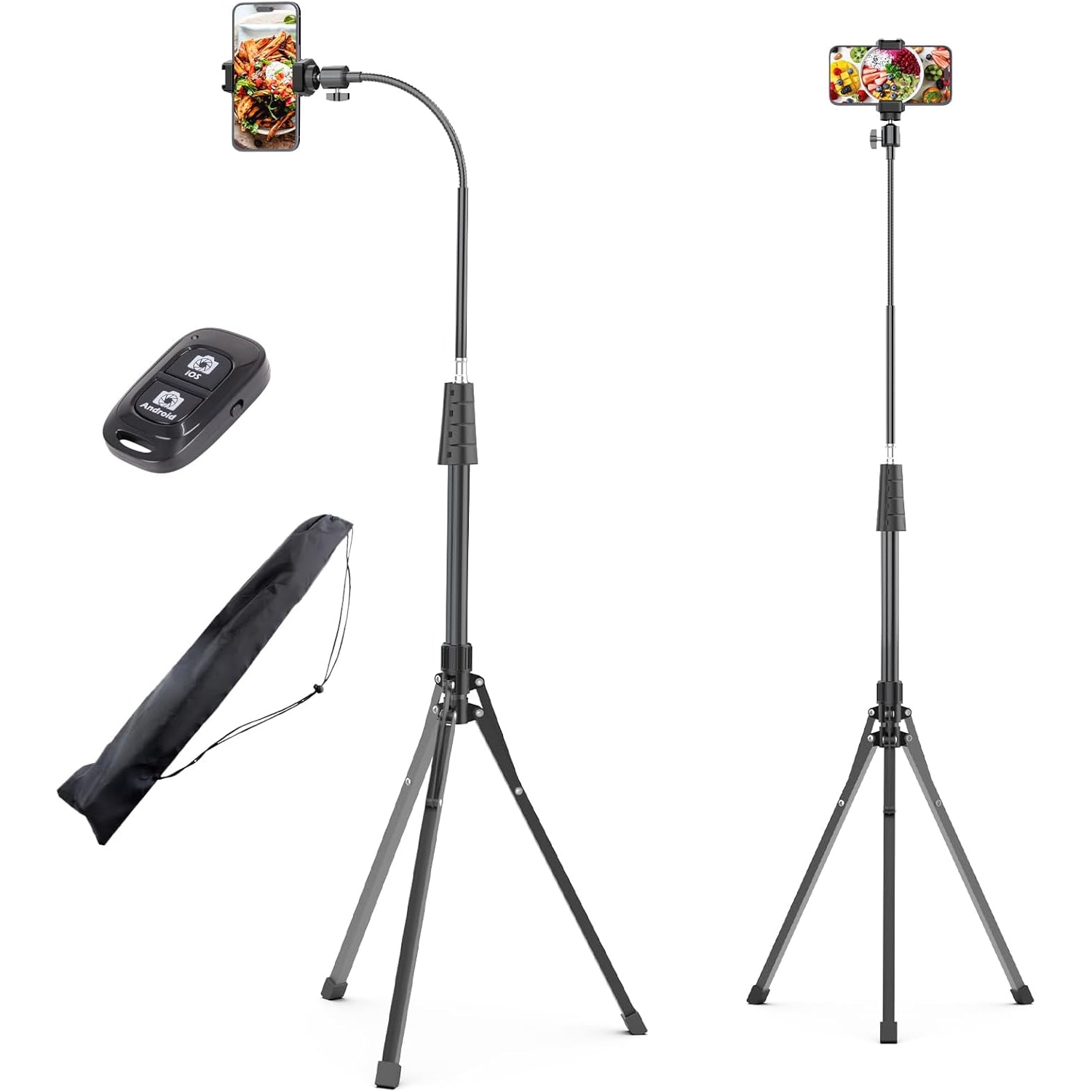
An overhead phone tripod is the proper fix. The stand sits beside the table. An arm reaches out over it. The phone hangs from the end, looking down. This one does the reaching with a 41.9 cm flexible gooseneck.
How the gooseneck works
A gooseneck is a bendable metal arm that stays where you put it. Curve it into an arch and the phone ends up out over your work with the lens facing down.
There are two things to know before you rely on one.
First, it bends in a curve, not at a hinge. A 41.9 cm arm does not give you 41.9 cm of sideways reach, because some of the length goes into the arch. Expect the phone to sit somewhat closer to the pole than that. It is still enough to get past the edge of a dining table and over a chopping board.
Second, a flexible arm moves when you touch it. Tap the screen and the phone bobs for a second or two. That is the nature of the design and it is why the remote in the box is worth using every time.
At the tip of the arm is a ball head. Once the gooseneck has the phone roughly in place, you loosen one knob, level the phone exactly and tighten. Rough positioning with the arm and fine positioning with the head is the routine.
Height, from bedside to above your head
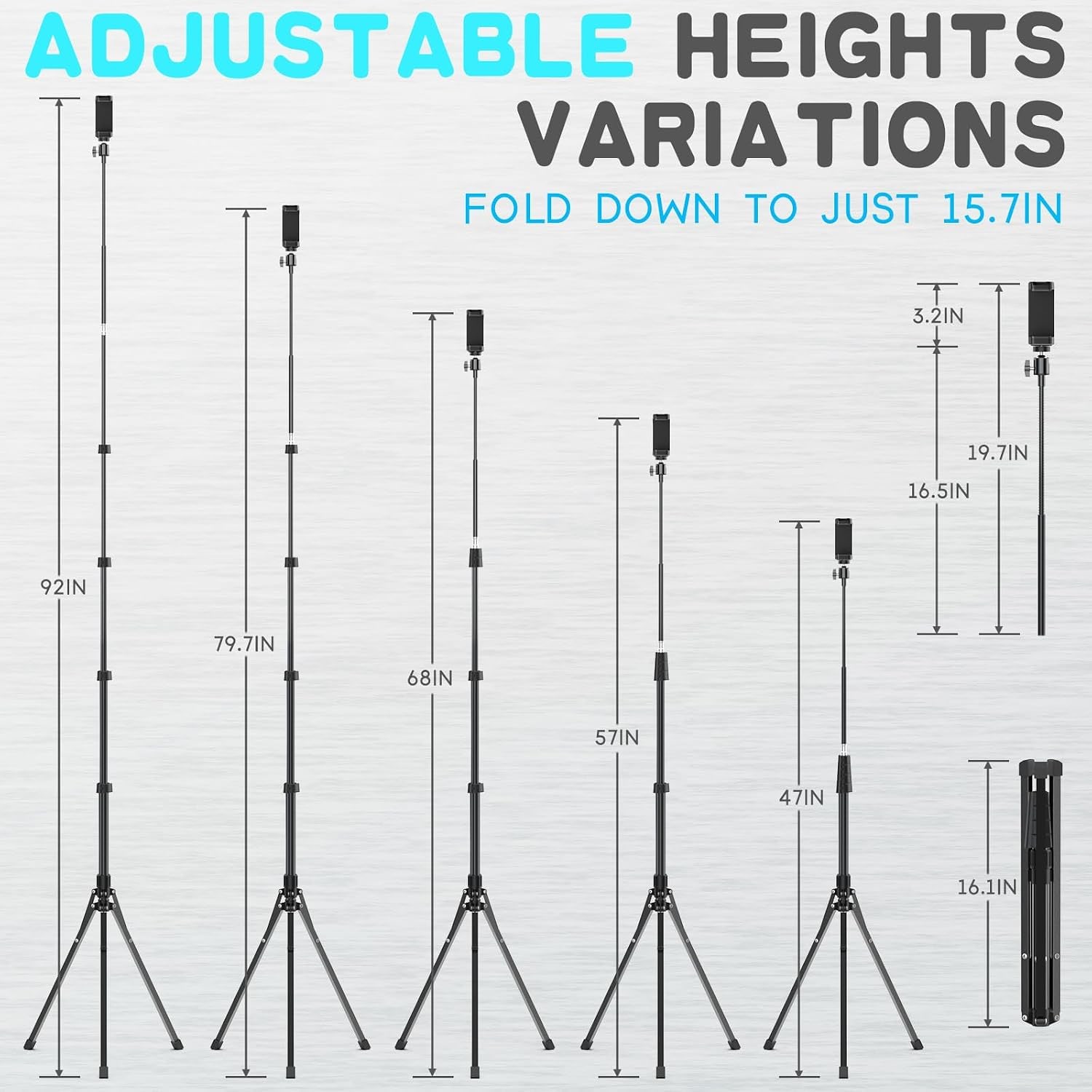
The maker gives the working height as 40.6 to 233.7 cm. That is an unusually wide range.
Near the bottom, the stand sits by a bed or a sofa. The maker suggests using it to hold a phone above you while you lie down, and the gooseneck makes that comfortable in a way a straight pole cannot.
In the middle, it is a standing-height stand. Put the phone at eye level for a video call, an online lesson or a piece to camera.
At the top, it looks down on things. A phone at over two metres sees a whole living room, a full dance routine or a big family group with every face visible.
The maker does not explain how 233.7 cm is measured. The sensible reading is that it is the highest point of the full setup. When the arm is bent over for a top-down shot, the phone will be lower.
The clip, the cold shoe and the remote
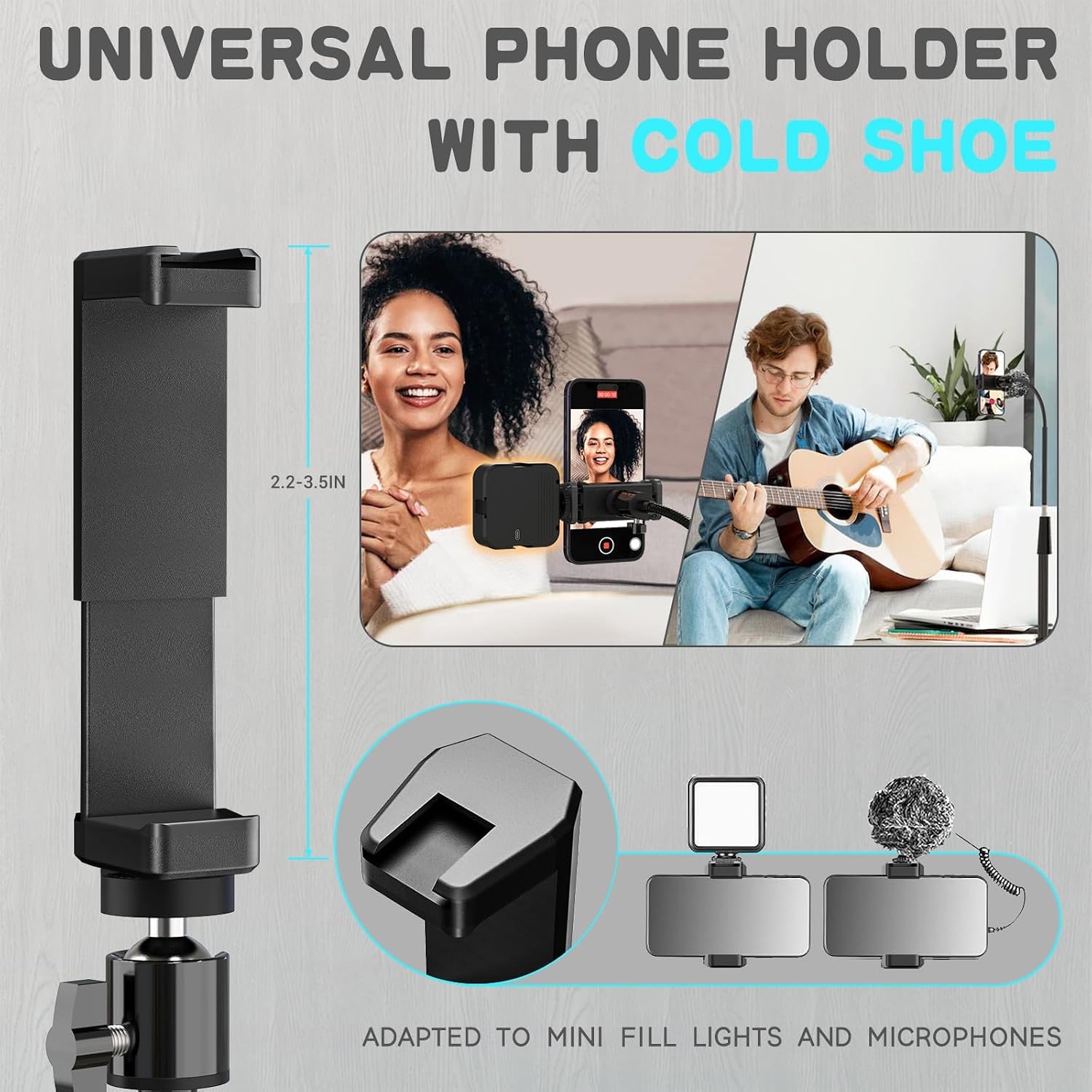
The phone clip opens from 7.1 to 14.5 cm. The maker says it takes iPhone and Android handsets, including ones in bulky cases, and lists a long run of models from small older phones to the largest current ones.
On the clip is a cold shoe. If you have not met one, it is a small slot that accessories slide into. Clip-on microphones and pocket LED lights are made to fit it. So the phone, the light and the microphone can all ride on the end of the same arm. The light and the microphone are your own to supply.
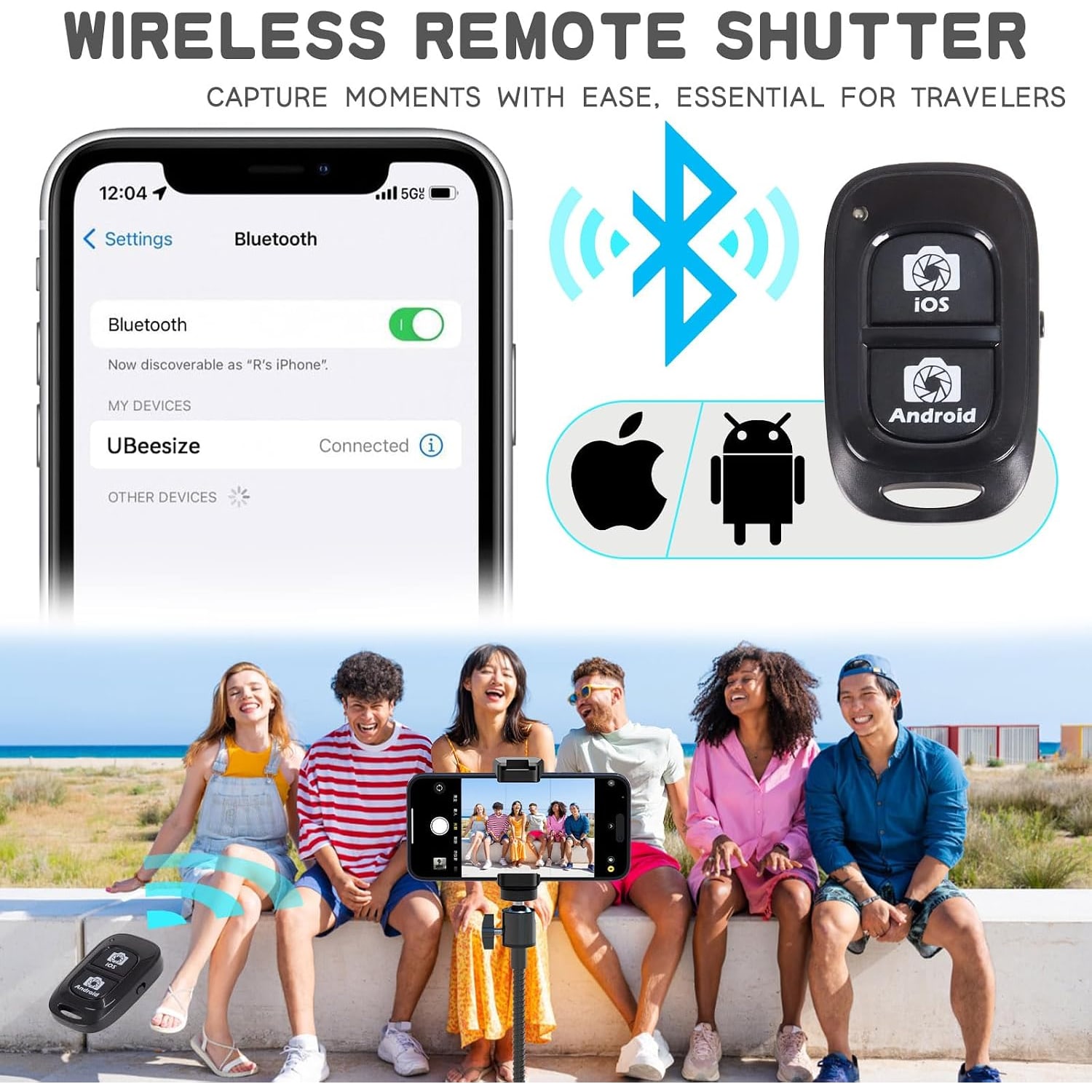
The Bluetooth remote pairs with the phone and works from up to about 9 m, by the maker's figure. For overhead filming you will use it from half a metre away, and that is fine. Its job is to keep your fingers off the phone.
Staying under the weight limit
The stated weight limit is about 1 kg.
A large phone in a case weighs a fraction of that. Add a small light and a microphone and you are still comfortably inside it. So for the use this stand is built for, the limit is not a worry.
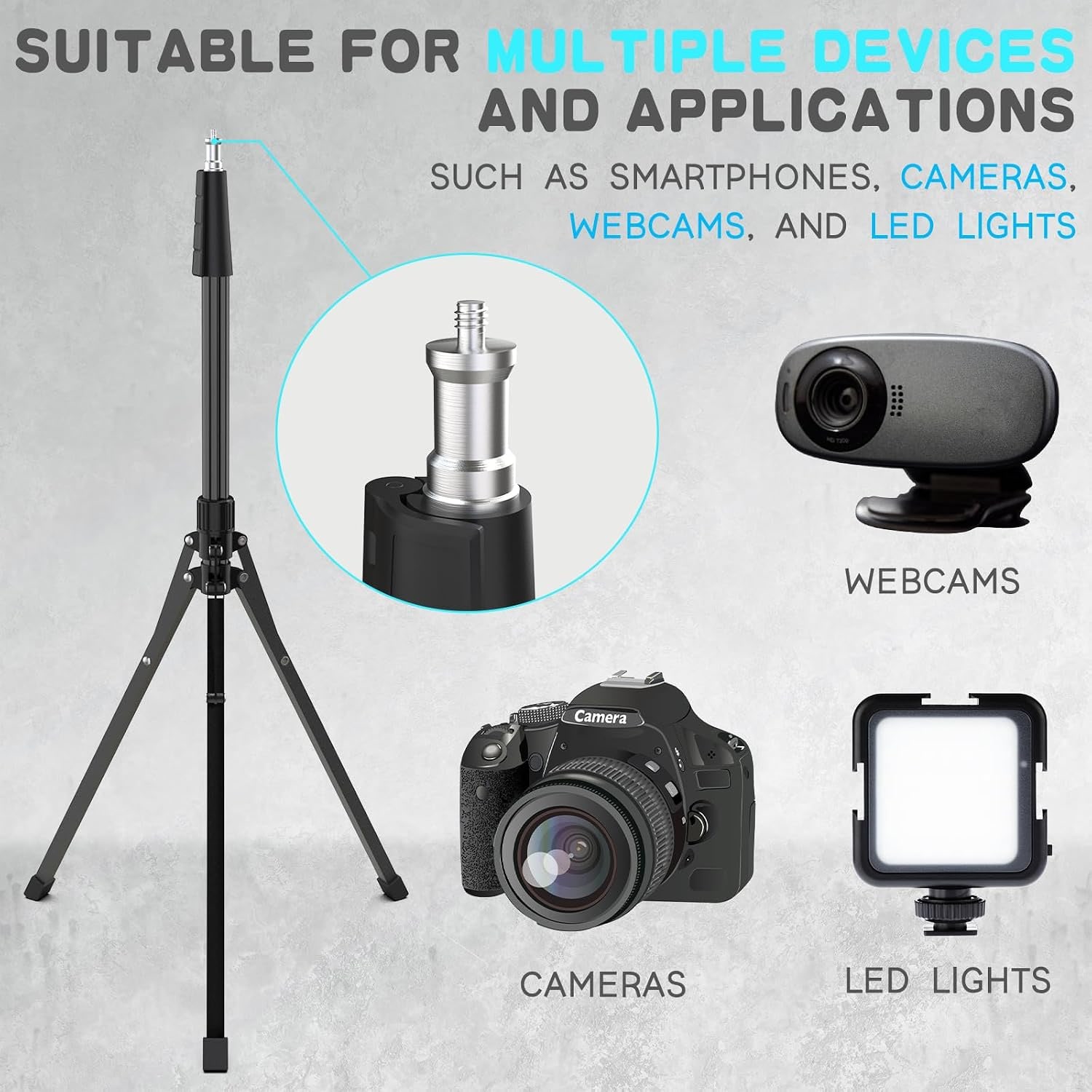
It becomes a worry when people try to hang a camera off it. The thread on the ball head is the standard 1/4 inch tripod size, and the maker does mention cameras, webcams and ring lights. A webcam is fine. A small ring light is fine if it weighs under the limit with its cable. A DSLR with a zoom lens is too much for a bendable arm even if the scale says otherwise, because the arm will sag and bounce. Use a rigid tripod for that.
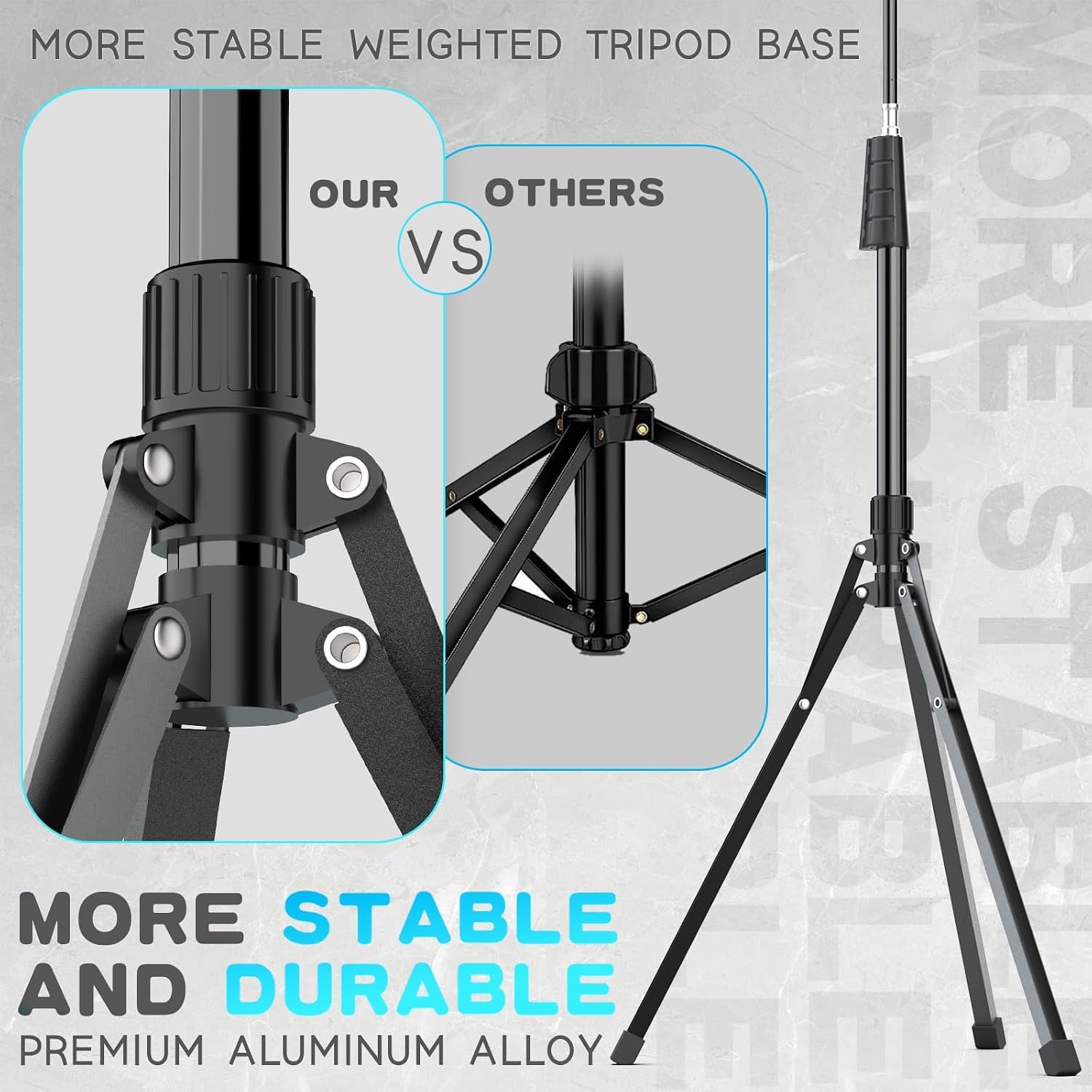
The maker does not state how much the stand itself weighs. It describes the base as weighted, which is what you want when a phone is hanging out to one side.
Setting up your first top-down shot
Give yourself ten minutes the first time. Stand the tripod beside the table with one leg pointing toward your work, so the weight of the phone sits over a leg and not over a gap. Raise the pole until the top is well above the surface. Bend the arm over in one smooth arch and clip the phone in with the lens facing down.
Now look at the screen, not the stand. Level the frame with the ball head until the table edges run parallel to the edges of the picture. Wait for the arm to stop moving, then press the remote. If a ceiling lamp throws the shadow of the phone onto your work, shift the stand to the other side of the table.
Who it suits
Home cooks and bakers who film what they make. People who sell handmade goods online and need clear product clips. Artists, crafters and anyone who teaches a skill with their hands. Tutors who show working on paper. Students filming notes.
It also suits people who do not film anything. Hung over a bed or beside an armchair, it holds a phone for watching shows or reading without a sore arm. Beside a desk, it holds a phone at eye level for calls.
It is less suited to heavy cameras, to shooting in strong wind, and to anyone who needs a published carry weight before buying.
Using it in a Singapore flat
Kitchens in HDB flats and condominiums are tight, and that is where this design helps. The stand goes on the floor beside the counter, out of your way, and only the arm crosses into the working space. You do not lose any counter to tripod legs.
Steam and oil are the cost of filming near a hob. Keep the phone to the side of the wok and not directly over it, and wipe the clip and the arm afterwards. The stand is listed as not water resistant, so keep it clear of the sink too.
For storage, it folds to 40.6 cm with its flip locks. That slides into a kitchen cupboard, under a bed or onto a shelf. Folded, it travels on the MRT in a backpack without drawing a glance.
Take care with height outdoors. On a balcony or along the waterfront, wind pushes hard on anything tall and thin. Keep the stand low, stay beside it and never extend it to full height near a railing.
Humidity is kinder to aluminium than to steel, but the joints still like to be dry. Wipe the stand down and let it air before it goes into a closed cupboard.
How to choose between overhead stands
Reach comes first. Measure from where the stand will sit to the middle of your work area. If that is well under the arm length, you are fine.
Then look at the base. A stand that holds weight out to one side needs something to counter it, and a weighted base is the usual answer.
Then check the clip range against your phone, and decide whether you want a cold shoe for a light.
Last, ask whether you need the height. If you only ever film a desk, a short overhead arm that clamps to the desk would do. If you also want standing shots, bedside viewing and high angles, a tall stand like this one covers all of them.
Looking after it
Bend the gooseneck in wide curves. Sharp kinks in the same spot wear the arm. Keep it dry, wipe off grease, and close the flip locks fully before you lift it. Check the ball head knob is tight before you let go of the phone.
The short version
This is an aluminium phone stand with a 41.9 cm flexible gooseneck for top-down filming. It adjusts from 40.6 to 233.7 cm, folds to 40.6 cm and carries about 1 kg on a ball head with a standard 1/4 inch thread. The clip takes phones 7.1 to 14.5 cm wide and has a cold shoe. A Bluetooth remote is included. It is not water resistant, and the maker does not state the weight of the stand.