
The complete guide
How to Choose a Mini Tripod for Vlogging and Travel
The tripod you leave at home
Ask anyone who owns a full-size tripod how often it leaves the flat. The honest answer is rarely. It is too long for a day bag and too much to carry on the off chance.
So the moments that would have been better with a steady camera get shot handheld. The night skyline comes out soft. The time-lapse never happens. The video of you talking is filmed at arm's length with your thumb over the microphone.
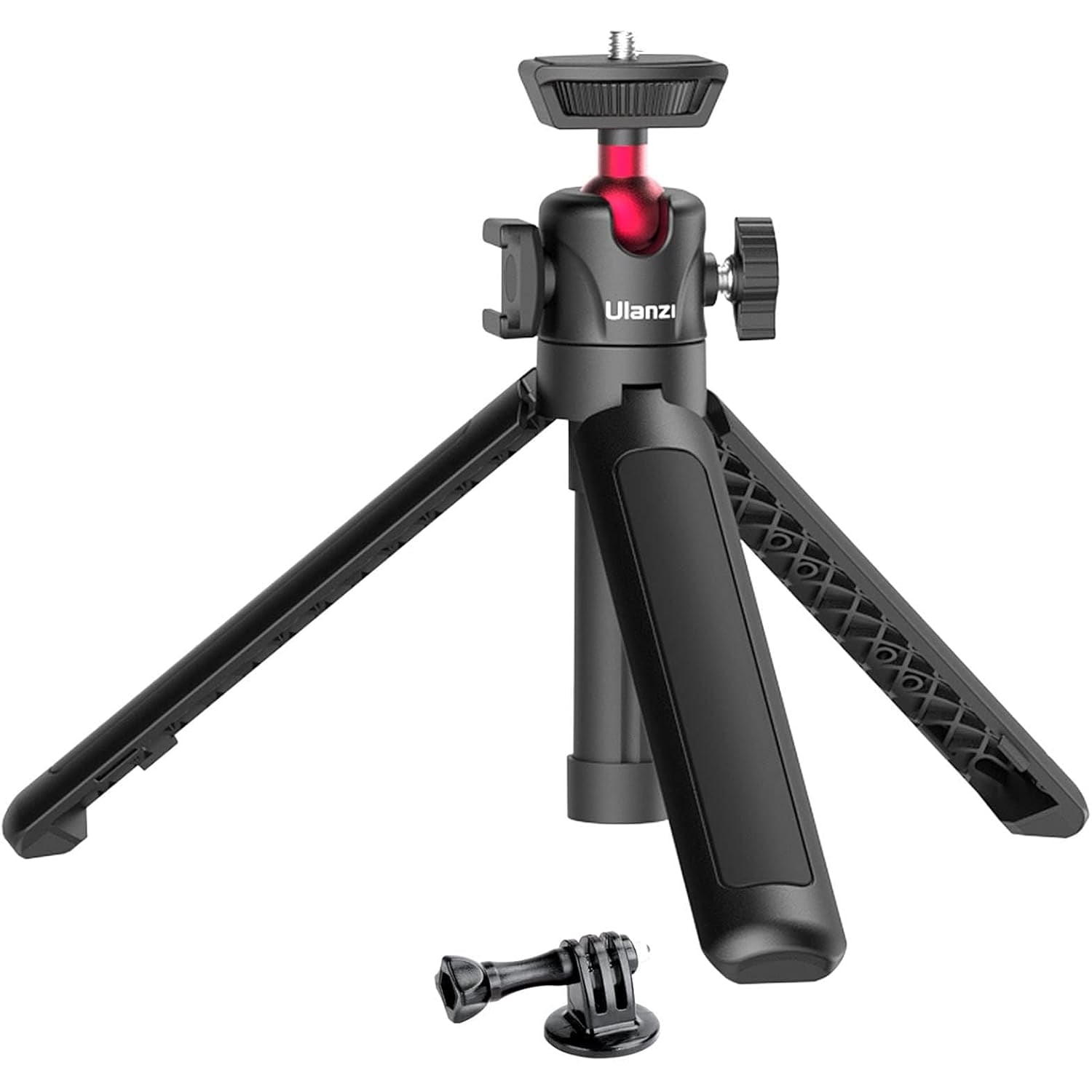
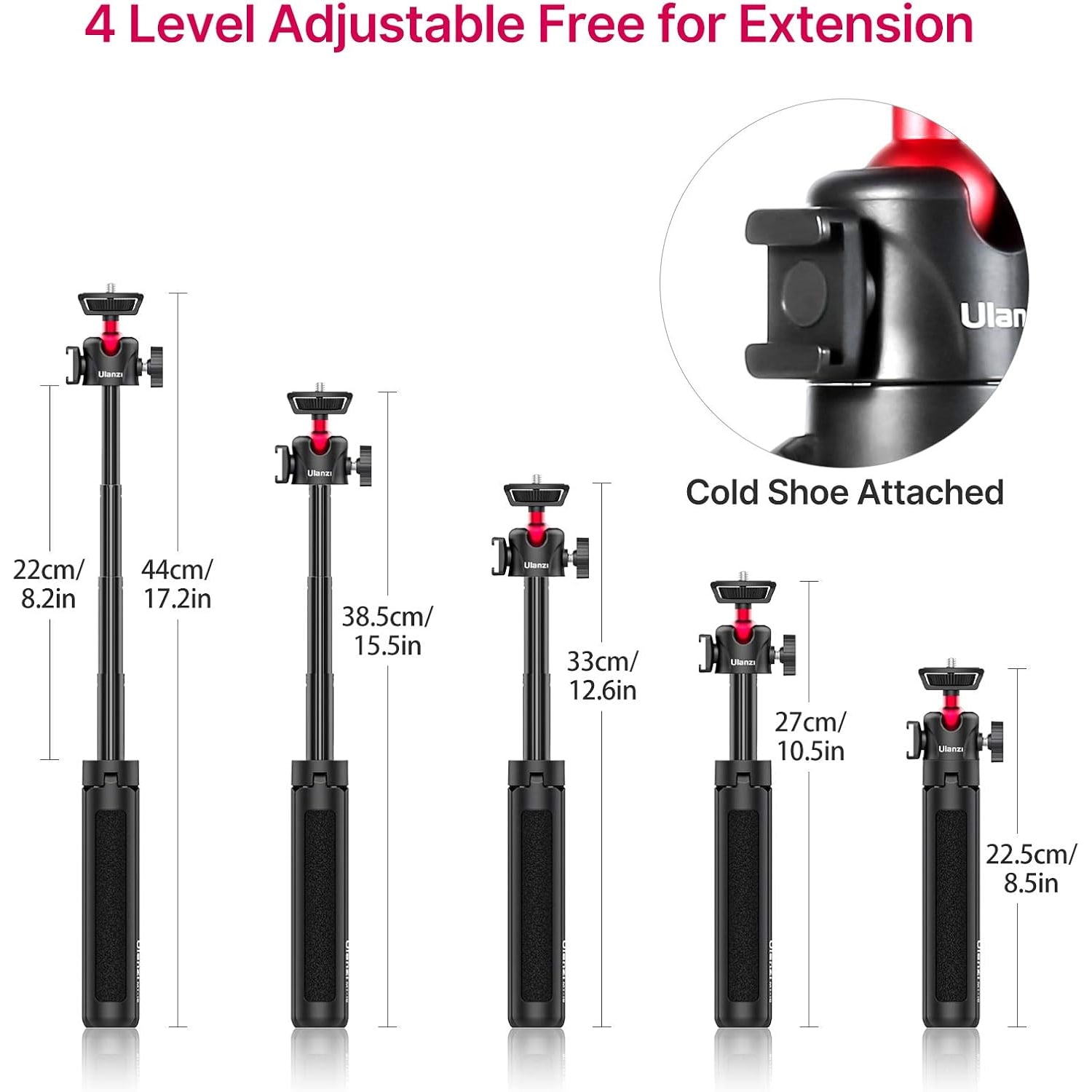
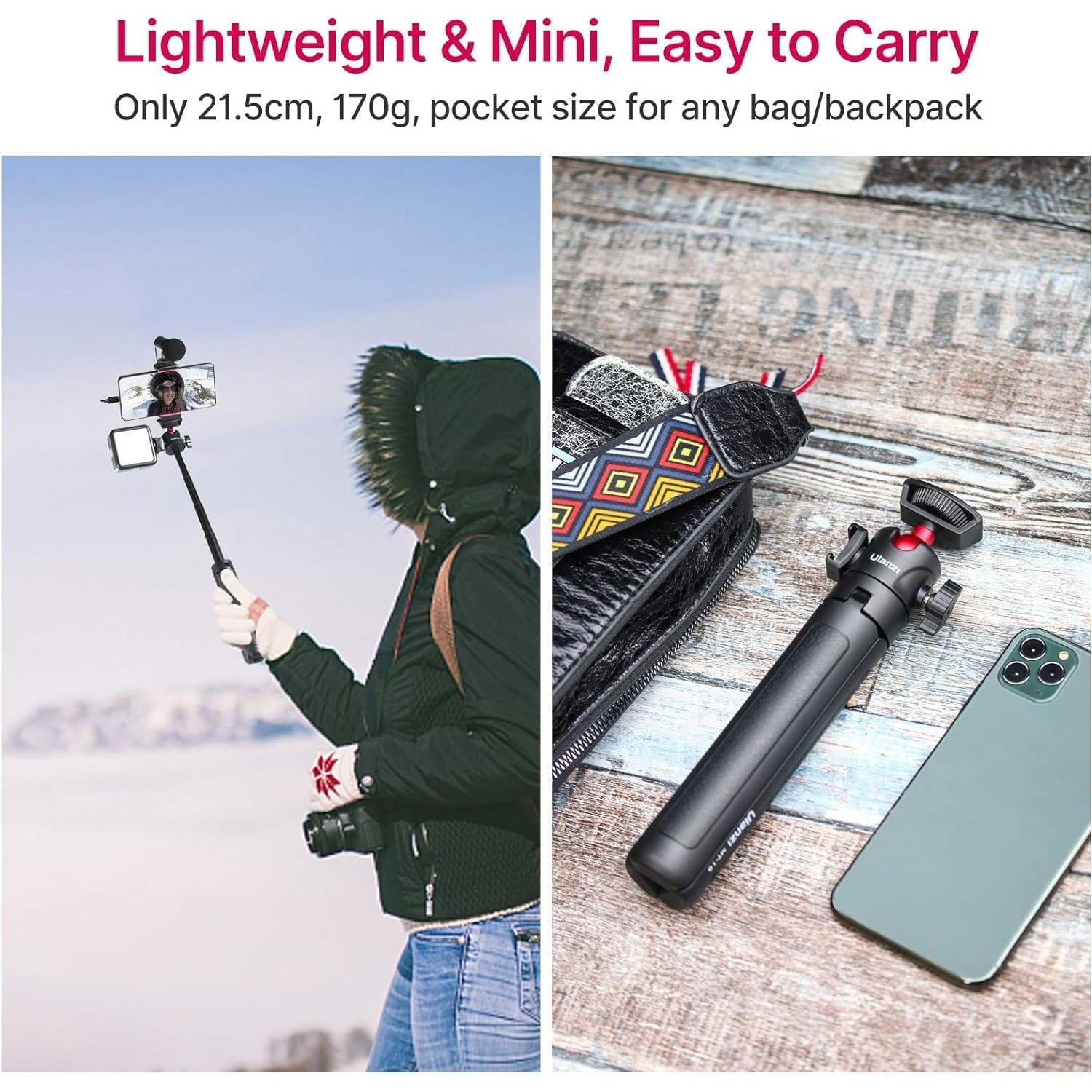
A mini tripod takes the opposite approach. It gives up height in exchange for being with you. This one is 22.5 cm long and weighs 170 g. That is small enough to stop being a decision.
Three jobs in one small tool
The maker describes three ways to use it.
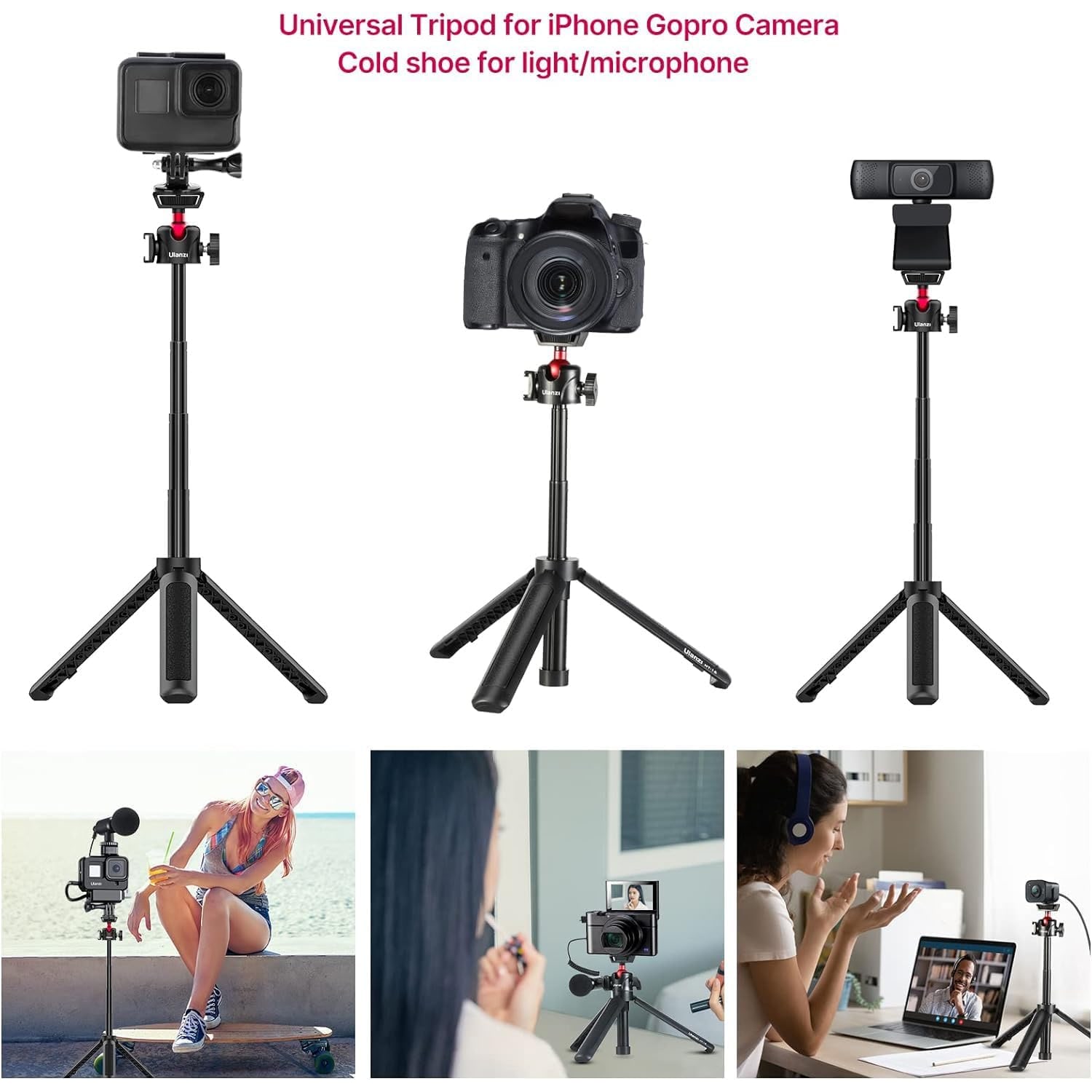
The first is as a tabletop tripod. Open the legs and stand it on a table, a low wall, a bench or the floor. The camera sits a short way above the surface. For a time-lapse of clouds over the bay, a long exposure at night or a fixed shot of you at a cafe table, that is all the height you need.
The second is as a handle grip. Close the legs and they form a handle under the camera. Small cameras are awkward to hold. Your fingers creep toward the lens and cover the microphone. A grip moves your hand down and out of the way, and gives you a steadier hold when walking.
The third is as a selfie stick. An extending section pulls out so the camera sits further from your face, which fits more background into the frame. The maker says this model has one more adjustable stage than the one before it. It does not state the extended length, so think of it as a short stick for arm's-length shots.
The ball head and the cold shoe
A tripod this small stands low, so nearly all the aiming happens at the head.
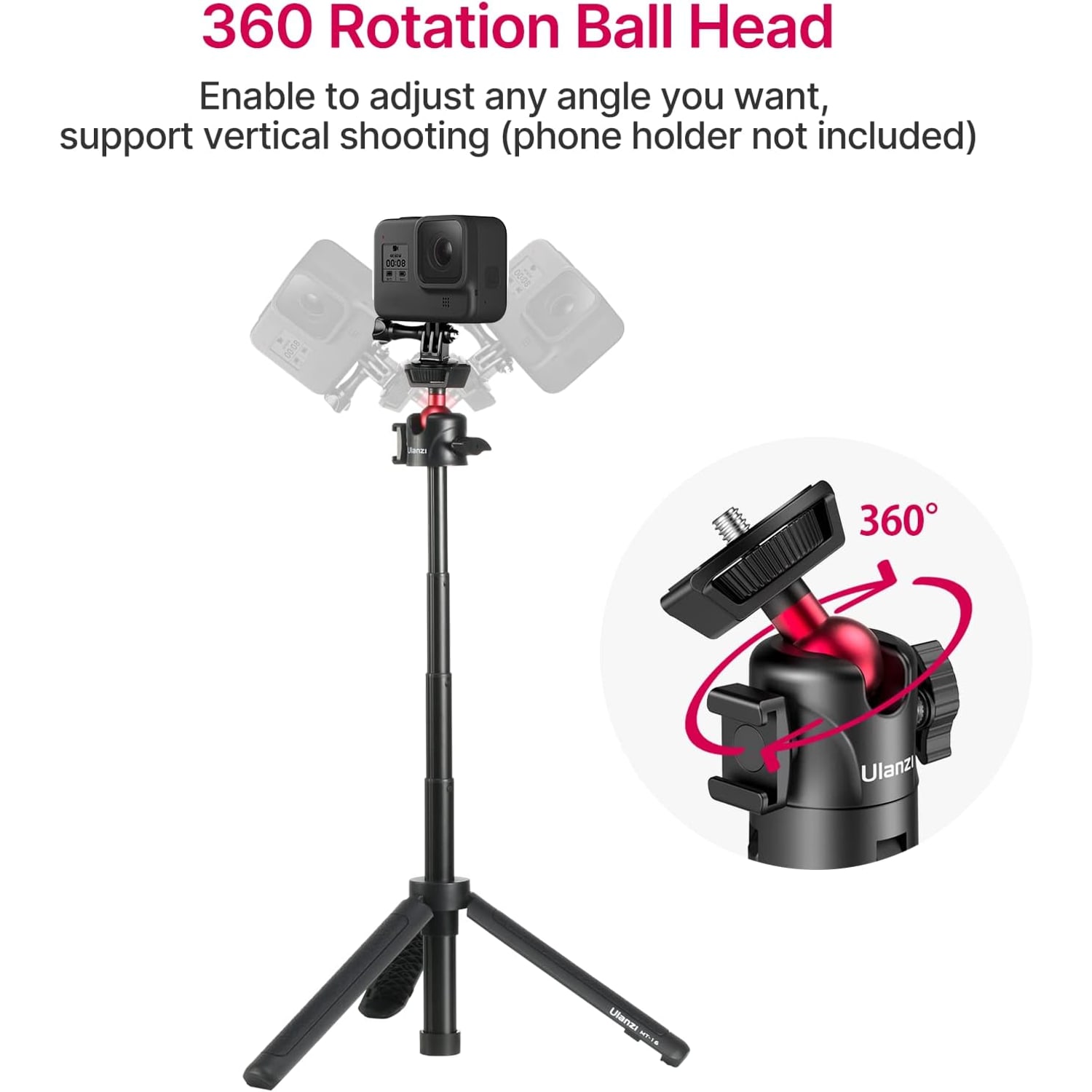
The ball head rotates through 360 degrees. Loosen it, point the camera and tighten it again. It also tips over to the side, which turns the camera on end for vertical video. If you post to social media, that is the feature you will use most.
On the head is a cold shoe. This is a small slot that accessories slide into, and the maker names a microphone and an LED video light as what it is for. Small cameras have weak built-in microphones and struggle indoors at night. A clip-on microphone or a pocket light fixes one of those problems, and the cold shoe gives it a home without an extra bracket.
It holds one accessory. If you want both a microphone and a light, look for ones that stack.
Know the two weight limits
This is the part to read carefully.
The stated weight limit is about 1 kg. That applies with the camera sitting upright above the tripod.
In vertical mode, the maker gives a lower limit of 500 g. When the head tips over, the camera hangs out to one side. The weight is no longer above the legs, and a small stand feels that.
So weigh your setup. Camera, lens, battery, memory card, and whatever is in the cold shoe. An action camera is well inside both limits. A premium compact is usually inside both. A small mirrorless body with a kit lens may be fine upright and too heavy for vertical. A DSLR with a standard zoom is likely past the point of comfort either way, and the maker says as much by pointing heavy-camera owners to a larger model.
The phone holder is not in the box
The maker is direct about this, and so are we. A phone holder is not included.
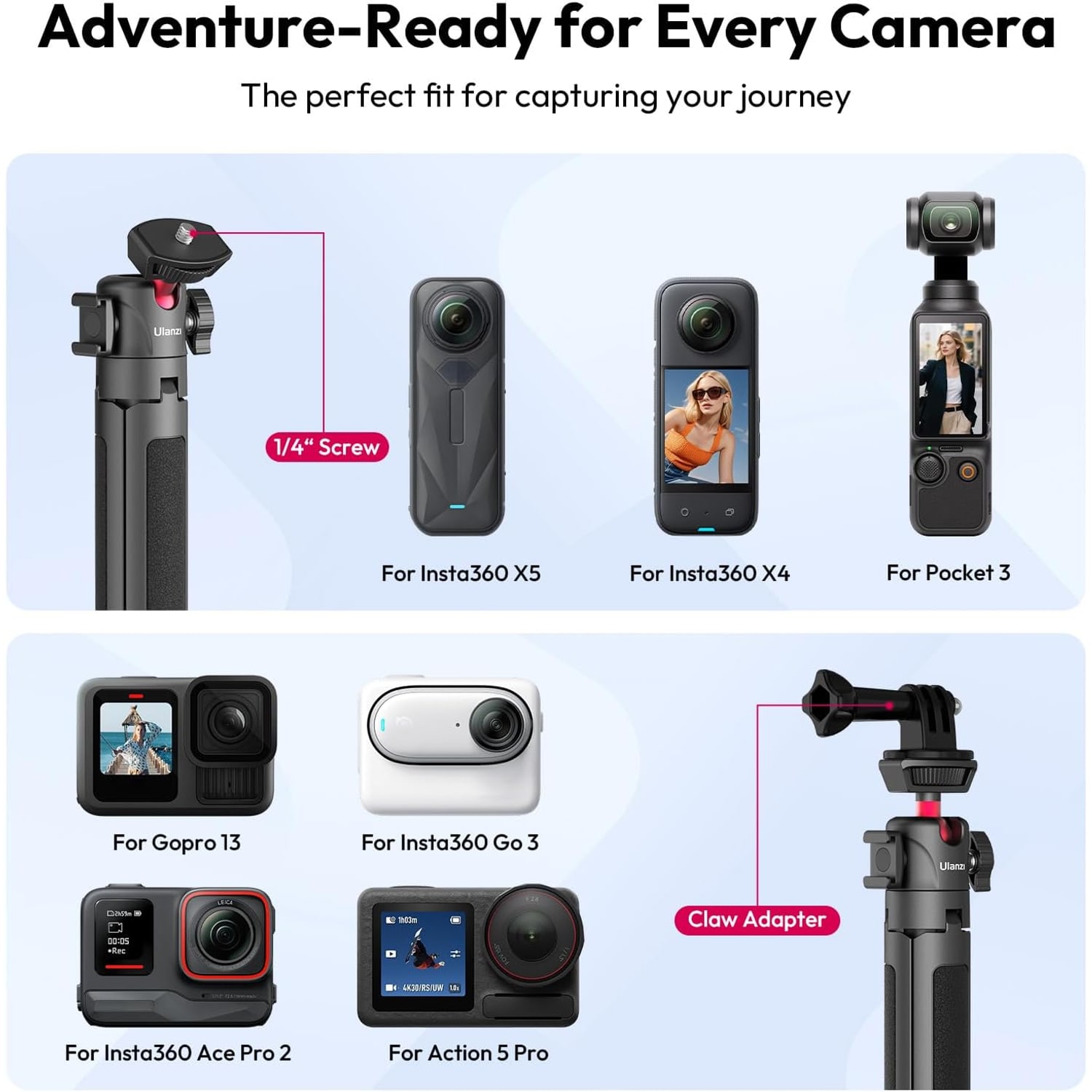
The tripod has a standard 1/4 inch screw on top. Cameras have a matching socket underneath and screw straight on. Phones do not.
If you want to use a phone, buy a phone clamp with a 1/4 inch socket. They are easy to find. Add its weight to the phone's when you check the limit, especially for vertical shooting, which is how most phone video is filmed.
If you shoot only with a phone and want everything in one box, a phone tripod with the holder included is the simpler buy.
Getting a steady shot from a small stand
Small tripods reward a little care. Open the legs all the way before you mount the camera, not after. Keep the extending section closed when the tripod is standing by itself, because every centimetre of extension raises the weight and narrows the margin. Point one leg in the direction the lens faces, so the camera's weight leans over a leg.
Use the camera's self-timer or a remote of your own for long exposures. Pressing the shutter by hand shakes a 170 g stand more than it shakes a heavy one. For time-lapses, set the camera going and then leave it alone. And if the surface is a cafe table that other people are leaning on, wait for a quiet moment or expect a wobble in the result.
What the maker leaves unsaid
A few details are missing from the maker's figures. The extended length is one. The spread of the legs when open is another, so we cannot tell you the exact footprint on a table. The material under the rubber is not given either. None of these changes what the tripod is for, but they matter if you are comparing mini tripods by the numbers.
Who it suits
It suits people with small cameras. Action cameras, pocket gimbal cameras, premium compacts and the smaller mirrorless bodies are the examples the maker gives.
It suits travellers and day-trippers who count every gram. It suits anyone who films themselves talking while out and about, since the grip and the short extension are made for exactly that. It suits desk use too, as a stand for a camera used as a webcam or for a pocket projector, since monitors and projectors are on the maker's compatible list.
It does not suit heavy cameras, anyone who needs eye-level height, or phone users who do not want to buy a clamp.
Around Singapore with a 170 g tripod
This is a city where you walk and ride. A tripod that fits a sling bag goes on the MRT, into a hawker centre and up to a rooftop bar without a second thought. Set it on the table and film your food arriving. Stand it on a low wall at Marina Barrage for the skyline after dark.
Mind the wind in open places. A low tripod gives a gust less to push on than a tall one. It is also very light, so a camera on top can still be shifted. Keep it back from edges and stay next to it.
Mind the water too. The tripod is listed as not water resistant. Your action camera may be built for a swim at Sentosa, but the tripod is not. Wipe off spray, keep sand out of the extending section and let it dry before you put it away.
The rubber grip is welcome in the heat. The maker calls it soft and anti-slip, which is what you want when your hands are damp at midday. Wipe it from time to time, since sunscreen and sweat build up.
Some venues do not allow selfie sticks, and airlines set their own rules for cabin bags. A quick check before you go saves an argument at the door.
How to choose a mini tripod
Start with weight and length, because those decide whether you carry it. At 170 g and 22.5 cm this one is easy.
Then match the load limit to your camera, using the vertical figure if you shoot upright video.
Then look at the head. A ball head with a cold shoe is more useful for video than a fixed tilt head with no accessory mount.
Then check what is in the box. Here it is the tripod alone. No phone holder, and no adaptor listed for action cameras with folding mounts.
Finally, decide whether you need a stated extended length. If reach is the main thing you want, choose a selfie stick whose maker publishes it.
Looking after it
Keep it dry and clean. Brush off sand, wipe the grip and do not store it wet. Tighten the ball head before you let go of the camera. Check the screw is snug each time, since small threads work loose with walking.
The short version
A 22.5 cm, 170 g mini tripod that also works as a handle grip and a short selfie stick. It has a 360 degree ball head with a cold shoe and a standard 1/4 inch screw. The weight limit is about 1 kg upright and 500 g in vertical mode. It is not water resistant, the maker does not state the extended length, and a phone holder is not included.